Cannondale’s history has been steeped in aluminium from the 1980s to the latest CAAD14 launched today.
Carbon may have taken over at the top of the industry, with the latest SuperSix EVO up there with the best, but Cannondale still produces some of the most desirable alloy bikes around, building on a history stretching back to the 1983 Sports Touring 500, the first alloy-framed bike sold.
Along the way, it has produced some truly iconic alloy road bikes and pros have won a cabinet full of grand tours on Cannondale’s alloy frames.
To mark the brand’s return to classic round tubes with the launch of the new CAAD14, here’s a look back through the cream of Cannondale’s alloy bike catalogue.
- You may like: 6 reasons why your next bike should be aluminium
1983 ST-500 touring bike

Cannondale started off in 1971 making a bike trailer, but its first foray into frame building was the Sports Touring 500.
“Back in this time, skinny steel frames were the absolute state of the art in high performance cycling technology,” says Murray Washburn, director of product marketing at Cannondale.
“We took the big risk and followed our gut, followed our innovative instincts, and introduced oversized high performance aluminium to the industry and to the world. It had what at the time were wildly oversized tubes. It was made out of big tubed aluminium, and it was lighter, stiffer, and more efficient than anything else on the planet at the time.”
Although the ST-500 didn’t carry the CAAD name, it was the forerunner to the CAAD series.
Washburn points out that CAAD didn’t start with a road bike, but a 1996 hardtail mountain bike. Cannondale saw an opportunity to port the name over to its road bikes, too, and add a number suffix to denote successive generations and the CAAD road bike series was born.
1997 Saeco Cannondale CAAD4

Although by the mid-1990s aluminium was taking over from steel as the preferred material for mountain bikes, it was still shunned by the road pros, Washburn says. So, in 1997, Cannondale sponsored a top European pro team, Saeco Estro, with lion king Mario Cipollini its star rider.
It wasn’t only Cipollini making headlines, though, with Ivan Gotti winning the 1997 Giro d’Italia on the CAAD4 in Cannondale's first year as team sponsor.
Alongside its alloy frame, Cipollini’s bike was equipped with Spinergy’s iconic four-spoke Rev-X wheels, designed by an ex-Cannondale engineer. The UCI didn’t like them and banned them from competition in 2001. It also didn’t like Cannondale’s one-off custom painted frames and fined the team for riding them.
2002 Cannondale Black Lightning CAAD7

Based on Cannondale’s CAAD7 frameset, which was still built in the US when most frame building had moved to Taiwan, the Black Lightning was a special edition equipped with a 10-speed Campagnolo Record Titanium groupset in gold and a Cannondale HollowGram crankset.
Flandrien Bicycle Gallery, which sells classic bikes and has a Black Lightning CAAD7 listed for sale, suggests the gold groupset was only ever produced for this bike.
2007 SystemSix

Cannondale was the last brand to win a grand tour with an alloy frameset, with Damiano Cunego winning the 2004 Giro d’Italia on a CAAD frame. That’s if you don’t count Danilo Di Luca’s 2007 Giro win on the SystemSix.
The SystemSix had an alloy rear triangle mated to a carbon top tube, head tube and down tube, which Cannondale claimed increased frame stiffness and made it “the lightest, most explosive bike” it had ever produced. When we reviewed the bike back in 2007, we reckoned it was as good as carbon with top notch handling.
- Read more: Why Cannondale retired its fastest road bike
2011 CAAD10
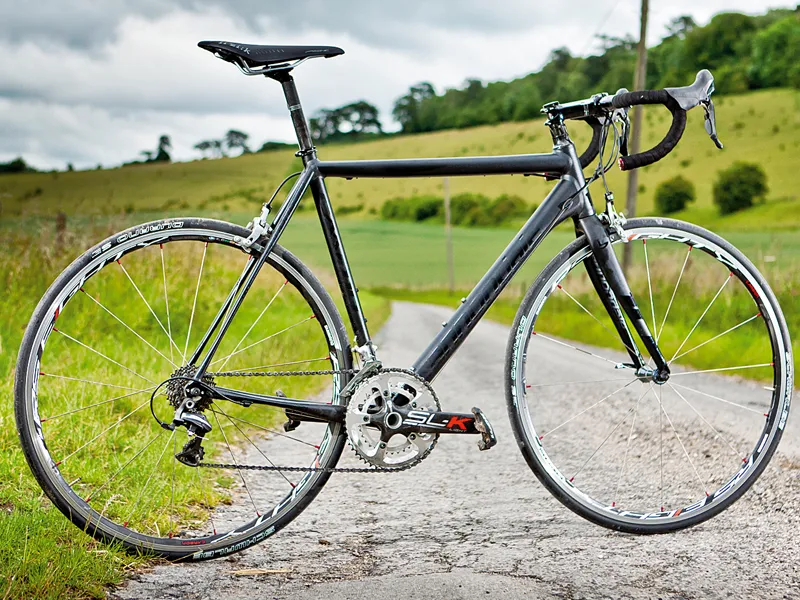
Cannondale shaved 200g off the frame weight of the CAAD9 when it launched the CAAD10, claiming a 1,050g bare frame weight.
The CAAD10 continued Cannondale’s oversized design, but with more tube shaping, including SAVE chainstays and seatstays designed to increase compliance. Cannondale decreased the headset bottom-bearing diameter, but claimed this didn't reduce frameset stiffness.
It deemed the CAAD10 worthy of a Dura-Ace groupset in the £2,500 top spec. In our review, we praised the geometry and handling, as well as the superb finish.
2016 CAAD12
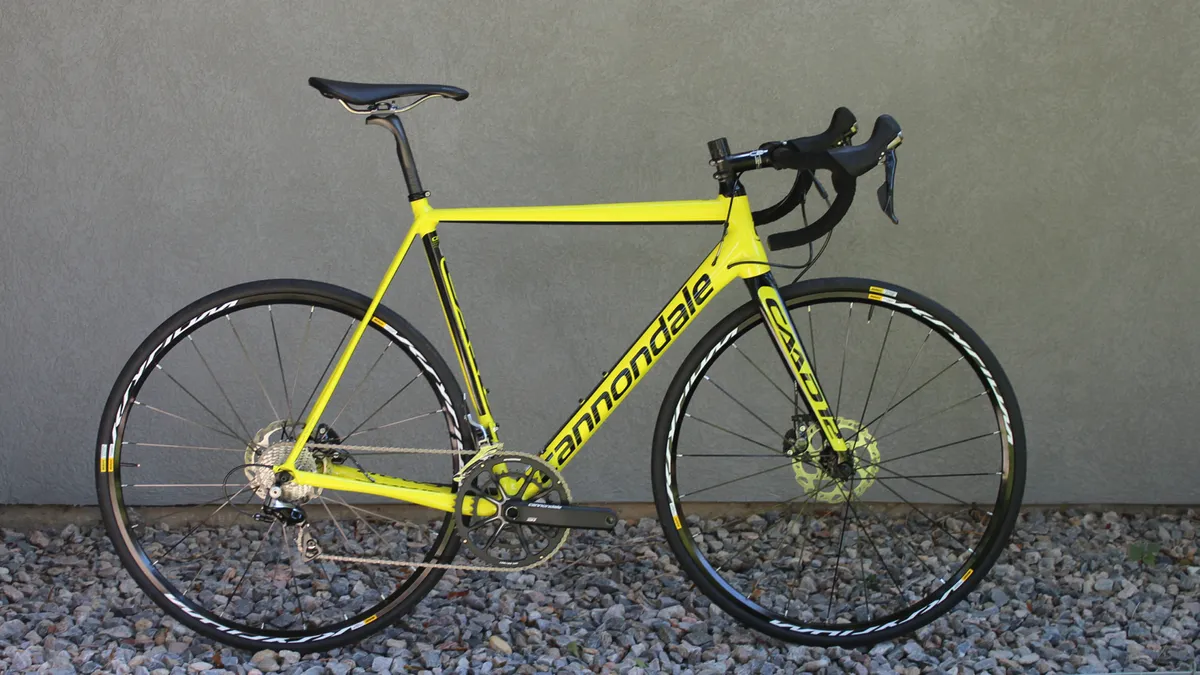
Winner of our Bike of the Year in 2016, the CAAD12 was the first CAAD to be sold with either rim or disc brakes and looked every inch the match of the then-current SuperSix EVO. It earned a five-star review from us in 2018, too.
The CAAD12 replaced the CAAD10 – we’re not sure what happened to the CAAD11. Cannondale managed to chop yet more weight off the bike, with a further claimed 200g reduction in the total system weight. It also claimed it was stiffer and more compliant, a well-worn trope.
Cannondale used a new tube-forming process, along with new computational analysis tools, which resulted in the most complex tube shaping on any alloy frameset then available. The disc frame, at a claimed 1,094g, was a few grams lighter than the rim-brake frame.