The Cannondale SuperSix is one of the most iconic race bikes of the last two decades, carrying the likes of Ivan Basso, Peter Sagan, Vincenzo Nibali and, more recently, Ben Healy to countless victories.
The latest version, released earlier this week, marks the fifth generation of the bike, which like Porsche's 911, clings to the concept of evolution rather than revolution.
To mark the release of the new bike, we’ve looked back at the incremental changes Cannondale has made to the SuperSix through its generations to see how modern road bikes have evolved.
Because BikeRadar is as old as the Cannondale SuperSix, launched in 2007, we have detailed reviews of the bikes, so be sure to check them out for some nostalgia.
- Read more: Cannondale’s latest SuperSix EVO is lighter and more aggressive for EF Education’s pro riders
Cannondale SuperSix Gen 1 – 2007

When the first SuperSix was released in 2007, it was Cannondale’s first full carbon fibre bike.
The bike replaced the SystemSix, a hybrid aluminium/carbon road bike succeeding the CAAD models, with the name later revived for Cannondale’s aero offering.
Cannondale claimed a weight of 1,050g for a fully painted 56cm frame, and opted not to show the carbon weave through the lacquer like many bikes of the time.
The brand built the bottom bracket and chainstay unit as one piece to increase stiffness.
Hourglass seatstays with small diameters were used for compliance and to reduce road buzz.
The 340g fork was shaped for forgiveness and featured carbon wheel dropouts.
For its first shot at full carbon fibre, the brand impressed our tester at the time – 14-time Grand Tour stage winner Marcel Wurst – with its combination of power transfer, stiffness, comfort and handling.
The SuperSix was used by Team Liquigas from 2008, with Basso securing the Giro d’Italia and Nibali winning the Vuelta a España in 2010 onboard the bike.
- Read more: Cannondale SuperSix Gen 1 review
Cannondale SuperSix EVO Gen 2 – 2012

When the second-generation SuperSix launched, Cannondale made sure to let riders know it was an evolution, adding the EVO suffix, which has stuck ever since.
The new frame weighed in at a claimed 695g for a size 56cm, with industry-renowned carbon engineer Peter Denk leading the bike’s design.
Weight was saved via an updated carbon-moulding technique, with the carbon fibre material laid up around an EPS core.
Instead of making the bottom bracket and chainstay unit as one piece, this time the rear triangle of chainstays and seatstays were moulded as one piece.
Cannondale chose to incorporate the dropouts into this piece, giving it a continuous fibre structure that enabled carbon fibres to be used for increased stiffness, while allowing for some vertical compliance to provide a smoother ride.
This model represented the first time Cannondale offered two options for the SuperSix – a standard model and a Hi-Mod version that used a higher-modulus carbon fibre layup.
The Hi-Mod variant was a challenger for the lightest frame in the world when it launched.
We gave it a rare 5-star rating when we reviewed the bike in 2013, praising its acceleration, effortless climbing and all-day comfort.
The SuperSix EVO continued to be used by the Liquigas-Cannondale team in 2012, with Sagan claiming the points jersey in its first outing at the Tour de France.
- Read more: Cannondale SuperSix EVO Hi-Mod review
Cannondale SuperSix EVO Gen 3 – 2016

Cannondale finally gave the SuperSix disc brakes for the first time in 2016.
While a rim-brake option remained for weight-weenie racers, the new disc-brake bikes helped cement the tech into the mainstream.
The new SuperSix adopted the wider 73mm BB30a standard, with the wider shell enabling asymmetric stays, which lead to a beefier non-driveside for increased efficiency.
This was unwelcome by some, as a proprietary design, and with many press-fit bikes struggling at the time due to small manufacturing defects – this was something Cannondale would backtrack on with later generations.
Stiffness was also increased by an hourglass-shaped head tube and a carbon layup.
Truncated aero profiles were used for the tubes, giving the 2016 SuperSix an aero advantage over the previous bike, although there was a weight penalty, with the rim-brake frame weighing in at 777g.
The disc-brake version featured a similar geometry and build, but required a full redesign and new moulding for every part of the frame and fork.
This led to the weight being slightly higher, at 829g for the frame and 360g for the fork.
Cannondale only adopted the 12mm thru-axle standard on the front, while the rear remained a standard quick-release.
We gave the disc-brake bike 4.5 stars when we tested it in 2017, declaring it one of the best race machines around with much-improved braking.
- Read more: Cannondale SuperSix EVO Disc review
Cannondale SuperSix EVO Gen 4 – 2019

The silhouette of the SuperSix remained largely unchanged until 2019, when Cannondale gave the bike drop seatstays and significantly more aero tubing.
Cannondale used deep aerofoil shapes, with many of them employing Kammtail principles to stay within the rule constraints of the time.
The bike was still available with rim brakes, although disc-brake dominance was well underway.
Cannondale addressed the quick-release axles on the disc-brake variant, giving the bike its Speed Release thru-axles.
Weight also continued to climb, with Cannondale claiming 866g for a 56cm frame, combined with a 389g fork for the Hi-Mod frameset.
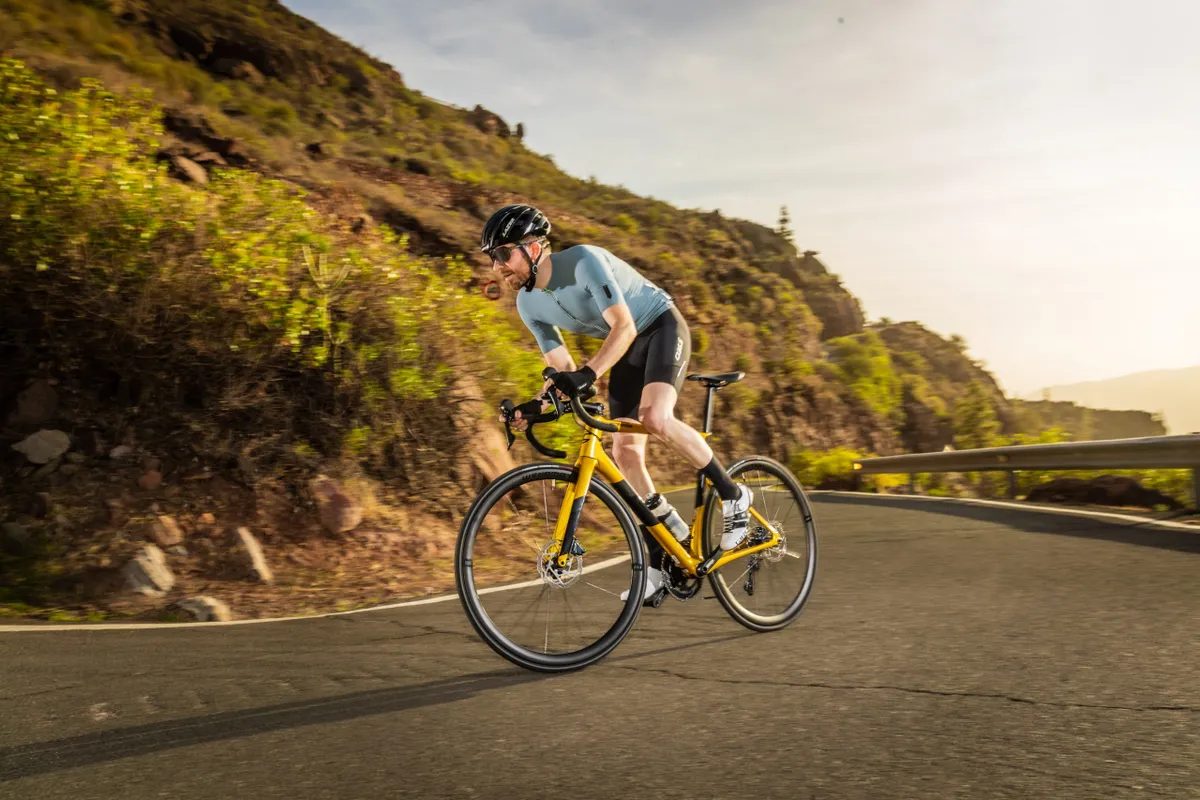
These gains were offset by the aero advantage, said to have reduced drag by over 30 per cent compared to the previous model.
This generation won our Bike of the Year title in 2020 with a 5-star review from Warren Rossiter, who was impressed by the bike's sublime handling and superb comfort.
- Read more: Cannondale SuperSix EVO Carbon Disc review
Cannondale SuperSix EVO Gen 4, v2 – 2023

The SuperSix EVO saw some subtle changes for 2023, sharing a similar frame shape to the previous model.
While this was an all-new bike, the geometry, head tube and bottom-bracket stiffness, and compliance through the rear end, were carried over.
Hence, we’ve added the V2 suffix to this bike.
It marked a farewell to a standard Cannondale helped introduce, with the brand waving goodbye to press-fit bottom brackets in favour of a threaded BSA/ISO bottom bracket.
The bike debuted the Delta steerer tube, a triangular-shaped steerer that enabled it to greatly reduce the head-tube sizing of the EVO, while still allowing for fully integrated cable routing.
Cannondale also refined the seat-tube design in the name of aerodynamics, while repositioning the Di2 battery to the bottom of the down tube.
The brand moved away from its Speed Release axles, instead using the Syntace thru-axle standard, which helped reduce the bike's weight.

Cannondale introduced the Lab71 edition during this generation, with that frame weighing in at 770g for a size 56cm.
The Hi-Mod and carbon bikes weren’t exactly heavyweights, with the Hi-Mod frame weighing in at 810g, and the standard carbon model 930g.
We were once again impressed by this SuperSix generation when we tested it, with Ashley Quinlan giving the bike 4.5 stars, naming it one of the best all-round race bikes at the time.
- Read more: Cannondale SuperSix EVO Hi-Mod review
Cannondale SuperSix EVO Gen 5 – 2026

The latest SuperSix EVO was released earlier this week, with incremental changes made to the bike's geometry and weight.
Cannondale has given the bike a more aggressive geometry, reducing the stack by 10mm.
The bike has also had some weight shaved from the previous generation, weighing in at 728g for the Lab71 frame and 410g for the fork, in a size 56cm.
The brand says this saving comes from an improved carbon manufacturing process to help cut excess material.

Two new top-tier cockpits have been designed for the 2026 bike, with the SystemBar Road and the SystemBar SL offering an aerodynamic solution and a lightweight option.
SRAM’s Universal Derailleur Hanger design has been included.
The bike features the same 32mm tyre clearance and threaded bottom bracket of the previous generation.

We’re yet to review the bike, but Simon von Bromley has shared his first impressions.