Some MTB tech standards seem to have existed for decades with little change – sometimes because there’s no better solution, sometimes because there’s no point in updating them.
Technological advancements in mountain biking are commonplace, with electronic gears, computer-controlled suspension, and materials such as carbon fibre and titanium becoming almost unremarkable.
So, why are we still using outdated technology in so many areas, which is starkly contrasted against a backdrop of electronically controlled gearboxes and integrated onboard telemetry?
It’s time to examine why derailleurs, SPD cleats, unique gear hangers, tubeless tape and saddles with rails are still the dominant standards within the mountain biking landscape.
Derailleurs

Derailleurs were invented in the 1890s and we’re still using these familiar-looking pieces of tech to shift gears nearly 150 years later.
Whereas front derailleurs are now consigned mostly to road and touring bikes, rear derailleurs are still commonplace.
Derailleurs can do a good job, if the frame, hanger and derailleur are straight and true, and in good condition. But hanging off the back of the bike, the fragile parallelograms and tiny pivots a derailleur relies on are continually sprayed with mud and vulnerable to damage. These variables mean ghost shifting and noisy gears are all too common.
But we still use them, and for good reason: they’re extremely efficient with minimal drivetrain losses, because drag only comes from the two jockey wheels.
So, is there anything that could replace the derailleur? Running a singlespeed solves the problems of maintenance, weight and expense, but we lose the ability to change the speed our legs turn in relation to the speed of the bike.
Internally geared hubs and gearboxes remove the derailleur but offer gears. Internally geared hubs put the weight in the wrong place at the back of the bike and are compromised in their construction because they have to fit inside a rear hub.
Gearboxes put weight in the right place, service intervals are massive and the chainline can be optimised.
However, they’re heavy with all those steel cogs inside, and they’re draggy with all those side-loaded bearings. They’re also complicated if they do go wrong, and therefore difficult to repair yourself at home.
Yet they seem to have found a home in downhill racing, especially since Gates put up a huge $100,000 prize for the first Elite World Cup downhill win using one of its Carbon Belt Drive systems.
Will we see the death of the derailleur? Not yet; it’s only brave riders who choose a frame that's purpose-built around a gearbox. However, if the price of gearboxes continues to fall, and shifting technology such as Pinion’s electronic Smart.Shift continues to progress, we could see more gearbox bikes on the trails soon.
Shimano SPD cleats

Shimano was not the first to the clipless-pedal game, being beaten to the punch by Look with its road cleats, but Shimano’s ‘Shimano Pedalling Dynamics’ SPD cleats were the first for MTB.
Their form has been mostly unchanged since their introduction in the 1990s: a steel arrow-shaped cleat with multi-release angles. They shed mud reasonably well, recess into the shoe neatly, and are resilient to wear.
So it was big news last year when Shimano released a revised SPD cleat called the CL-MT001. It was different in that it could be engaged from the back first, front first or from the top. Thankfully, the CL-MT001 is backwards-compatible with existing SPD pedals. Despite this change in function, visually it's almost indistinguishable from the original SPD cleats.
It's not only Shimano, either. Time and Crankbrothers' cleats are still the same as when they were released – an example of the old adage, 'If it ain’t broke, don’t fix it'.
Derailleur hangers

Original geared mountain bike frames were made of steel and featured a threaded hole in a tail of metal, which hung down below the dropout that the rear derailleur screwed into.
These integrated steel derailleur hangers were robust and could be repaired easily because the malleable and ductile steel was easily bent back into place.
Aluminium alloy and carbon fibre frames were more fragile, so a sacrificial and replaceable derailleur hanger was needed.
The problem was no universal standard design was adopted, so different frames (even from the same manufacturer) used differently shaped hangers. Some were so similar it was almost impossible to tell the difference until you tried to fit them.
Aftermarket replacements from brands such as BETD and A2Z were the go-to options, alongside posters in bike shops to help you recognise which you needed.
In 2019, a new standard began when SRAM introduced the Universal Derailleur Hanger (UDH). It overlaps the frame on both sides, increasing strength, yet still enabling the derailleur to pivot backwards and out of the way.
However, Japanese bicycle leviathan Shimano still uses the traditional derailleur-mounting style. So it’s unlikely to die in the immediate future.
Tubeless tape
Tubeless tyres were a revolution for mountain biking at the dawn of the millennium: lower weight, more tyre compliance, punctures repaired themselves and pinch punctures were a thing of the past.
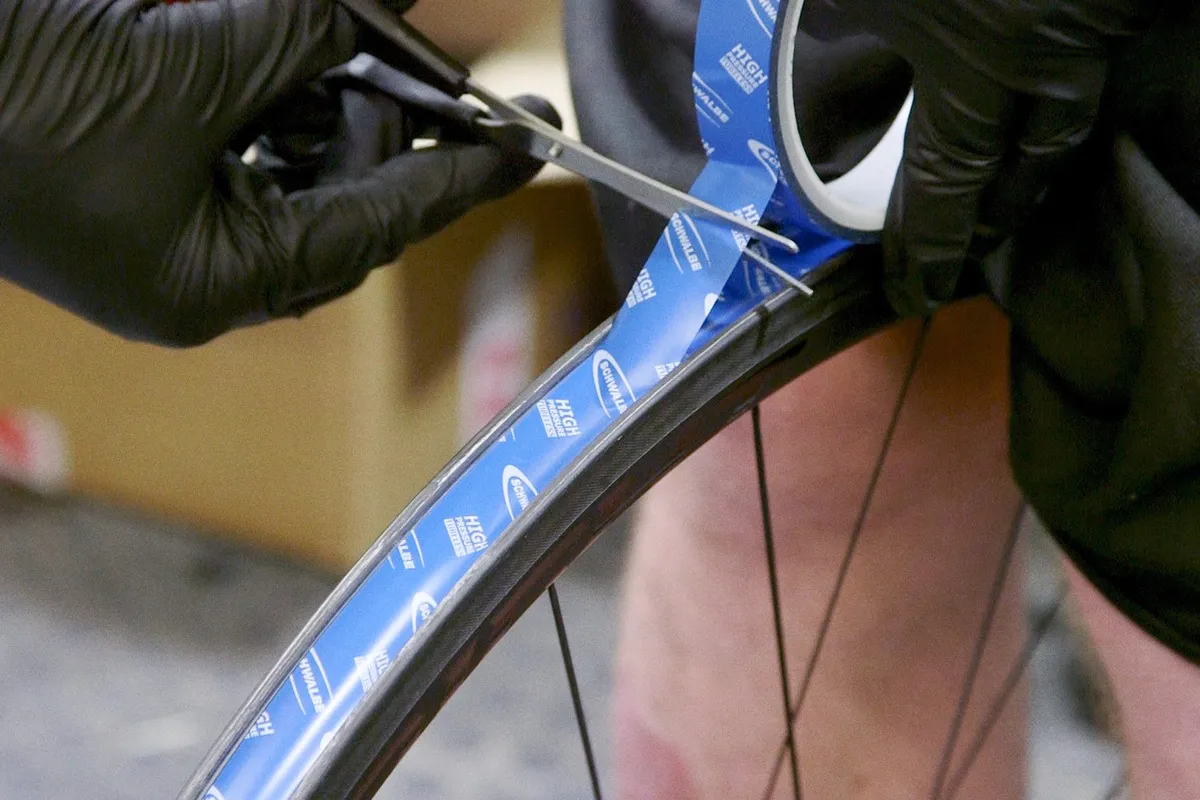
However, most rims still had holes in the rim bed where the nipples could be fed through. So, unless you were able to find a rim with a solid rim bed design, you would have to use a rim strip from a brand such as Stan's or tubeless tape to make an airtight seal between the tyre and the rim.
Tubeless wheel setup therefore means messing around with sticky inflexible tape, cleaning surfaces to the nth degree, and even then sometimes failing to make a seal. Plus, if you need to replace a spoke nipple, it has to come off again.
Rim technology is the limiting factor, and unless solid rim beds become universal, metres of expensive and environmentally costly tubeless tape will be required for every wheel build.
Saddle rails

Twin-railed saddles have been commonplace across cycling disciplines for years, with the possible exception of BMX and dirt jumping, which adopted fixed pivotal seats, and trials riders, who abandoned seats altogether.
Twin-railed saddles give a solid, sliding-adjustable base to the shell of the saddle, and the middle of the saddle hangs like a hammock for some suspended comfort.
Compatibility is great, too; it is as close to a universal standard as you could get on a mountain bike –virtually every saddle works with every seatpost.
The downside is they’re fiddly, with intricate and delicate saddle clamps needed, they often creak and they’re tricky to clean.
SDG’s I-Beam technology was an alternative and using a single composite rail was great in many ways, including its light weight with loads of adjustment and easy fitment.
They were very stiff, which meant less comfort, but perhaps there are clever engineering ways around this. I-Beam needs to make a comeback.