
As the Tour de France begins to settle into its rhythm, we’re back in the UK, fresh from a few sunny days touring hotel carparks on the outskirts of Barcelona with our cameras and notepads.
With a few days to digest what we saw, a number of clear trends have emerged among the sport’s best teams.
From divergent tyre choices to narrow bars and short cranks, bikes that surprised us with their weights, and brands looking to control the media narrative around their new bikes, let’s dig into the biggest tech trends from the 2026 Barcelona Grand Départ.
There’s no “fastest tyre size”
We love nothing better than a good argument about tyre sizes – we’re nerds too, after all – but the best teams at the Tour de France appear to know there’s more nuance to this topic than many of us.
Despite the roads around Barcelona being in generally decent condition, from what we saw of them, there were a variety of tyre sizes at the Grand Départ.
While Tadej Pogačar has previously been at the forefront of the ‘wider is faster’ revolution (back at the 2023 Tour, he was running 30c tyres measuring more than 33mm wide, for example), he and his teammates have taken a step back in the last couple of years.
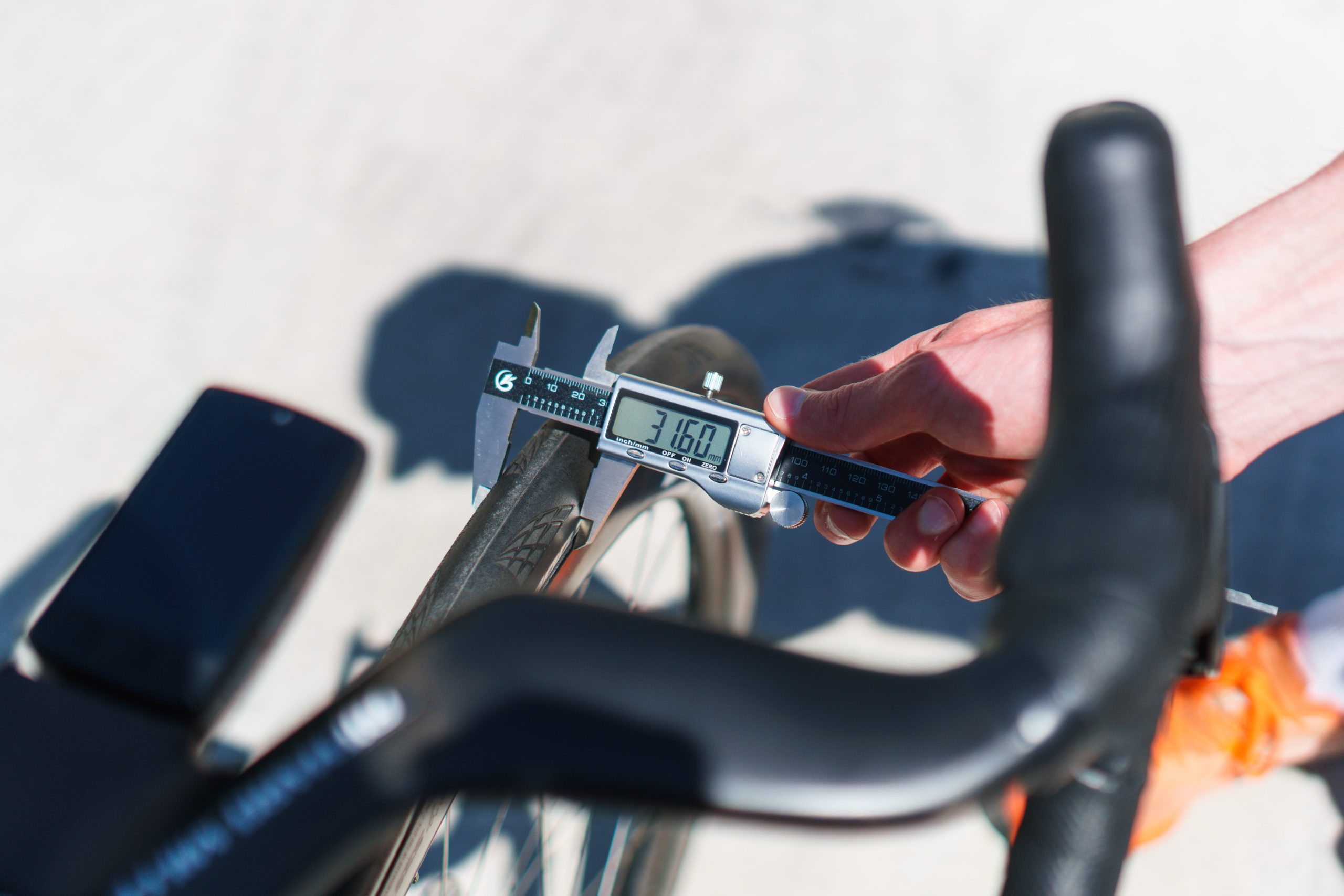
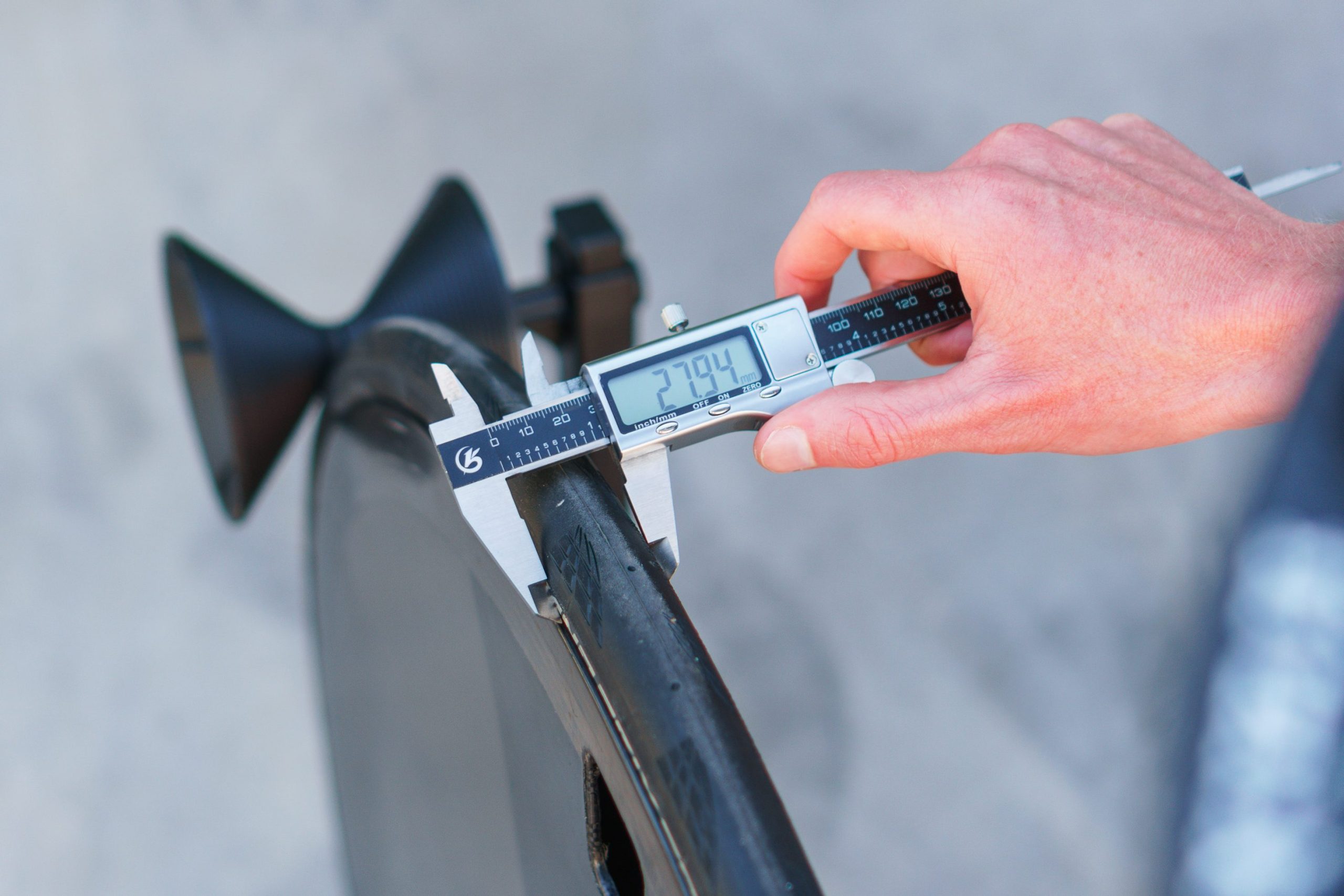
As with last year’s Tour, Pogačar had 28c Continental GP5000 TT TR tyres on his main road bike – a raw carbon Colnago Y1Rs – and surprisingly opted for the same tyres in a 25c size on his Colnago TT2 time trial bike.
These measured up wider than their labelled widths on the relatively wide ENVE rims he and his teammates use (such as the SES 4.5 Pro wheelset), of course, but still, seeing 25c tyres at the Tour de France was a distinct novelty.
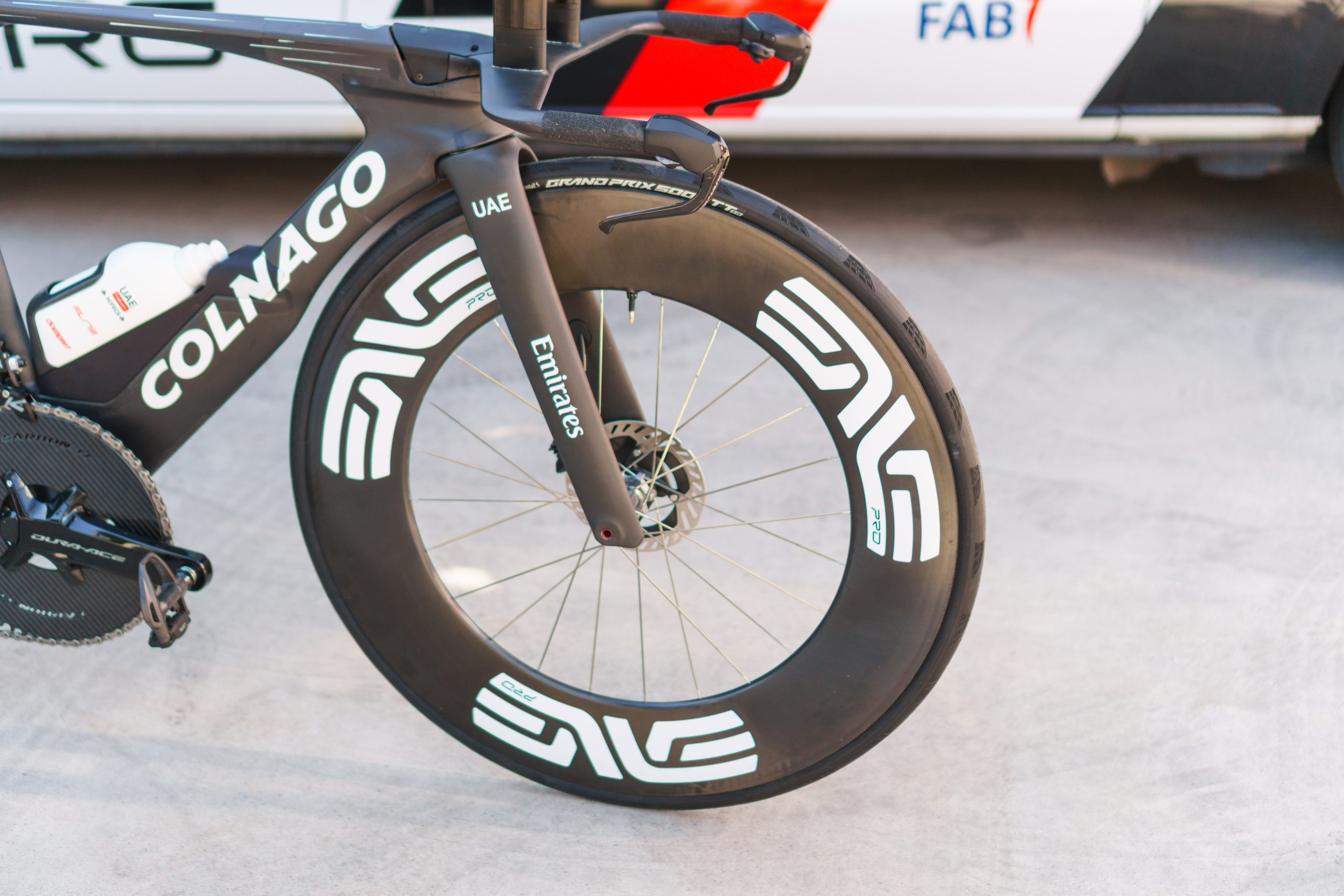
According to Neil Shirley, ENVE’s vice president of marketing, the team's new ENVE time trial wheels (the SES 100 Pro and SES Pro Disc) are optimised for 28mm tyres – although Shirley was coy on whether that meant ‘measured’ or ‘labelled’ width.
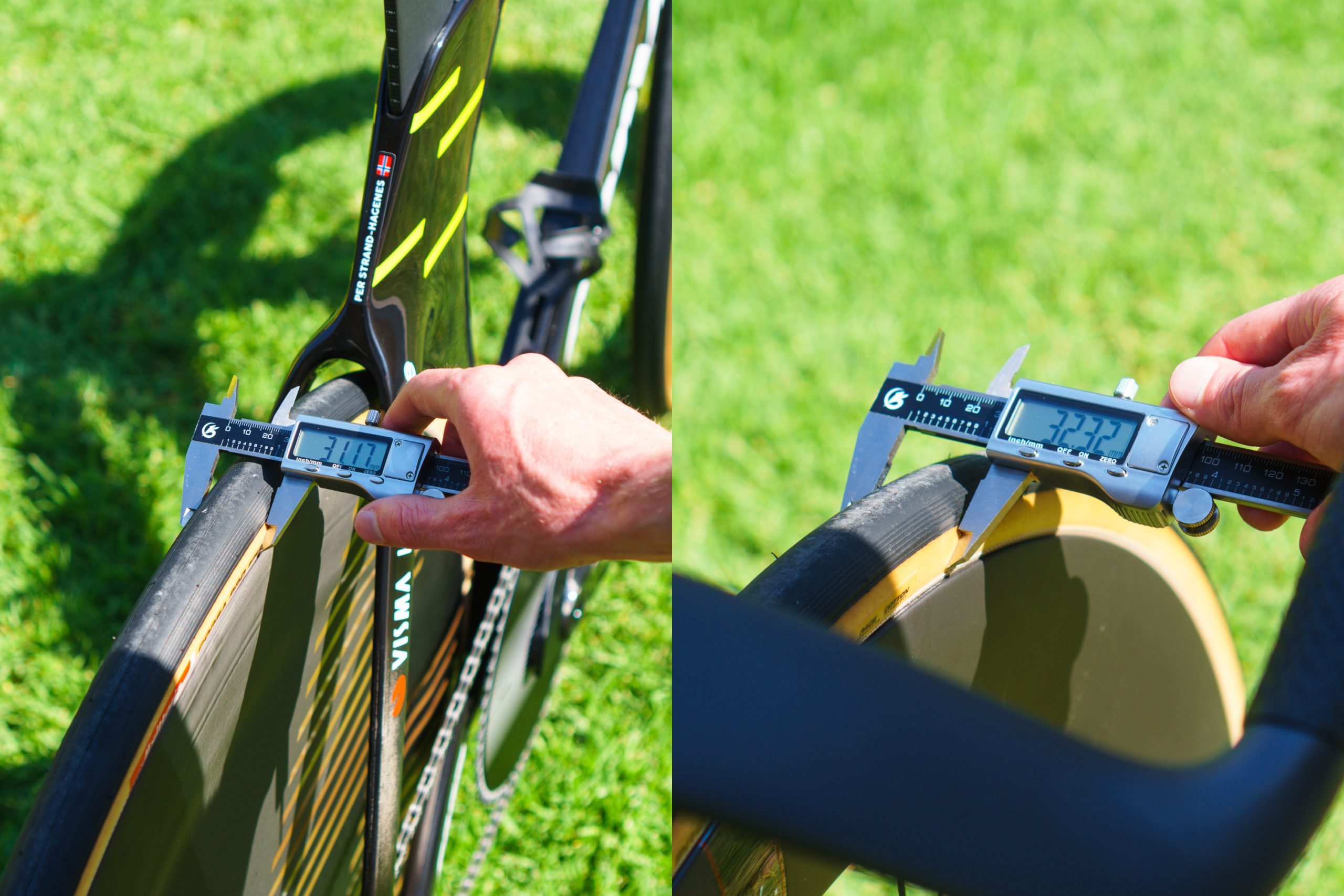
In contrast, Team Visma–Lease a Bike opted for 30c Vittoria Corsa Pro Speed TLR tyres on its Cervelo TT bikes.
On Per Strand Hagenes’ P5, these measured just over 32 and 31mm wide, front and rear, on the Reserve 77 and Infinity Disc wheels the team used.
The fact Visma–Lease a Bike won the opening team time trial isn’t total vindication for its tech choices, of course, nor does it mean Team UAE Emirates ARX was ‘wrong’ to use 25s – but we can assume both teams were intentional with their tyre choices and believed them to be the ‘fastest’ possible setup they could muster for the stage.
One thing we can be sure of, though, is the answer to the question, “what’s the fastest tyre size?” is “It depends”.
Narrow bars aren’t dead yet
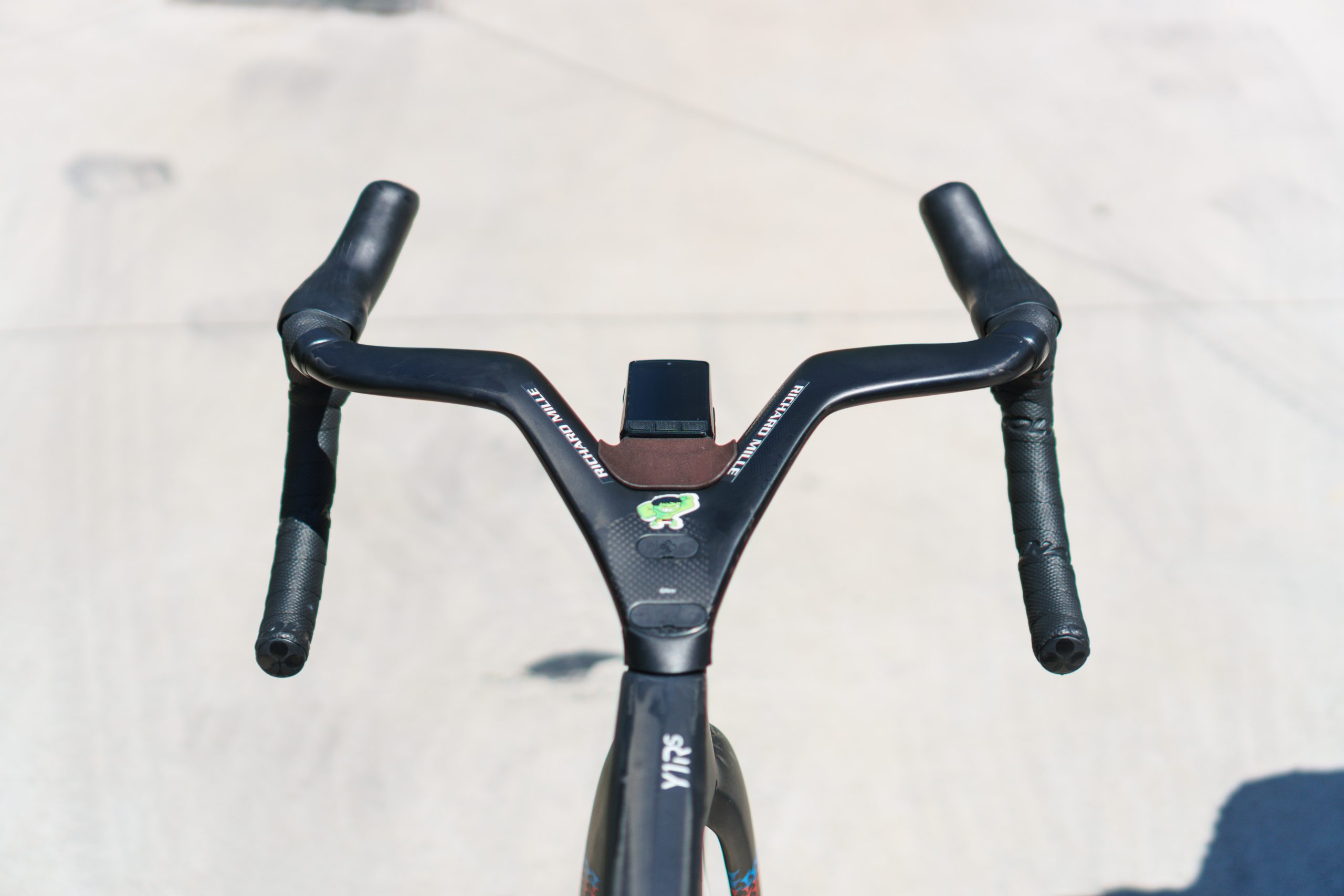
Much digital ink was spilled about how the UCI’s 'controversial' handlebar rules would be 'impossible' to adapt to, but, as predicted, it simply wasn’t a topic of conversation at this year’s Tour de France.
This is largely because the UCI backtracked on a key part of the proposed rule – lowering the minimum distance between the inner edges of the brake hoods to 280mm, instead of 320mm as initially proposed.
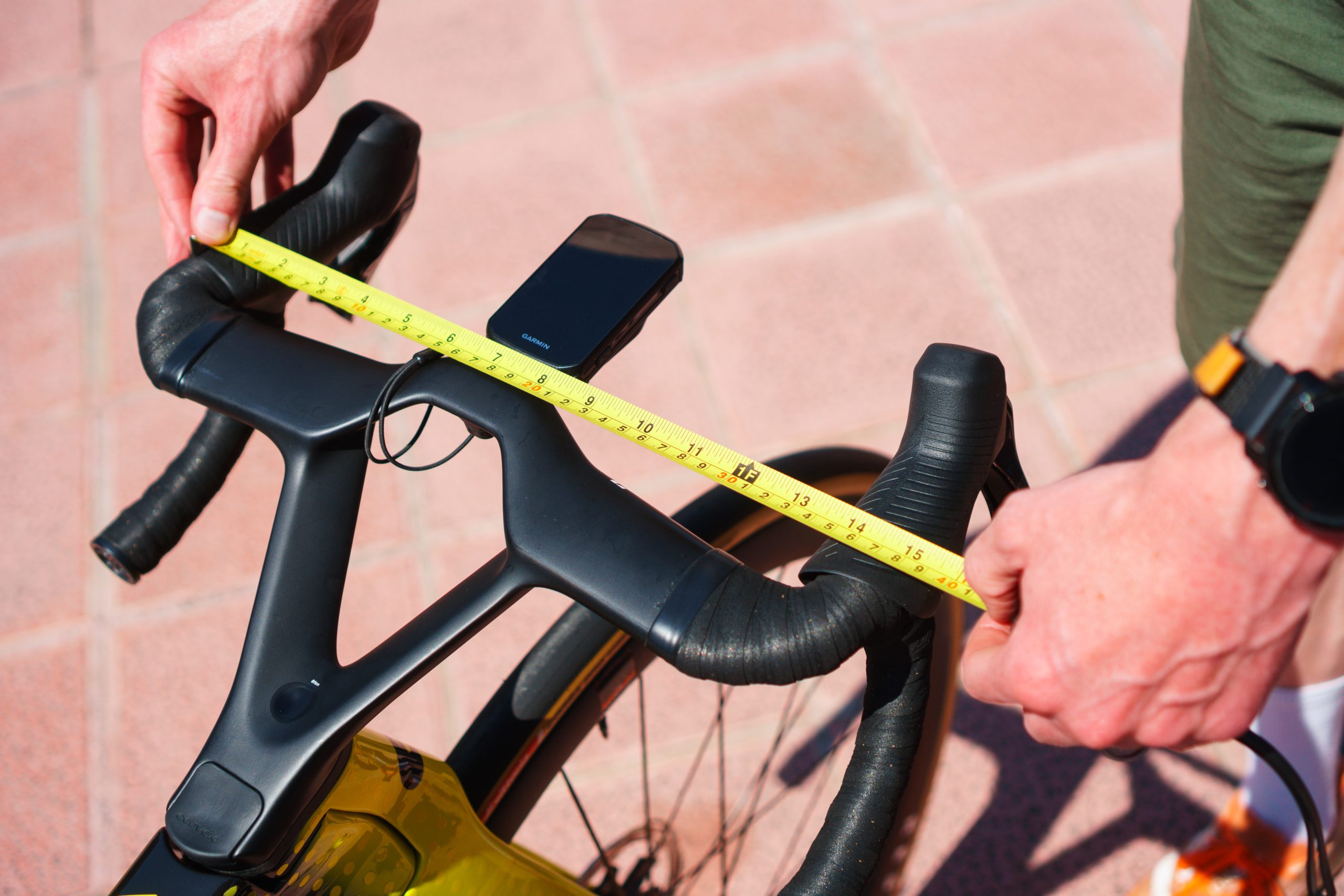
With this, it seems most of the big name riders have been able to keep their preferred cockpit setups.
Pogacar, Vingegaard and Evenepoel were all on sub-400mm handlebars, measured centre-to-centre at the brake hoods, with each bar flaring out at the drops to meet the UCI’s minimum outside-to-outside width of 400mm.
Short cranks are still in vogue
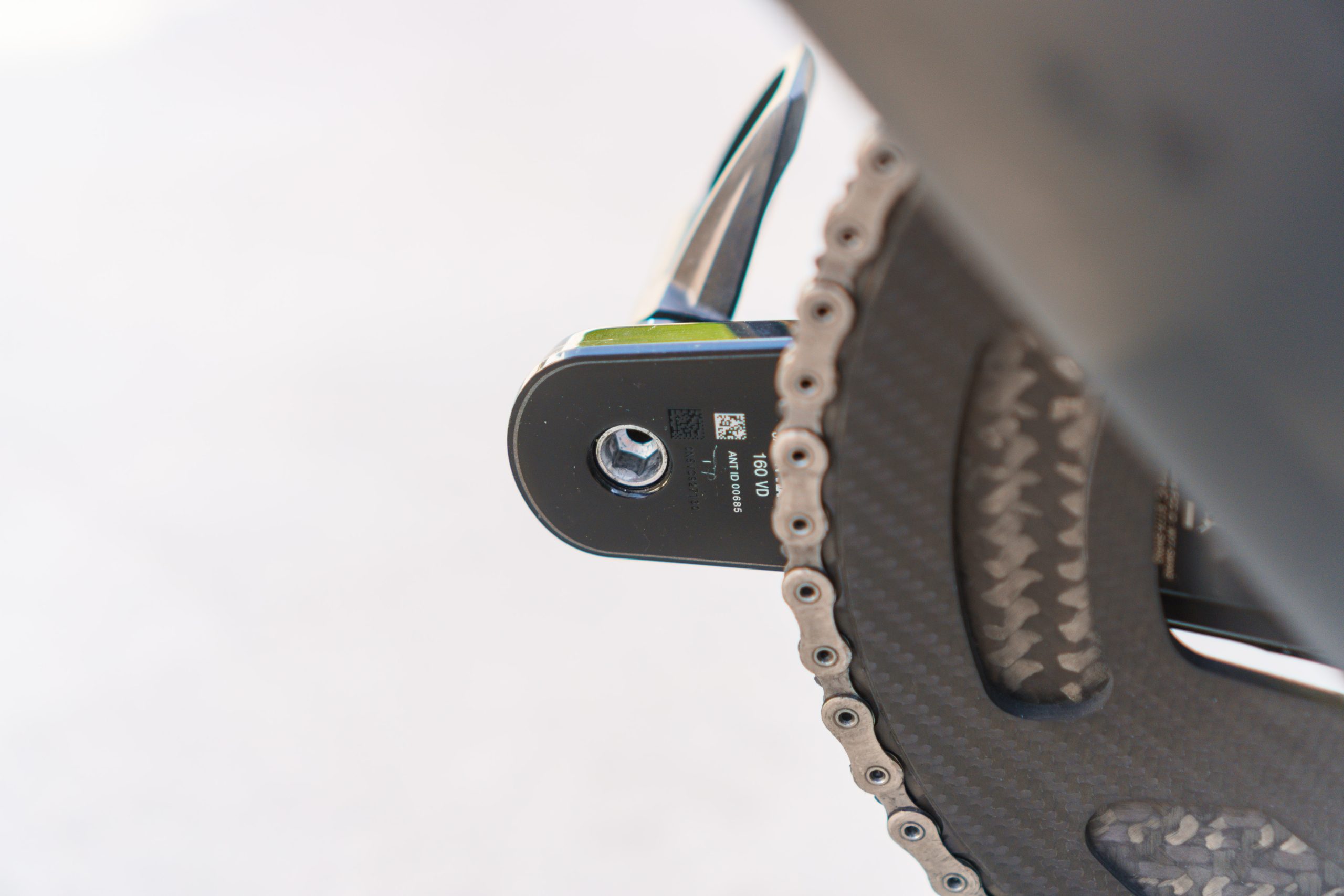
Short cranks have been all the rage in pro cycling over the past few years, with high-profile riders such as Pogačar, Jonas Vingegaard and Remco Evenepoel switching to cranks 165mm or shorter.
Although Vingegaard hasn’t stuck with the tiny 150mm cranks he trialled early last season, he and Pogačar both had 160mm cranks on their time trial bikes at this year’s Grand Depart, and Evenepoel is still on 165s on his new Specialized S-Works Tarmac SL9.
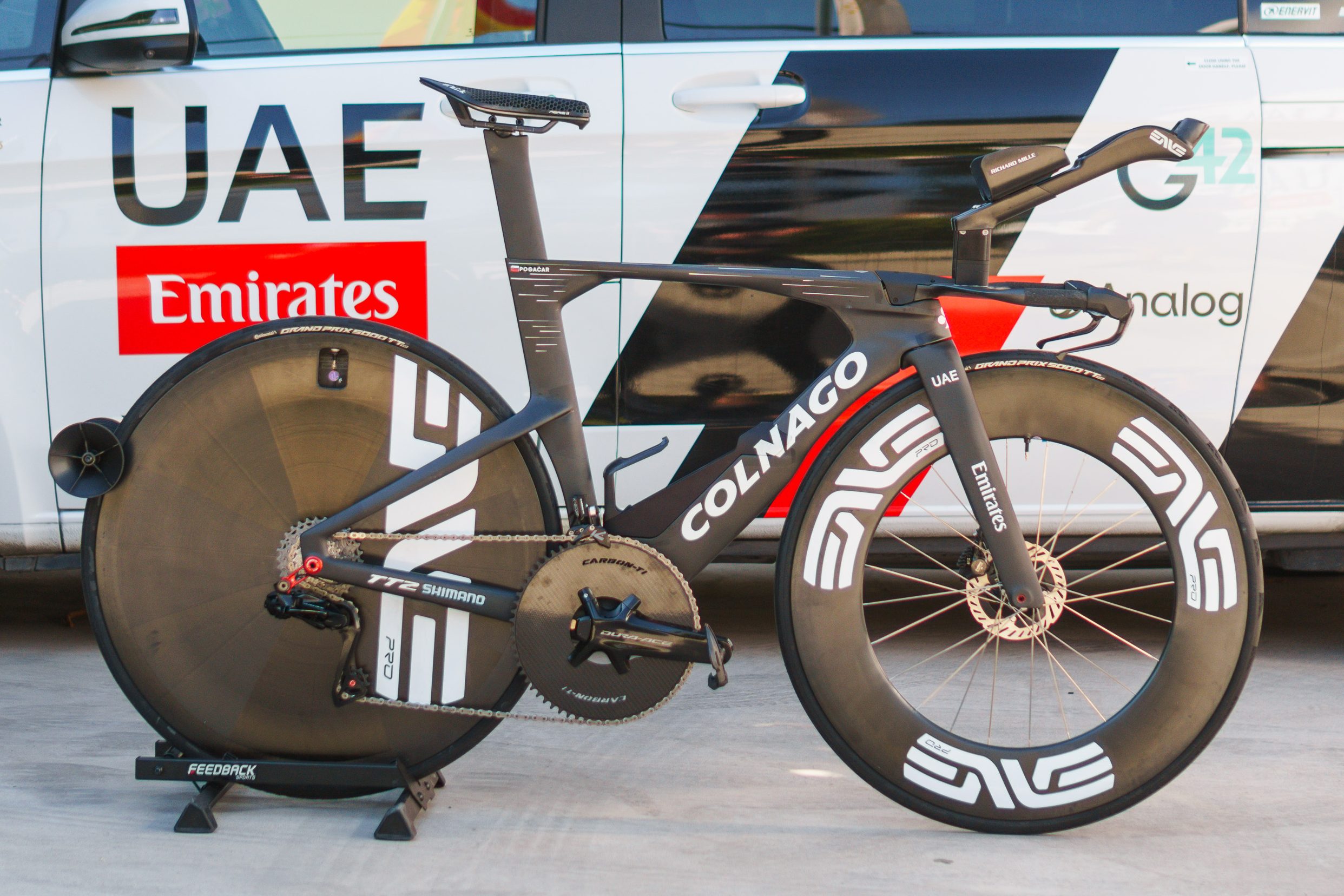
The use of such short cranks on time trial bikes makes sense given the aggressive positions riders now adopt routinely.
With a desire to get their torsos and heads low and close to their arms (for improved aerodynamic efficiency), hip angles can get very tight at the top of the pedal stroke, potentially compromising a rider’s power output.
Switching to shorter cranks can therefore enable riders to open up their hip angle without compromising their wind tunnel-optimised riding position.
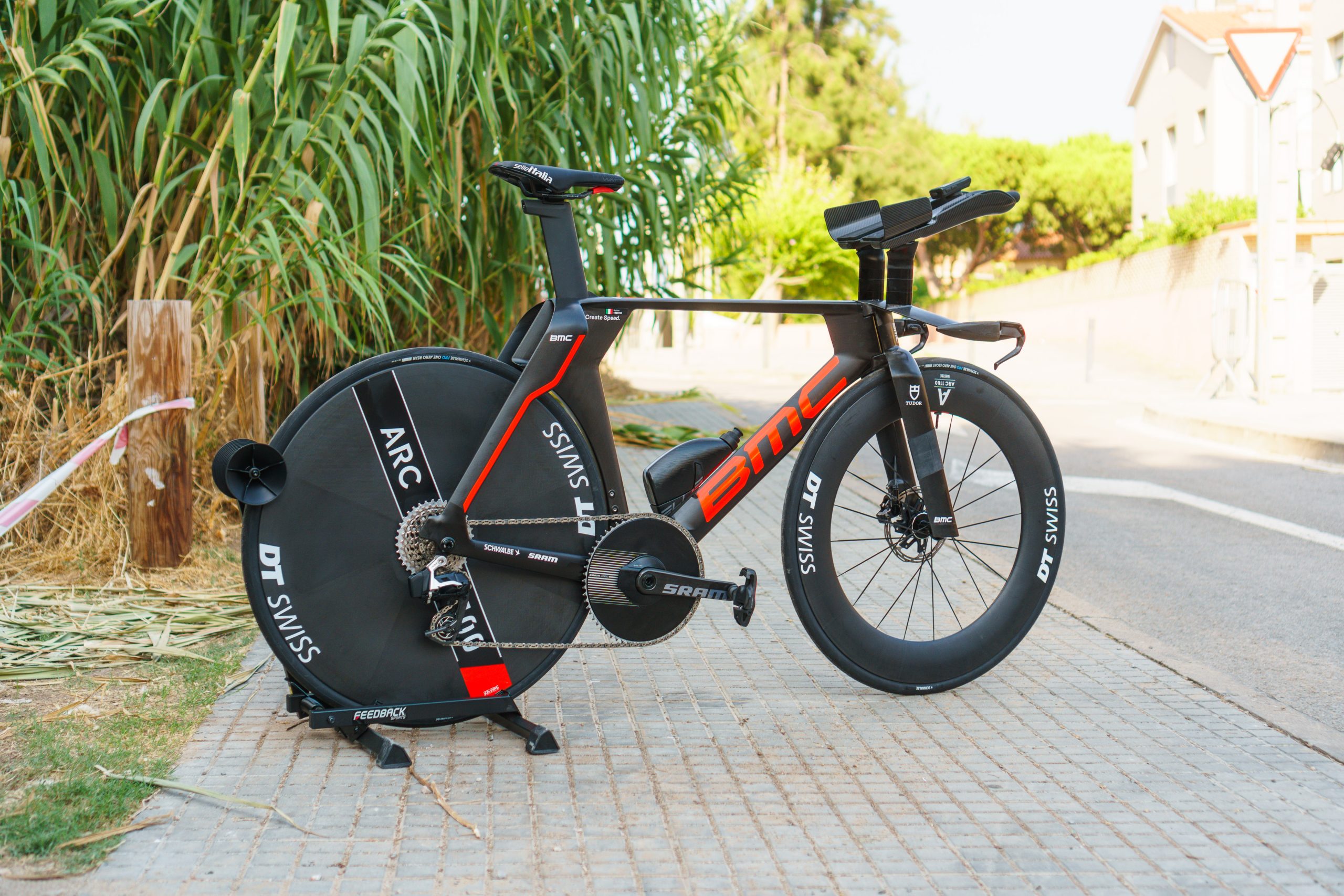
Of course, not everyone’s on board with this trend. Matteo Trentin’s BMC Timemachine Mpc is strikingly futuristic, but the Italian veteran opts for ‘standard’ 172.5mm cranks.
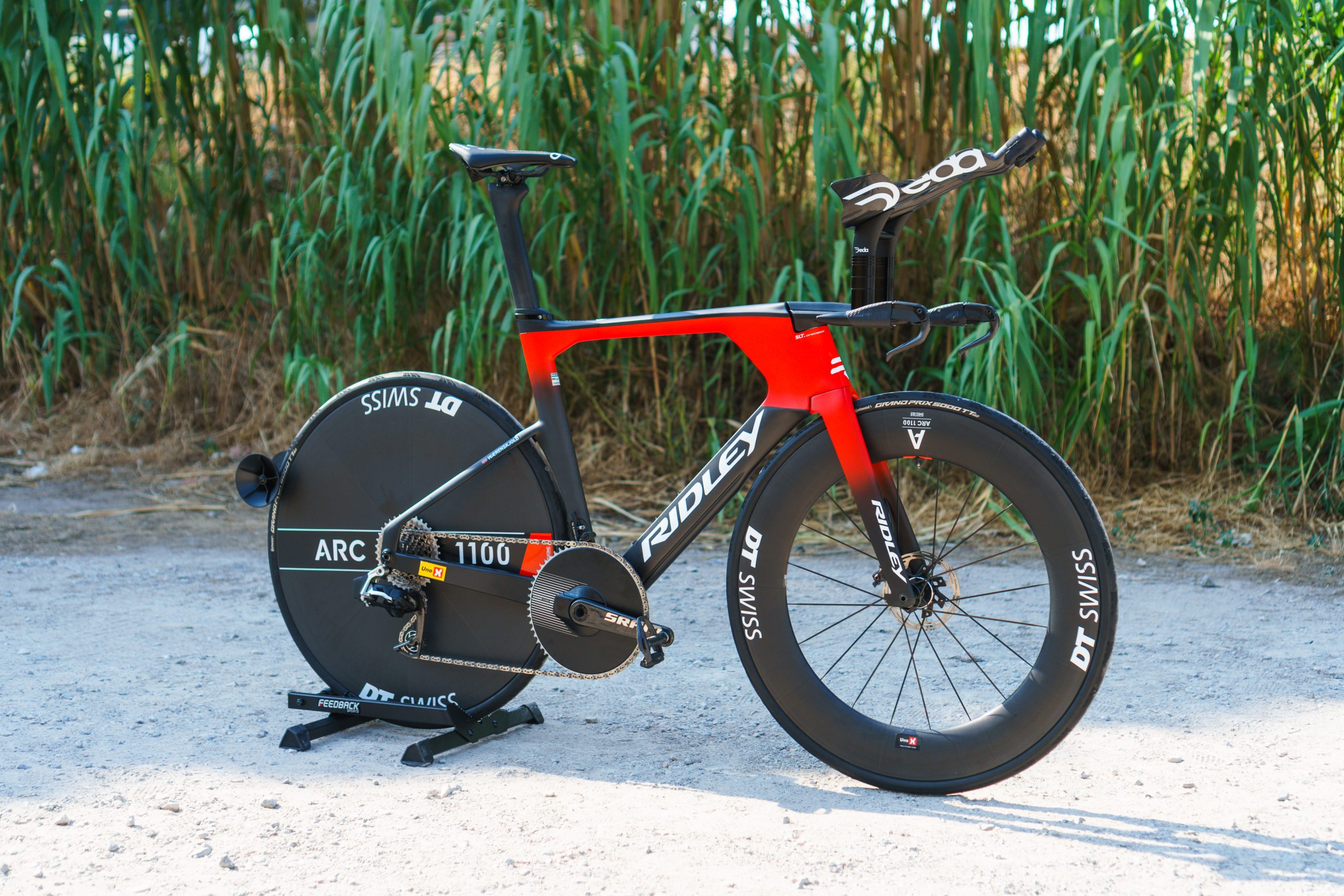
Søren Wærenskjold of Uno-X Mobility also had a set of 172.5mm cranks on his Ridley Dean Fast – although at 1.95m tall, it’s fair to say that’s proportionally a shorter crankset compared to Trentin at 1.79m.
Specialized looks to control the narrative
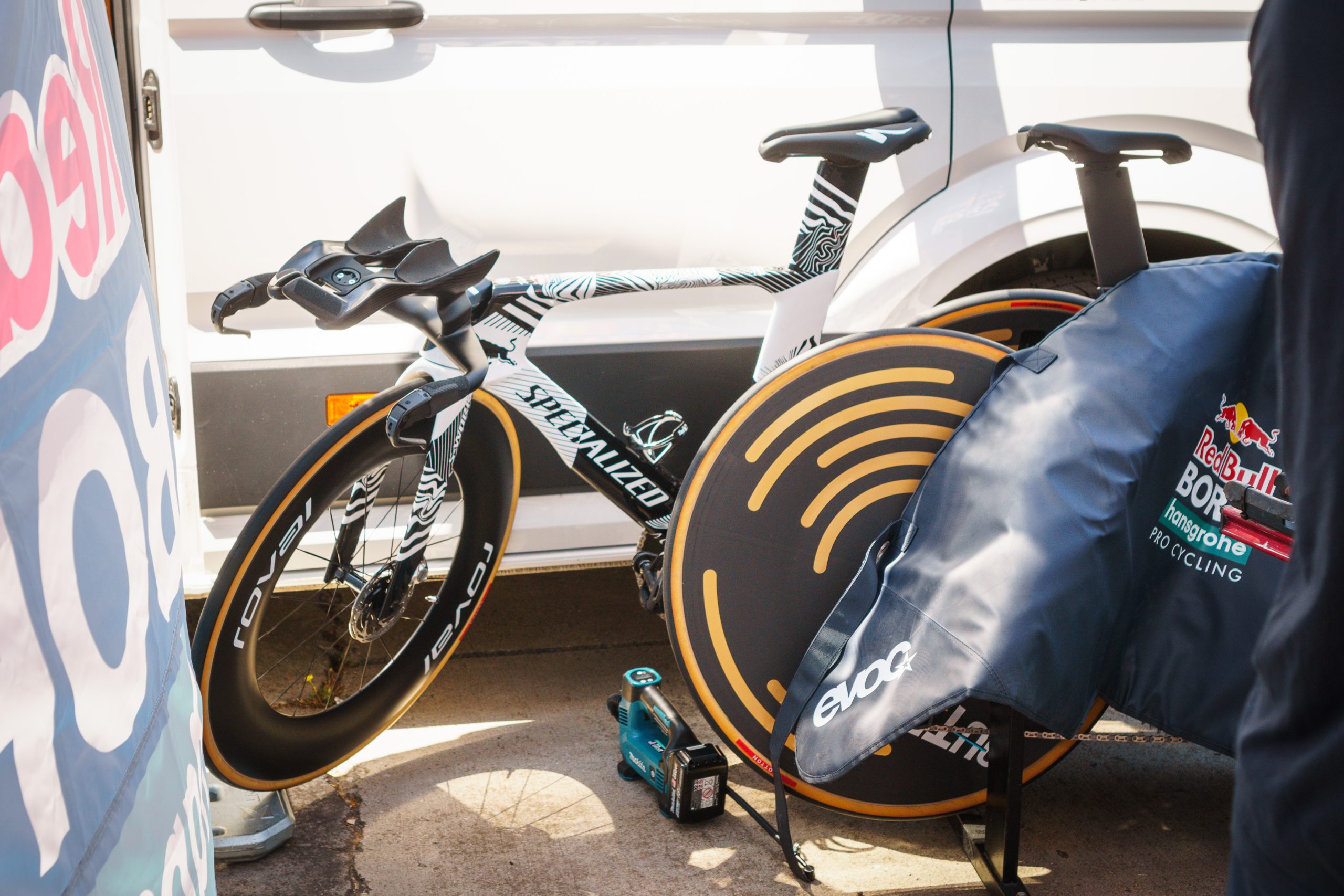
Perhaps due to the fact the Tarmac SL9 leaked ahead of its launch late last month, Specialized appeared keen to control the narrative around its latest bike – a new Shiv TT.
While it allowed its start TT rider – men’s time trial world champion, Evenepoel – to ride it in training and during the first-stage team time trial, and even surreptitiously featured it in the background of some of its social content, team staff kept pulling covers over it whenever we tried to get close to it at the team hotel.
In any case, it’s notable – as George Scott, BikeRadar’s esteemed head of content pointed out – that the new Shiv TT looks a lot like Tadej Pogacar’s old Colnago TT1, whereas Pog’s new TT2 looks curiously like the old Shiv (which launched back in 2019).
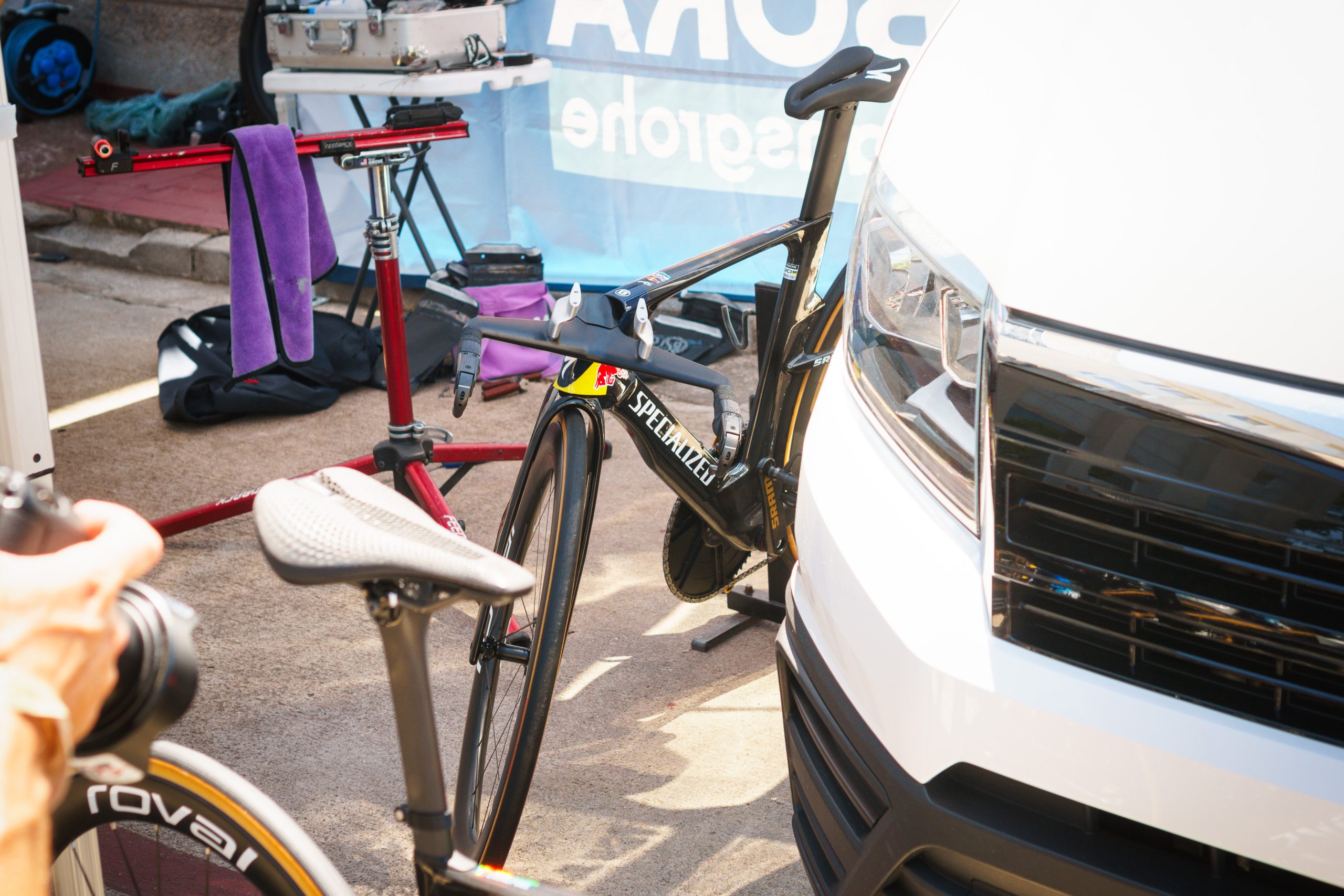
While we don’t know for certain, it’s not hard to imagine Specialized’s engineers being asked to make the Shiv ‘more aerodynamic’, and looking to Colnago’s design for inspiration, while Colnago’s may have been asked to make the TT1 ‘lighter’, and subsequently looking to the old Shiv that Evenepoel had so much success on.
Taking inspiration from competitor bikes is perfectly natural, of course. The BMC Teammachine Mpc is quite clearly inspired by Team Great Britain’s Hope HB.T Paris track bike, for example.
Team Visma–Lease a Bike mean business, but will need to be careful
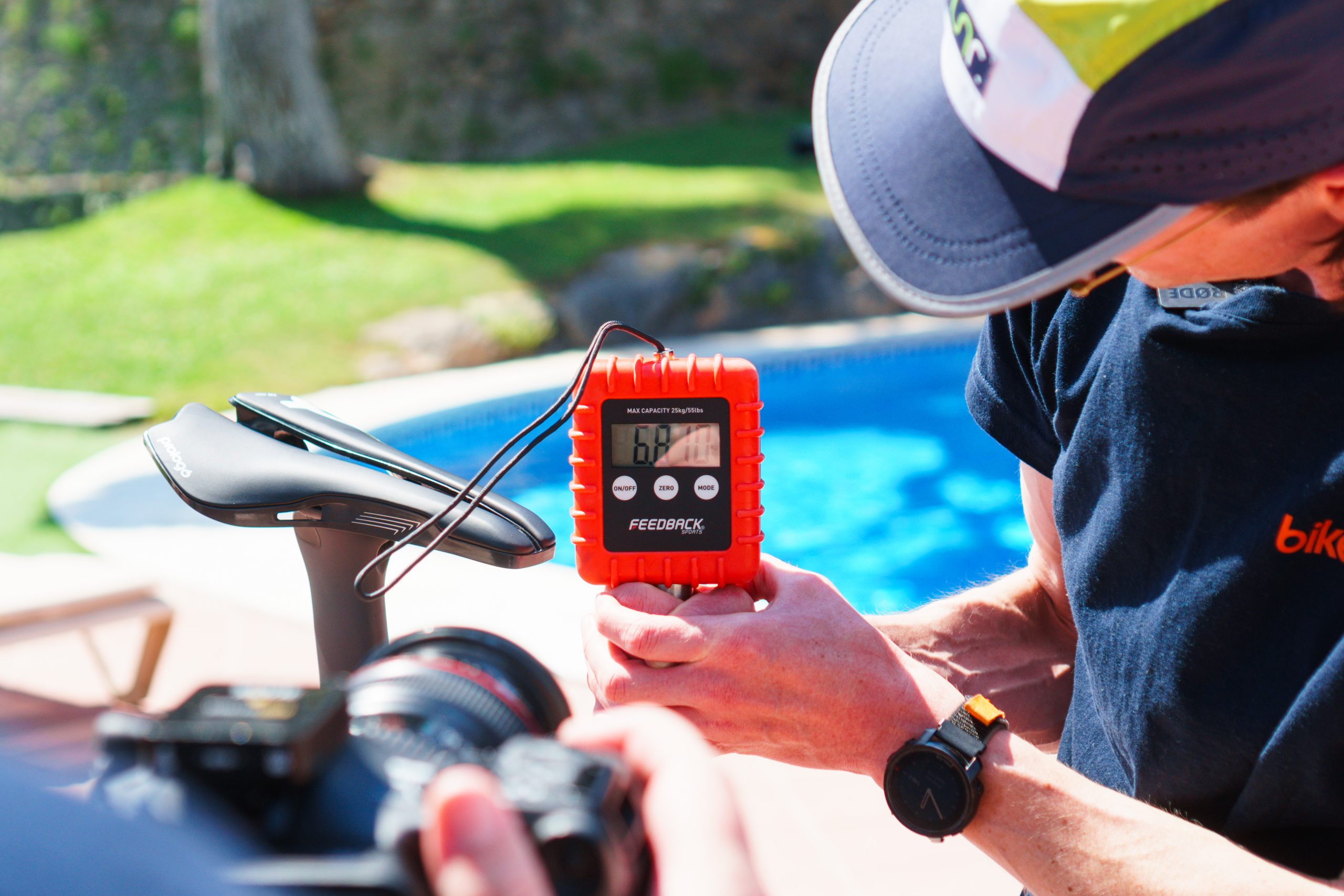
One of the stand-out bikes we saw in Barcelona was undoubtedly Jonas Vingegaard’s Cervelo S5.
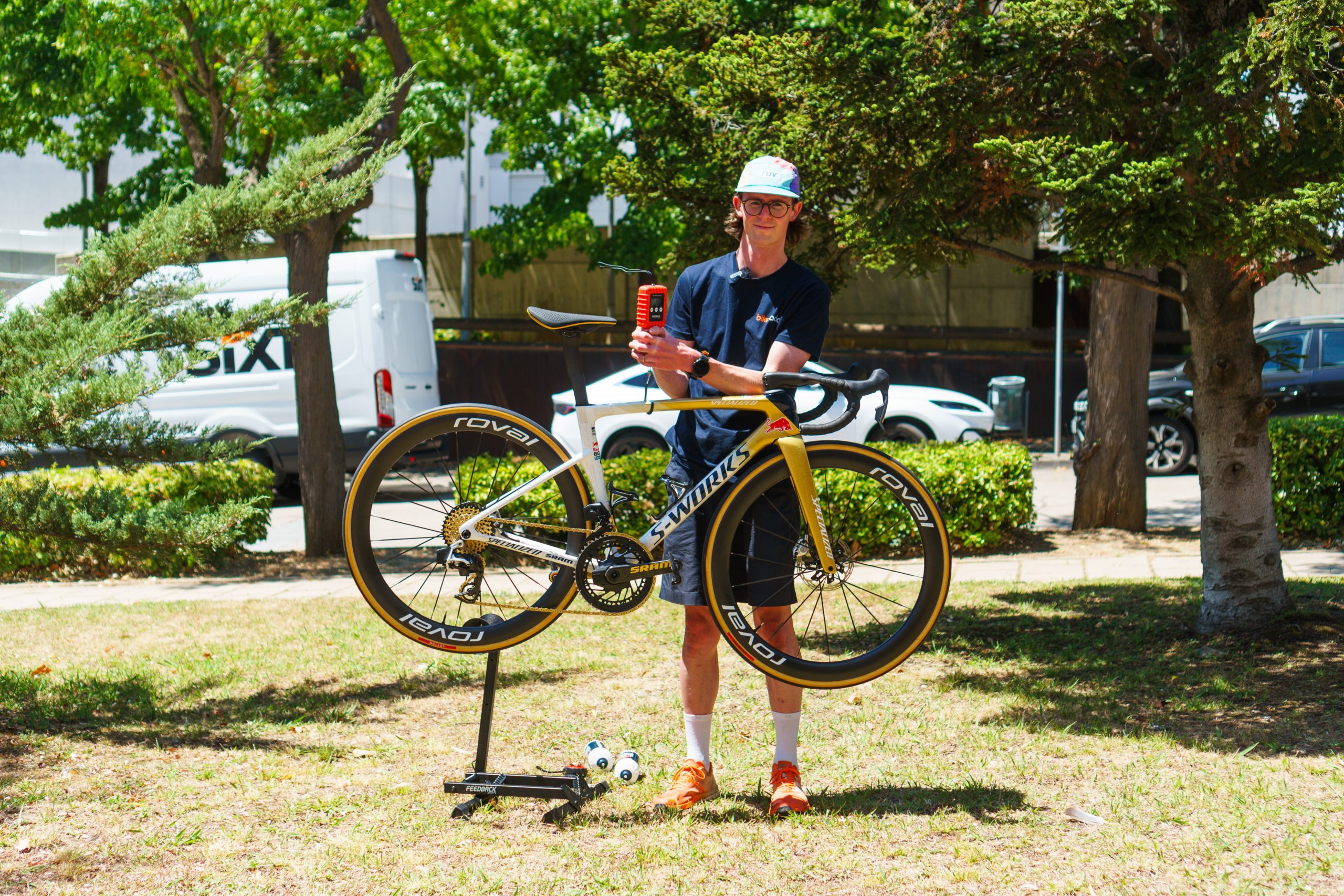
Despite the fact it’s a full fat aero road bike, it tipped our Feedback Sports scales at a scant 6.81kg, even with mid-depth Reserve 42|49 wheels and 30 / 29c tyres front and rear.
The fact it was set up with a 1x drivetrain will have helped, and while it’s tempting to think Vingegaard will swap to a 2x setup once the race hits the mountains, we suspect he may stick with the setup for more stages than many might think.
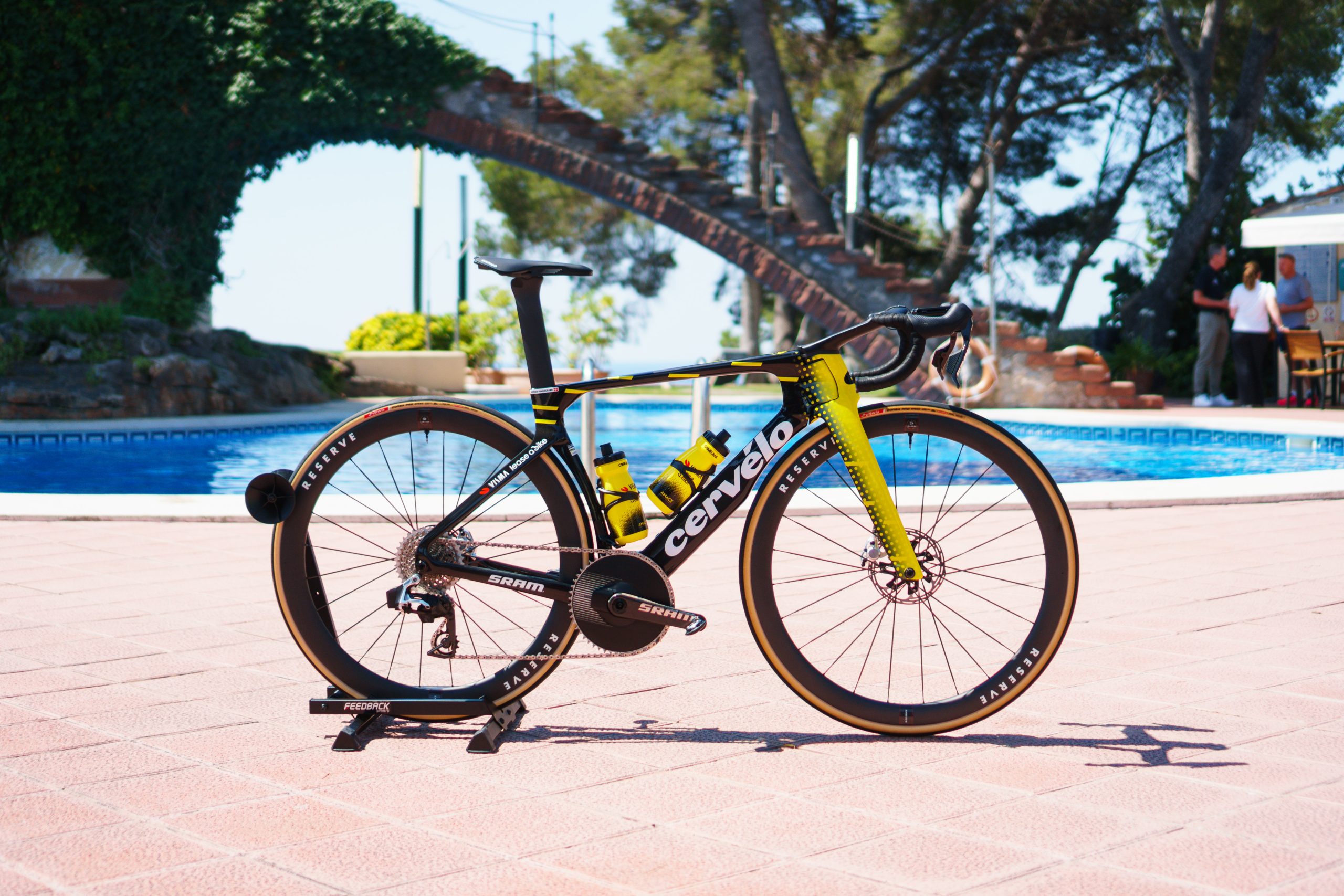
After all, Vingegaard used an almost identical S5 with a 1x drivetrain to race over the Galibier – a 2,2642m mountain pass in the French Dauphiné Alps – during the 2024 Tour.
All very impressive, then, but Visma–Lease a Bike will need to pay close attention to ensuring the legality of Vingegaard’s bike in light of Lorena Wiebes’ disqualification from the Giro d’Italia Women in May.
Having determined her bike was 20g below the minimum bike weight limit of 6.8g, Wiebes was unceremoniously kicked out of the race, seemingly without course to appeal.
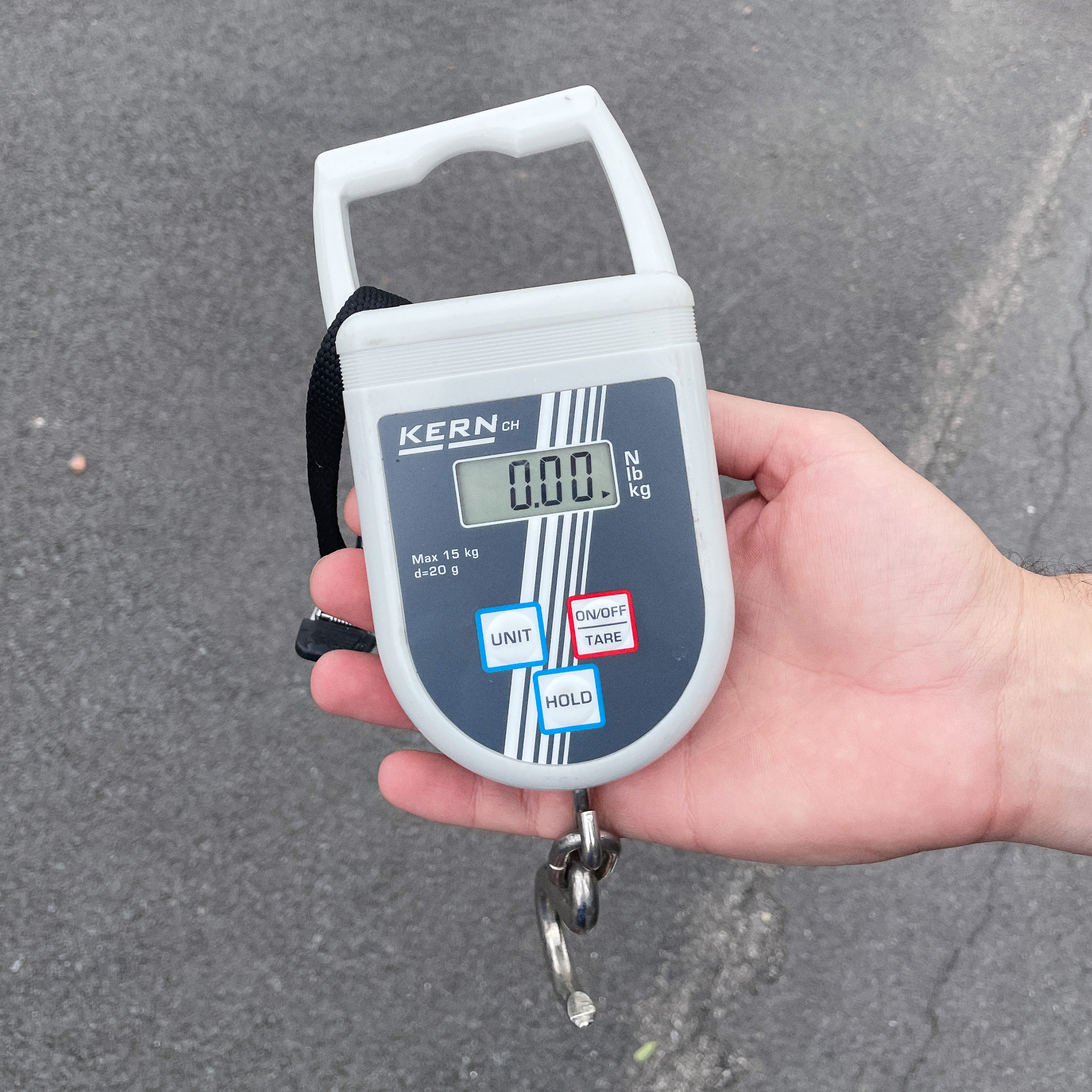
We were reliably told by one pro team at the 2024 Grand Depart that the UCI uses a Kern CH 15K20 hanging scale as its measurement device in these matters, but its protocol for ensuring accurate and reliable measurements isn’t clear.
Given what’s at stake, then, Team Visma–Lease a Bike would be wise to add some weight to Vingegaard’s bike in order to be safely within any margin of error.
Why Pogačar’s Y1Rs is so heavy (relatively)
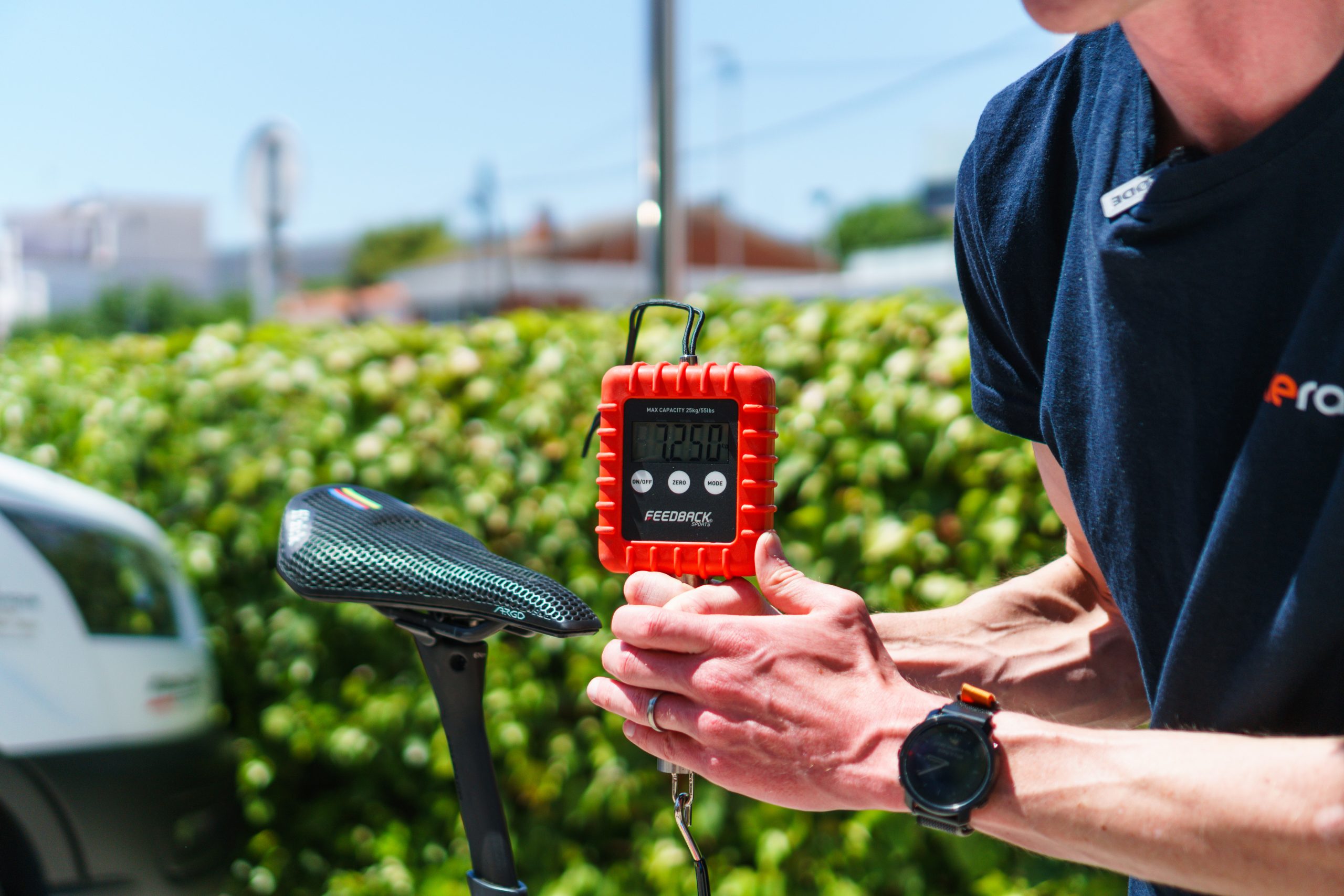
While we were impressed with Vingegaard’s bike, Tadej Pogačar’s raw carbon Colnago Y1Rs was a little disappointing in comparison.
Given Colnago claimed it weighed around 7kg, thanks to its minimalist paint job and lightweight, no-expense-spared build, the fact it tipped our scales at 7.25kg – 440g more than Vingegaard’s S5 – was somewhat surprising.
That’s by no means ‘heavy’ in the grand scheme of things, of course, but given the lengths pro cyclists go to to cut every last gram from their bikes and bodies, we’re sure it will sting.
Pogačar could switch to the lighter V5Rs, of course, which weighed 6.765kg before last year’s Tour (according to our scales).
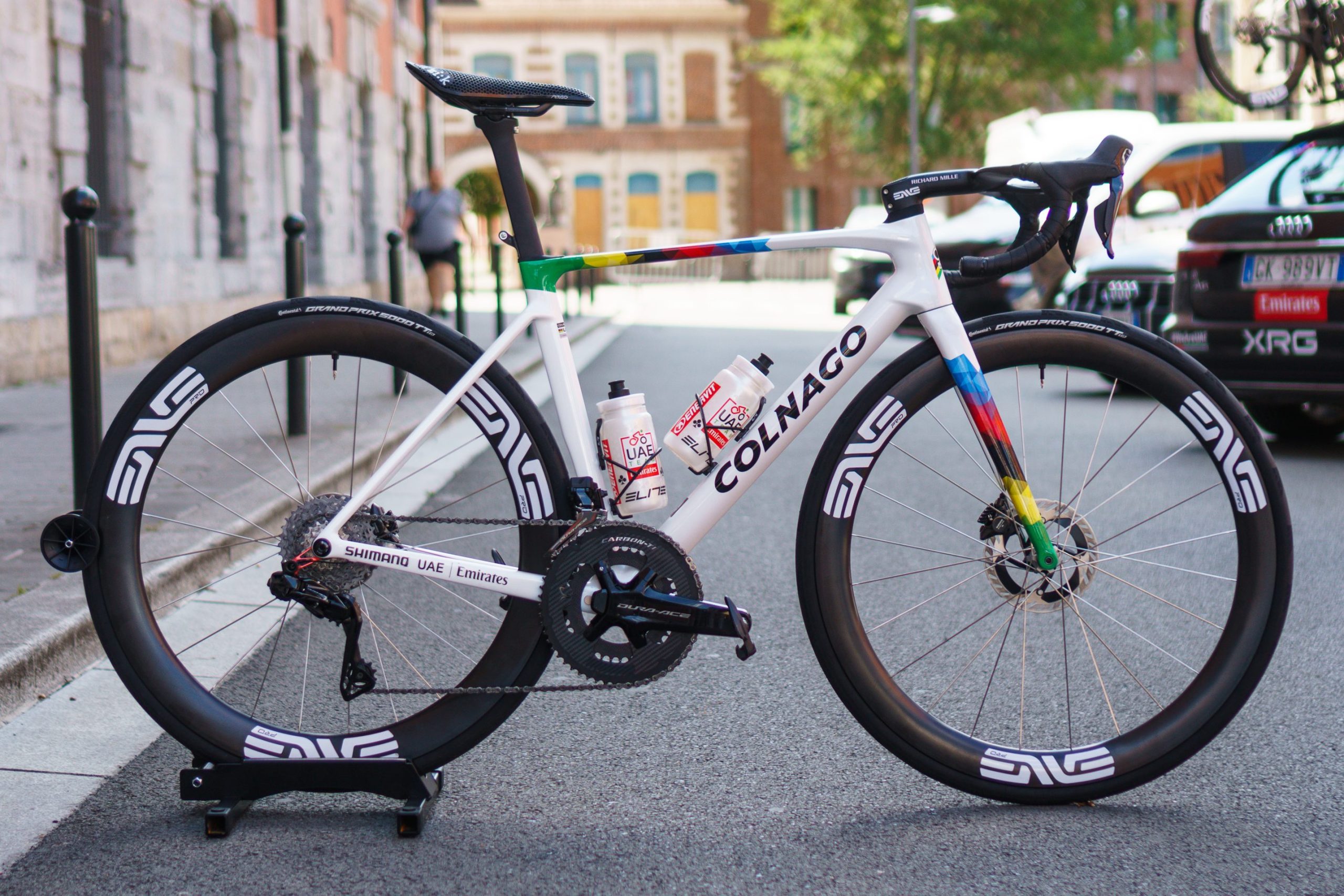
That would undoubtedly mean giving up a significant amount of aerodynamic efficiency compared to Vingegaard’s S5, though, which we imagine is something he’s not willing to do, given the phenomenal speed the Tour is now raced at.
It’s hard to be certain why Pogačar’s Y1Rs is so much heavier than Vingegaard’s S5, but we do have a few ideas.
First and foremost, Pogačar rides a size-medium Y1Rs, while his great Danish rival rides a smaller, 51cm S5 – and larger bikes typically weigh more because they simply require more material.
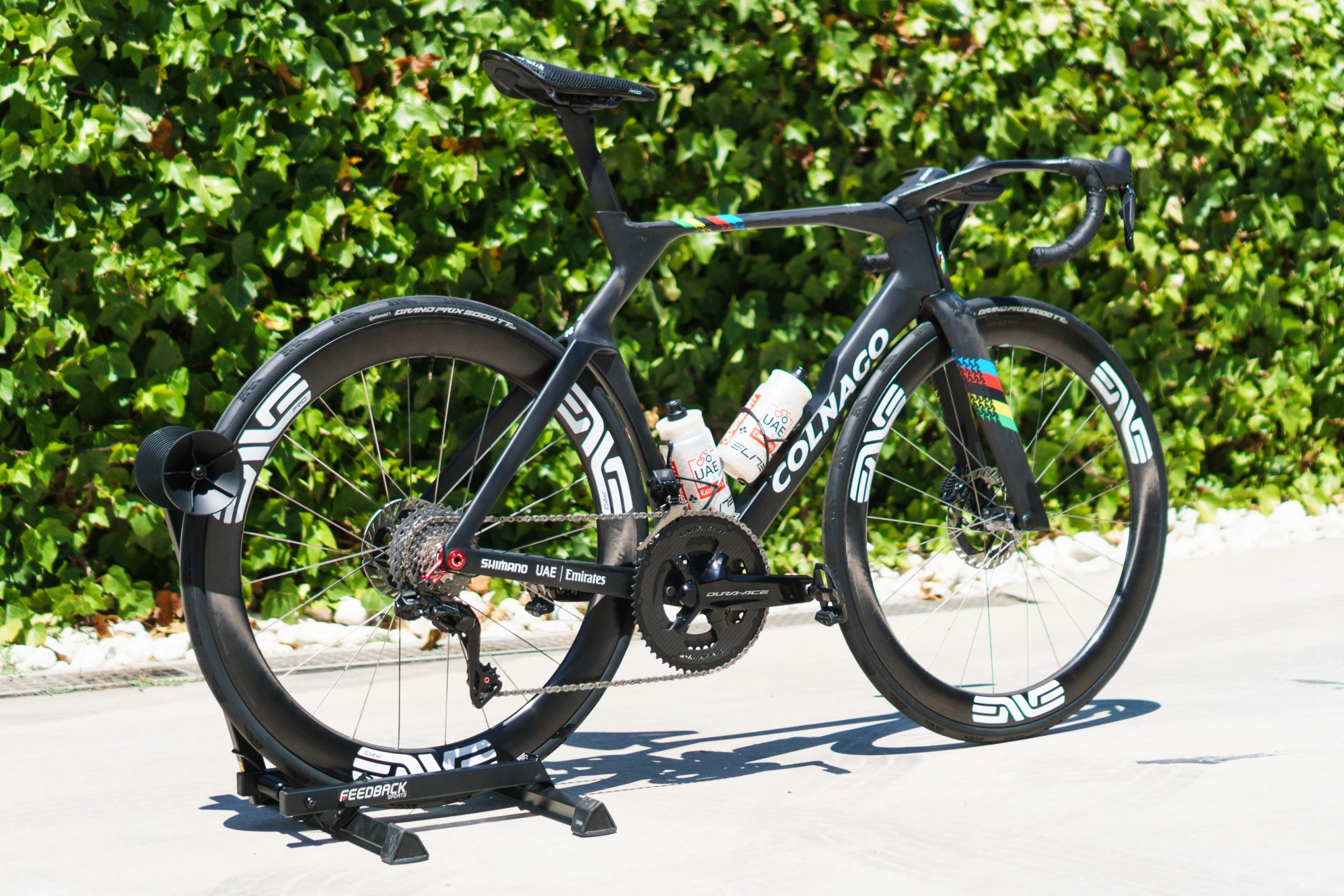
Beyond that, there’s the fact that the latest SRAM Red AXS groupset Vingegaard uses is marginally lighter than Pogačar’s Shimano Dura-Ace Di2 R9200, as well as the fact that Pogačar’s bike was set up with a 2x drivetrain and large, 56/44t chainrings.
Beyond those differences, though, we also might speculate whether Pogačar has a lighter version of this specific bike.
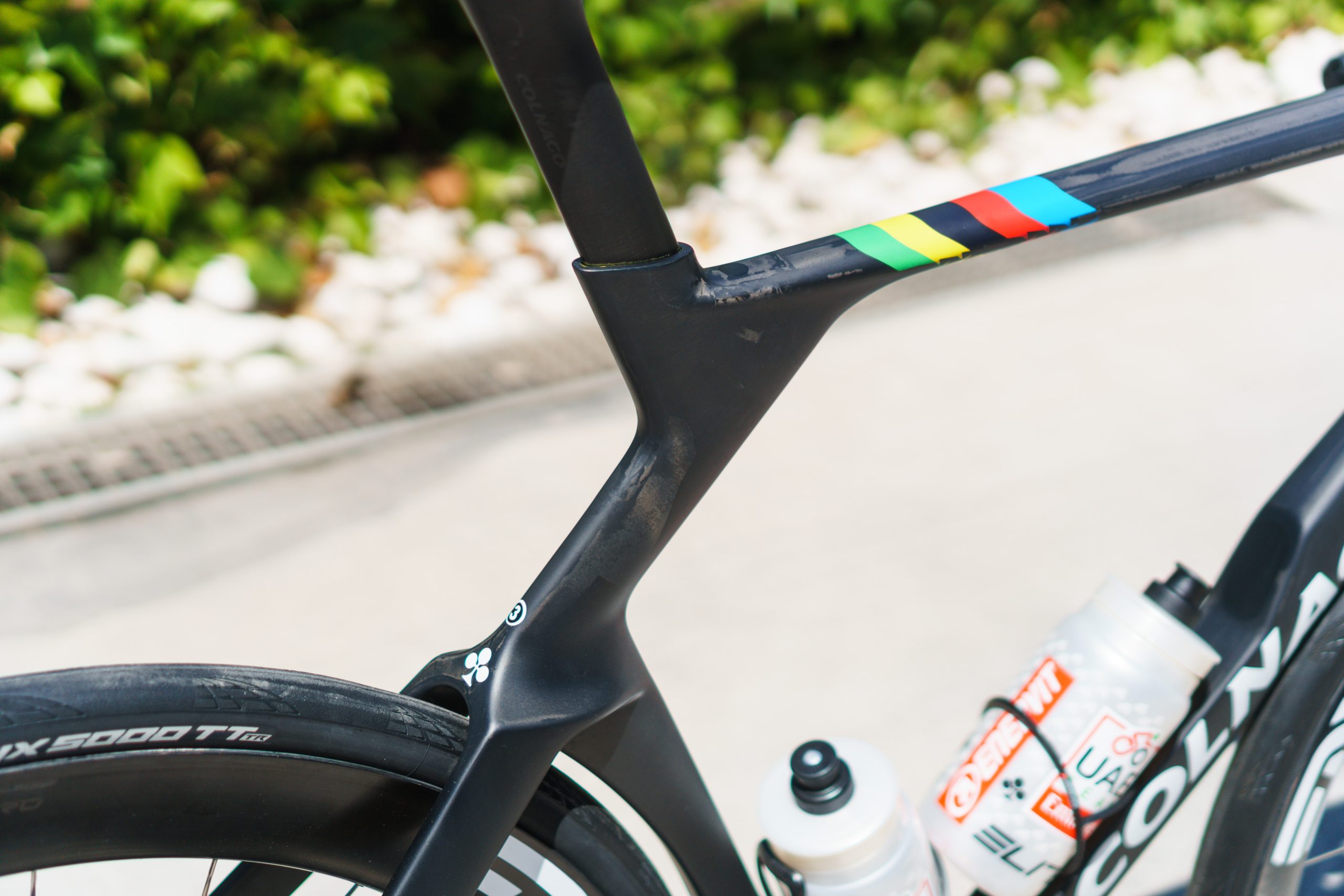
We were given his ‘number 3’ spare bike to film with, rather than his primary race bike, and perhaps his ‘number 1’ bike is built up with even lighter parts (all carbon bike frames and parts are subject to a little variation in weight from the manufacturing process, after all).
In past years, we’ve also seen Pogačar using specialist parts such as ultra-light seatposts from Darimo, which weren’t present on the build we saw in order to protect sponsor relationships.
Extreme heat already affecting the race
As we also predicted, extreme heat is already taking its toll on this year’s Tour.
With temperatures soaring in southern France, spectators were banned from the finish area of stage 3 due to wildfires in the area, and the UCI even decided to ‘soften’ its rules to allow extra feed zones for water bottles ahead of stage 4 (and possibly beyond).
Although most cycling fans like to think of it as an environmentally friendly sport, some in Barcelona were critical of the sport’s lack of action on the issue of climate change.
Team Cofidis sports director, Bignen Fernández, told BikeRadar, “We need to think as humans. We are creating this. We’re burning petrol. Climate change is here.”
“We‘re doing things to cool down the body, but we should do things to cool down the planet.”
With such conditions having a potentially large impact on performance, though, teams are continuing to develop novel strategies to cope with it. Ahead of the TTT on stage 1, for example, Netcompany-Ineos riders were spotted wearing ice vests and holding their forearms in trays of icy water while waiting for their turn to start.
According to the team’s new director of racing (and former Tour champion), Geraint Thomas, this was a trick the GB track team had used “many years ago” to help keep riders core temperatures without affecting how ‘warmed up’ their leg muscles are.


