Built for speed, steep terrain and the roughest trails you can find, downhill bikes are designed to give you confidence when the trail gets fast, technical and seriously demanding.
The best downhill bikes combine sophisticated suspension, aggressive geometry and burly components to make light work of terrain that would push most mountain bikes to their limits.
Of course, a dedicated DH bike is a more specialised machine than enduro bikes or trail bikes. You’ll generally need an uplift, shuttle or bike park to get the most from one, rather than simply pedalling to the top of every descent. But if gravity-fuelled riding is your thing, that focus is precisely what makes a downhill bike so appealing.
The latest DH bikes are more capable and adjustable than ever, with race-developed suspension and geometry finding their way into bikes aimed at everyone from World Cup racers to weekend bike-park regulars.
While some brands’ ‘halo’ downhill bikes now cost in excess of £10,000, you don't necessarily need to spend five figures to get a seriously capable machine.
We've tested a range of models across the spectrum, from full-blown race bikes to more playful bike-park machines, to bring you our pick of the best downhill bikes.
We have also included a buyer's guide to point you in the right direction when picking your next DH bike.
This best list was compiled by our staff writer, Nick Clark, who has brought together expertise from across the team while adding his personal experience in the saddle.
The reviews in this buyer's guide were written by Luke Marshall and Alex Evans.
Editor's note: this list was updated on 8 September 2026 with the addition of our high-scoring Canyon Sender CFR Team review. We have also added information on how we test downhill bikes.
Best downhill mountain bikes
Canyon Sender CFR Team
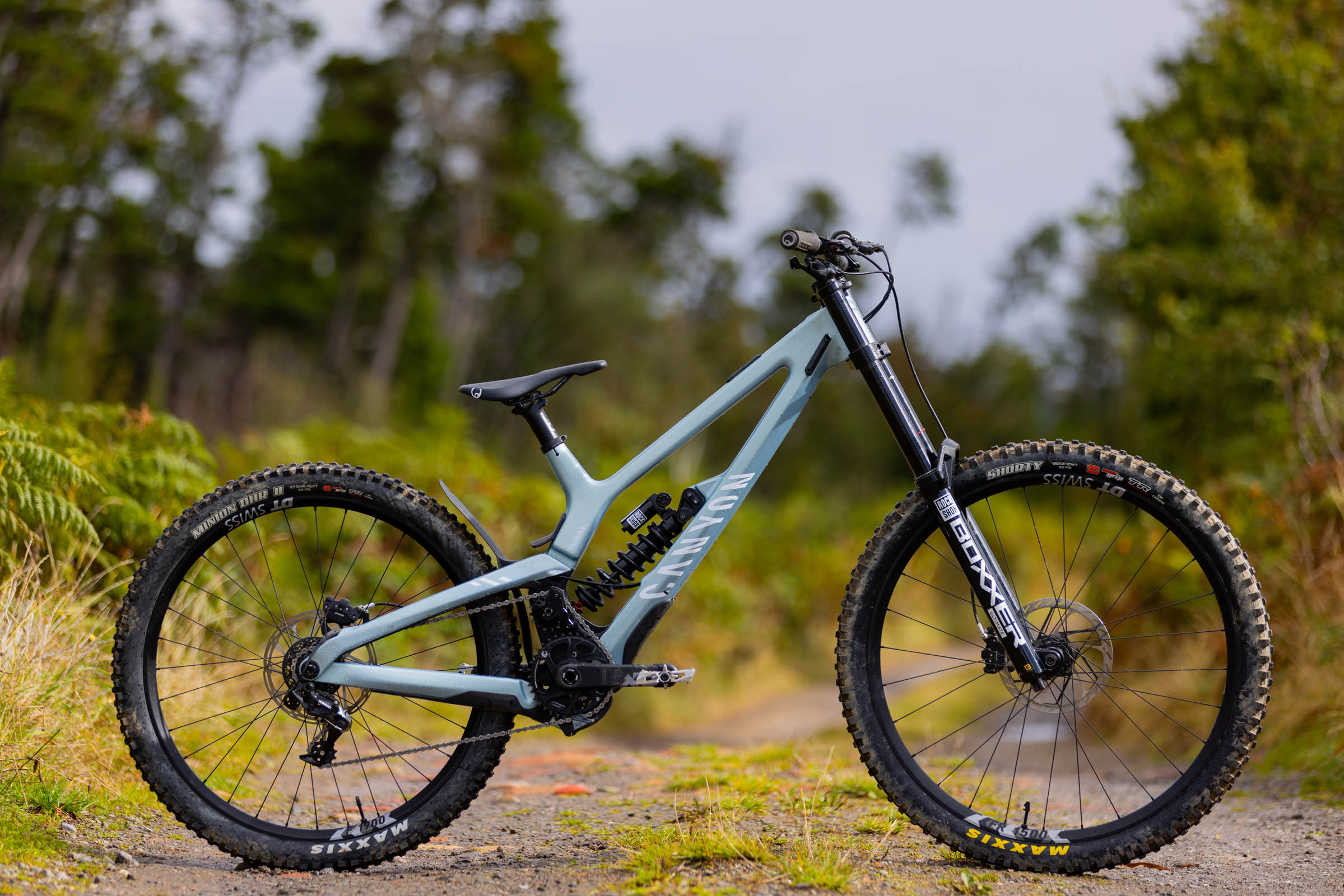
- £5,599 / $7,799 / €5,999 as tested by Luke Marshall
- Pros: Stable, fast and unwavering in rough terrain; great build kit for the price; plenty of adjustability
- Cons: Not as playful as other downhill bikes; complicated frame may need more maintenance
The Canyon Sender CFR Team is a purebred downhill race bike that delivers huge stability and speed for the money.
Its high-pivot suspension and 200mm of travel keep the bike composed through rough terrain, while the adjustable geometry and suspension settings give plenty of scope for tuning.
Our tester found it fast, predictable and confidence-inspiring when pushing hard. The race-ready build also offers impressive value at £5,599, with RockShox Boxxer Ultimate and Vivid Coil Ultimate suspension, SRAM Maven Silver brakes and DT Swiss wheels.
It isn’t the most playful downhill bike and the complicated frame could require more maintenance, but it’s an excellent choice for racing.
- Read more: Canyon Sender CFR Team review
Giant Glory Advanced
SQUIRREL_TEXT_14032816
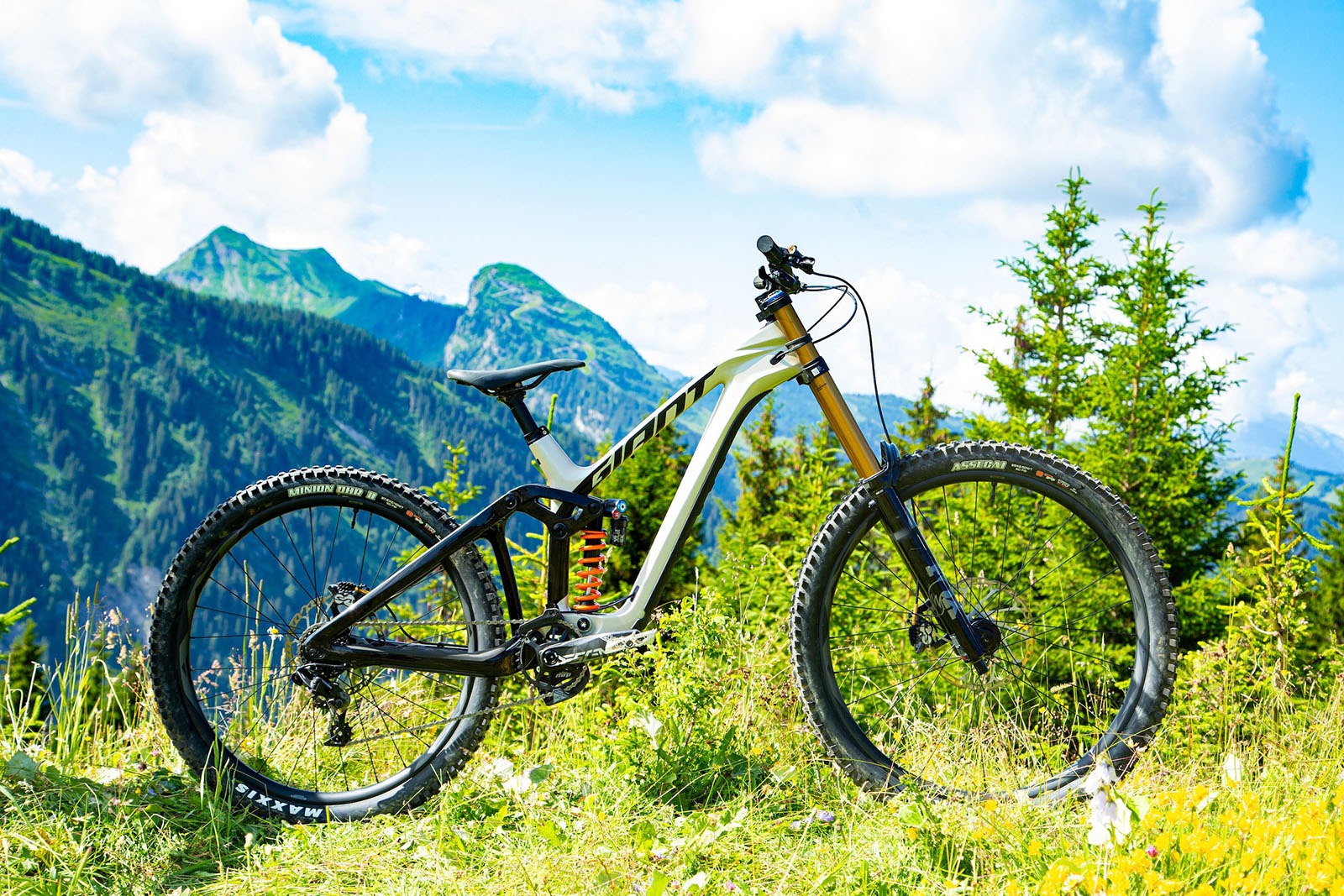
- £7,499 / $8,000 / €7,999 / AU$11,499 as tested by Luke Marshall
- Pros: Plush travel with plenty of support; high levels of adjustability; great shock tune
- Cons: Rims dent easily; high-speed rebound adjuster difficult to reach
Giant's Glory has plenty of heritage in downhill, and the current bike lives up to that legacy with a sure-footed and stable ride feel that compels on hard-charging descents.
This Glory Advanced comes with top-notch suspension that provides plenty of adjustability, with a 203mm Fox Factory 40 fork up front and a DHX2 Factory shock controlling 200mm of travel.
The frame features adjustable geometry, which should keep even the biggest tinkerers happy.
We found the Giant AM30 rims to be the Achilles heel of this model and they were quick to dent.
With an overriding sense of composure, the Glory performs well when faced with a variety of trails and conditions.
- Read more: Giant Glory Advanced review
SQUIRREL_14032816
Giant Reign SX
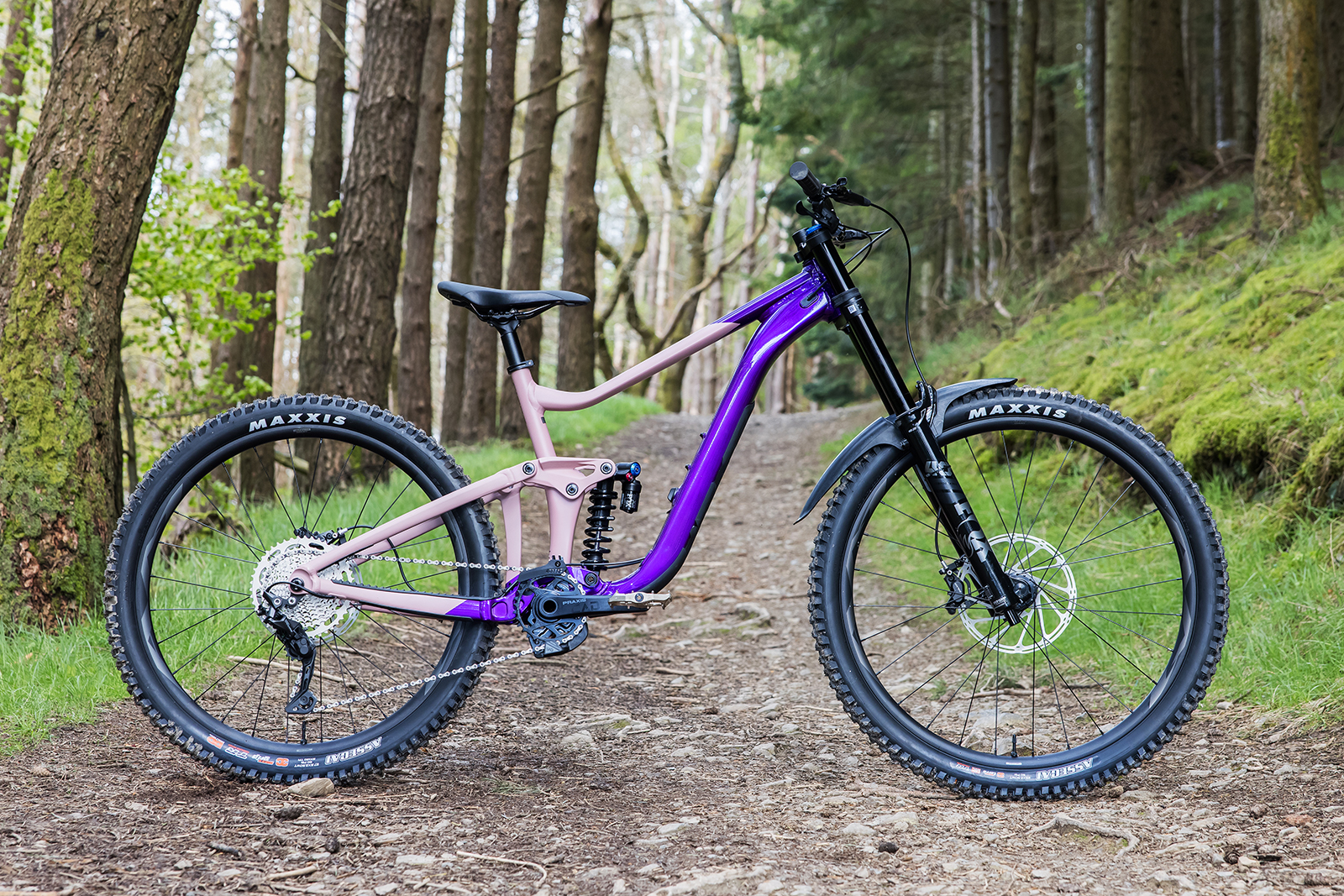
- £4,499 / $4,600 / €3,799 / AU$6,199 as tested by Alex Evans
- Pros: Fantastic suspension performance on all terrain types; great, balanced geometry; Fox 40 fork impressive everywhere; shock tune dialled
- Cons: Tyre choice; stiff-feeling grips; could retain more of its enduro roots
The Giant Reign SX uses the same frame as the Reign enduro bike but boasts 165mm of travel and swaps the single-crown fork for a burly dual-crown 190mm-travel Fox 40.
The bike rolls on mixed mullet wheels and the frame offers geometry adjustment via a flip chip in its upper rocker.
Despite having less travel than most other downhill bikes, the Reign SX delivers an incredibly confident ride thanks to its balanced geometry and fantastic suspension.
The slightly shorter travel, mullet wheels and enduro-focused geometry enable the Reign SX to shine on tight and technical descents, where other full-blown downhill bikes can feel slightly cumbersome.
Thanks to its steep, enduro-inspired seat tube angle, the Reign SX is a well-behaved climber. However, Giant has chosen to spec a 10-speed cassette, which stunts the bike’s potential on steep climbs.
- Read more: Giant Reign SX review
Marin Quake
SQUIRREL_TEXT_14032817
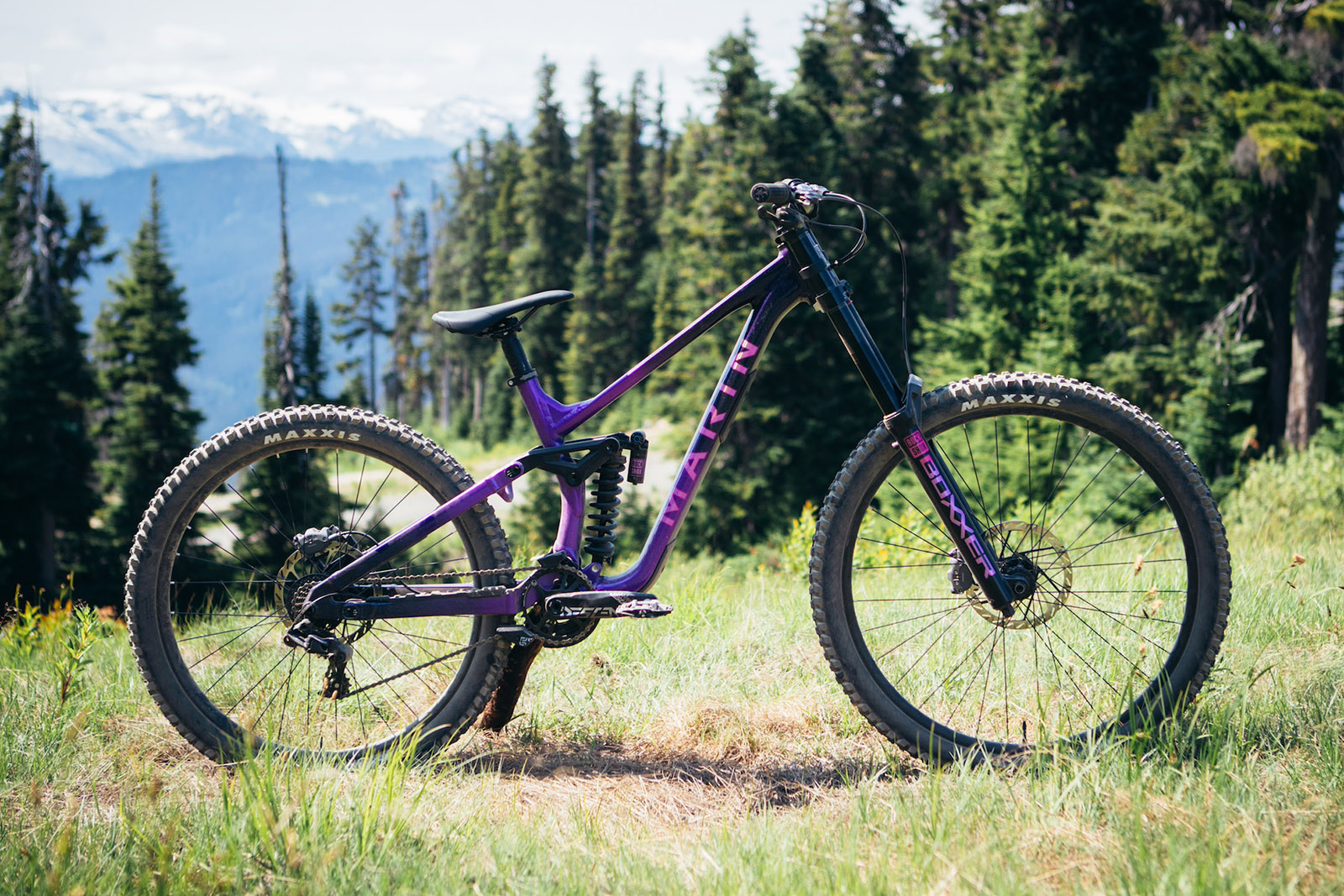
- £4,599 / $4,699 / €5,199 as tested by Luke Marshall
- Pros: Impressive spec for the price; intuitive to ride; customisable geometry and wheel-size options
- Cons: No mounts for tool accessories; Marin rims need tyre-insert protection
The new Marin Quake isn’t designed to be a downhill racer. With 180mm-rear and 200mm-front travel, it’s touted as a bike-park specialist. But, in this build, it would fair well as a downhill bike.
The Quake has two flip chips, for maximum versatility: one enables switching between 27.5-inch and 29-inch rear wheels, and the other adjusts the chainstay length and bottom bracket height for different riding styles and trails.
The Quake’s MultiTrac 2 LT suspension feels predictable and capable, balancing supple small-bump sensitivity with progression through the travel. While it’s not the most supple off the top, it has enough reserves to iron out harsh bike-park braking bumps and miscalculated landings.
- Read more: Marin Quake review
SQUIRREL_14032817
Nukeproof Dissent 297 RS
SQUIRREL_TEXT_14032818
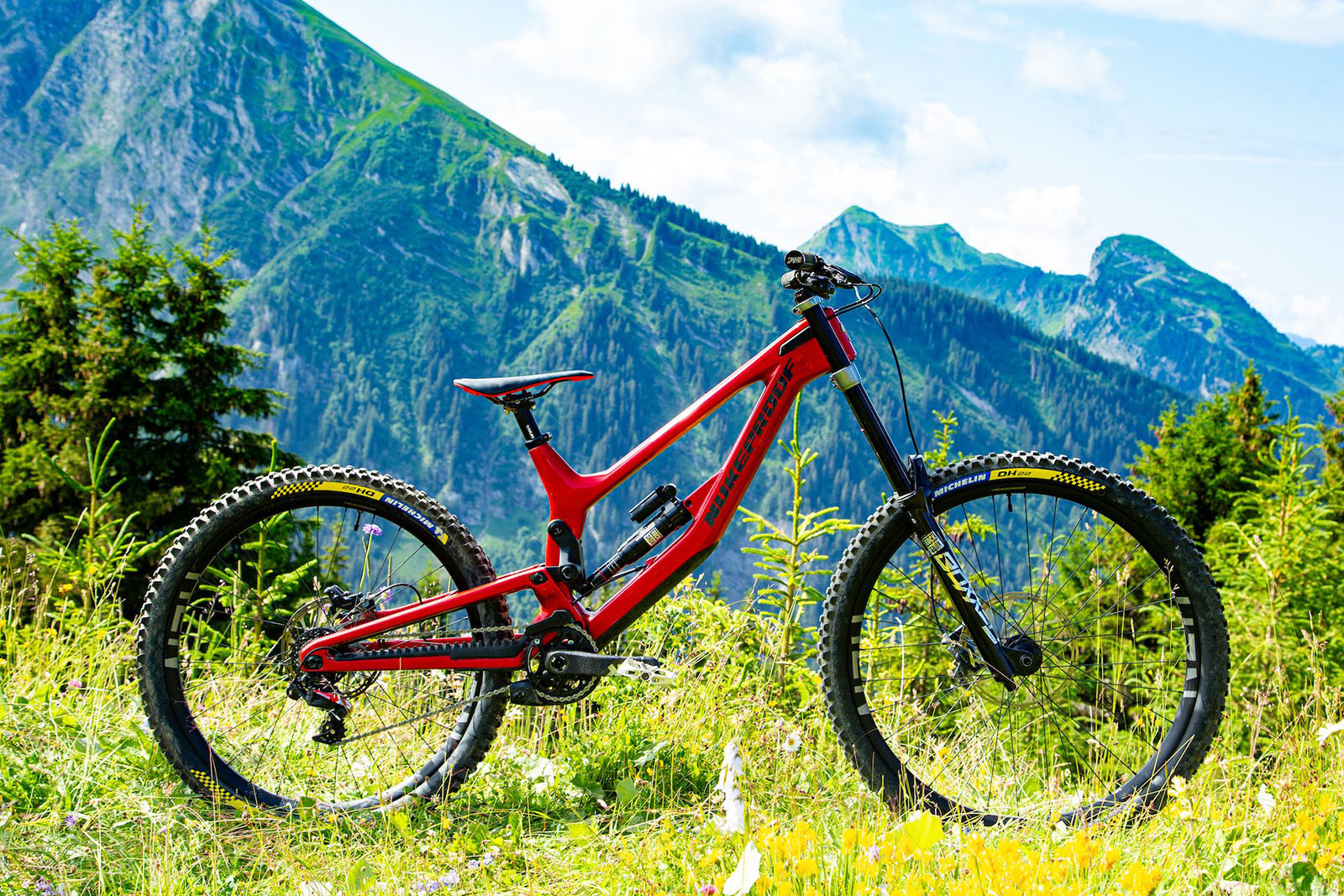
- £6,000 as tested by Luke Marshall
- Pros: Competitive price compared to rivals; good beginning and end-stroke feel
- Cons: Low stack height; feels bogged down at slower speeds
Nukeproof's Dissent Carbon 297 RS proves to be a great platform for aggressive riders, with out tester touting its ability, and calm and collected nature.
This reduces the bike's versatility, with it feeling lethargic and sluggish on mellower trails and at slower speeds.
The carbon fibre frame produces 200mm of travel through the brand's Fallout linkage, which is connected to a RockShox Super Deluxe Ultimate shock.
Up-front, there's a 200mm RockShox Boxxer Ultimate suspension fork, which provides a smooth and supportive ride.
- Read more: Nukeproof Dissent 297 RS review
SQUIRREL_14032818
Propain Rage 3 CF Mix Highend
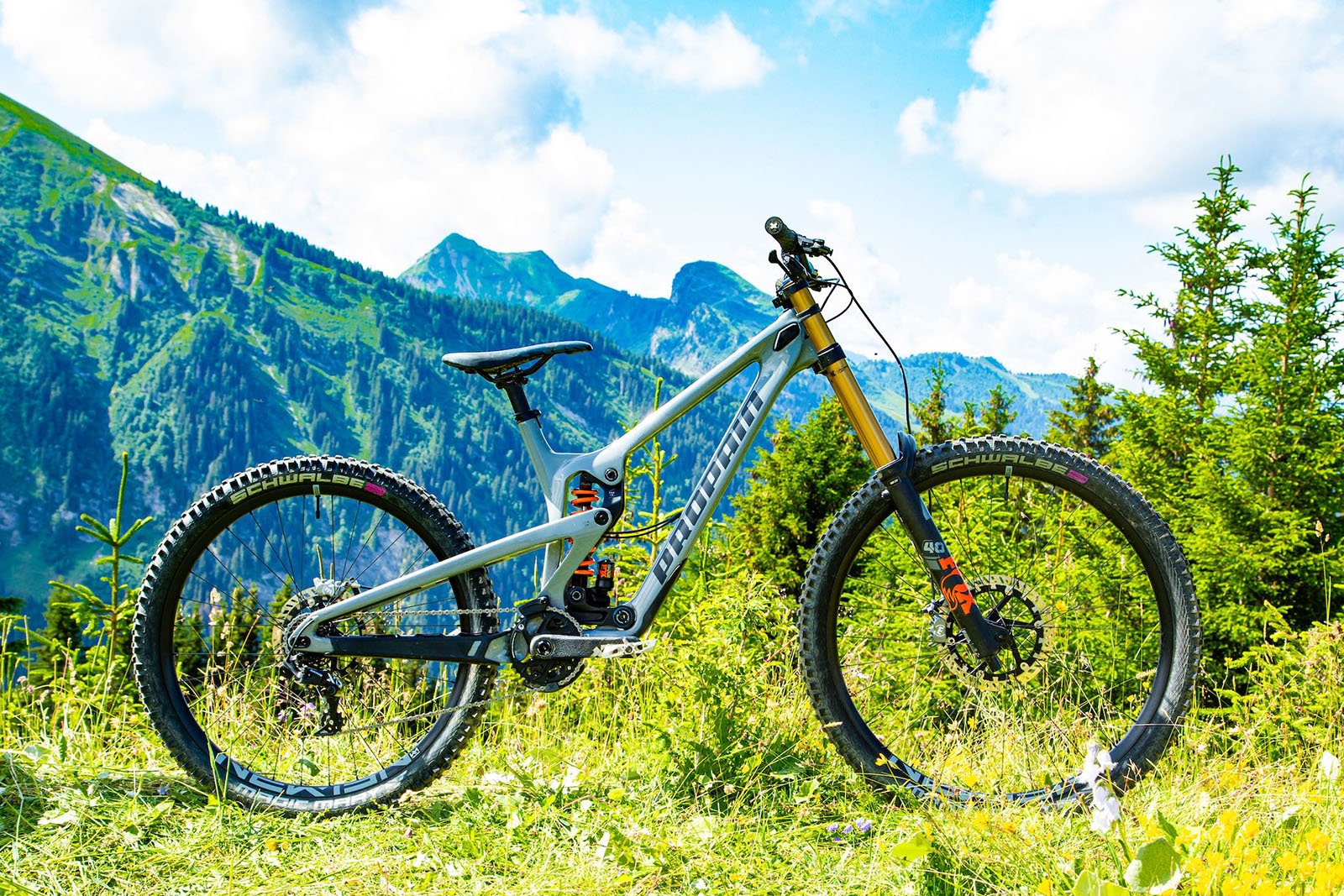
- £6,519 / €6,389 as tested by Luke Marshall
- Pros: Handles steep tech and jumps with ease; 215mm of travel is very forgiving; pedals better than expected
- Cons: Seat tube could be shorter; saddle a little chunky for our preference
The Rage 3 is an impressive piece of kit that should be taken seriously by those looking for top-end performance at a reasonable price.
The bike has a fun character and provides plenty of performance on a variety of trails, with the 215mm of rear-wheel travel adding to a very forgiving ride.
A 200mm Fox 40 Factory fork features up-front and a Float DHX2 Factory shock is mounted in the frame.
At speed, the bike remains engaging. However, it falls short on the roughest terrain, where it lacks the same composure as other bikes on this list.
- Read more: Propain Rage 3 CF Mix Highend review
Saracen Myst Pro
SQUIRREL_TEXT_14032819
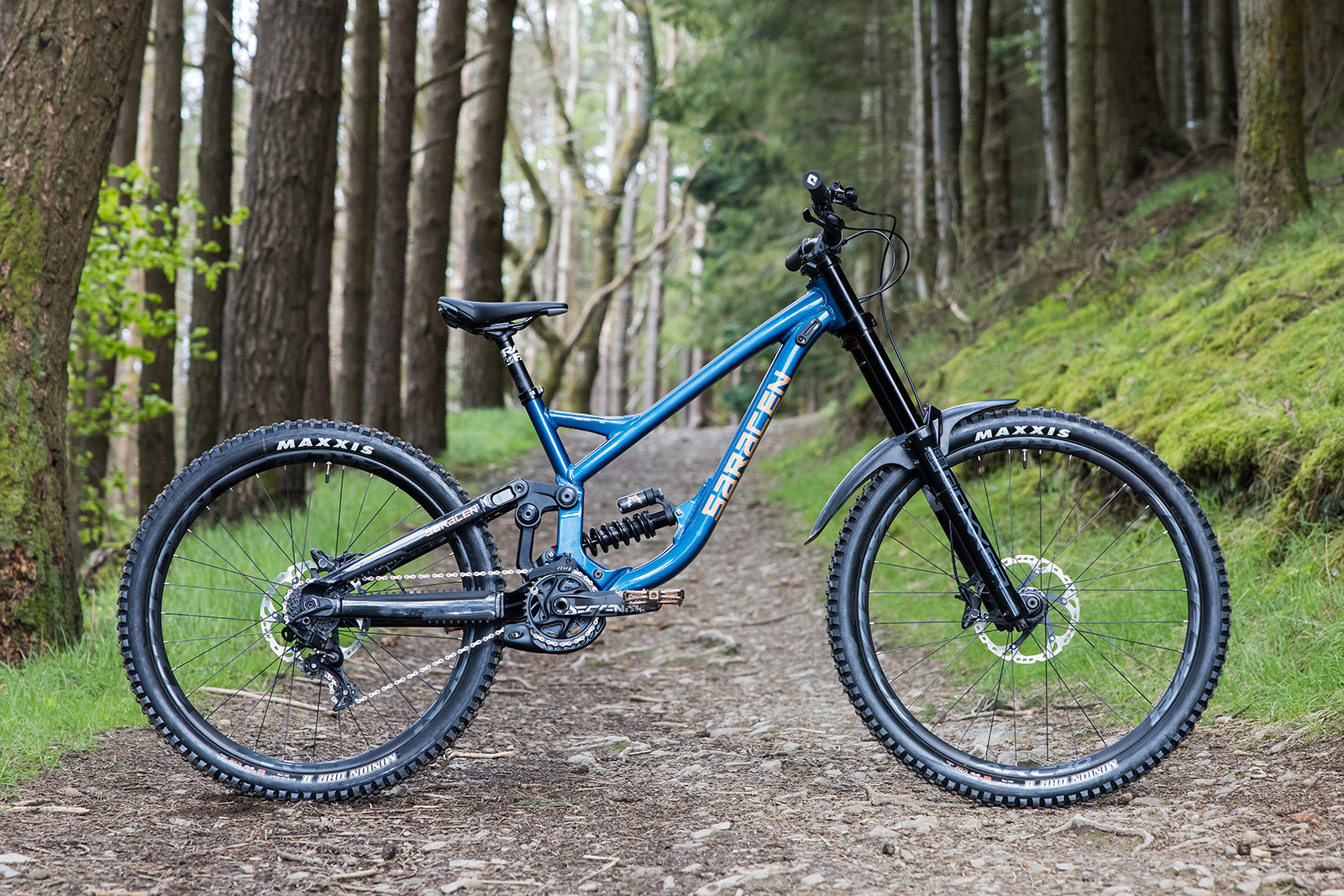
- £3,600 as tested by Alex Evans
- Pros: Hunkered-down geometry; confidence-inspiring and balanced riding position; smooth, controlled suspension on all terrain
- Cons: Boxxer fork would benefit from cartridge upgrade
Tested and developed on the DH World Cup circuit, the Saracen Myst Pro is a thoroughbred race machine.
Its aluminium frame uses Saracen’s Ride Tuned Link suspension and delivers 211mm of travel. The Myst impresses with its smooth yet capable suspension, which keeps it tracking in even the rowdiest of sections, while never running out of travel on the biggest hits.
Rolling on mixed 29/27.5-inch wheels, the Myst features offset headset cups, allowing for 5mm of reach adjustment.
Its race-focused geometry, namely the long reach and chainstay figures, is well-balanced for high-speed riding. No matter how wild the riding gets, the Saracen remains calm and composed.
With a £3,600 retail price, the Myst offers impeccable value for money to boot.
- Read more: Saracen Myst review
SQUIRREL_14032819
Scott Gambler 910 (2025)
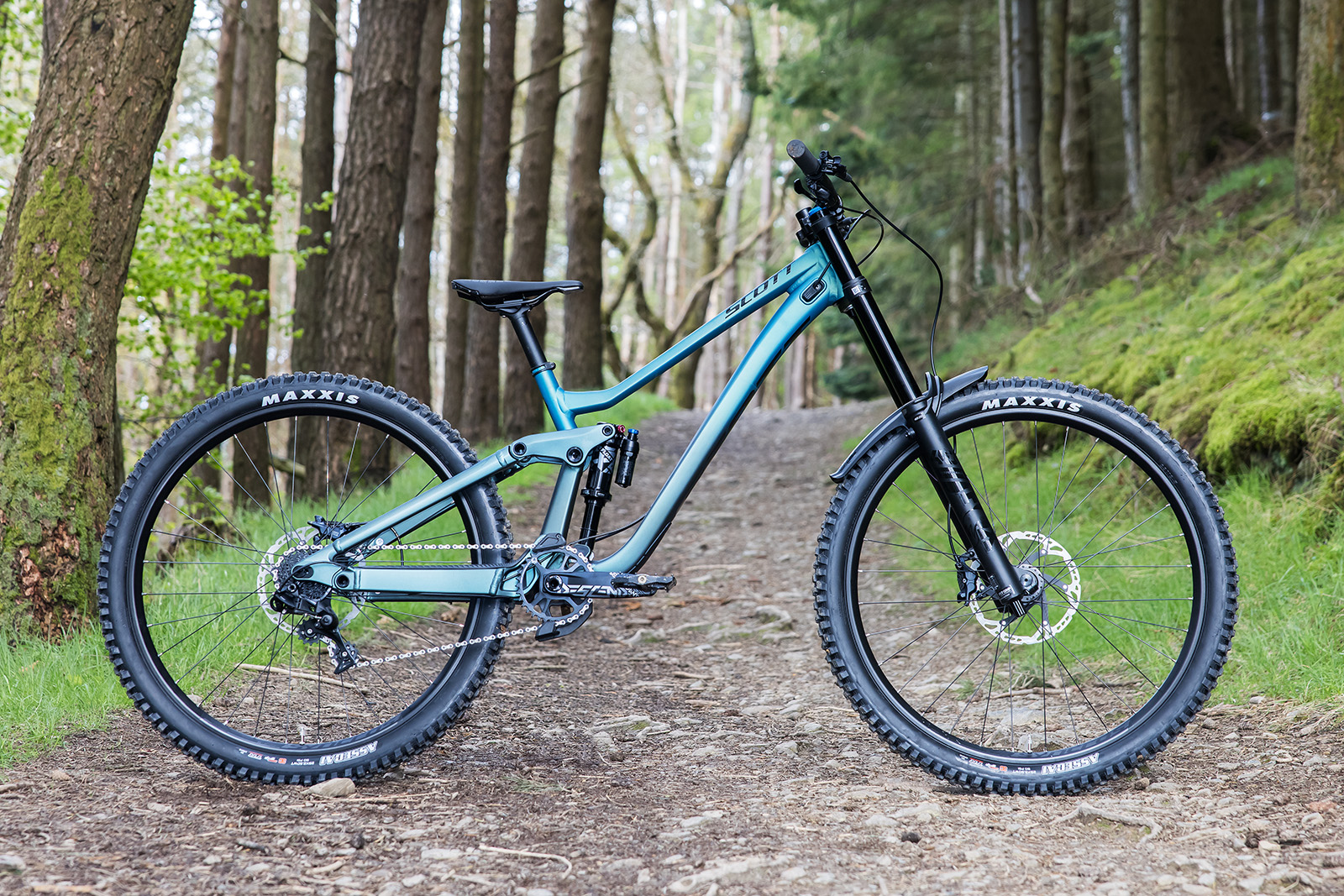
- £4,399 as tested by Alex Evans
- Pros: Balanced geo and flip chips make for a versatile ride; supportive suspension allows for playful riding; sorted spec for the price
- Cons: Float X rear shock feels slightly harsh; low front end required some tweaking
The Gambler 910 is an aluminium version of Scott’s successful downhill bike.
It rolls on 29-inch wheels front and back, although you can switch to a mixed-wheel setup thanks to a set of geo-adjust flip chips.
A Horst Link suspension platform delivers 200mm of rear travel, which offers plenty of support for a poppy and playful ride. Deeper into the travel, the Gambler’s suspension delivers good mid-stroke support, generating grip and control.
The aluminium Gambler uses the same geometry as its carbon counterpart and both are distinctly race-focused. The front and rear centres of the bike are very balanced, especially in the long chainstay setting.
Overall, with its dual 29-inch wheels and balanced yet adjustable geometry, there’s little the Scott Gambler can’t handle.
- Read more: Scott Gambler 910 review
How we test downhill bikes
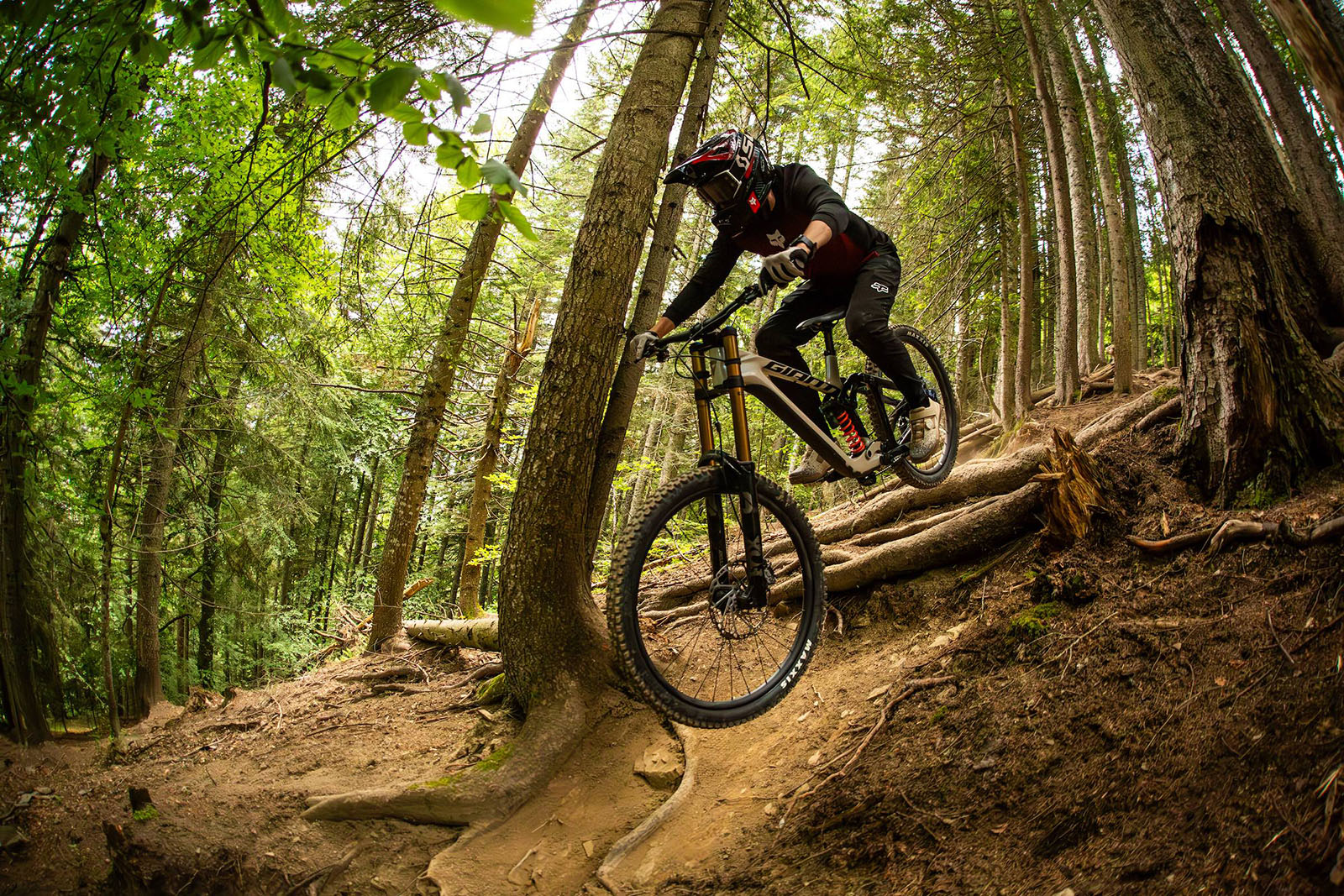
We test downhill bikes in their natural habitat, taking in steep, technical trails in and around bike parks.
Our testers have plenty of downhill racing credentials and know how to push the bikes we review on a variety of terrain.
Ultimately, we base our downhill bike reviews on the following criteria:
- Handling characteristics – their suitability for downhill riding and whether they fulfil the brand’s claims.
- Specification – and how well the components work. Our in-house workshop manager also performs an initial assessment of each test bike to help filter out any issues and potential design flaws.
- Value versus the competition – for the specification and ride experience, are you getting a good deal for your money compared to the market?
- Subjective reflections – we aim to be as objective as possible, but we also recognise that some things will suit some individuals, while others won’t. We try to capture our honest reflections while providing the information you need to make the best buying decision.
Downhill mountain bike buyer's guide | Finding the right downhill bike for you
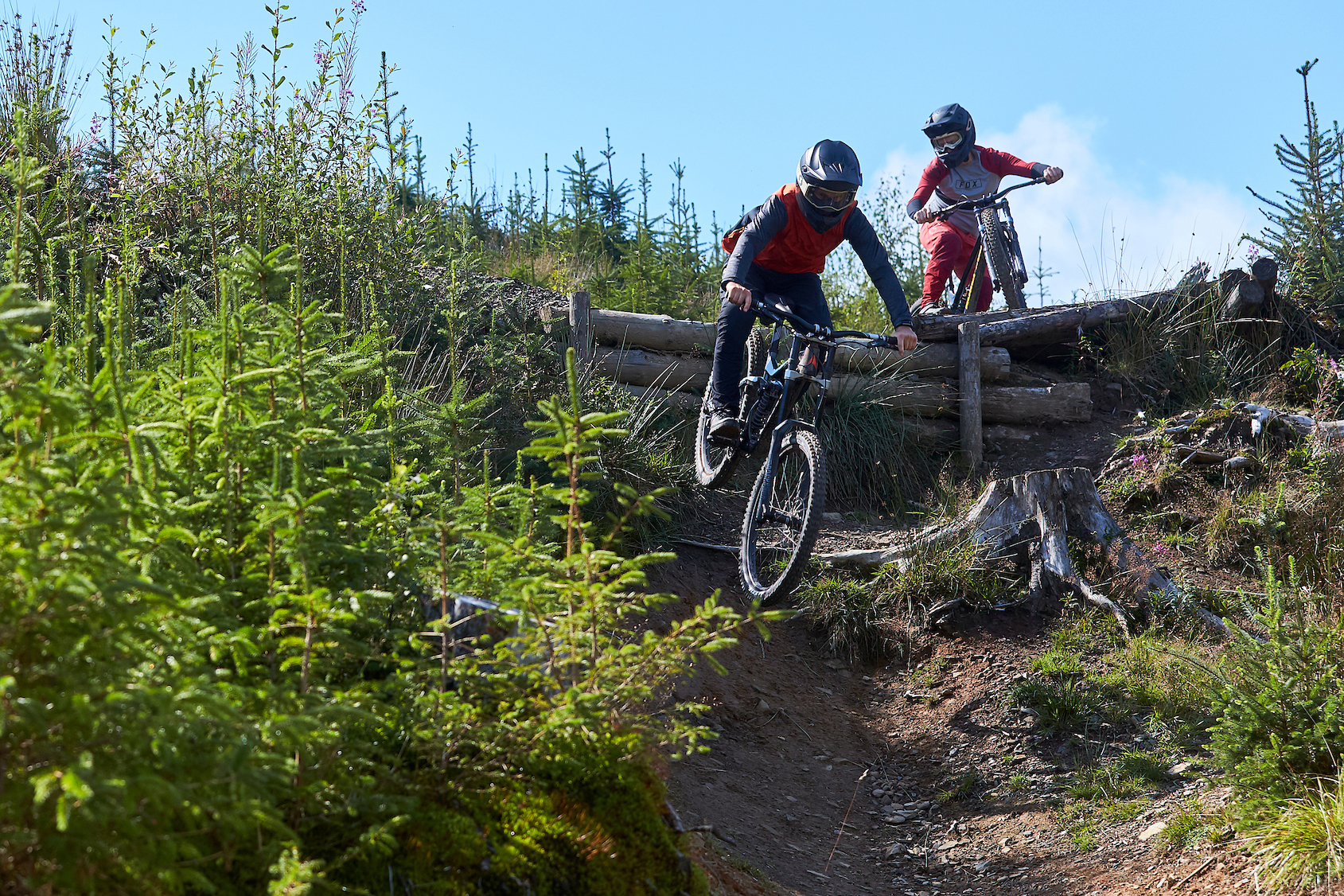
When looking for a downhill bike, a good starting point is to ask the question 'what do I want from a DH bike?' Is it top-performing suspension? Or do you want high-end components, or even more sophisticated frame technologies such as carbon fibre constructions or hydroformed tubes?
Choosing a DH bike that concentrates your cash into one area over another, especially if you're on a budget, will always create compromises though.
Prioritising performance
How do you prioritise performance, then? It's quite a balancing act and requires a bit of careful consideration. You need to be able to rank, in order, the parts of the bike you think are the most important.
Is it the frame's construction? Its geometry? The way the suspension works? The bike's components or its fork and shock dampers? The wheels and tyres or something else, such as its looks? Prioritising any one element should help guide your purchase.
Setting a budget
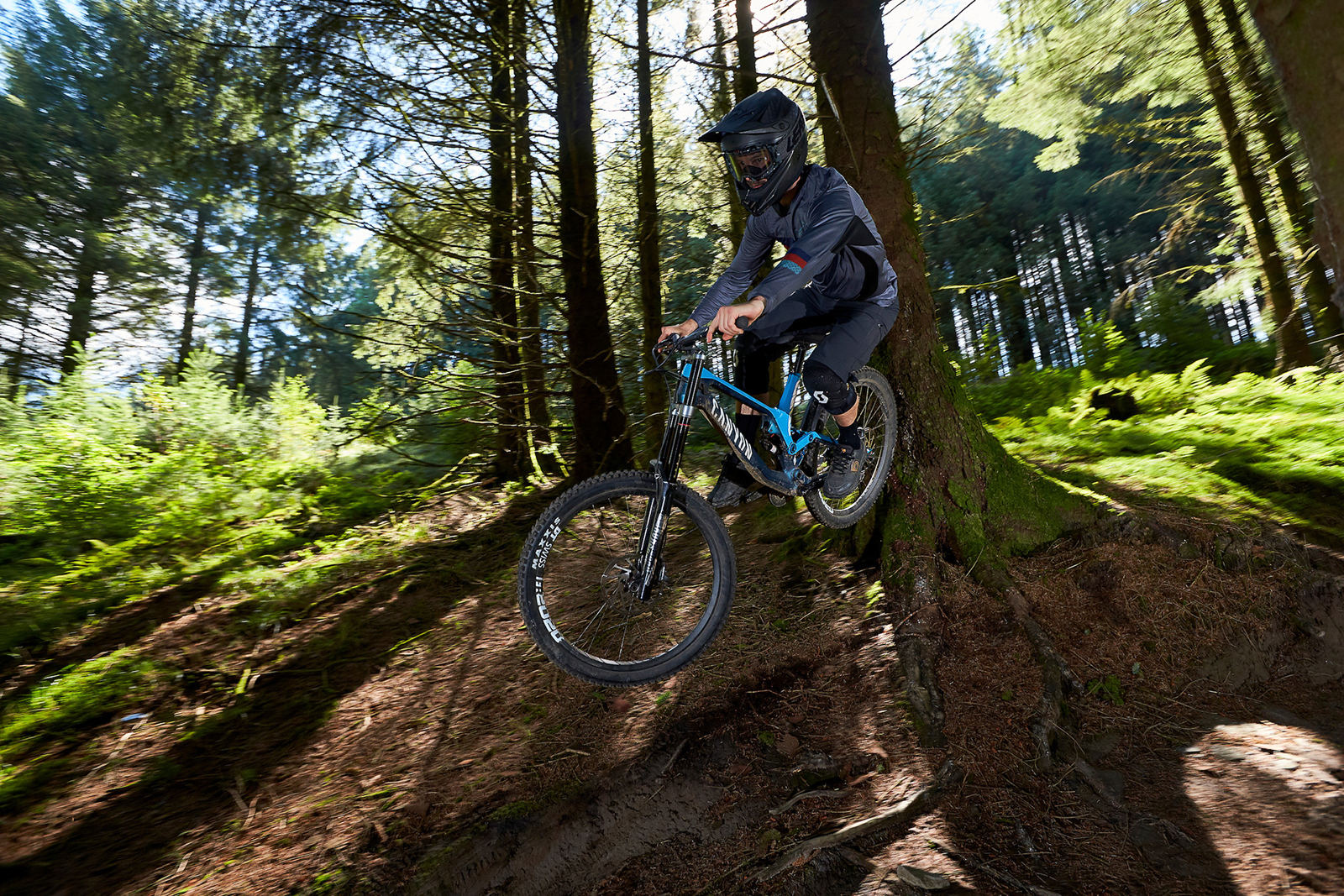
In recent years, we’ve seen a lot of the fancy tech that makes top downhill bikes so expensive trickle down to their more affordable siblings, so you can get quite a lot of bike for your buck nowadays.
Most DH rigs now have adjustable geometry, metric trunnion shocks and downhill-specific parts. Even if you're considering a model that's much cheaper than a brand's range-topper, its suspension may not be as sophisticated and the parts may feel clunkier, but that doesn’t mean it'll be any less fun on the hill.
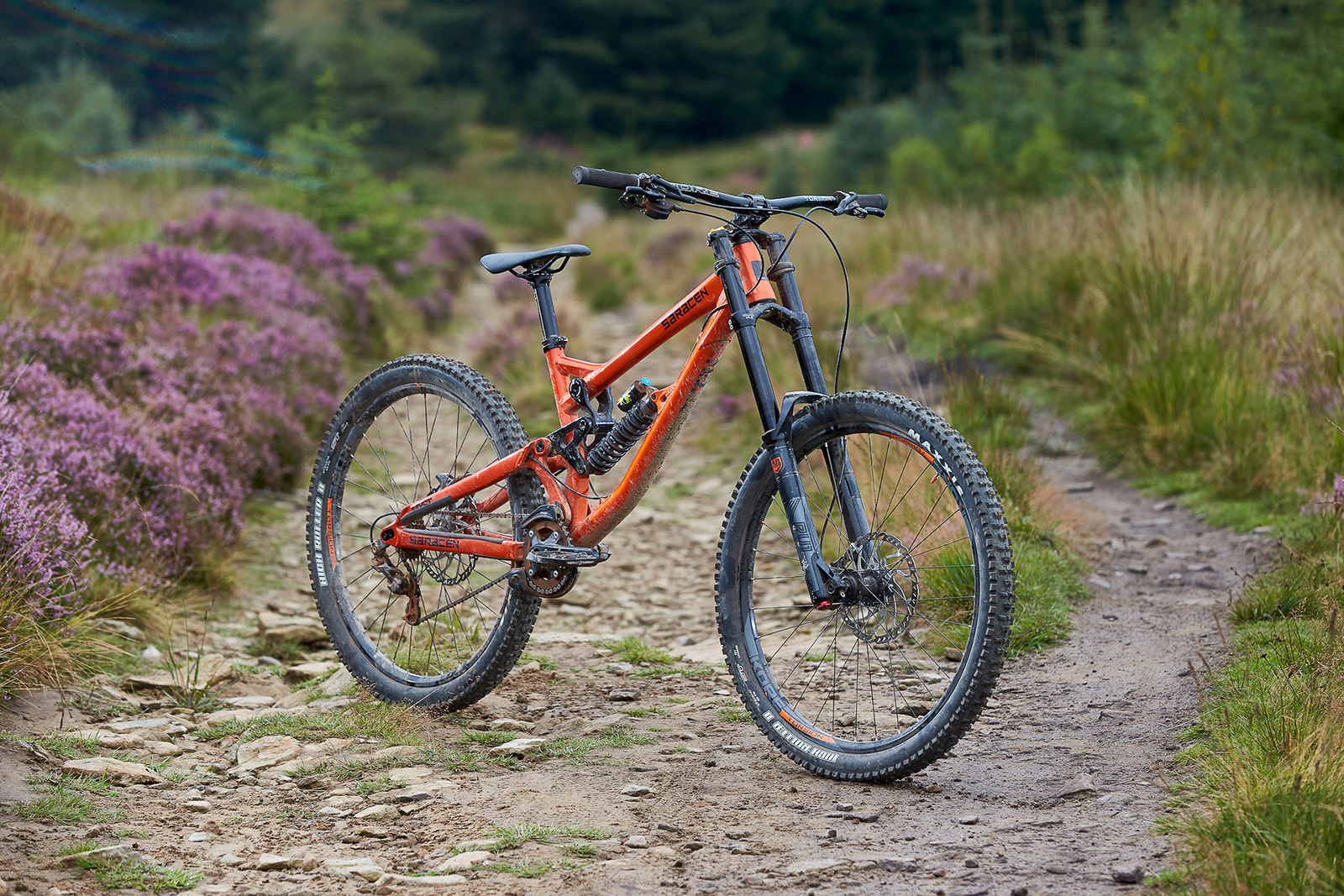
It is possible to pick up a bottom-spec DH bike for around £2,000 / $2,000 / €2,000, although some can be found cheaper in sales and at the end of their model year. Equally, the second-hand market is truly vibrant, so you can still get your kicks on a shoestring.
Top-end bikes – that can reach lofty purchase prices of around £10,000 / $10,000 / €10,000 – will be dripping with top DH-specific kit and have cutting-edge technology, such as the latest suspension designs and dampers.
Direct to consumer
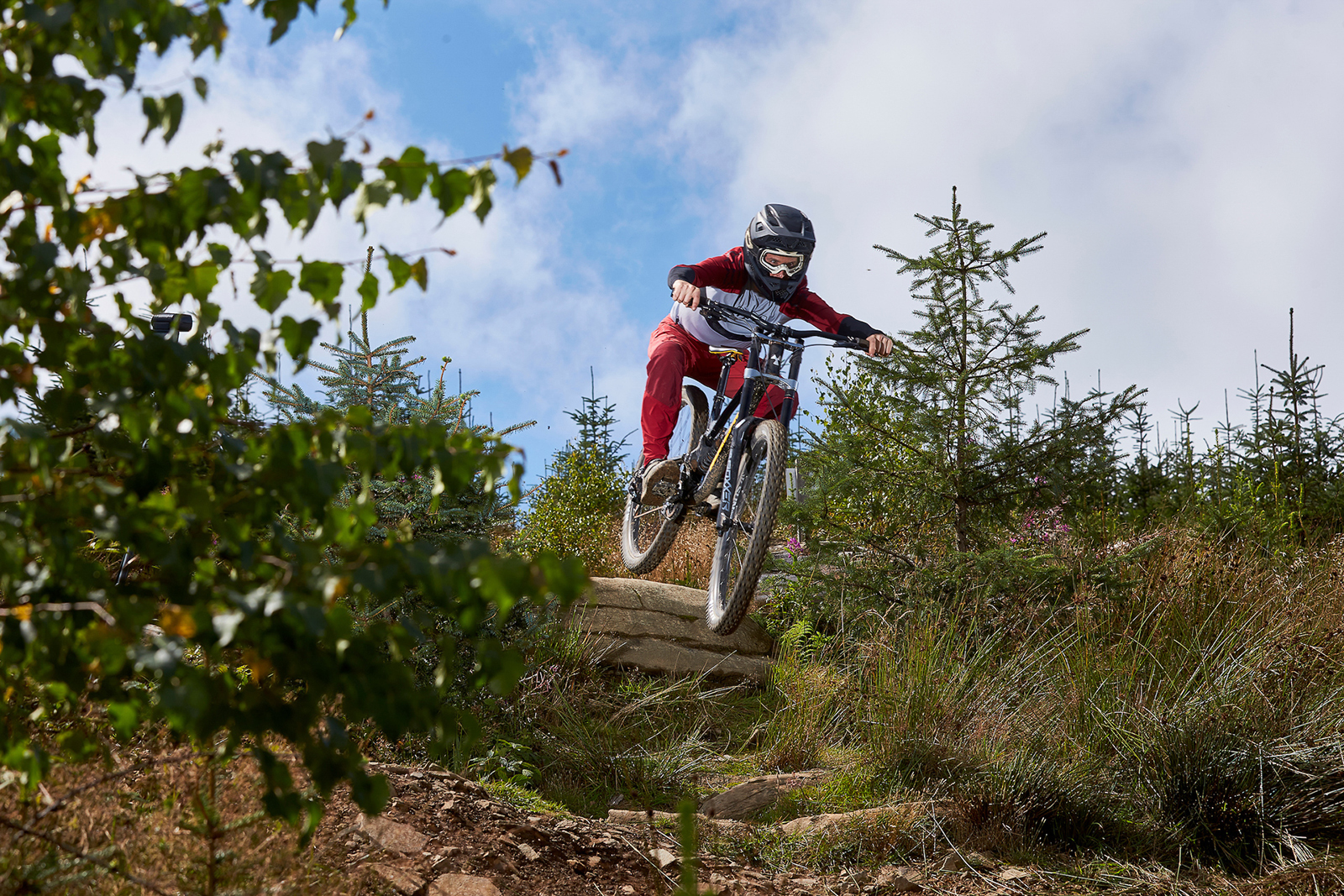
Generally speaking, direct-to-consumer brands – such as YT Industries, Canyon, Cube and others – offer the most top-end parts and frame technologies for the least amount of coin.
On the flip side, because you're buying a bike from the internet, there's no bike shop to help out when things go wrong and you could be left bikeless for longer than you'd like. So you'll need to decide how important that initial purchase price is compared to after-sales support.
Frame construction
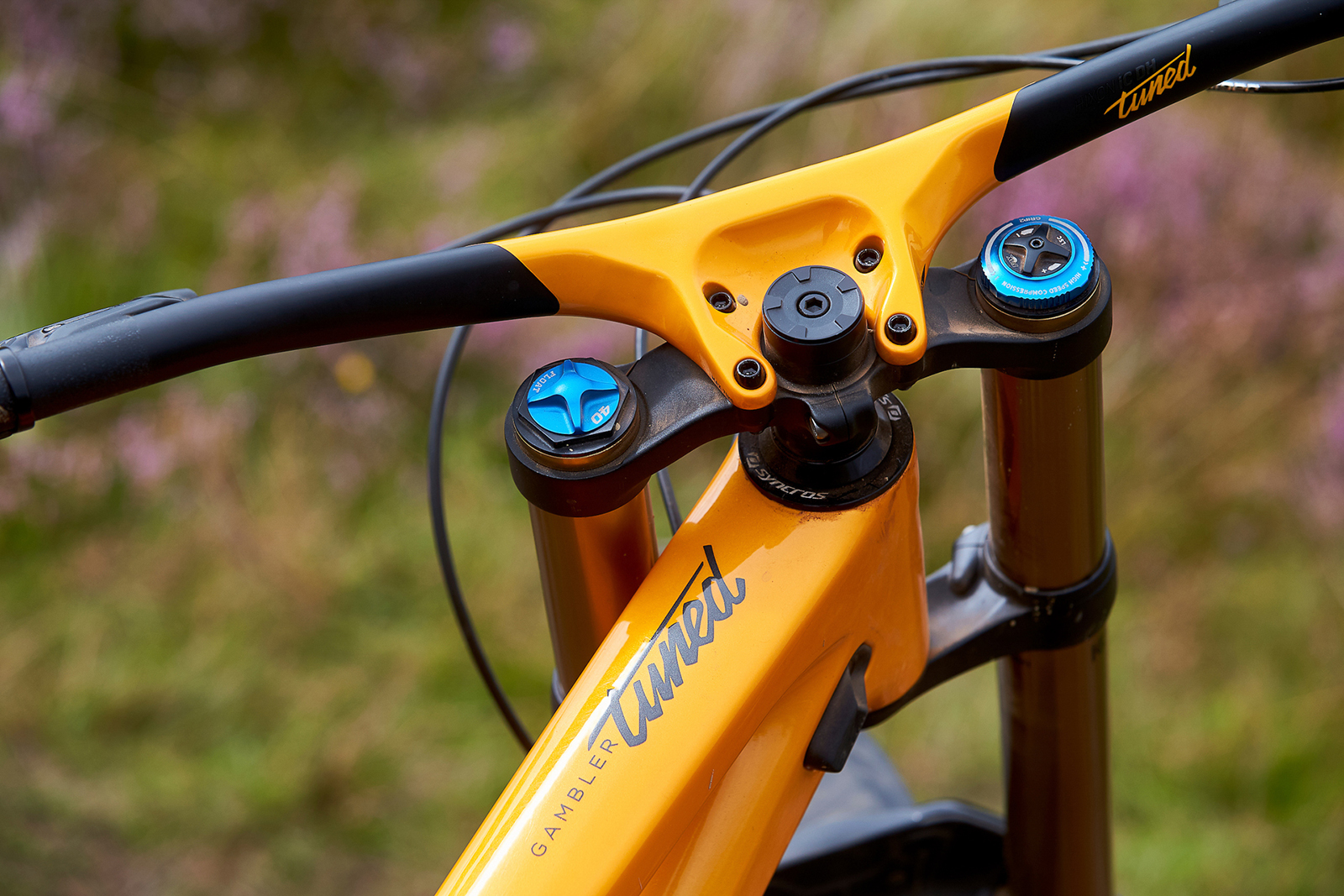
A carbon fibre frame will generally cost more than an alloy one. For that extra money, it will normally be lighter and should have a more tuned construction compared to an alloy counterpart.
Carbon is an easier material to work with to generate different characteristics over an alloy bike.
Geometry
Spending more money won't necessarily get you better geometry, so study the geo charts carefully when you're looking to buy.
A bike with great geometry at a reasonable price is a good place to start, meaning you can upgrade the parts over time to improve the way it rides. For more information, check out our guide on all things bike geometry and handling.
Suspension kinematics
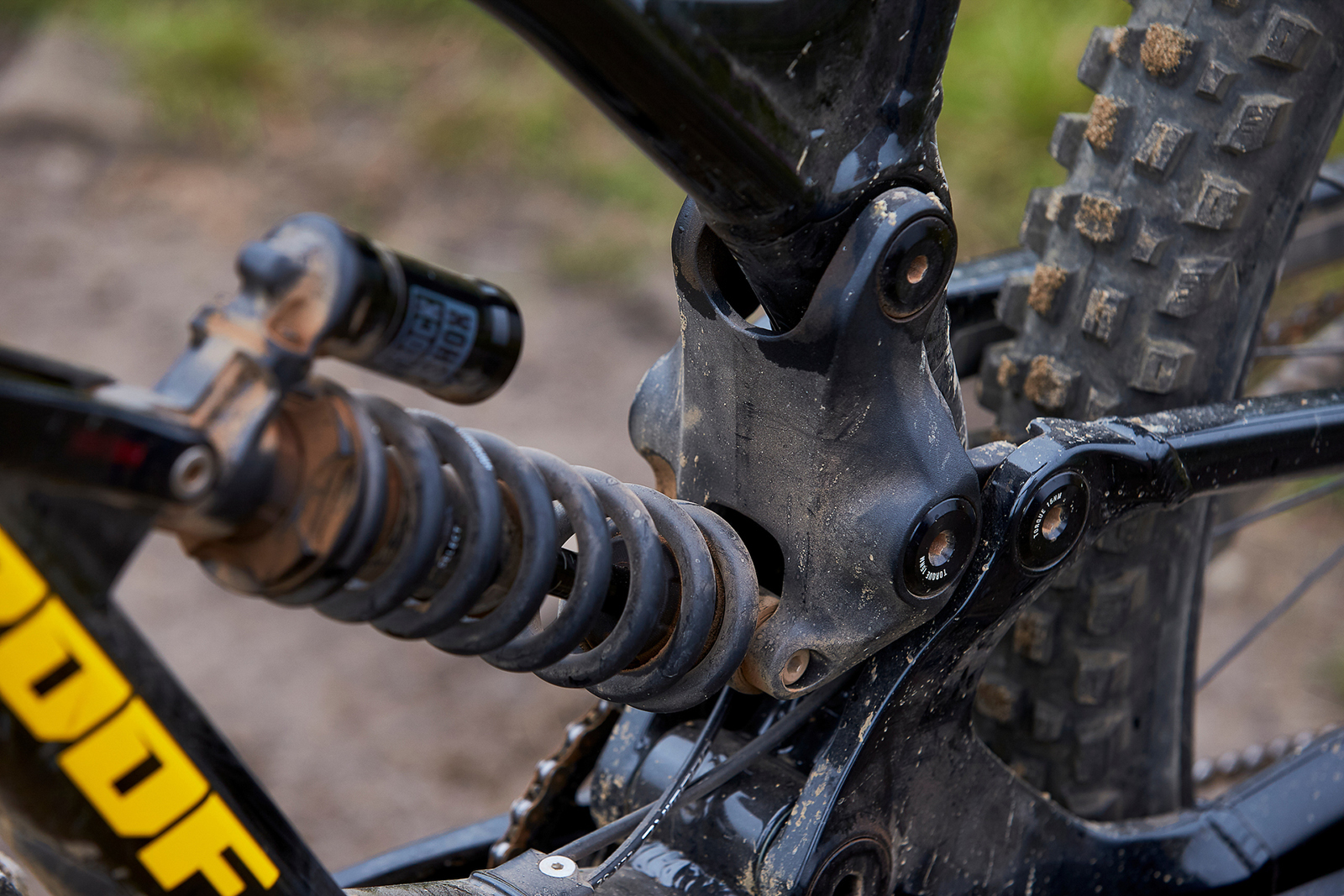
The way the suspension works is really important, but don't get too bogged down on whether it's single-pivot, Horst-link, four-bar or virtual-pivot-point style suspension.
Each one of those designs can be tuned in a certain way, so study up on what you think you'd like from the bike's suspension by reading our ultimate suspension guide.
Suspension dampers
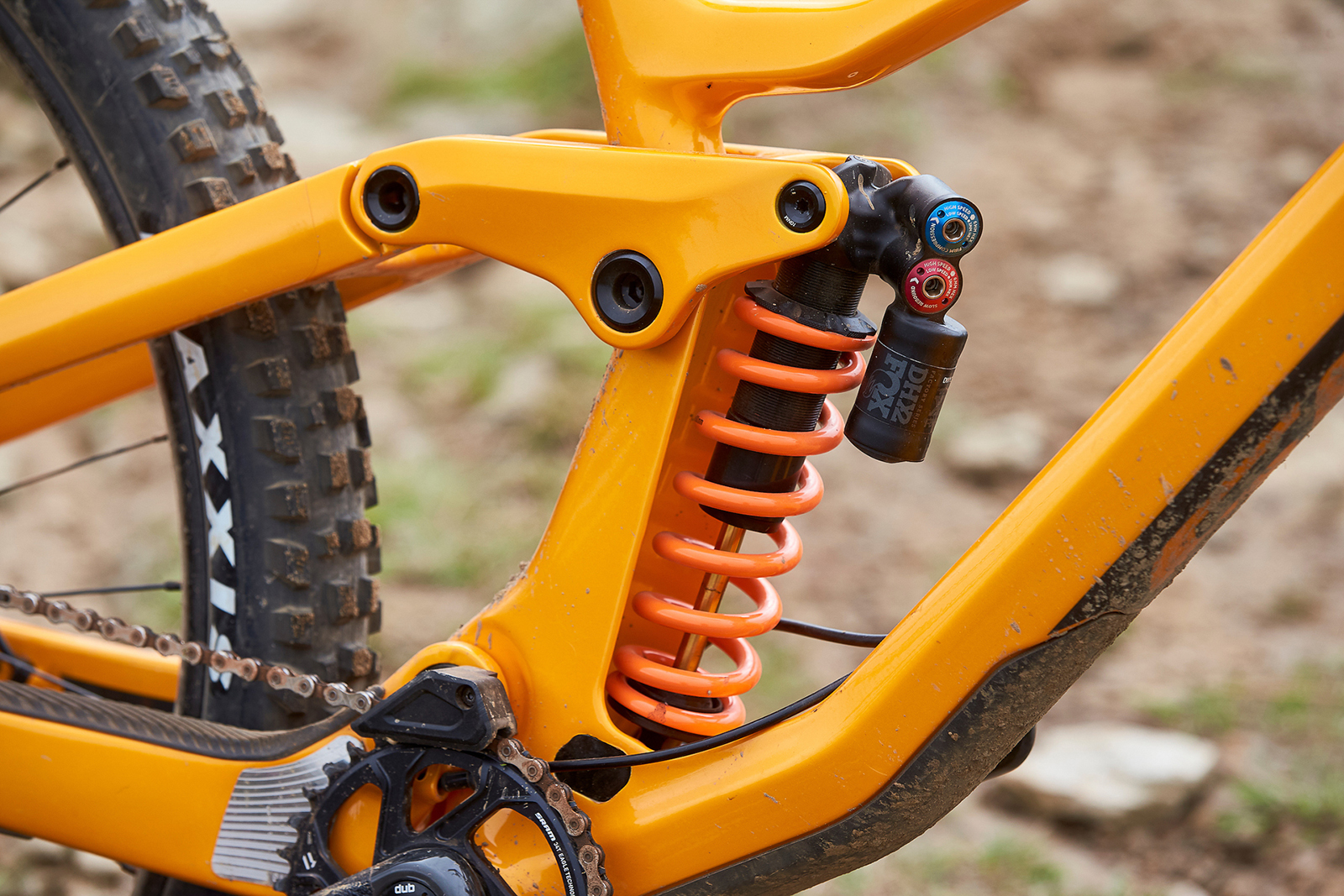
Because they're a high-value upgrade, getting the right suspension dampers fitted to your bike's fork and shock from the factory is important. Carefully read the bike's specs, making sure its suspension is damped correctly. It would be worth considering sacrificing some of the bike's spec – such as elements of the drivetrain or the wheels – to get better dampers.
Components
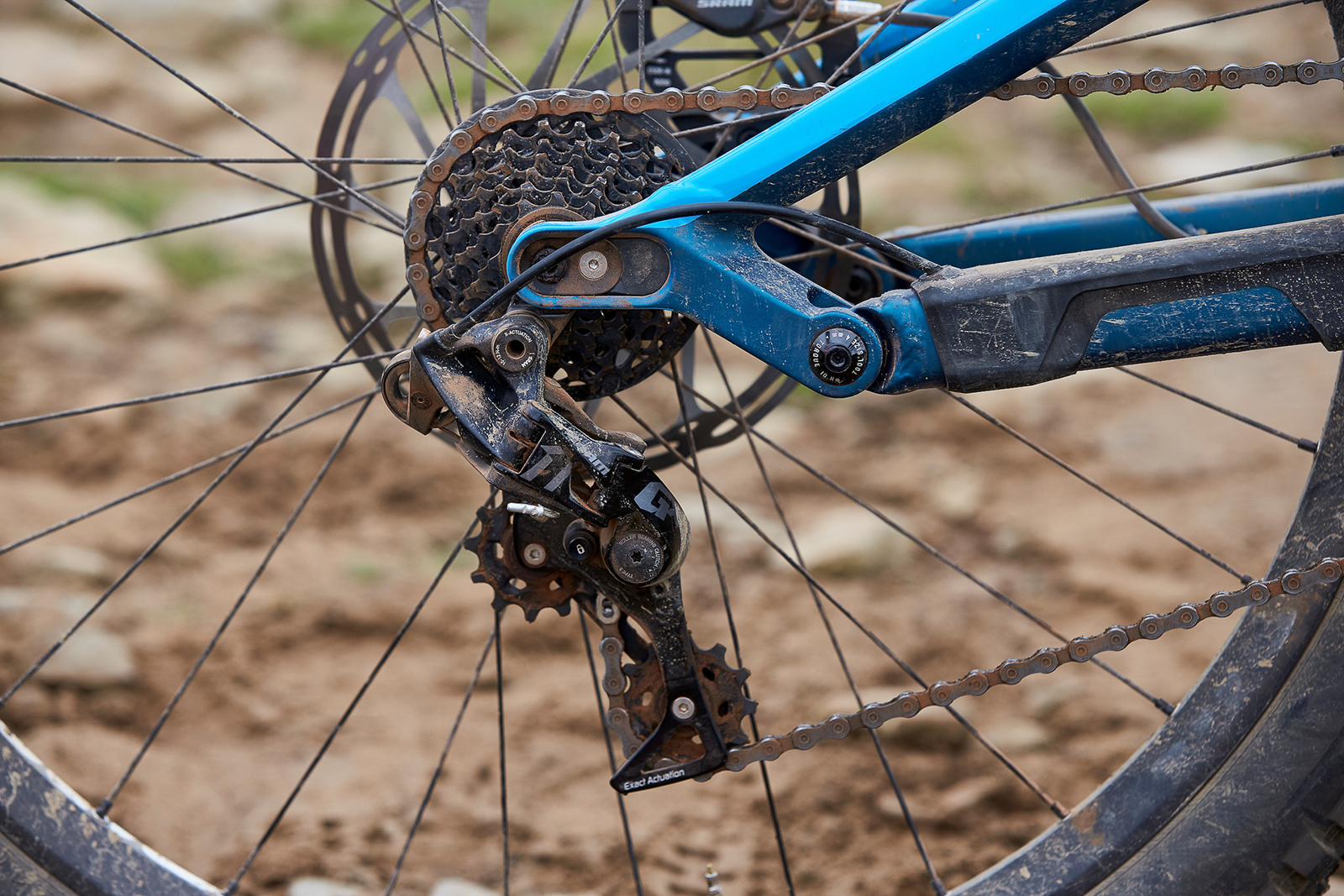
Although these make up a large portion of the bike, they don't necessarily change its fundamental ride characteristics. Given the choice between outstanding suspension and geometry or a platter of top-spec parts, it would be wise to go for the better suspension and geometry.
The bike's parts can be upgraded over time as they break or your budget permits. That said, if this is a finite-spend, one-off purchase, then consider carefully what tyres, brakes and gears are bolted to the bike. Poor performance in these areas is the most detrimental to the overall ride feel, especially if the frame's geometry and suspension is sorted.