Following the US Supreme Court’s ruling that Trump’s ‘liberation day’ tariffs are unlawful, a growing number of bike brands are joining major US corporations including retailer Costco to recover tariffs they’ve paid over the past year.
Headline cycling industry names filing suits with the Court for International Trade include Shimano, Specialized and Trek. They join outdoor brands including GoPro, Patagonia and retailer REI, and major corporations such as FedEx, Toyota and Goodyear in filing suits.
In fact, so many companies have now sued the US administration for return of monies paid, with interest, that the court has stopped accepting new suits. Instead, it's keeping a list of plaintiffs for settlement once a final ruling had been made. It’s been suggested that companies that have filed a suit may be at the front of the queue for any eventual refunds, however.
According to Dr Totis Kotsonis of international law firm Pinsent Masons: “The immediate question that this ruling poses for businesses in the process of importing goods is what rate of tariff will they now have to pay at the US border.”
Bike industry impacted

Trump’s tariffs have already had a marked effect on the cycling industry. Before they were struck down, effective tariff rates on bicycles manufactured in China fluctuated to as high as 66%, with US cycle industry trade association PeopleForBikes publishing an open letter to the US president claiming the tariffs would be devastating for the US cycle industry.
The levies on aluminium and steel, major elements of bicycle parts, would also raise prices. SRAM has issued a statement and sought to galvanise cycle retailers to protest against the tariffs.
Last year, both Trek and Specialized raised their US prices in response to the tariffs, while other cycling brands have decided to limit imports to the US or cancelled shipments.
On Friday, Trump responded to the striking down of his tariff authority by announcing a 10% blanket tariff under different legislation. The next morning, he raised this to 15%, but the rate implemented on Tuesday 24 February was 10%.
Legal experts suggest these tariffs may also be unlawful and need to be repealed and refunded, adding to business uncertainty.
Brompton tilts towards China

While US companies are suing for the return of the tariffs they’ve paid, the uncertainty over the tariffs is causing some bike brands to adjust their longer-term plans.
According to UK business magazine Business Matters, London-based folding bike maker Brompton has already closed its branded stores in New York and Washington.
Speaking to The Telegraph last April, Brompton’s managing director, Will Butler-Adams, said the company had also paused plans for stores in Los Angeles and San Francisco, and was likely to raise US prices by between 5% and 10%.
Instead, Brompton is tilting its bricks-and-mortar presence to China, opening a store in Shenzhen and doubling the size of its Shanghai store.
Butler-Adams said the decision was a direct response to US policy unpredictability, making long-term commitment to the US market difficult.
He said Brompton would continue to invest in the US, but would be more cautious. But China, where Brompton has been selling its bikes for 17 years, is now more important to the company than the US.
Business Matters quotes Butler-Adams as saying: “It’s our largest market and we know where we stand.”
The brand has three of its own stores in China, as well as 14 franchised outlets, according to Business Matters.
Tariffs have already hit Brompton's bottom line, with Butler-Adams citing global economic uncertainty as a factor when he recently reported a £2 million loss for Brompton in 2025.
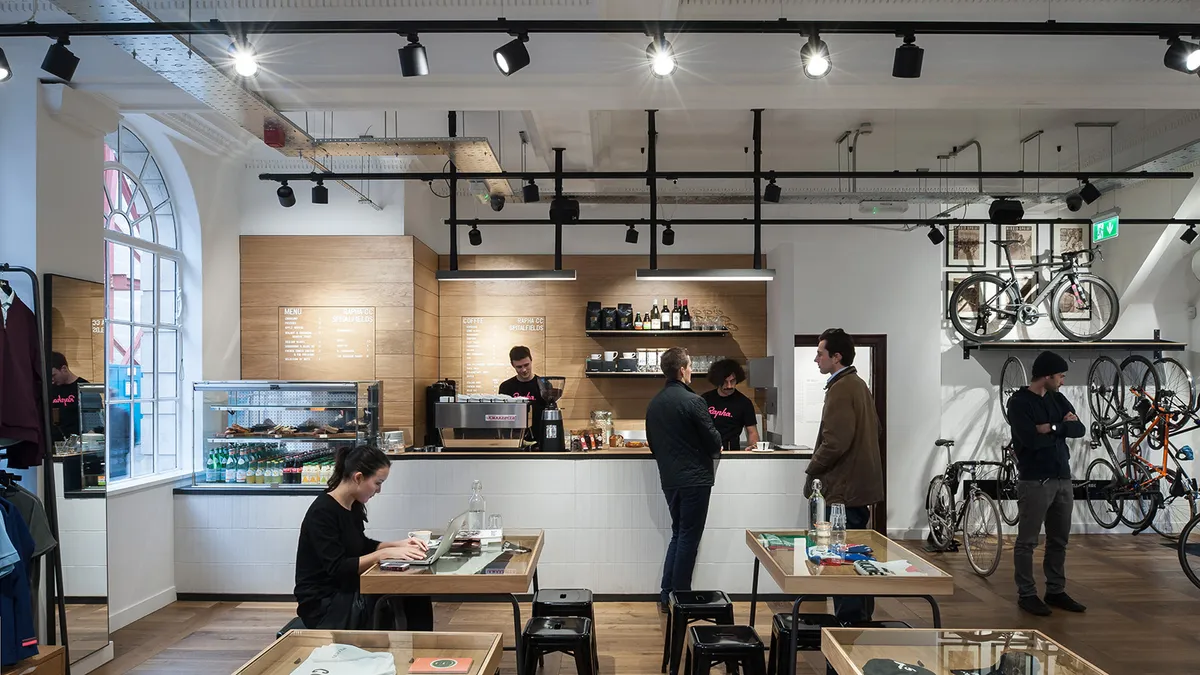
Rapha, too, is lowering its physical presence in the US, with four of five of its clubhouses slated for closure located in the country. At the same time, though, it has left the door open to the US market, partnering with USA Cycling as it looks to the Los Angeles Olympics in 2028 to offer a showcase for the brand.