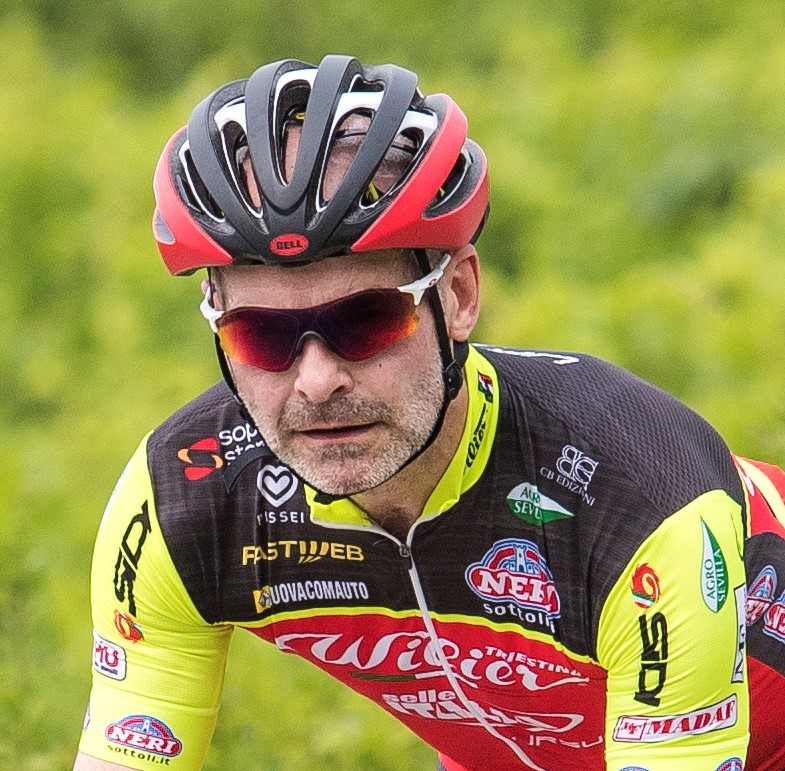
Although billed as the race of truth, with the rider alone against the clock, the team car following the rider could have an oversized effect on the outcome of the Tour de France stage 16 time trial today.
According to a study led by Professor Bert Blocken, head of the aerospace engineering cluster at Heriot-Watt University in Edinburgh, the size and shape of the team car following a rider could make a difference of more than five seconds to a rider’s time.
"When a cyclist rides, they create an area of overpressure in front of them that holds them back, and an area of suction behind them that pulls them back, causing resistance,” Blocken says.
That’s well-known and the foundation of CFD analysis that forms a major component of the design process for any new bike with aero pretensions.
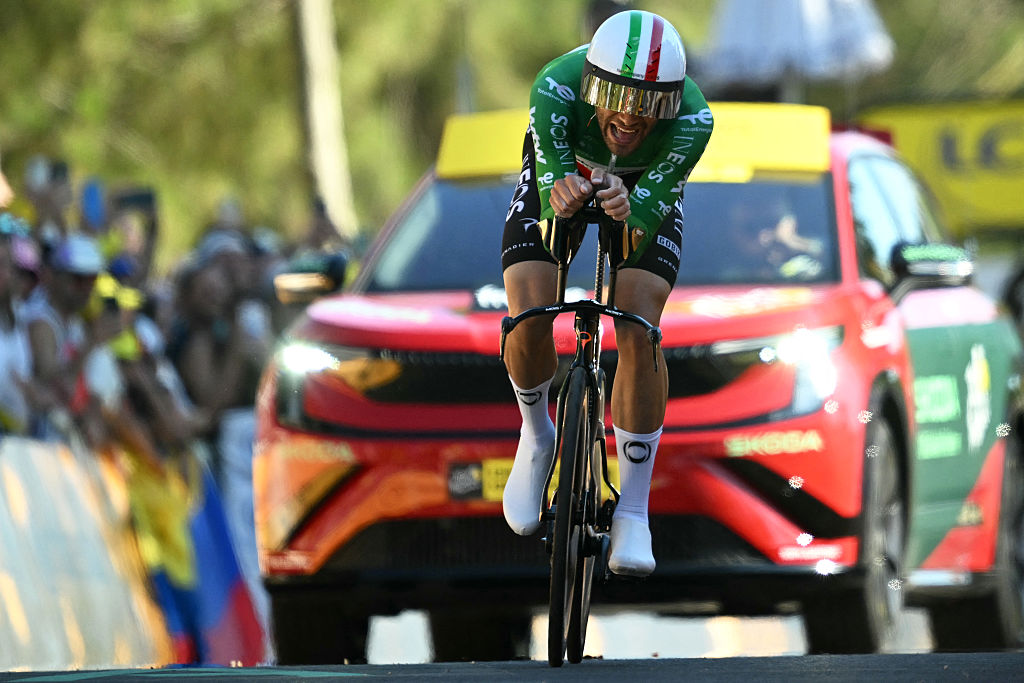
"But a car creates the same effect on a much larger scale,” Blocken continues. “It pushes a big bubble of overpressure ahead of it, and when the car drives close behind a cyclist, that bubble partly cancels out the suction behind the rider, providing the cyclist with a meaningful boost.
"At a distance of just one metre, a rider's aerodynamic resistance drops by almost 14 per cent, which is massive. The benefit falls away quickly as the distance grows, but it never reaches zero, not at 10 metres, not even at 30.”
Blocken’s group has found teams can increase the effect by stacking spare bikes on their cars’ roofs and has run the numbers to show that a larger, less aerodynamic vehicle has a larger effect than a smaller one with a lower drag coefficient.
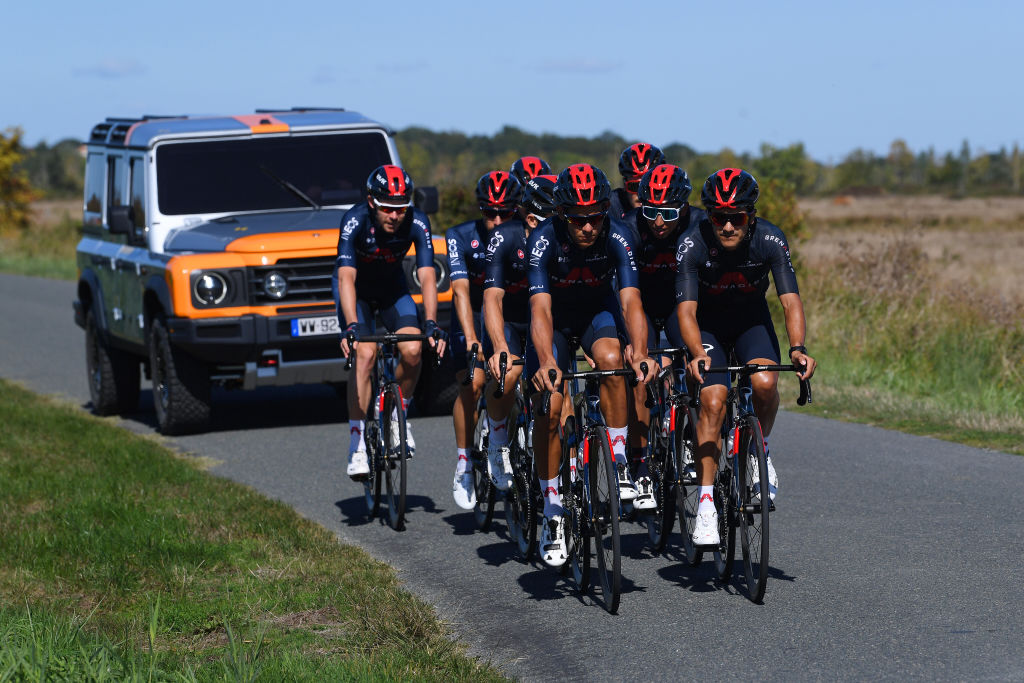
Who has the largest following car? We’re looking at you, Netcompany Ineos. The team’s Ineos Grenadier gas-guzzling Land Rover lookalike is described on its site, without irony, as “the driving force behind the team”. Looking back at images of its star time triallist, Filippo Ganna, it appears he's usually followed by a slightly smaller estate car, though.
Blocken’s group has modelled the effect of a range of vehicles, including the Grenadier and another seven models from a Smart Fortwo, via a typical estate car/station wagon and an SUV to three vans.
Following a rider at 10m distance, the Grenadier would reduce the rider’s time over the 26.1km course by 5.5 seconds and an estate car by 2.3 seconds when ridden at 50km/h, according to the Heriot-Watt team. At 25m, the calculated numbers are 2.6 seconds for the Grenadier and 0.8 seconds for the estate car, with the SUV lowering ride time by 1 second.
That's before you add spare bikes to the vehicle. The UCI has recommended that teams don't over-stack spare bikes on cars, but there's no limit stipulated.
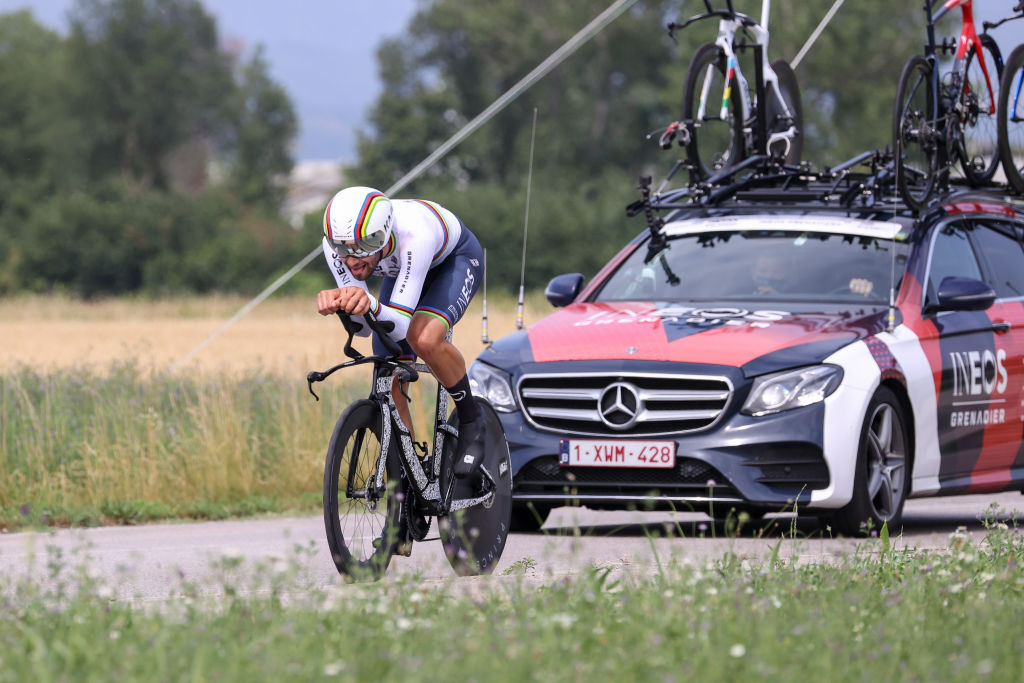
The UCI has already reacted to Blocken’s group’s previous studies, changing the minimum distance to a following car in a time trial from 10m to 25m in 2023, but even at that distance the Ineos Grenadier would add a push of 2.6 seconds.
Blocken suggests the UCI should further mandate a maximum CdA figure for team cars, enforce the 25m rule more vigorously and require cars to stay 40m or more behind the rider.