Mountain biking legend Hans Rey has written an open letter to the bicycle industry, calling for clearer definitions over what an ebike is.
In the letter, first published in Bicycle Retailer & Industry News, Rey, one of the best-known and respected figures in the MTB industry, states it's time to "draw a line in the sand" as electric bikes become increasingly powerful.
He writes: "Ideally, e-bike would mean one thing: A Class 1 pedal-assist bicycle with a maximum assist speed of 20 mph, no throttle, and a motor not exceeding 750 watts of peak power.”
- Read more: New Jersey signs ebike law that requires all riders to have a licence, registration and insurance
The letter reads as follows:
An Open Letter to the Bicycle Industry
To the leaders, builders, advocates, and riders who shape our industry,
I’m writing because I care deeply about where bicycles – and electric bicycles – are headed. We are at a crossroads. The decisions we make about language, power limits, and definitions will determine whether Class 1 eBikes remain accepted as bicycles – or get grouped with much more powerful machines that don’t belong in the same category.
It’s time to define our language, and it’s time to draw a line in the sand of when eBikes become too powerful.
Words Matter
Today, the term “e-bike” is used to describe everything from a lightweight pedal-assist mountain bike to electric mopeds and full-blown electric motorcycles. That lack of precision creates confusion – and conflict – with land managers, other trail users, parents, and lawmakers.
If we don’t define our terms, others will define them for us.
Ideally, “e-bike” would mean one thing:
A Class 1 pedal-assist bicycle with a maximum assist speed of 20 mph, no throttle, and a motor not exceeding 750 watts of peak power.
Instead, the label has expanded to cover vehicles with throttles, higher speeds, and significantly more power. That blurring of categories puts access at risk.
Clear Categories, Clear Expectations
We need distinct names for distinct machines:
• E-bicycle (EMTB): Class 1 pedal-assist only (20 mph max assist, 750W max peak power)
• E-moped: Throttle-equipped or faster than 20 mph or exceeding 750W, incl. Class 2 & 3
• E-motorcycle: High-power electric motorcycles well beyond bicycle-level performance
Clear labelling should be mandatory. Every electric vehicle should visibly state its category, assist speed, and peak motor power. This isn’t about enforcement – it’s about clarity and accountability.
The 750-Watt Line Matters
The 750-watt peak limit is not arbitrary. It helps determine whether a vehicle is treated as a bicycle or a motorcycle – and whether it remains welcome on trails and bike paths.
Maximum peak power and nominal (or average/rated) peak power are not the same.
A bike limited to 750 watts peak never exceeds that output. A motor rated at 750 watts nominal can produce much higher bursts of power. That difference is significant.
Class 1 eBikes gained acceptance because they behave like bicycles: pedal-assist only, no throttle, limited speed, and moderate power. If we allow power creep – higher torque, faster acceleration, motorcycle-like performance – we shouldn’t be surprised when access disappears, and regulations increase.
We are already seeing warning signs. In New Jersey, proposed legislation would require insurance, registration, and motorcycle helmets, and would restrict trail access for electric bikes.
In California, lawmakers are working to reinforce the 750W peak limit to improve safety and preserve trail legality. These debates are not theoretical – they are happening now.
A Call to Responsibility
To manufacturers:
Resist the temptation to chase bigger numbers at the expense of long-term access. Short-term sales gains could lead to long-term collapse.
To media and marketers:
Use precise language – even when it’s less convenient. Help draw and defend the line that protects this category.
To riders:
Ride responsibly. Understand what’s at stake. Don’t take trail access for granted.
To advocates and trade groups:
Defend Class 1 clearly and consistently. The industry must self-regulate until the laws are defined.
In order to protect what we have, we must stop asking how much power we can get away with – and start asking how much power is too much.”
~ Hans Rey
What would change if Hans Rey’s proposal was actioned?
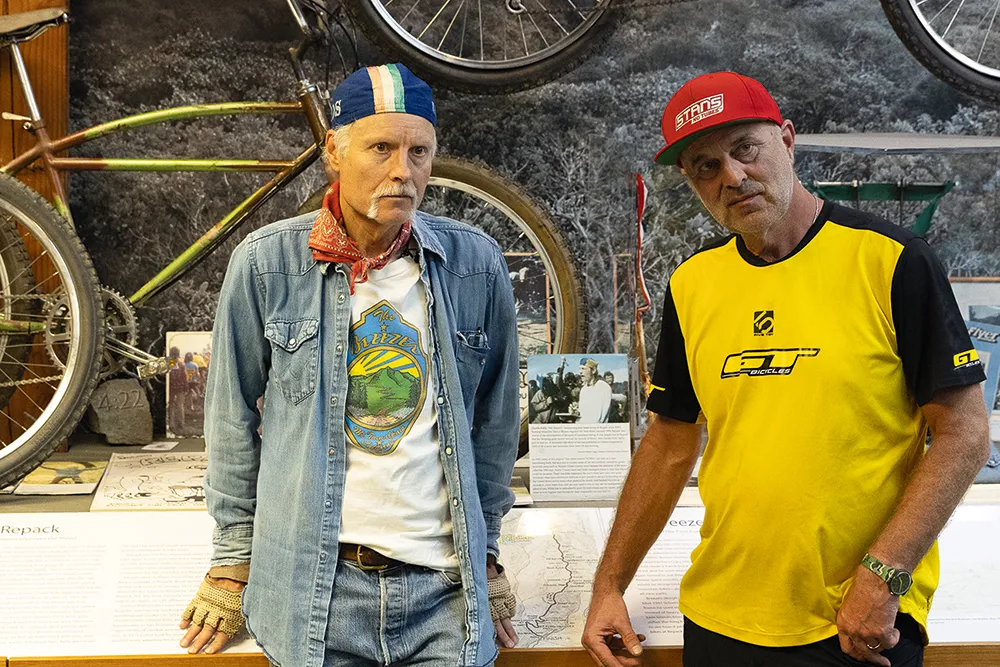
German cycling superstar Hans Rey is one of the most well known and respected figures in the history of mountain biking. He helped put the sport on the map during a long sponsorship with GT Bicycles as a professional trials rider performing stunt demos on 20in and 26in-wheeled bikes.
Now 59, he has been involved with MTB since its inception and has been central to the evolution and mainstream acceptance of mountain biking.
His letter calls for standardised guidelines worldwide.
Electric bikes are under strict regulations in many countries. In the UK, they are speed limited to 15.5mph (25Kmh). However, guidelines differ across the world, with e-pedelec rules in Europe allowing more power, and a higher speed limit of 20mph in North America.
Rey is a Bosch-sponsored rider and his views align closely with those of Bosch, which is a member of the Zweirad Industrie Verband (ZIV). Bosch produces only motors with a maximum output of 750W peak power; less powerful than Specialized's S-Works motors (850W) and DJI’s Avinox (1,000W).
Under Rey's proposal, these bikes (and anything over 750W) would require a licence and insurance because they would be classified as class 2 electric mopeds; these require that riders must be 15 years of age or older and possess a class 2 moped licence (or a higher-level driving licence). Motor vehicle insurance would also be required.