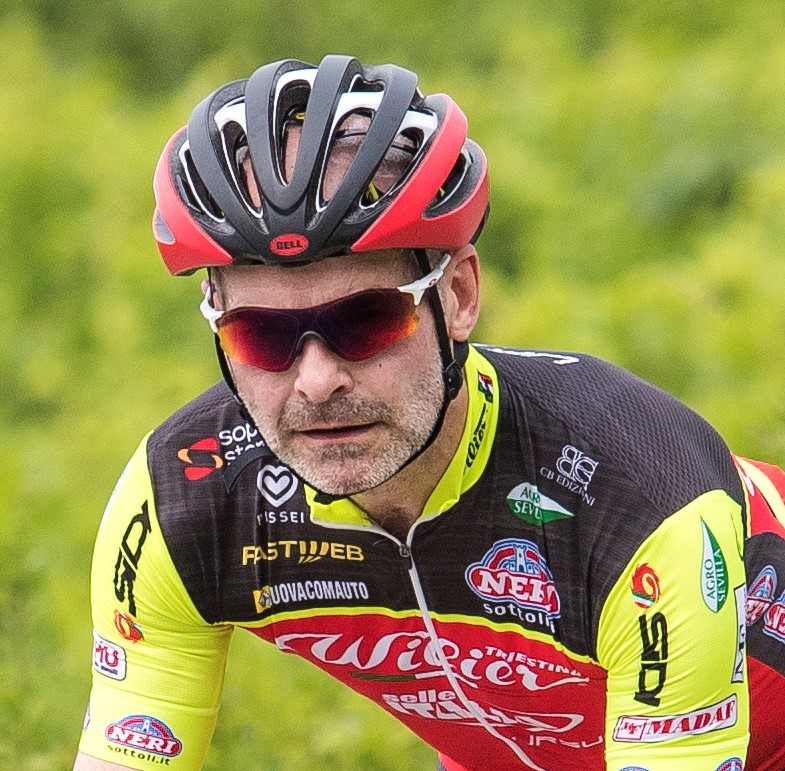
If you've tuned into the Tour de France, you may have noticed that when a rider gets a flat puncture, they wait by the roadside until a helper comes and changes their wheel.
It wasn't always this way, and riders used to fix a flat tyre themselves.
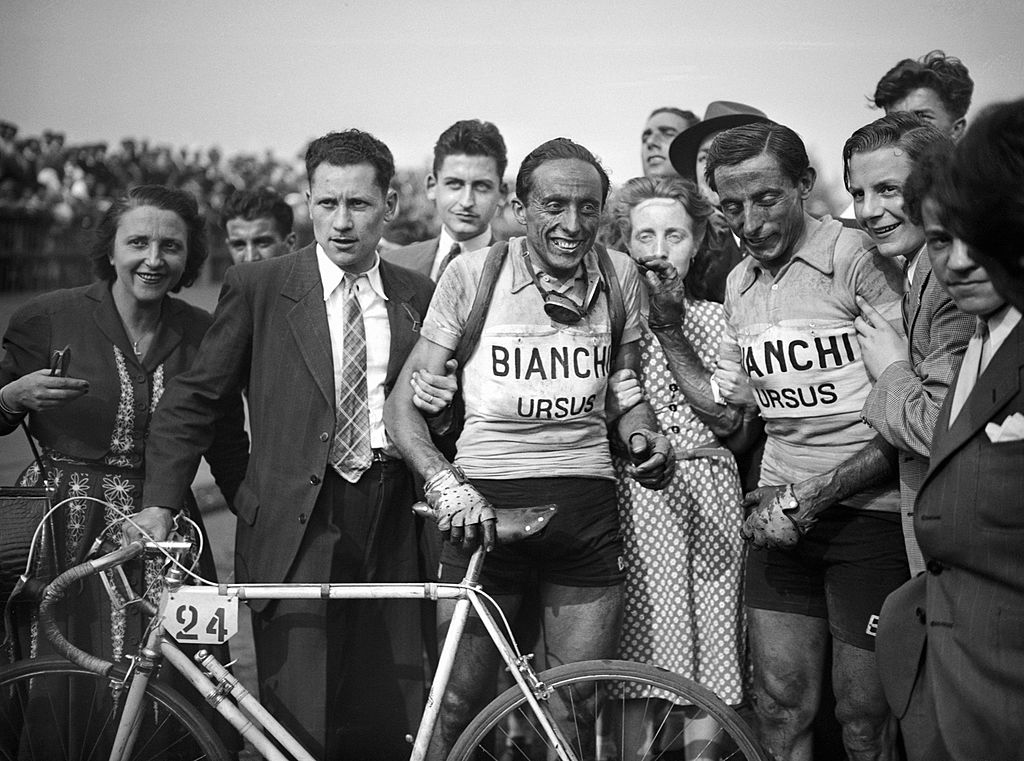
That’s why you’ll see photos of riders such as Fausto Coppi, who won the Tour de France in 1949 and 1952, with a spare tyre wrapped around their shoulders, to swap in case of a puncture.
Saving time
The modern Tour de France may be thousands of kilometres long, but mere seconds can determine the winner of a stage and even the overall race.
This is the main reason why riders no longer fix punctures themselves. The faster a rider can get on the move again, the better.
Nowadays, each team will have a team car following, loaded with spare bikes and wheels. It’s a lot quicker to swap equipment than to repair it and each team has specialist mechanics to sort out problems, replace flat tyres and clean bikes between stages.
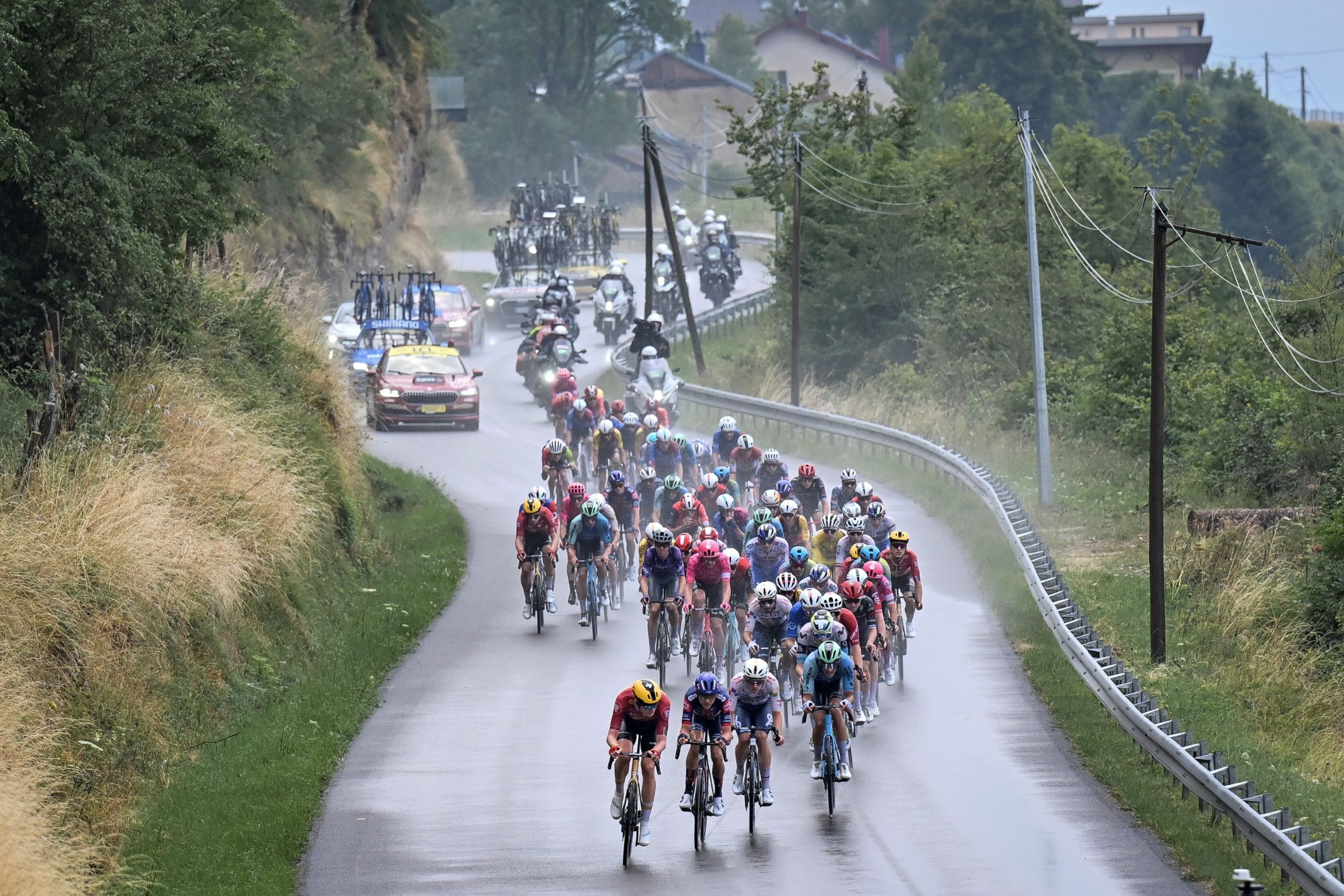
When road bikes had rim brakes, it was usual to swap wheels when a rider got a flat tyre, because wheels had quick-release hubs that made for a rapid wheel change. Nowadays, a team car is more likely to swap a rider to a spare bike, because this is faster than unscrewing a thru-axle on a modern disc brake bike, although this does still occur.
If a team leader has a mechanical problem at a key stage in a race, they may swap bikes with one of their supporting riders to avoid losing time. It’s more usual for them to wait for one of their own bikes, carried by a team car, though, because this will be set up precisely for them. Usually, one or more of their support riders will drop back to help them draft back to the peloton.
Shimano neutral service
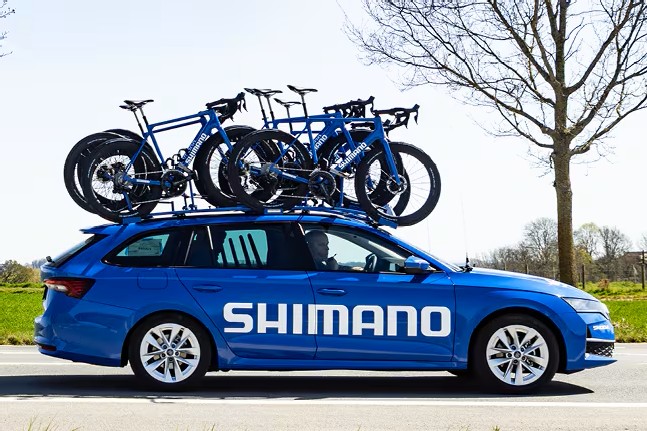
If a rider’s team car is a long way back and will take time to reach them, they can also call on neutral service. For a number of years, this has been provided by Shimano’s blue-painted cars and motorbikes, and before that Mavic’s yellow cars.
Neutral service will provide support to a rider on any team, whereas team cars (and riders) are only allowed to provide assistance to members of their own team.
Neutral service motorbikes will supply a spare wheel for a rider’s own bike and may fix a mechanical problem. Neutral service cars can do the same, but also carry bikes that a rider can swap to, as Tadej Pogačar did at the 2026 Paris-Roubaix.
Since riders are of different heights, neutral service bikes come in different sizes and have a dropper seatpost so they can be adjusted to fit the rider better. There will also be bikes fitted with different pedal systems, because different teams use different, incompatible pedals and shoe cleats.
A rider will usually only ride a neutral service bike for a short distance, enabling their team car to catch up and give them one of their own spare bikes.
More from the Tour de France
- New Cervélo R5 hiding in plain sight at the Tour de France
- Visma-Lease a Bike is trialling carbon-spoked Reserve wheels at the Tour de France
- Seven remarkable numbers behind Tadej Pogačar's Tour de France success
- Is this Colnago V5Rs with ENVE aero extensions Tadej Pogačar’s mountain TT bike?
- How to watch the 2025 Tour de France