Throughout the build-up to Paris-Roubaix 2026, we’ll be answering common, quirky and unexpected questions about the Queen of the Classics – not the headline debates such as who’ll conquer the cobbles this year, but the juicy nuggets and details that make this incredible race unlike any other.
In our first instalment, we ask: why don’t riders use gravel bikes at Paris-Roubaix?
Paris-Roubaix is defined by its iconic cobbled secteurs, with riders tackling the famed unpaved roads at bewildering speeds.
Why, then, do riders opt for road bikes with only moderate concessions made to comfort when gravel bikes, on paper, look like the perfect fit for the job?
It's a question of compromise.
The first 100km of Paris-Roubaix is raced exclusively on metalled roads, before it hits the first cobbled section. From there, ‘only’ 55km of the 2026 route is on cobbles in the total 260km-ish of racing.
So, although a gravel bike might be handy for the cobbles, it could prove slower than a road race bike for the rest of the parcours, where the penalty of opting for a gravel bike would outweigh that of a modern aero bike.
In 2024, the Israel-Premier Tech team did indeed ride the Factor Ostro Gravel at Paris-Roubaix.
That’s a gravel race bike with aero tube profiles derived from Factor’s road bikes. But, on the whole, riders stick to aero road bikes.
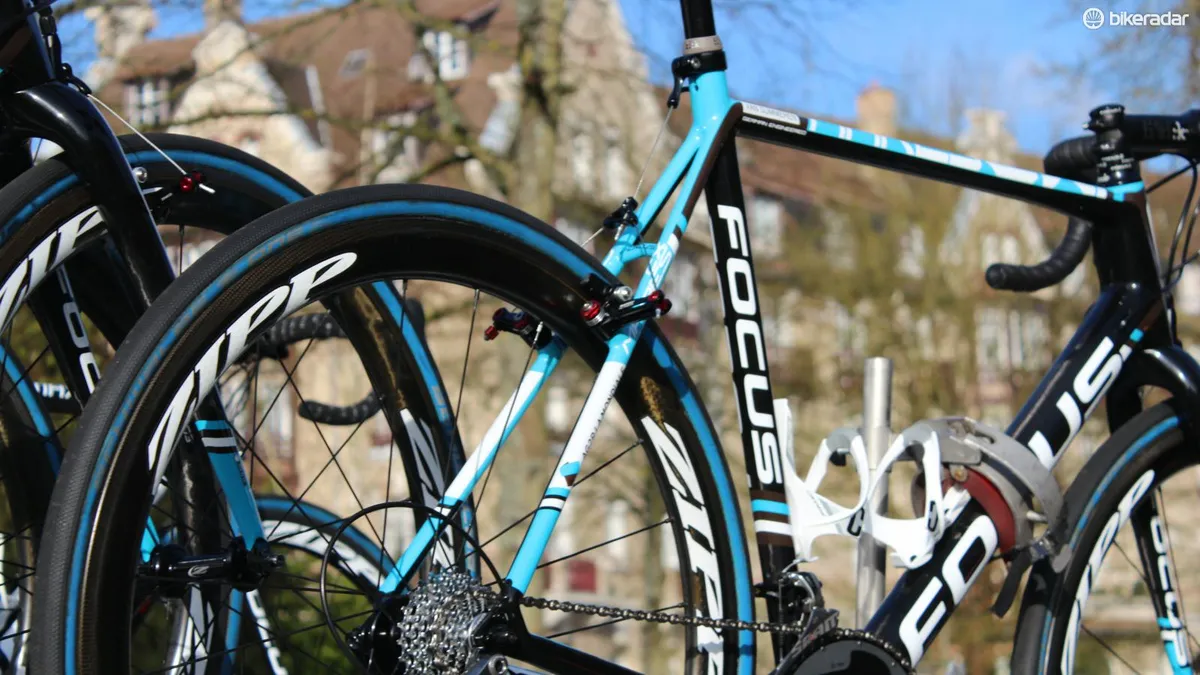
In the past, when road bikes all had rim brakes, some riders looked outside of the road-bike stable, opting for (often modified) cyclocross bikes – the spiritual predecessors of gravel bikes.
That’s because their cantilever brakes enabled wider tyres to be fitted than there was space for between rim-brake calipers.
But modern road bikes typically have clearance for tyres at least 30mm in width, and even the Cervélo S5 aero bike typically ridden by the Visma-Lease a Bike team can fit 34mm tyres. So, tyre width is no longer really a constraint when setting up road bikes to master the cobbles.
Tyre inserts and tubeless tech enable riders to run low enough tyre pressure to smooth the cobbles and have replaced the tubular tyres used in the past.
There’s not a need at Roubaix for the super-wide tyre clearance offered by gravel bikes because conditions are frequently dry and dusty and, if it's wet, mud tends to be of the spray-on variety rather than the gear-clogging sort.

We have, however, seen gravel derailleurs and gravel wheels at past editions of Paris-Roubaix, so gravel tech has its place. It’s possible that more teams will choose to showcase their sponsors’ gravel race bikes in future, too.
But pro racers are conservative and don’t like to experiment – remember the furore over the introduction of disc brakes?
So there’s a tendency to stick to what they know, even if it’s not best adapted to the cobbles. If road bikes were good enough for the first 100-plus editions of Paris-Roubaix, why are they not still?