SQUIRREL_14045002
At only £34.97, the Bikil 2400 is far cheaper than most dedicated mountain bike lights and has a claimed output of more than 2,000 lumens.
Its integrated 6,400mAh battery, USB-C charging and simple bar mount make the specification look impressive for the money, too.
However, claimed brightness figures don’t tell you how useful a light will be on the trail, and the Bikil’s beam limits how hard you can ride once things get faster or more technical.
Bikil 2400 at a glance
- Claimed output: 2,400 lumens
- Integrated 6,400mAh battery
- Three LEDs
- Weight: 246g
- USB-C charging
- Claimed IPX5 water resistance
- Max power runtime: 2hr 7mins
Bikil 2400 performance
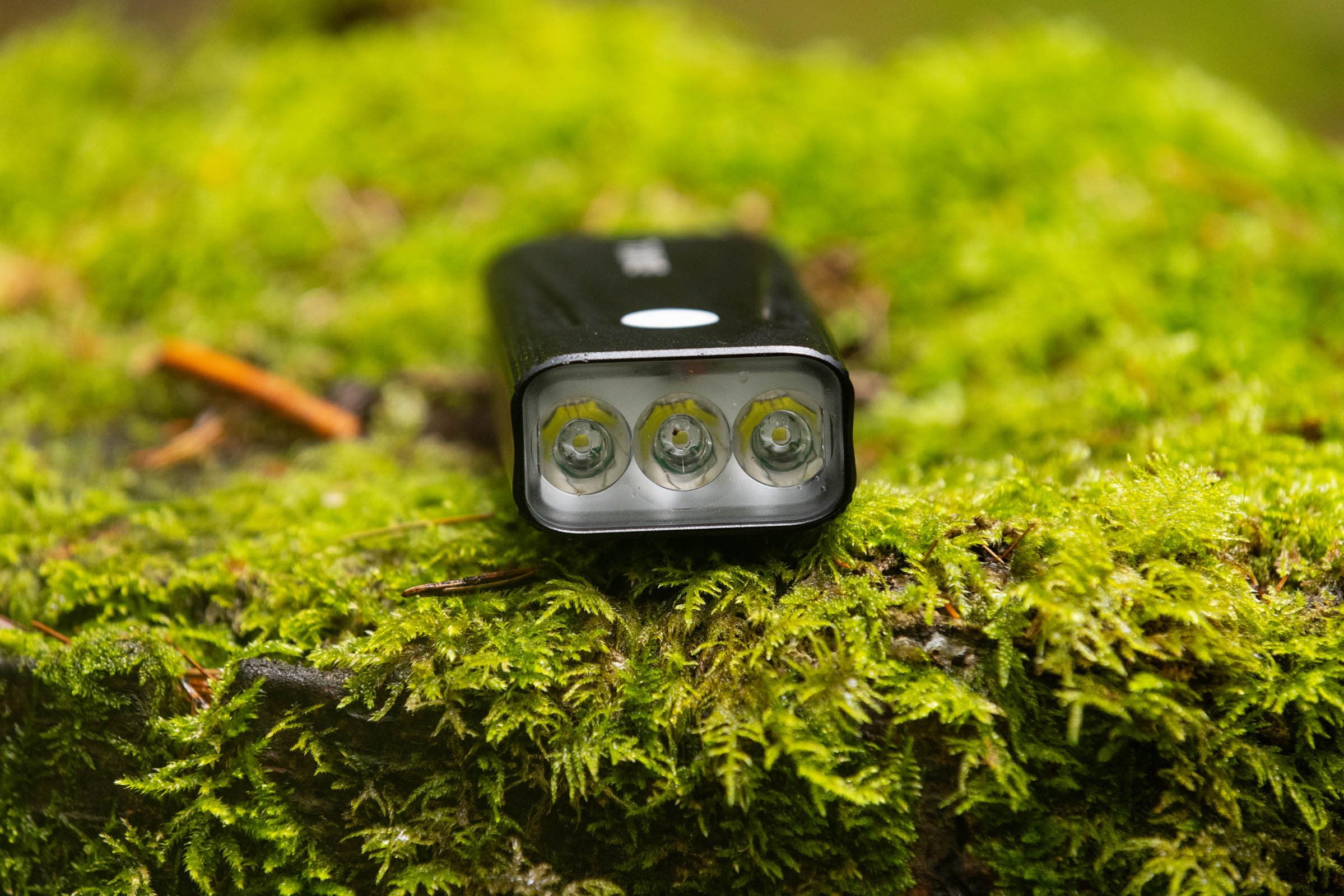
At £34.97, the Bikil 2400 is an extremely cheap mountain bike light and it's inevitable there will be some compromises at that price point.
On the trail, the compromise is the beam. Despite a claimed 2,400-lumen maximum output, it was by far the weakest light of the group I tested together.
That judgement is based on what reaches the trail. Whatever the headline number, the Bikil doesn’t light up enough ground to inspire confidence.
Its biggest limitation is the beam shape. The light is concentrated into a narrow central area with a fairly abrupt edge, leaving the sides of the trail much darker.
On straightforward tracks, the central spot provides enough light to see where you’re going, but once the trail starts twisting the lack of peripheral beam spread becomes obvious. Corner exits are harder to pick up early and the view ahead can feel tunnel-like.
That affects speed. I could ride comfortably on easier trails, but I had to back off notably when things were more challenging. Fast, open descents expose the lack of reach and width most clearly.
On steeper, technical ground, it works better when your chosen line stays directly ahead, although searching for an alternative line quickly highlights the narrow spread again.
Trail detail within the lit area is reasonable, but foreground illumination could be better because roots and rocks cast longer shadows close to the wheel. Its slightly rose-tinted colour is pleasant, although it doesn’t give the same crisp contrast as rival lights.
The mount is a pleasant surprise. It’s easy to fit, the clip-in connection feels secure and the light can be rotated to help positioning. There was a little vibration on rough ground, but it stayed in place.
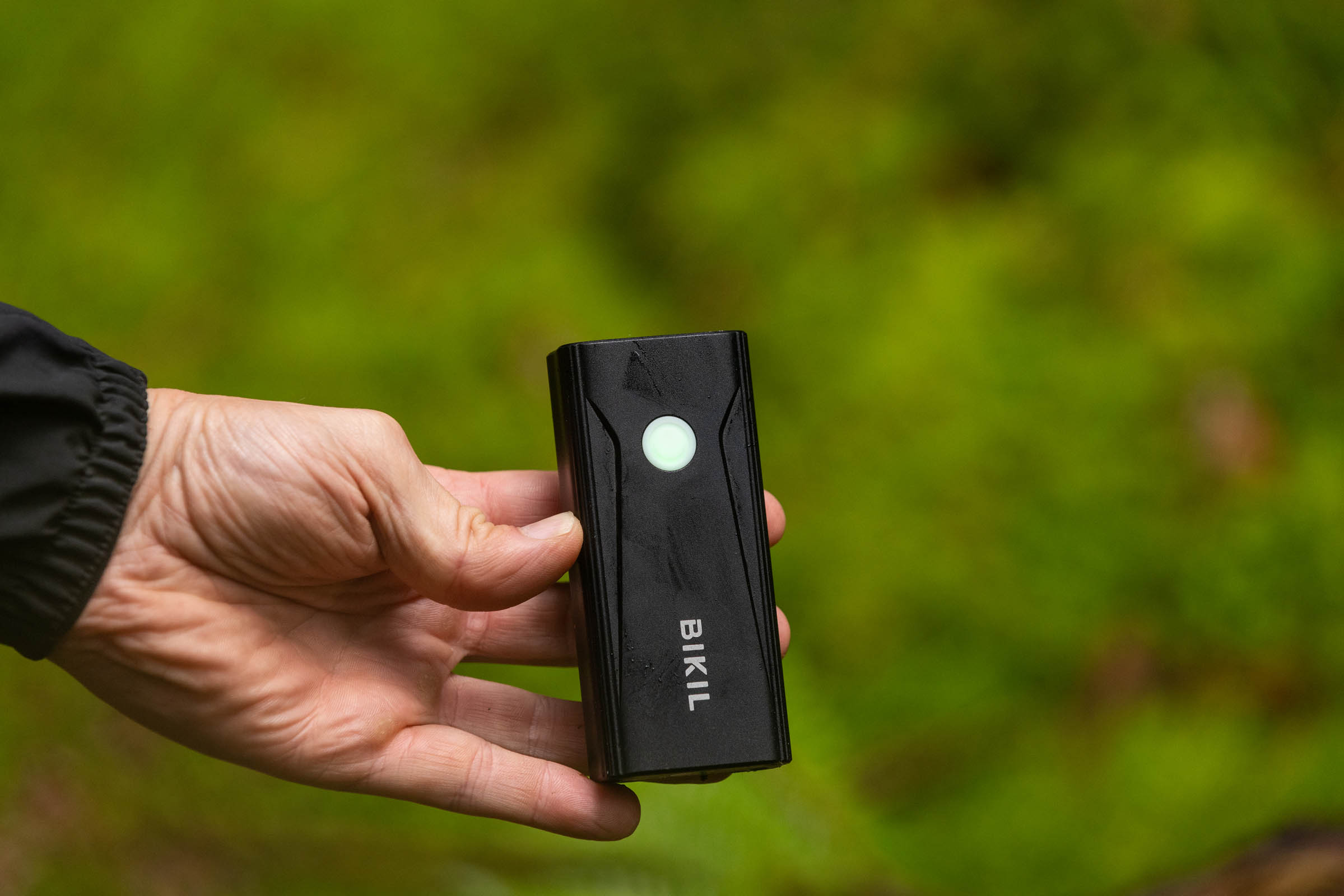
The controls are simple, too, with six modes and a main button that is easy to use when wearing MTB gloves. You have to cycle through the settings, though, and the green/red battery indicator is basic.
The aluminium-bodied light has three LEDs, a 6,400mAh battery, USB-C charging and a claimed IPX5 water-resistance rating. During testing, it remained at maximum power for around 2hrs 7mins, which is impressive.
For occasional use on easy trails or gravel, the Bikil is a remarkably cheap option. For faster or more technical MTB riding, its narrow, weaker beam asks you to slow down too much.
How we tested
I tested the Lezyne alongside three rival integrated-battery MTB lights, riding them back to back over the same mix of trails, from easy greens to technical blacks. These included fast descents, tight singletrack, rough rooty sections, steep climbs and slower terrain.
I compared beam reach, width, shape and colour, along with how clearly each light revealed trail texture as speed increased. I also assessed mount security, controls and battery information while riding in gloves.
For the runtime test, each light was fully charged and run at maximum power until it dropped noticeably into a lower-output mode, rather than simply timing how long it remained illuminated.
Lights tested
- Bikil 2400
- Sigma Buster 1600
- Moon Rigel Enduro 2600
- Lezyne Super Drive 1800+ Smart
Bikil 2400 bottom line
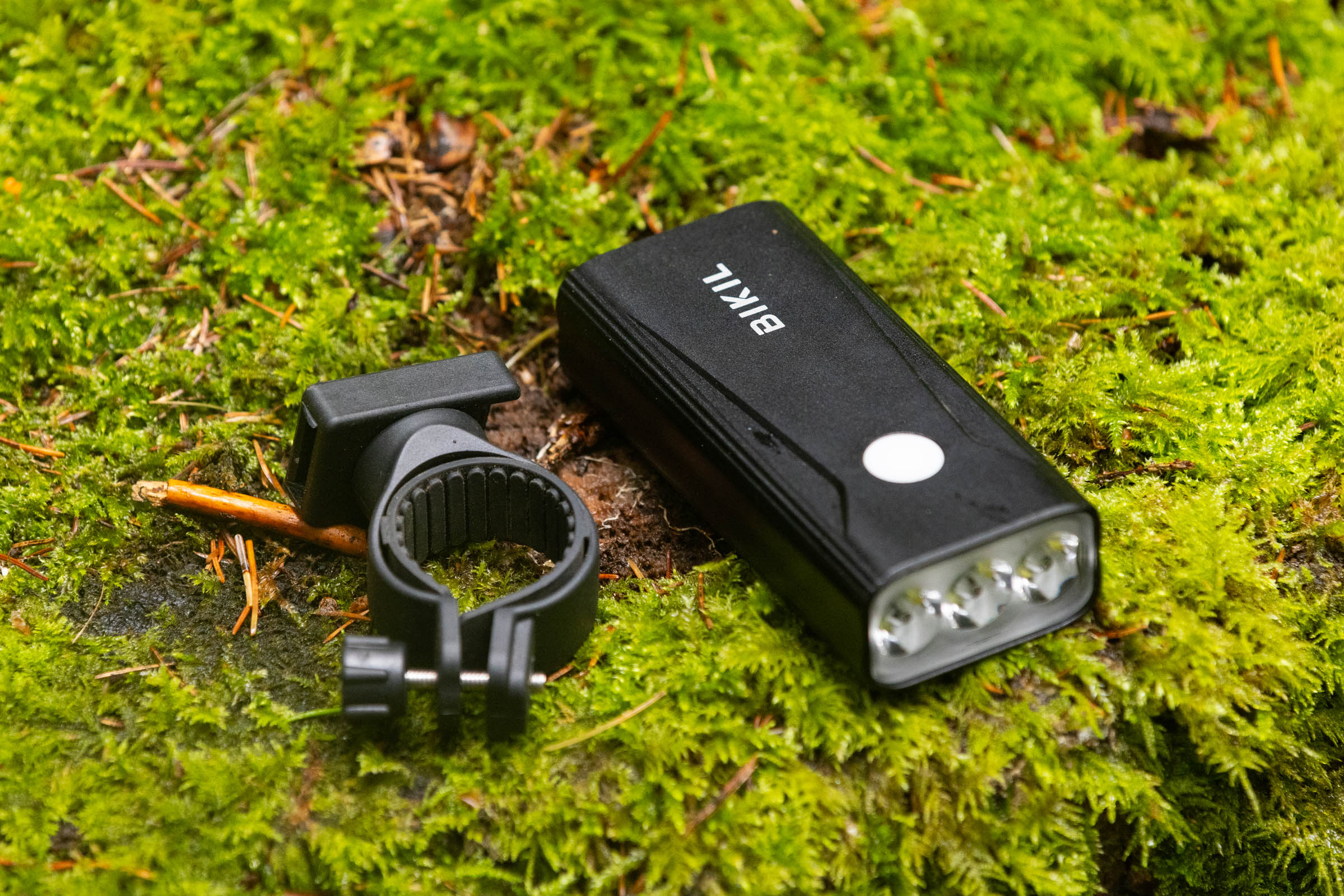
The Bikil’s biggest achievement is giving you a genuinely usable rechargeable MTB light for less than £35. Its 2hrs 7min maximum-power runtime is excellent and the mount and controls work better than the price suggests.
However, the narrow beam, limited peripheral light and relatively weak usable illumination mean it can’t match the confidence offered by more expensive lights.
It’s good enough for easier trails, gravel and riders who just want an affordable route into night riding, but if you frequently ride fast or technical singletrack, spending more gets you a much more useful beam.
SQUIRREL_14045002