SQUIRREL_14043795
With a claimed 1,600-lumen maximum output, the Sigma Buster 1600 is not the most powerful light. However, its focused beam makes surprisingly effective use of that output, producing enough reach to illuminate a useful distance ahead on faster sections.
At £109.99, it sits somewhere in the mid-range for mountain bike lights, with competitors such as the Moon Rigel Enduro 2600 and Lezyne Super Drive 1800+ Smart retailing for upwards of £150.
It has a focused beam, decent reach and is easier to use than some rival lights, but the lack of peripheral illumination became an issue in testing.
Sigma Buster 1600 at a glance
- Claimed output: 1,600 lumens
- Two LEDs
- USB-C charging
- Weight: 240g
- Claimed IPX4 water resistance
- Max power runtime: 1hr 35mins
- Battery capacity not stated in the supplied test information
Sigma Buster 1600 performance
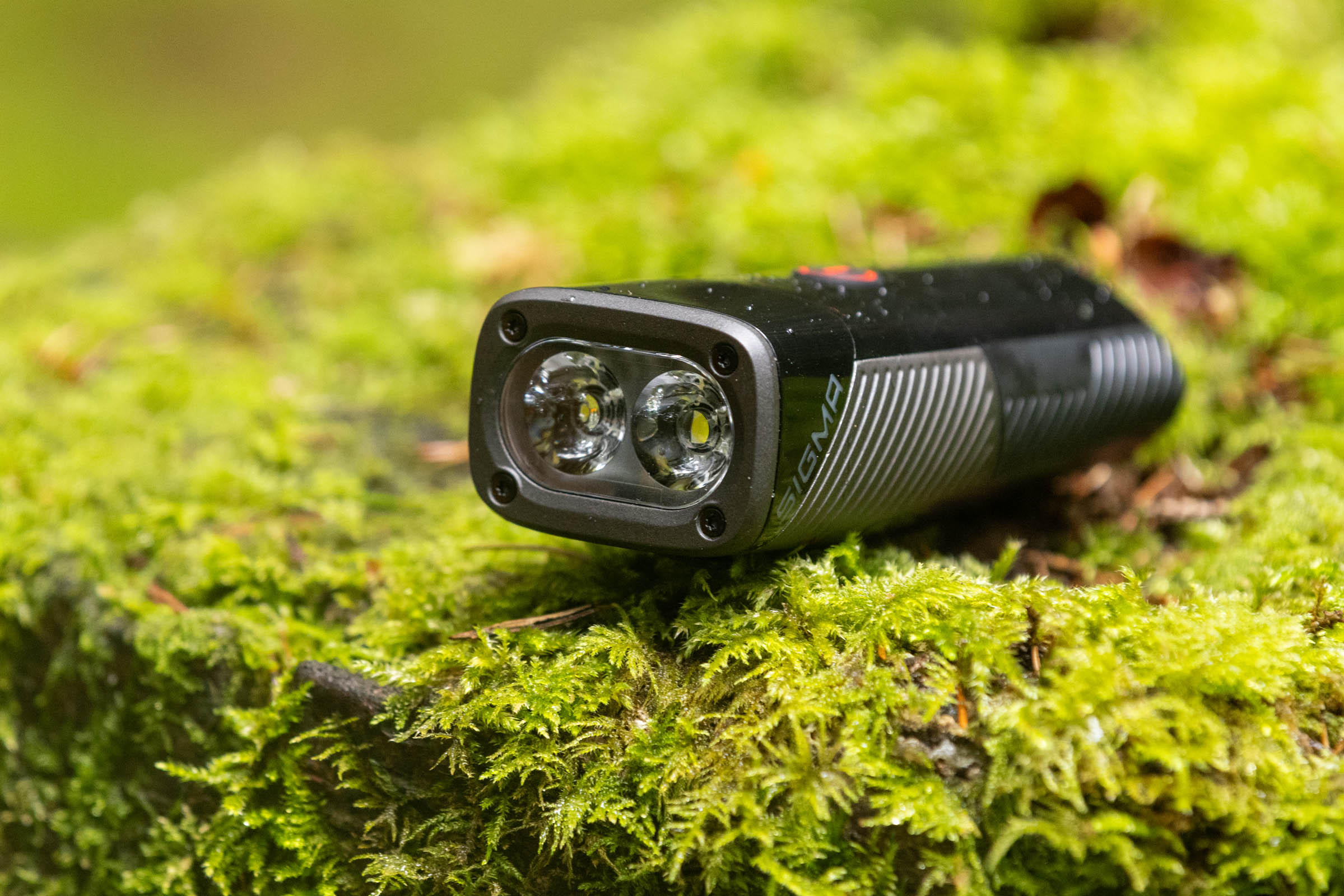
The Sigma Buster 1600 has the lowest claimed maximum output of the group of mountain bike lights I tested together, yet it makes surprisingly good use of its 1,600 lumens.
Its strongest setting produces a focused beam with enough reach to illuminate a useful distance down the trail, so on straighter sections it can feel more powerful than the headline figure suggests.
Where it struggles is width. The beam is concentrated towards the centre and finishes more abruptly than other lights of this type. That leaves less peripheral light on the sides of the trail and creates a mild tunnel-vision effect.
That isn’t a major problem at a steady pace, but the faster I rode, the more obvious it became. Tight turns are harder because the exit isn’t illuminated as early, forcing a little more speed control than I’d want from a dedicated MTB light.
Within the beam, visibility is good. Roots, rocks and surface changes stand out clearly, and the cooler white colour delivers useful contrast without feeling particularly harsh.
On steep, technical lines, the central spot works well, provided the line stays within the beam. Foreground lighting is less convincing than rival lights, with less focus falling immediately in front of the wheel.
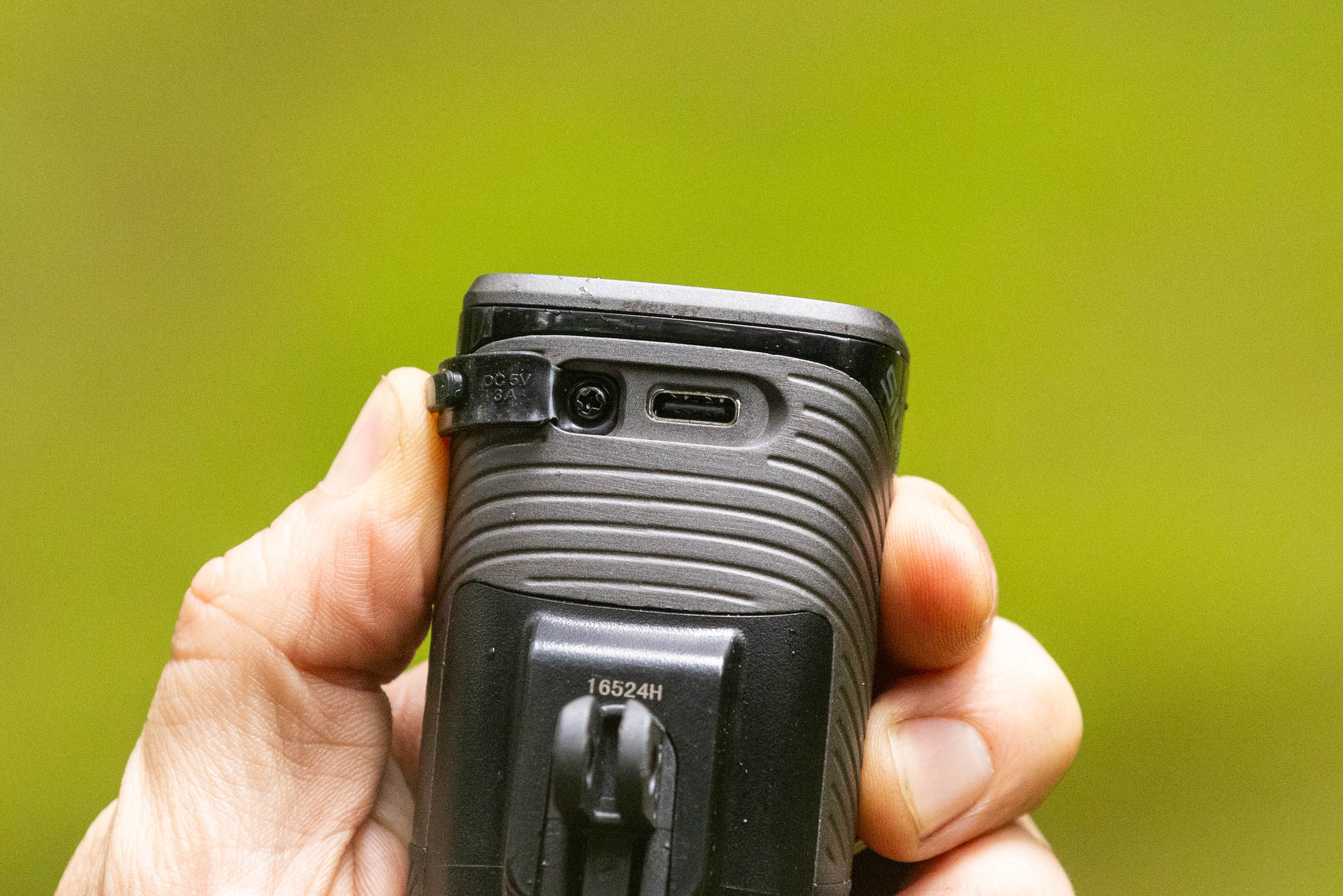
The mount is straightforward to fit, although securing it properly takes some care. On a 35mm carbon handlebar, the clamp can slip if it isn't tightened enough, and the small adjustment dial is awkward to tighten firmly with your fingers. A flat-blade slot helps with extra purchase.
Once tightened, the light stayed put with only a little vibration.
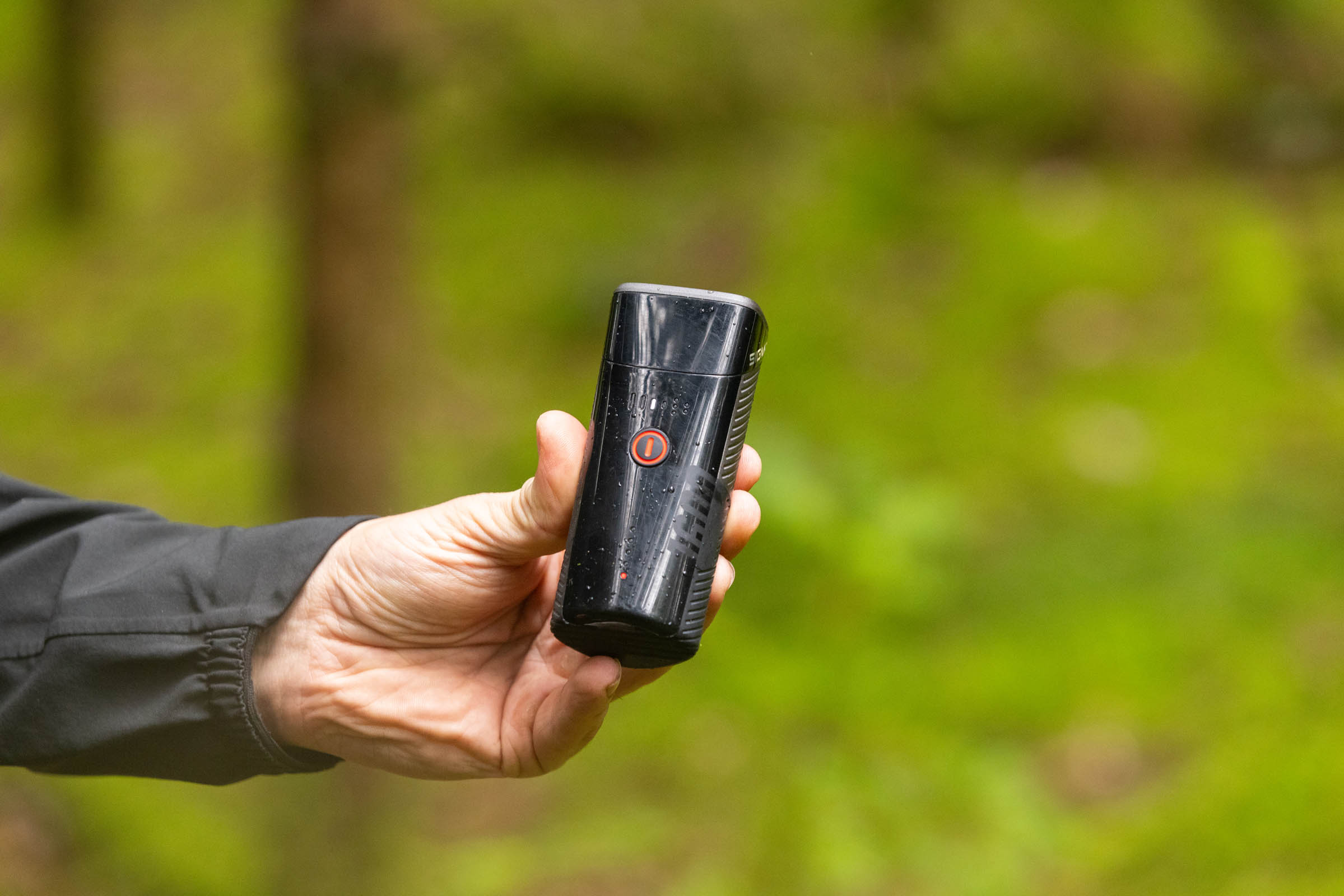
Sigma has done a better job with the controls. There are six modes, but the LED display on top makes it immediately obvious which setting you’re using. Battery information is similarly clear, with separate LEDs showing remaining charge, and the main button is easy enough to find when wearing MTB gloves.
Charging is through USB-C, the body uses two LEDs and Sigma claims IPX4 water resistance. The maximum-power runtime for me was 1hr 35mins. After that, the power dropped, but there was still enough juice for a two-hour thrash if I used the battery smartly.
The Buster is easy to live with, but its narrow beam limits confidence when speed rises. It suits riders happy at a moderate pace, especially on less enclosed trails.
How we tested
I tested the Lezyne alongside three rival integrated-battery MTB lights, riding them back to back over the same mix of trails, from easy greens to technical blacks. These included fast descents, tight singletrack, rough rooty sections, steep climbs and slower terrain.
I compared beam reach, width, shape and colour, along with how clearly each light revealed trail texture as speed increased. I also assessed mount security, controls and battery information while riding in gloves.
For the runtime test, each light was fully charged and run at maximum power until it dropped noticeably into a lower-output mode, rather than simply timing how long it remained illuminated.
Also tested
- Bikil 2400
- Sigma Buster 1600
- Moon Rigel Enduro 2600
Sigma Buster 1600 bottom line
The Buster 1600 proves outright lumen figures aren’t everything, although it falls short of the best mountain bike lights. Its focused beam has a decent reach and good contrast, while the clear mode and battery displays make it easy to use.
The problem is it doesn’t spread enough of that light across the trail.
Tight corners and technical sections expose its lack of peripheral illumination and you need to rein in your speed sooner than with other lights.
Maximum output lasted 1hr 35mins in testing, although lower-output modes extend the useful ride time beyond that. It’s a solid option for moderate-paced night riding, but not the strongest choice for fast, twisting trails.
SQUIRREL_14043795