SQUIRREL_14036103
The Lezyne Super Drive 1800+ Smart front light takes a different approach from simply throwing as much light as possible into the distance.
Its 1,800-lumen output is spread broadly and evenly across the trail, giving excellent visibility immediately in front of the bike and towards the edges of the track.
That makes it particularly appealing for technical woodland riding, although at £150 there are cheaper rival lights.
Lezyne Super Drive 1800+ Smart at a glance
- Claimed output: 1,800 lumens
- Integrated 6,600mAh battery
- Three LEDs
- Weight: 244g
- USB-C charging
- Claimed IPX7 water resistance
- Max power runtime: 1hr 30mins
Lezyne Super Drive 1800+ Smart performance
The Lezyne Super Drive 1800+ Smart doesn’t throw light as far down the trail as the Moon Rigel Enduro 2600 I tested it alongside, but it does a good job of illuminating the full width of the trail.
Its 1,800-lumen maximum output is well short of the Moon’s claimed 2,600 lumens, yet the broad, even beam makes the Lezyne particularly effective on tight woodland trails where peripheral vision matters as much as outright distance.
There are no distracting hotspots, and plenty of light reaches down towards the front wheel. That reduces the deep shadows that can form behind roots, rocks and trail undulations, making the immediate surface easy to read when climbing slowly or picking through technical ground.
The generous spread helps in corners, too, because the edges of the trail remain visible and exits appear earlier than they do with lights that have a narrower beam.
The trade-off is reach. There is enough throw for a reasonable pace, but on faster, more open descents I never felt that comfortable pushing on. Its warmer, yellower light is easy on the eyes and avoids harsh reflections, although a whiter beam gives stronger contrast on some surfaces.
Pairing the Lezyne with a focused helmet light makes sense, enabling the bar light to fill the trail while the helmet light adds reach.
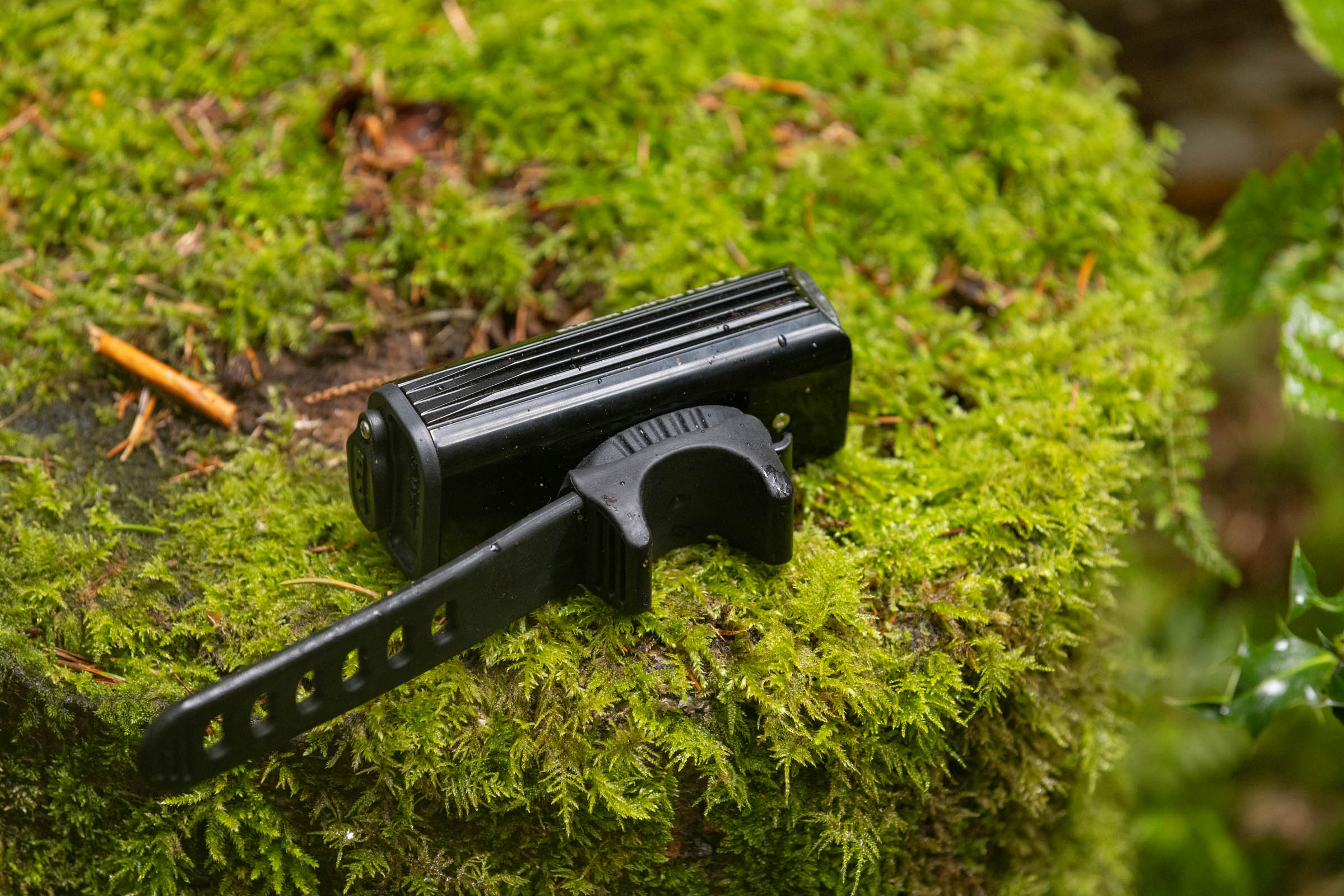
Fitting is quick thanks to the integrated strap and removing the light for charging is straightforward.
The downside is stability. There was noticeable vibration on rough ground, and harder compressions could alter the light’s angle slightly. It was rarely a major distraction, but at £150 I’d like the mount to hold its position more securely.
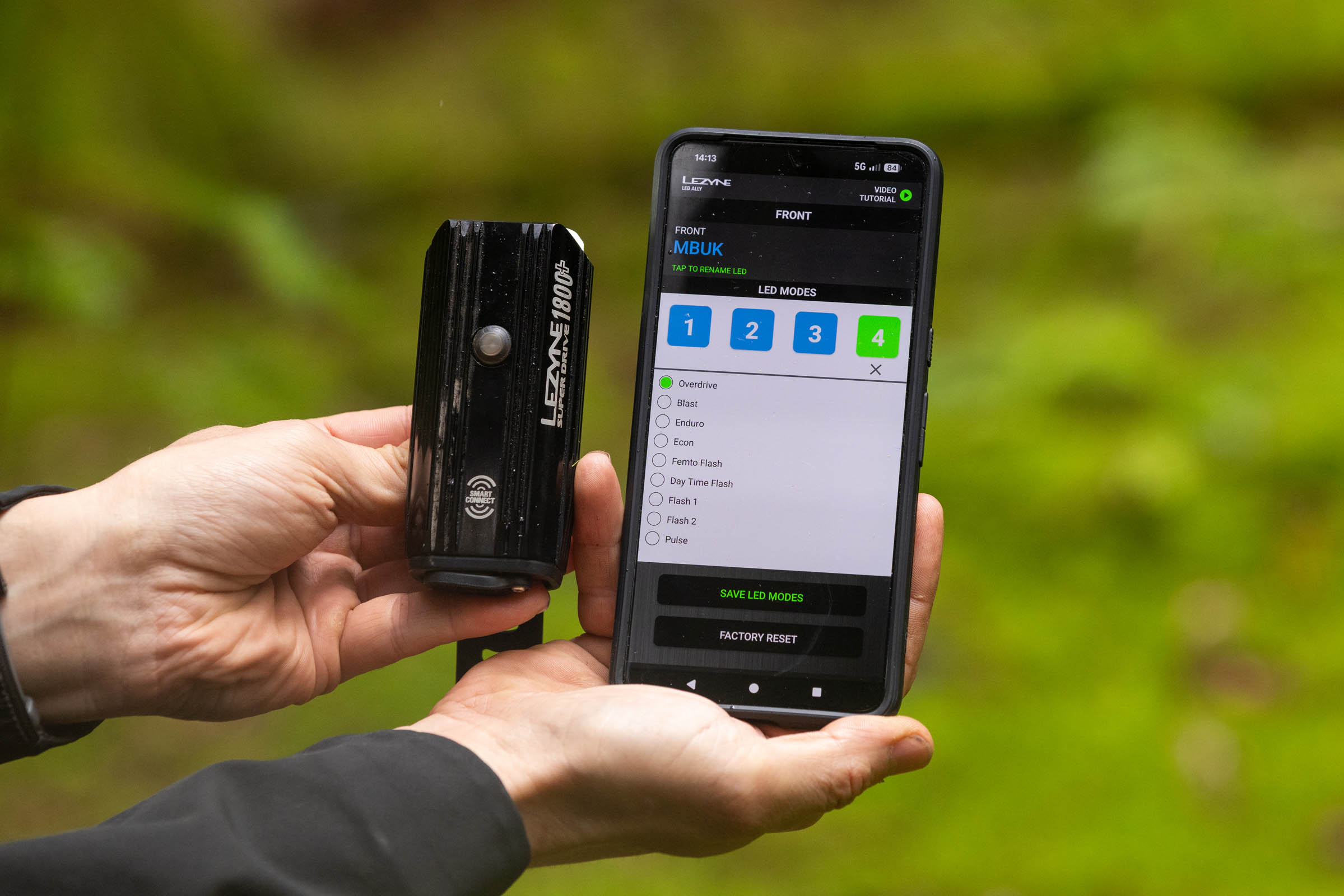
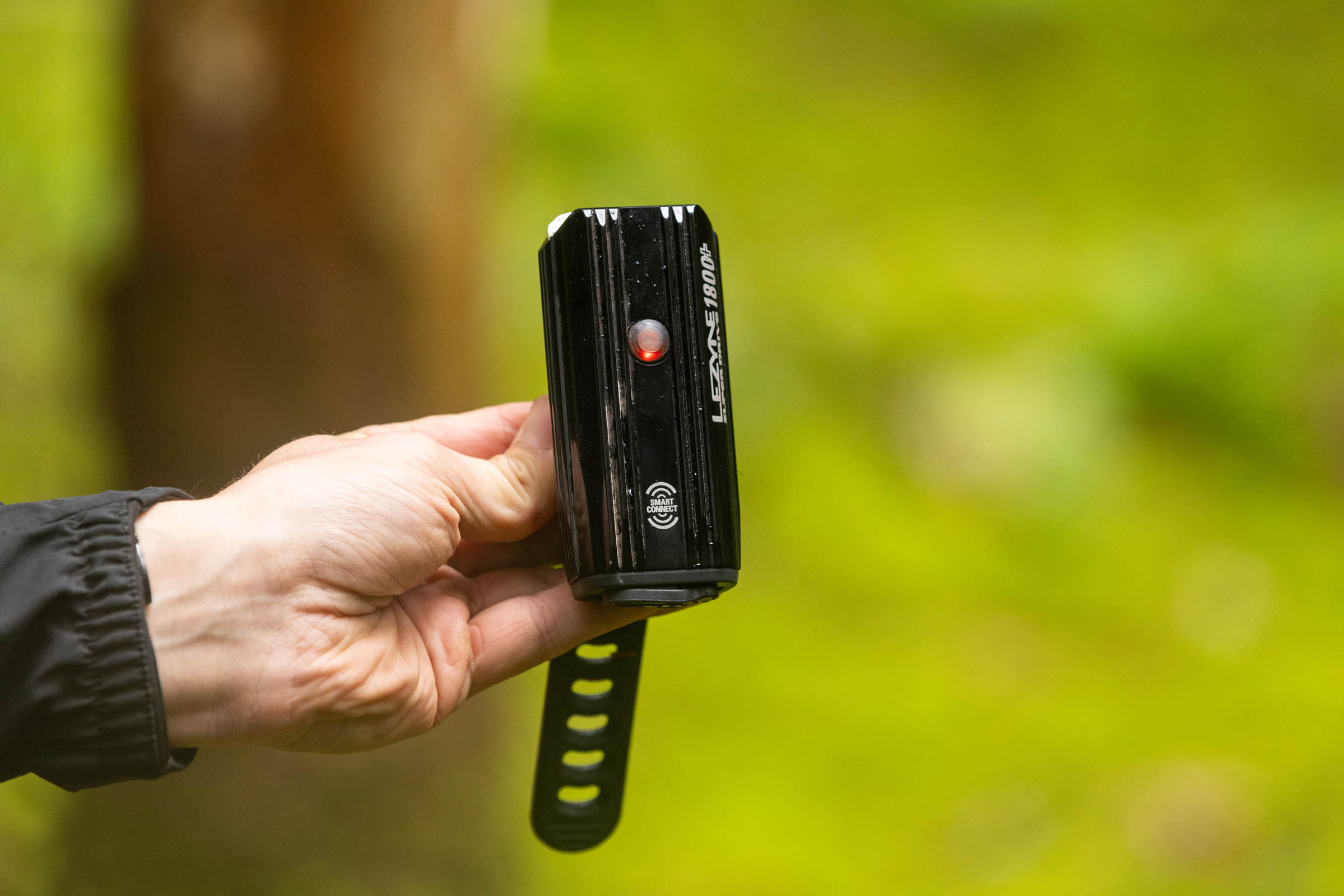
The controls are easy to live with. The buttons work well when wearing MTB gloves and Lezyne’s LED Ally app enables you to configure the available settings. The factory modes are spaced sensibly, and the memory function means you don’t have to start from scratch for each ride. Battery indication is less precise than others, relying on a green, amber and red light.
The 6,600mAh battery charges by USB-C and Lezyne claims IPX7 water resistance plus a 1hr 45min maximum-power runtime. In my test, that time was a little shorter at 1hr 30mins, but there was enough useable light in its low-power modes to get off the trails if needed.
For slower, twistier trails, the Lezyne’s wide beam is excellent. For faster riding with a single bar light, though, there are better options.
How we tested
I tested the Lezyne alongside three rival integrated-battery MTB lights, riding them back to back over the same mix of trails, from easy greens to technical blacks. These included fast descents, tight singletrack, rough rooty sections, steep climbs and slower terrain.
I compared beam reach, width, shape and colour, along with how clearly each light revealed trail texture as speed increased. I also assessed mount security, controls and battery information while riding in gloves.
For the runtime test, each light was fully charged and run at maximum power until it dropped noticeably into a lower-output mode, rather than simply timing how long it remained illuminated.
Also tested
- Bikil 2400
- Sigma Buster 1600
- Moon Rigel Enduro 2600
Lezyne Super Drive 1800+ Smart bottom line
If your night rides involve tight woodland, awkward climbs and technical trails rather than flat-out open descents, the Super Drive’s excellent beam spread makes a strong case for it. Foreground visibility is particularly good, while its smooth peripheral illumination helps you see through turns without the tunnel-vision effect of narrower lights.
It gives away noticeable reach to its rivals, though, and its strap mount can vibrate or shift on bigger impacts.
Maximum output lasted around 1hr 30mins before reducing power, although there was still useful light available afterwards. It’s a good partner for a focused helmet light, but at £150 its compromises are harder to ignore when a rival such as the Moon Rigel costs essentially the same.
SQUIRREL_14036103