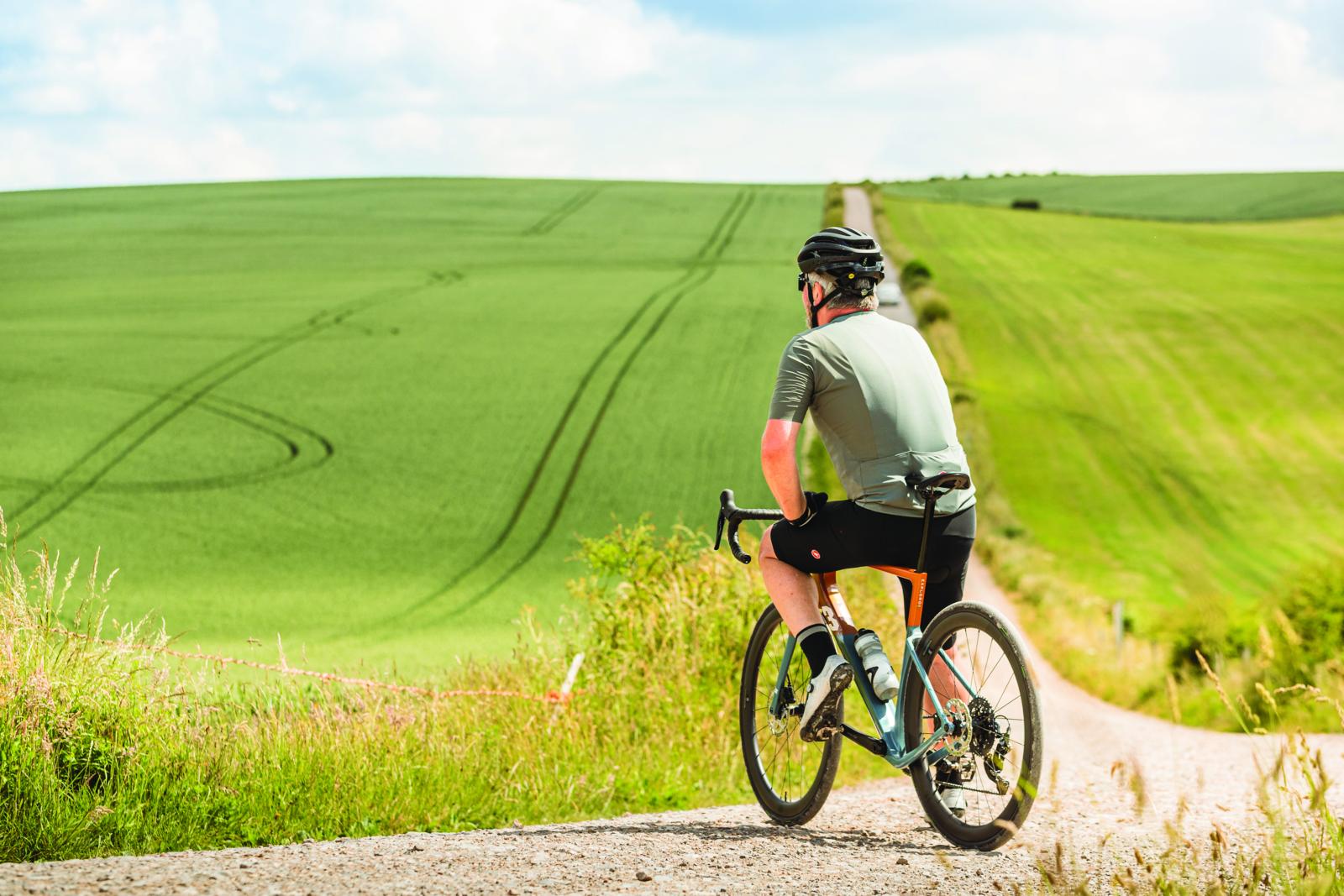
The latest incarnation of Orbea's Terra brings improvements in aerodynamics, weight, versatility and an updated geometry for more rough-stuff capability. It has been completely reshaped, with an oversized down tube for ample in-frame storage, a new fork with a forward-facing crown and a cut-out for compliance, plus clearance for 50mm tyres.
In addition to this Terra, with the brand's ‘OMR’ carbon, Orbea also offers the Terra Race with a higher-grade ‘OMX’ carbon frameset with even more of an aerodynamic and stripped-down design.
However, the tyre clearance drops to 45mm – that might be fine for UCI gravel racing in optimal conditions, but I’d argue this bigger-clearance and more versatile Terra is the better option if you live somewhere that gets all weather.
Priced at £5,749 / $6,299 / €5,999, it has proven to be a superb all-rounder in testing – at home on tarmac, gravel and trails. However, the stock tyres might be a limiting factor.
- Read more: Best gravel bikes in 2026 – top-rated carbon, aluminium, titanium and steel gravel bikes reviewed
Orbea Terra M21e Team frameset
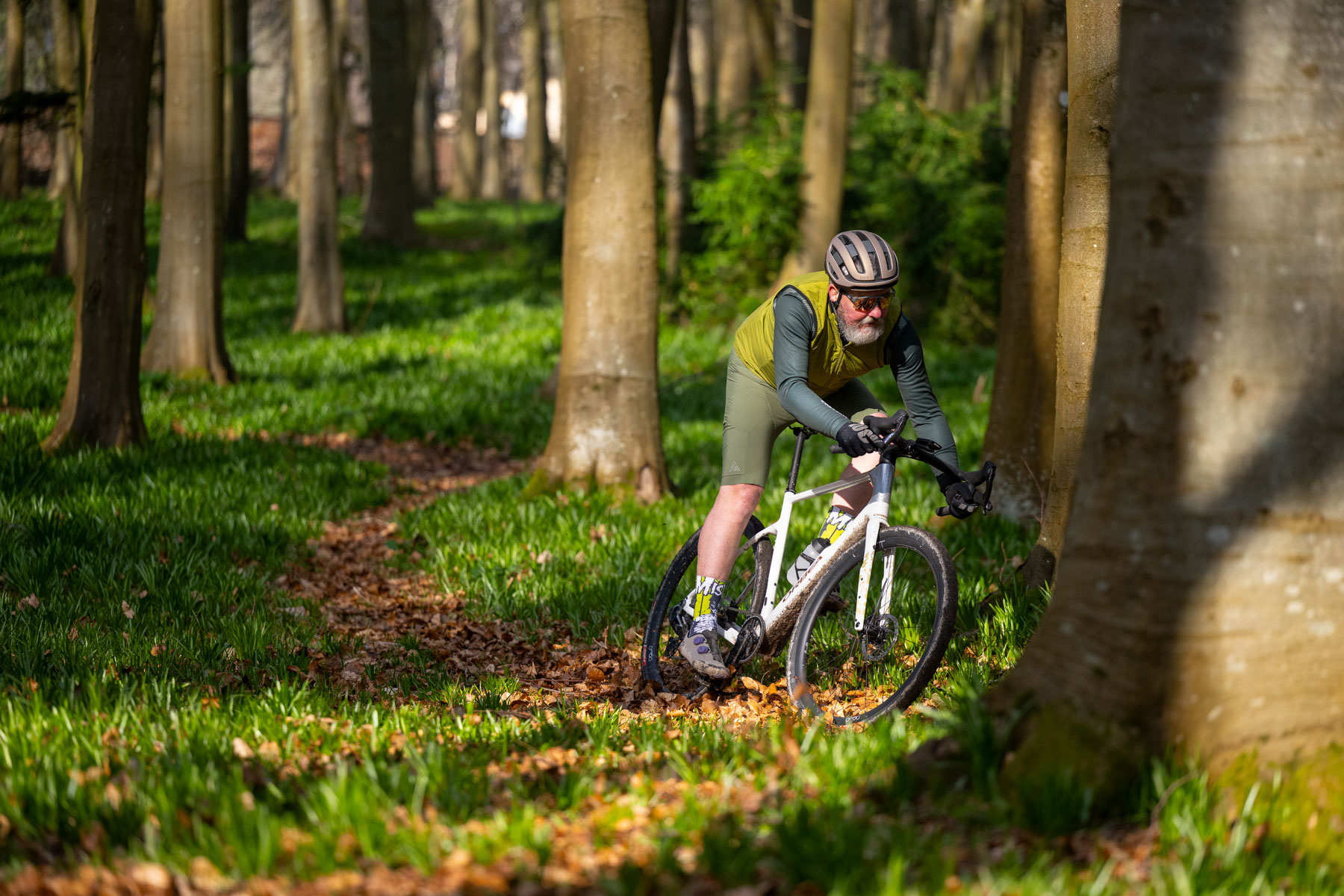
Orbea claims a 90g frame-weight reduction over the previous Terra, thanks to a new construction method that optimises the fibre orientations, helping reduce the material needed for the same strength.
A size-medium painted frame weighs a claimed 1,040g, which is impressive considering the frame has gained tyre clearance and down-tube storage.
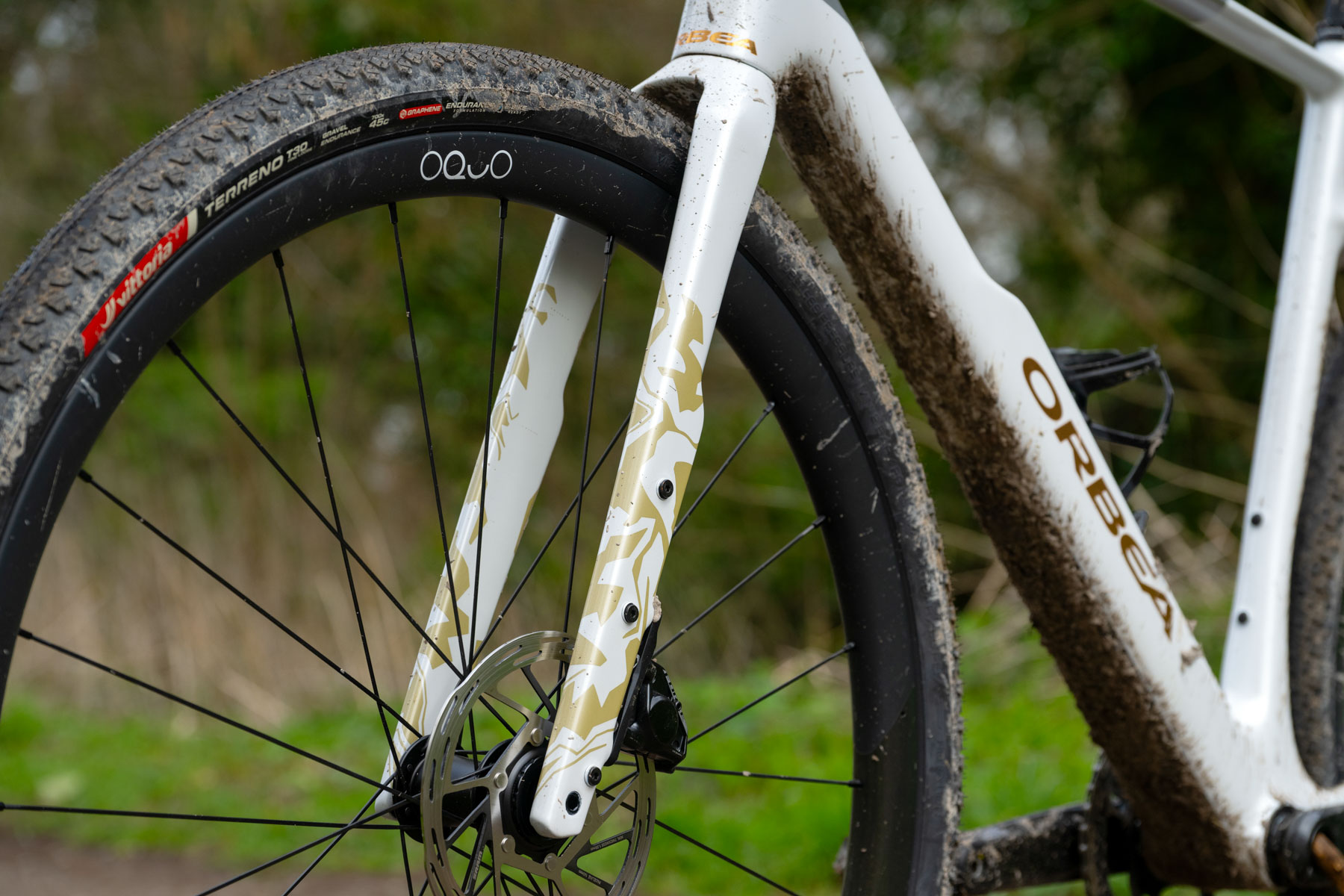
The new fork has a cut-out profile in its top third to improve compliance, and the seat tube has been made much shorter than on the previous Terra, again to aid comfort.
Orbea claims both the head tube and bottom-bracket stiffness have been boosted by 5Nm to 100Nm, and the Terra gets a future-proofed SRAM UDH dropout.
The frame is well appointed with mounting points, and there are ‘anything’ mounts on the fork, too, plus a bolt-on rock guard on the underside of the down tube.
There are eyelets for mudguards, although the tyre clearance will drop to 45mm if you run them.
Orbea Terra M21e Team geometry
The head angle has been relaxed to between 69 and 71 degrees (depending on the size), while the seat angle is steepened to 74 degrees. Meanwhile, the fork gets size-specific offsets designed to make the handling consistent across the sizes.
Longer 430mm chainstays help to lengthen the wheelbase, aiding stability. Standover height is decreased and the bottom-bracket drop is now 80mm to account for the increase in tyre clearance.
My XL test bike gets a 70.8-degree head angle, with a long 412mm reach and 625mm stack, giving the Terra a ride position akin to a sporty endurance bike, such as Giant’s Defy.
| Size | XS | S | M | L | XL | XXL |
|---|---|---|---|---|---|---|
| Seat tube (C-T) (mm) | 410 | 440 | 470 | 505 | 540 | 575 |
| Top tube (EFF) (mm) | 535 | 547 | 561 | 573 | 585 | 596 |
| Head tube (mm) | 110 | 132.5 | 153.5 | 175 | 198 | 218 |
| Chainstay (mm) | 430 | 430 | 430 | 430 | 430 | 430 |
| BB drop (mm) | 80 | 80 | 80 | 80 | 80 | 80 |
| BB height (mm) | 261 | 261 | 261 | 261 | 261 | 261 |
| Wheelbase (mm) | 1031 | 1041 | 1052 | 1061 | 1072 | 1081 |
| Head angle (degrees) | 69 | 69.5 | 70 | 70.5 | 70.8 | 71 |
| Seat angle (degrees) | 74 | 74 | 74 | 74 | 74 | 74 |
| Rake (degrees) | 45 | 45 | 45 | 45 | 45 | 45 |
| Standover (mm) | 690 | 717 | 743 | 772 | 801 | 828 |
| Reach (mm) | 386 | 392 | 400 | 406 | 412 | 417 |
| Stack (mm) | 535 | 558 | 580 | 602 | 625 | 645 |
Orbea Terra M21e Team specification
This Terra M21e Team 1x model sits at the top of the range, with my XL-sized test bike weighing an impressively light 8.45kg.
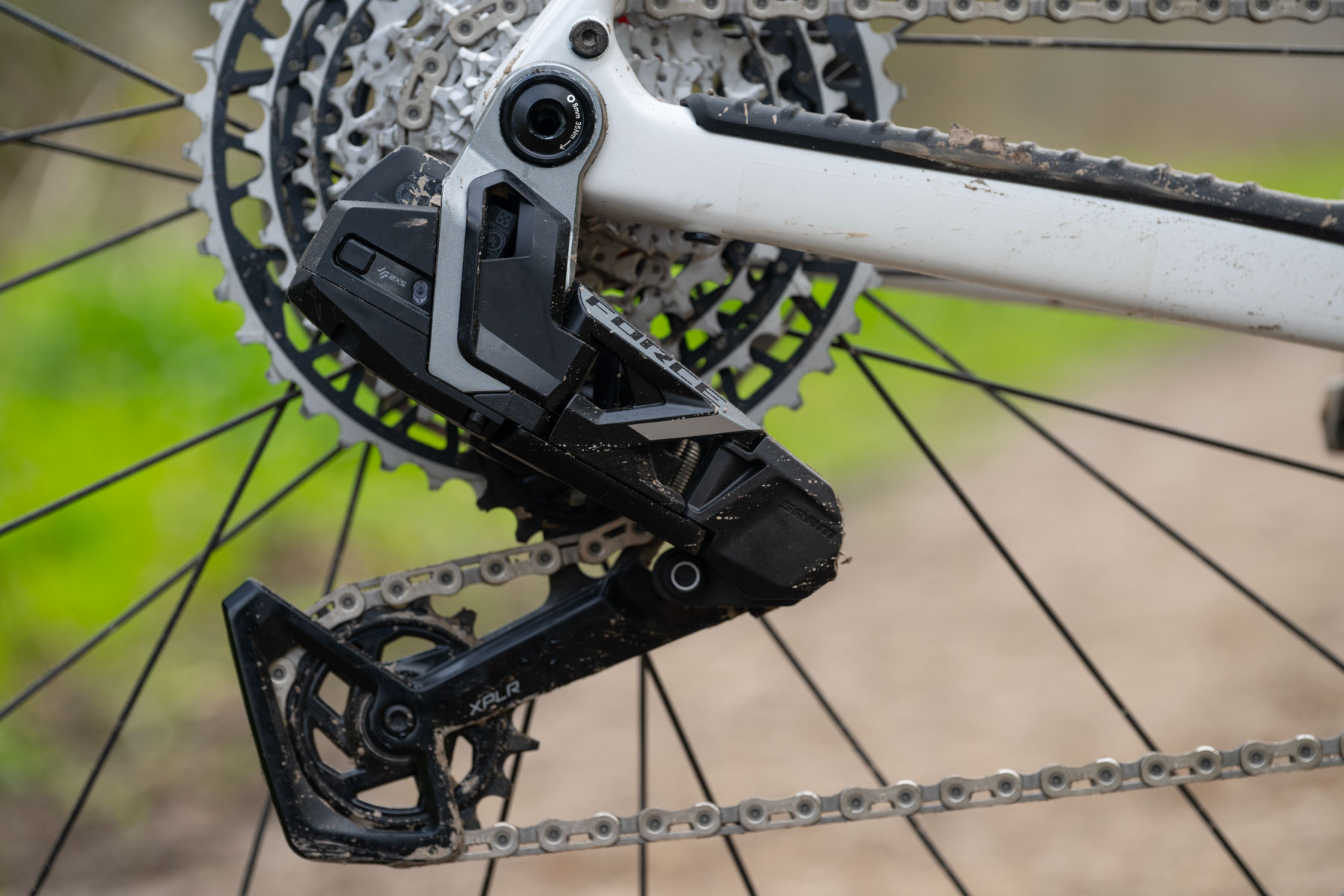
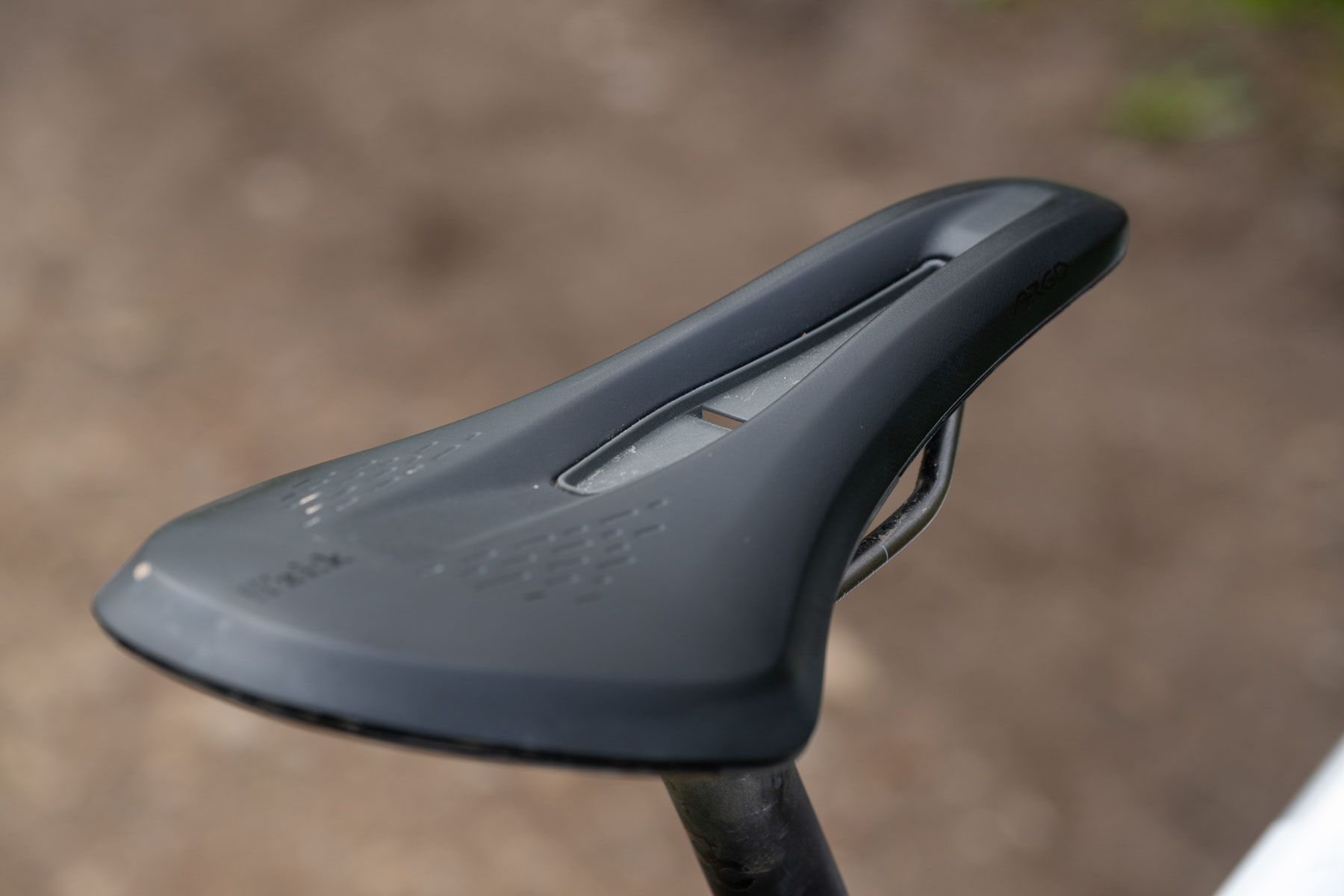
The build includes a SRAM Force XPLR AXS groupset, carbon Oquo RC25 Team wheels (although Orbea will be supplying this bike with the latest RC30 Team wheels going forward), and a carbon handlebar and seatpost.
The 1,425g wheels make for light rolling stock, and they’re shod with Vittoria’s Terreno T30 tyres in a 45mm width. Fizik provides the gravel-specific Terra Argo saddle to finish off the premium build.
How I tested – gravel race bikes
Most of my riding was undertaken in the same place I test any gravel bike – a trio of 50-mile routes around Wiltshire’s Salisbury Plain. The routes take in everything from wide gravel paths to twisting forest fire roads, heavily used bridleways and even mountain-bike style technical singletrack trails. I also headed onto tarmac to see how our trio fare as all-rounders.
In my view, it’s fine for a gravel race bike to consider aerodynamics in its design, but that mustn’t be at the expense of handling or comfort. The tyre clearances need to be generous, not limiting, with 50mm the sweet spot. They need to be practical, too, with features such as down-tube storage.
Our three racy rivals on test here offer all those elements, across a broad price range.
Bikes tested
Orbea Terra M21e Team ride impressions
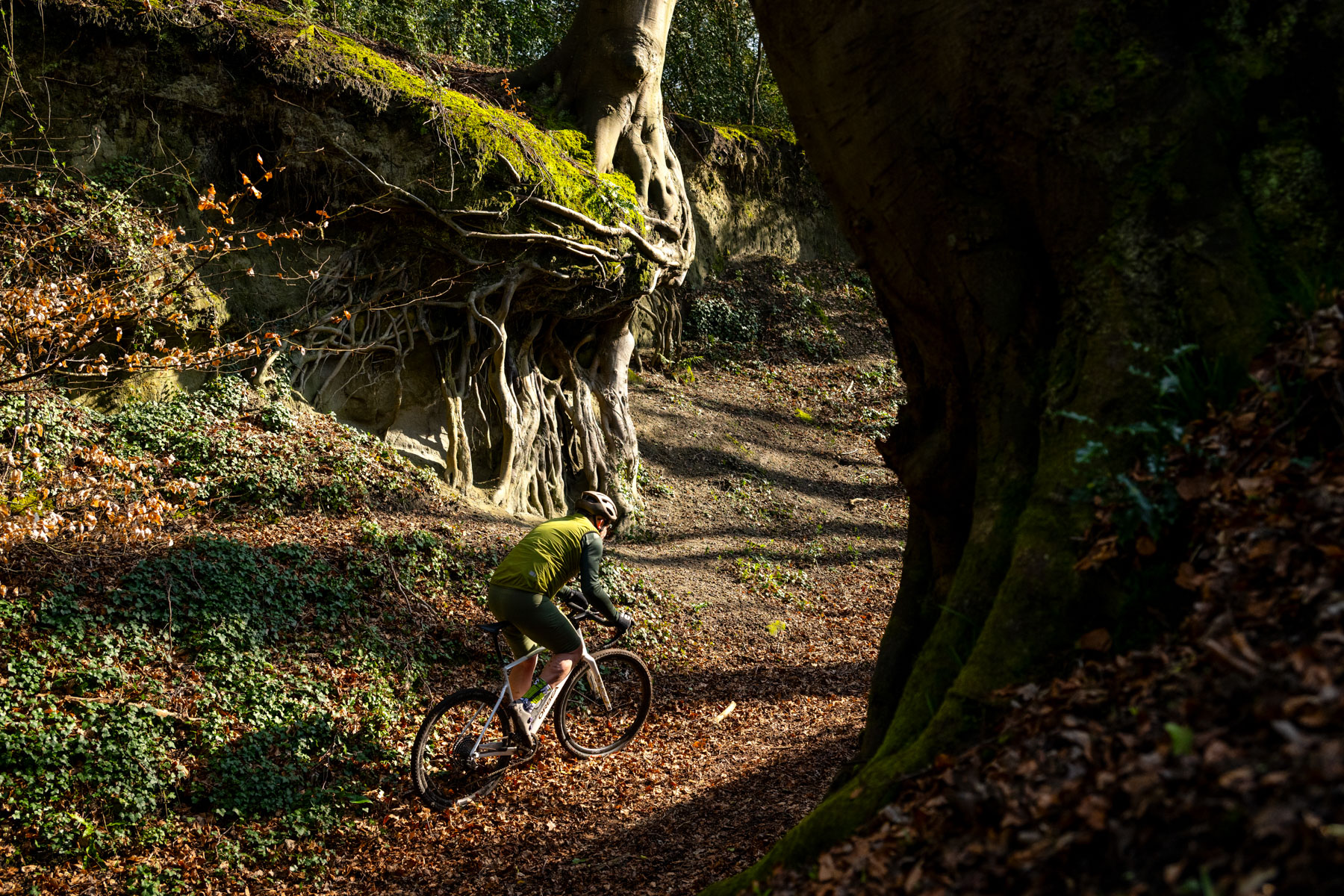
The Terra proved very capable in testing, hindered only by tyres that simply can’t cope with mud, or damp and loose surfaces.
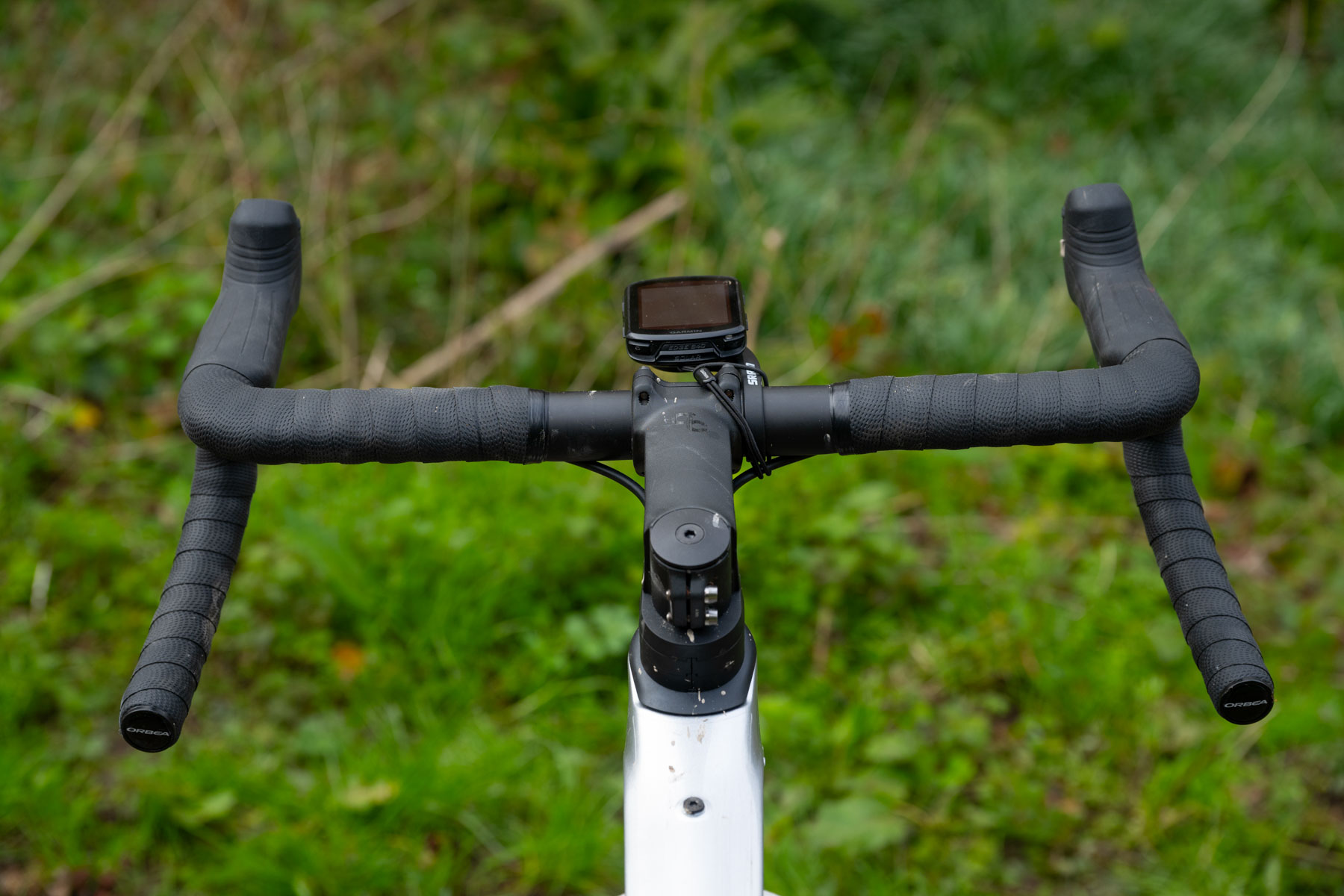
With the 44cm-wide bar and 100mm-long stem, the familiar ride position reminded me of an endurance road bike.
On roads or smoother gravel, the Terra is efficiently rapid, feeling quicker than the Argon 18 Dark Matter and a match for the 3T Racemax2 Italia I tested it alongside on gravel, although the aero-optimised 3T is by far the faster bike on tarmac.
However, don’t think the Terra’s familiar position results in a disadvantage off-road. The updated geometry makes the bike a real powerhouse once you’re off the tarmac – the steep seat angle keeps pedalling efficient, while the relaxed head angle helps the bike track well in the rough.
The light and lively ride means you can occasionally get bounced off-line, especially on off-camber trails with plenty of roots, but the bike never felt twitchy or nervy when navigating tight and twisty singletrack.
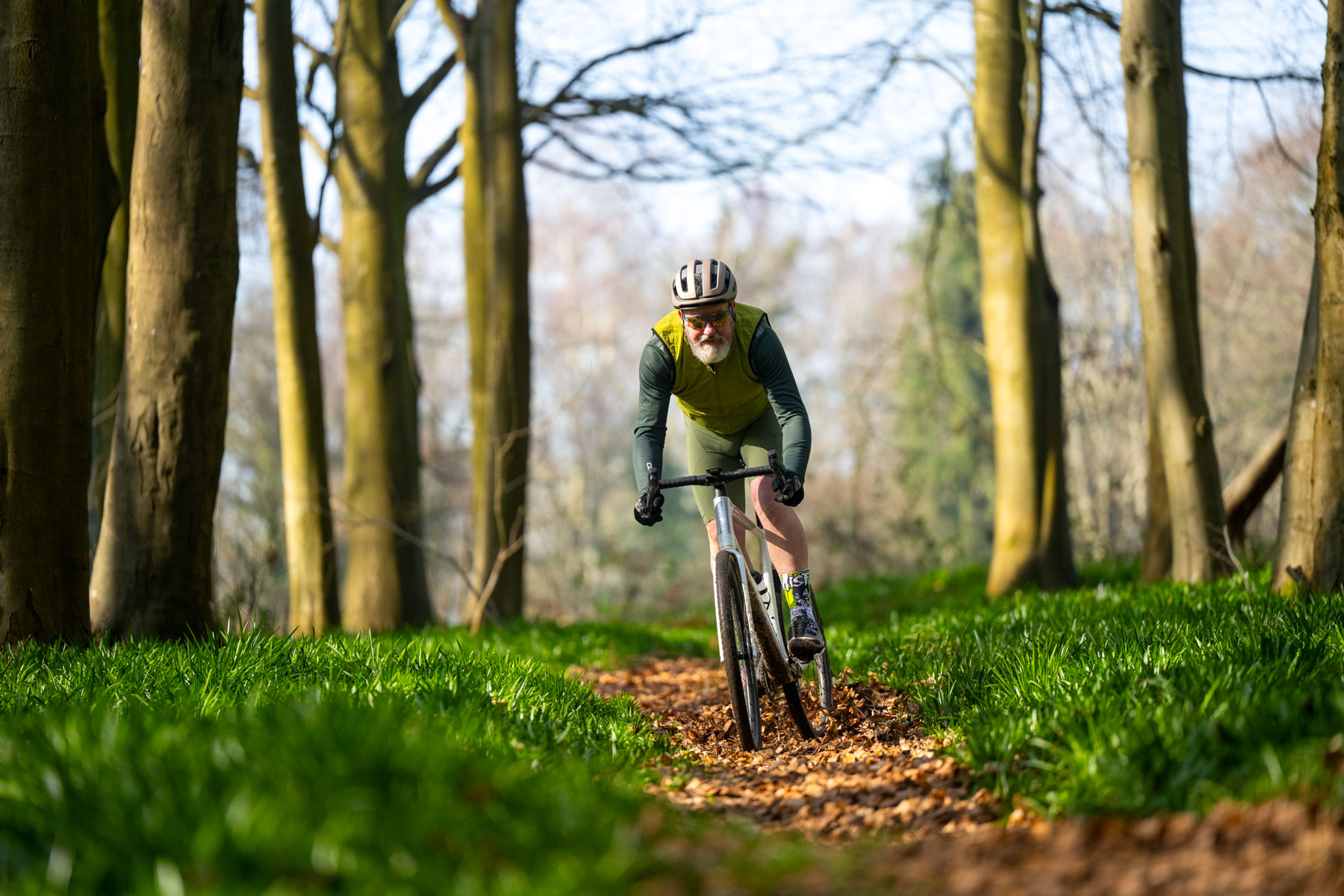
I particularly liked the Terra on long, drawn-out gravel ascents, where it felt easy to attack. The bike felt like a great endurance road bike on less technical sections and road descents.
Although I’ve had good experiences of Vittoria’s Terreno T30 tyres on bone-dry summer rides, their limitations were far too easy to find during the winter testing period. On damp, grassy corners, the rear tyre breaks away all too easily, and the tight file tread swallows up sticky, claggy dirt and doesn’t let go on woodland trails.
The Terra’s contact points are excellent – the handlebar has a subtle 12-degree flare that keeps the shifters in a near-vertical position, which I found very comfortable. The Fizik saddle is similarly forgiving, and the long, slender carbon seatpost adds plenty of compliance.
Elsewhere, SRAM’s Force XPLR AXS drivetrain is slick, swift and quiet.
Orbea Terra M21e Team 1x bottom line
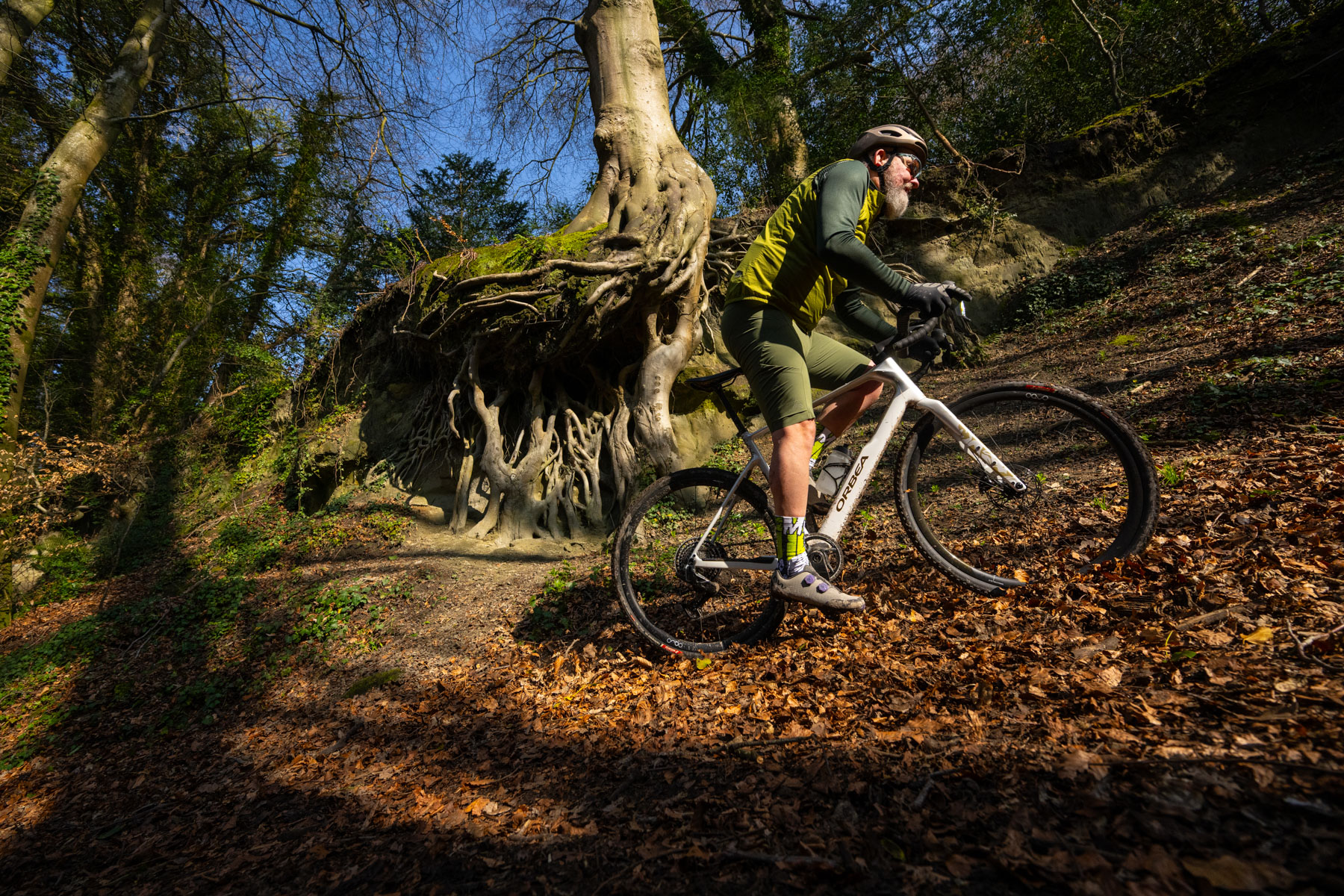
The new Terra is a very well-considered gravel bike. It’s not as race-focused as bikes such as the 3T Racemax2 Italia, Cervélo Áspero 5 or BMC’s Kaius, but it doesn’t swing completely the other way – like Mondraker’s Arid RR Carbon, Trek’s CheckOUT or Santa Cruz’s Stigmata.
Instead, the Terra occupies a similar all-rounder space as great bikes such as the Trek Checkpoint, Canyon Grizl and the Giant Revolt Advanced Pro 0. It’s a great performer on roads, gravel tracks, unpaved byways and princess gravel, but it’s more of a challenge on technical terrain, although not insurmountably so. Plus, being under-biked is half the fun, isn’t it?
The Terra's versatility is to its advantage, and with a change in tyres to suit the season, it's one of the smartest choices you could make when it comes to your next gravel bike purchase.