Whatever your athletic background – or lack of it – getting into cycling will empower you to achieve all your fitness, sporting and lifestyle targets.
It can be easy to let fitness slip, but cycling is one of the best ways to maintain it.
In this article, we hear from cycling coach Mark Walker, and cycling physio and bike fitter Bianca Broadbent.
Whether you're older, injured or short on time, we'll reveal how to make your 2026 on the bike a rewarding success.
We've included jump links to skip to the respective sections:
What to do if you're injured

Many former runners and other athletes get into cycling after an enforced injury lay-off.
“Low-impact cycling offers a great way to channel your energy again, and benefit your body and mind,” says cycling physio and bike fitter Bianca Broadbent.
Serving up new kit and adventures, cycling will reignite your sporting spark.
Strengths
“Former runners, swimmers and rowers are excellently placed to cycle,” says Broadbent.
“Many respiratory and muscular skills cross over to endurance cycling. And any competitiveness and determination help. Look at Lucy Charles-Barclay, an ex-swimmer who is now Ironman World Champion.”
Making progress

You may have good base fitness, but start with long, slow bike miles to develop your technique and muscle strength.
Over time, inject some variety. “There is a tendency for ex-athletes to stick in a Zone 3 middling intensity, but it burns through carbs and makes cycling a chore,” says cycling coach Mark Walker.
“Do a mix of low-, middle- and high-intensity rides, with endurance rides, threshold work and hill reps, and you’ll really improve.”
Don’t push too hard, too soon. “It can be easy to rack up miles on the bike, so don’t over-train,” warns Broadbent.
As you progress, consider the order in which you do sessions. “Put HIIT sessions earlier in the week, then low-cadence work midweek and save long rides for the weekend,” says Walker.
- Read more: Training zones explained: how to use heart rate and power zones to fast-track your training
Technique
You’ll also need to learn some cycling-specific skills. “Practise taking food out of your pockets,” suggests Walker.
“If you plan to do sportives, practise riding in a group, conserving energy by hiding in a bunch, holding a wheel, cornering, keeping a smooth pace, climbing on the hoods or sprinting on the drops.”
- Read more: How to cycle in a group | Our top tips for group riding, from communication to pace lines
Bike fit
Ex-runners can boost their comfort on the bike with hip-mobility work.
“Road cycling involves working at your inner to mid range of hip flexion, but runners aren’t conditioned to hold that position, so they tend to sit more upright on the bike or come forward to open up the hip position,” says Broadbent. “Accept that there will be a process of adaptation.”
Step it up
Low-cadence sessions can help ex-runners build functional cycling-specific strength.
“Start with seated 1min efforts at 50-60rpm (rotations per minute) in the biggest gear you can, at RPE 4-5 (rate of perceived exertion), with 2min rests in between,” says Walker.
“Keep your upper body still and don’t grip the bars hard. You can do these on a hill, on the indoor turbo or on the flat in a big gear. Over time, increase the duration of the reps to 5 minutes in a single set of 8-10 reps.”
Tips for older riders

You’re never too old to get into cycling. “Cycling is a wonderful, low-impact sport for all ages, even for people with joint problems,” says Walker.
“Benefits range from aerobic fitness to strength, balance and a reduced risk of Type 2 diabetes.”
It also helps fight sarcopenia (muscle wasting). “Cycling helps you to retain muscle and improves cardiovascular function,” explains Broadbent.
Strengths

If you are a rider who is retired or semi-retired, your biggest weapon is your free time. “Join local groups and social rides and make the most of the extra daylight hours available to you,” says Walker.
Making progress
“The challenge for older riders is pacing yourself, making sure you enjoy a very gradual increase in volume to promote adaptation and minimise injury risk,” cautions Walker.
“Start off doing easy stuff, with long, slow rides at a RPE under 3 – what I call the ‘gossip’ threshold. Then just increase your training in small increments. Schedule in lots of recovery days. As you get fitter, use the environment to get some contrast into your training, like riding over undulating terrain or riding on windy days when there’s more resistance.”
Technique
Always adapt sensibly to any health problems. “If you have had knee problems, knee surgery or a knee replacement, using shorter cranks can help you to get your leg around the pedal stroke much easier,” advises Broadbent.
- Read more: Fit older male cyclists face these hidden heart risks – here's why that shouldn't put you off riding
Step it up

“After gently building up your endurance, introduce tempo training,” suggests Walker. This will be at an RPE of 4, so you should still be able to talk, but in shorter sentences.
"Try intervals of 60 seconds at this tempo pace, with 20-second rest intervals. Start with 15 reps and nudge them up as you get fitter. Play with the progressions with reduced recovery intervals, longer efforts or more reps.”
Extra
“Do strength training to aid your bone density, whether that’s gym work or low-cadence efforts at 50-60rpm,” advises Walker. Cross-training is also beneficial for your body: “Senior athletes could do swimming and walking too,” suggests Broadbent.
If you're short on time

“Cycling is so good for time-crunched parents,” says Broadbent. “You can exercise easily, whenever you want. Even 30 minutes is positive for health. It could be a social catch-up ride with friends, or a solo indoor ride.”
Strengths
Your lack of time is a challenge, but it also focuses the mind.
Having to fit in exercise around childcare and other duties makes a flexible sport such as cycling your perfect exercise solution.
“It’s hard for new parents to do large-volume training or stick to fixed class schedules,” says Walker. “But cycling is flexible for whenever you get a break.”
Making progress

“To get fit and lose weight, you can reduce your energy intake, or increase your exercise – or ideally do both,” says Walker.
“When reducing energy intake, just make one small change a week, like eating more fibre-dense food, or switching to healthier snacks.
"When exercising, high-intensity intervals are quick, convenient and boost your metabolic rate, so you burn more calories. They develop fitness and improve insulin sensitivity. But slower rides with friends also increase your overall energy burn as you are riding for longer. So just do what works for you.”
Technique
For all parents, safety is a priority. “Wear hi-vis kit and flashing day lights and look far down the road,” says Walker. “Practise feathering your brakes so you don’t skid, and practise emergency stops – throwing your weight back and straightening your arms – so you know how long it takes to stop at different speeds.”
Bike fit
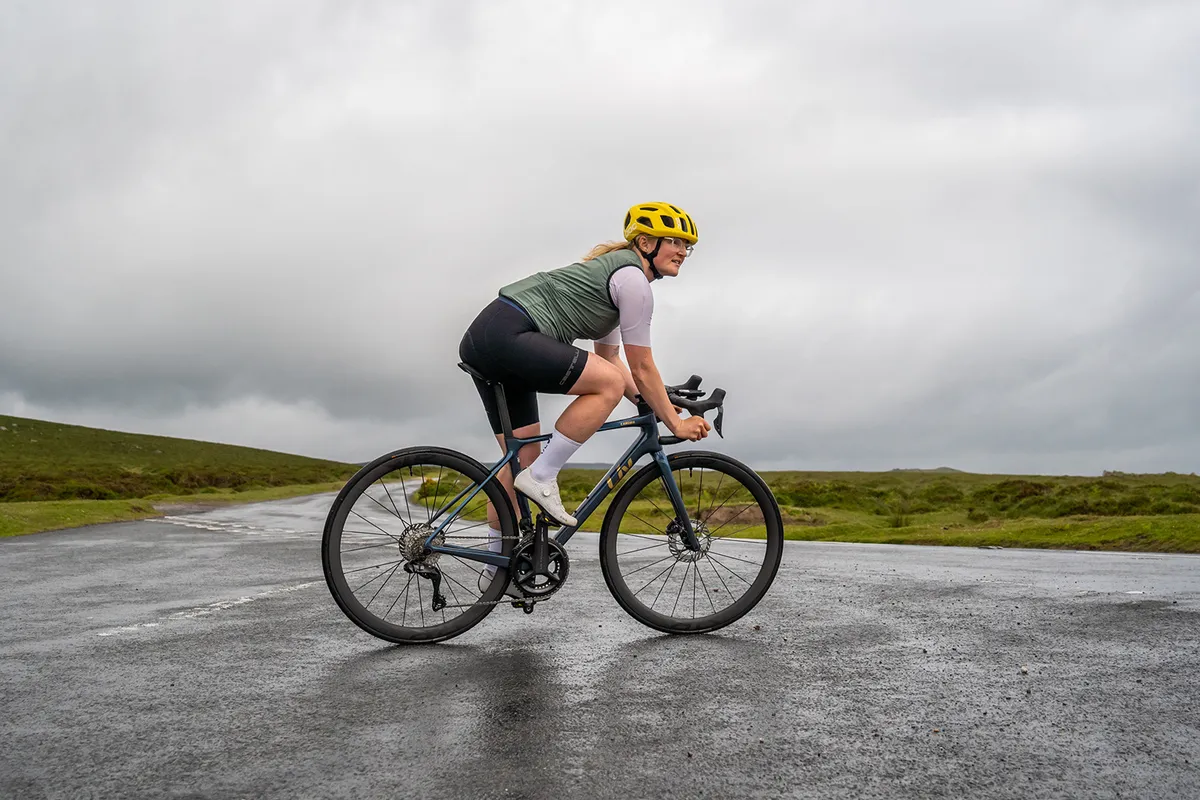
The success of cycling mums such as Lizzie Deignan proves that motherhood doesn't have to be an insurmountable obstacle, but small tweaks will ensure comfort after giving birth.
“If a mum has had an episiotomy or tear, it may require stitches and can leave scar tissue which can be irritated by a saddle,” says Broadbent.
“So try using a saddle with a pressure-relief cut-out or visiting a pelvic health physio.”
Step it up
“Try some Tabata intermittent training, such as 7-8x 20:10 efforts – 20sec hard efforts with 10sec recoveries – at RPE 7,” says Walker.
“If you can complete more than eight efforts, increase the power output or effort. With a warm-up and cool-down, you can do a Tabata session in 25 minutes.”
Extra
“If your goal is weight-loss, there is huge value to cross-training with running, kayaking, MTB or swimming,” says Walker. “It will burn calories and boost fitness.”