Silverstone is renowned as the home of British motorsport. The Northamptonshire village has been punctuated by the roar of engines since the circuit on its outskirts hosted the British Grand Prix in 1948, and it has been ever-present on the Formula One calendar since 1987.
But the local area isn’t dominated solely by petrol-focused engineering perfection. In fact, less than half-a-mile from the race track lies the Silverstone Sports Engineering Hub (SSEH), which is revolutionising the world of cycling performance.
Opened in 2019, the SSEH has become the gold standard of cycling testing facilities. The cutting-edge engineering space is a one-stop shop for performance-centred testing, offering customers access to industry-leading biomechanical analysis, componentry testing rigs for things such as rolling resistance and chain efficiency, and a pedalling efficiency tool for optimising bike setup.
Its biggest draw, though, is its sports performance wind tunnel.
It has proved incredibly popular, too. Read any new aero bike’s marketing materials in recent years and there’s a good chance it’ll reference a session at the facility.
Formula One foundations
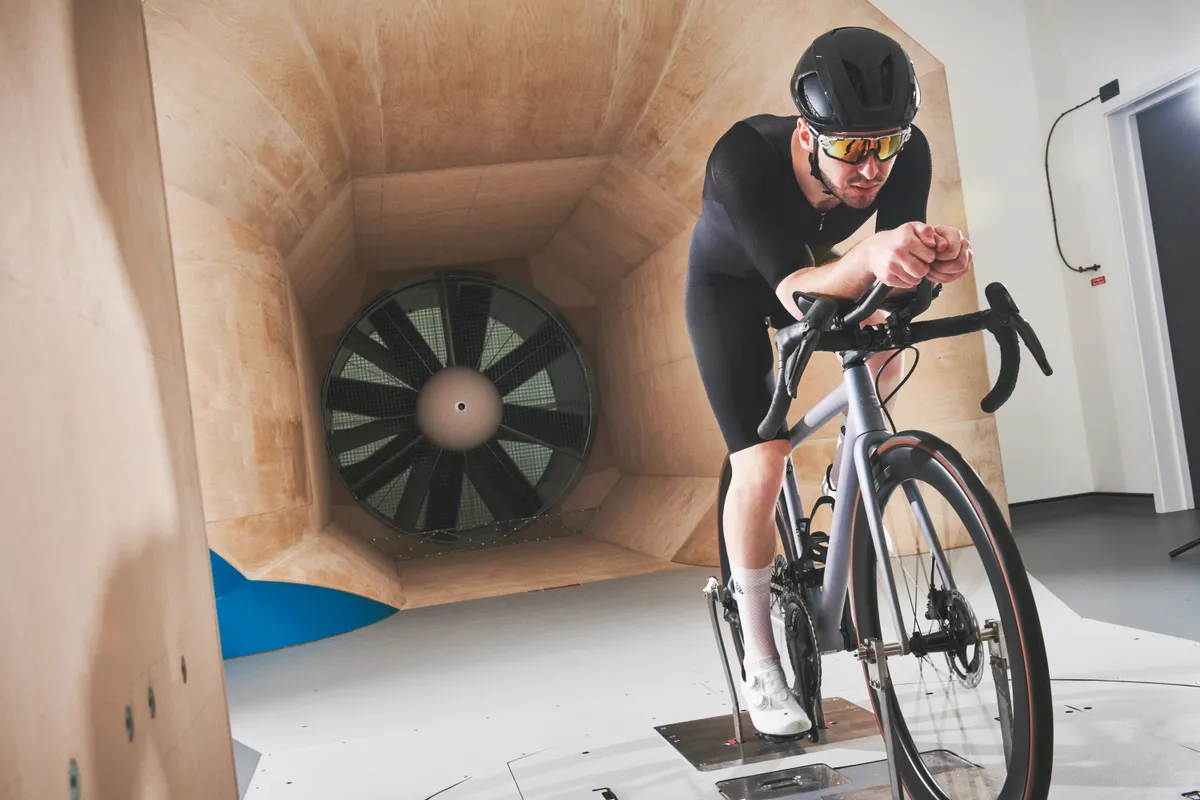
SSEH’s success hasn’t happened overnight. The research hub is backed by decades of aerodynamic expertise and 20 years of cycling-specific innovation.
“My background is CFD aerodynamics,” says Rob Lewis, managing director of TotalSim, the group that owns SSEH. “I was running the CFD team in what was BAR Honda [now Mercedes AMG Petronas] in 2004.”
Lewis was approached by British Cycling and UK Sport for help with aerodynamics, and he aided them for the 2008 and 2012 Olympic Games, as well as in the lead-up to the 2016 Games.
“After 2012, I sat with Chris Boardman saying, ‘this is a bit silly. You get a handful of athletes to fly all the way to Southampton to do a few wind tunnel tests a year. What you want is a bicycle wind tunnel embedded in the training cycle at Manchester so the athletes can go [to the] velodrome, gym, physio, wind tunnel, and they become the aerodynamicists and the innovators,’” Lewis says.
The facility at the University of Southampton was a repurposed aerospace tunnel that “got hacked into a motorsport tunnel with a rolling road”.
“To do bicycles in there, the Southampton guys would lower the rolling road out the way and then put in a balance that the cyclist could sit on. It was all a temporary installation and not perfect,” adds Lewis.
Instead, he was proposing a scaled-down wind tunnel designed specifically for cycling, catering to the sport’s relatively low speeds, exposure to crosswinds of varying angles, and the fact that cyclists don’t ride in a fixed position.
While British Cycling decided not to take Lewis up on his proposal, Boardman Bikes and Halfords did, with a retail and amateur-focused wind tunnel opening at the bike brand’s Evesham HQ in 2018. In a circuitous way, when the Boardman Performance Centre was shuttered by Halfords in 2020, British Cycling ended up buying the wind tunnel and moving it to Manchester. But Lewis already had another facility up and running by this point.
“We thought, ‘what we really need is one for R&D with all sorts of tricks and toys and lasers', so we set out building one for ourselves,” he recalls.
Although initially planned to be housed in a farmer’s shed to keep costs down, and reserved for the consultancy and design arms of TotalSim such as Catesby Projects and Vorteq, a local growth fund grant in Silverstone meant they could upgrade their plans into an innovation centre open to all.
When it first opened its doors, it was used mostly for TotalSim-led research – “Olympic projects were using Silverstone out of the box” – but over time its reputation spread. Now, the facility is used by pro and nationals teams, product manufacturers and amateurs.
Aero validation

SSEH’s arrival has coincided with a revolution in the dominance of aerodynamics in road cycling, as brands utilise carbon fibre’s true wind-cheating potential to make bikes faster and faster. The ever-intensifying focus on airflow, drag and turbulence has expanded across all areas of the sport – from skinsuits and shoe covers – creating an arms race to find any marginal aerodynamic advantage that will provide an edge over competitors.
This escalation wouldn’t have been possible without wind tunnels. A necessary step of the R&D process, a wind-tunnel session is used to validate CFD (computational fluid dynamics) simulations – software that can be used to mimic a virtual wind tunnel – while also highlighting areas for improvement that current CFD programs are unable to calculate.
To this end, Montreal-based Argon 18 has used the facilities at SSEH since 2024. “CFD is a great tool in general and provides a very good base but there’s a lot of limitations,” explains Adric Heney, performance engineer at Argon 18. “Oftentimes, they are just turbulent areas that are hard to compute.”
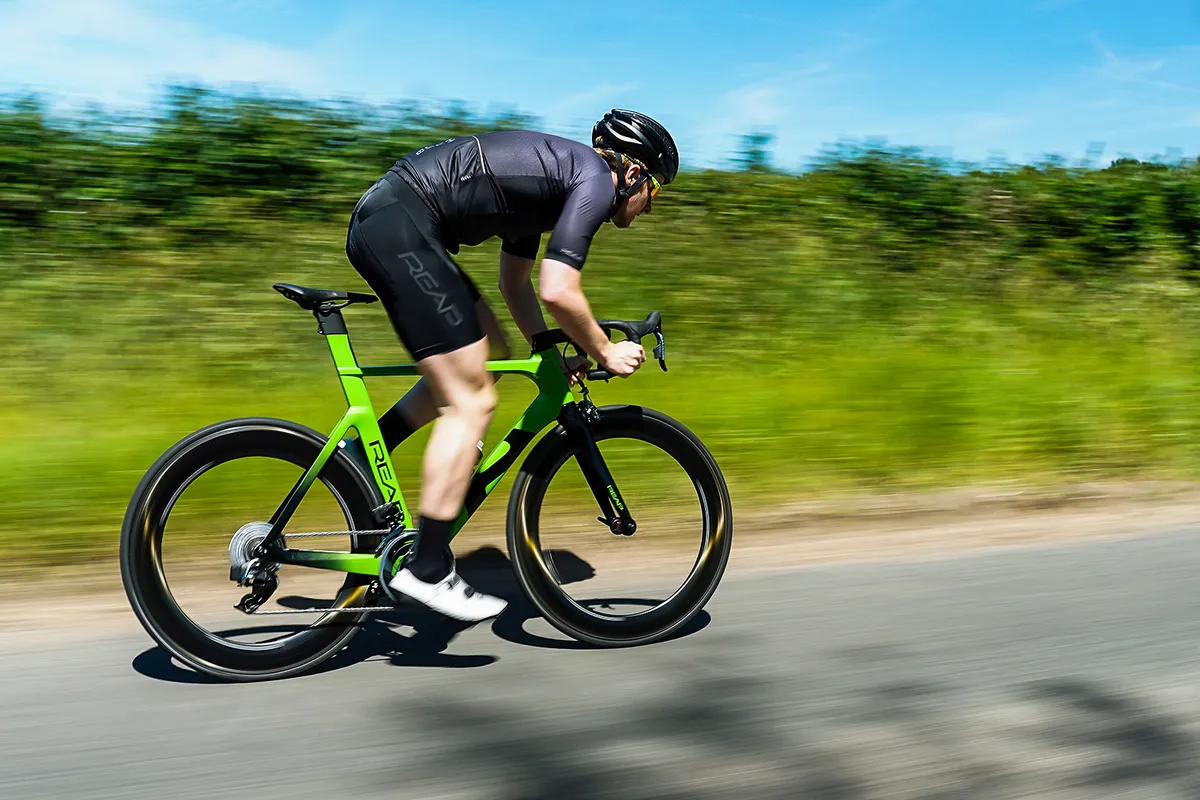
The moving legs of a rider is one area that software is unable to crack, while Heney adds that there are still inaccuracies around wheels spinning or how that air interacts with the forks.
“We want to get as close as possible to representing reality, and so that's why we have to validate everything in the wind tunnel. But that's also part of the feedback loop – we do the same tests in the wind tunnel as we do in CFD, and that allows us to see if our CFD simulation is accurate. If not, we have to figure out why, and try to improve our methods,” he says.
Getting specific
The wind tunnel at SSEH stands out from others because it’s bike-specific. Unlike other facilities that are built for aerospace, vehicles or architecture, SSEH is able to run the lower speeds that are encountered in cycling, and should in theory mean its results are a lot more accurate and repeatable.
SSEH isn’t the only bike-specific wind tunnel in the world, though. Specialized unveiled the ‘Win Tunnel’ at its California HQ in 2013, and there's the Aero Performance Lab in Beringen, Belgium, and the Low Speed Wind Tunnel in San Diego, USA, to name but a few. However, SSEH has become a preferred site in recent years.
Vincent Lemay, Argon 18’s vice president of R&D, says: “We tested and tried a lot of different wind tunnels because we don't want to be biased also by a certain facility and results, but since we found [SSEH] is very accurate and repeatable, it's not a bias anymore.”
“Sometimes if there's a discrepancy between our CFD and the wind tunnel results, we need to have a correlation factor that we need to take into account for all of our analysis of the data afterwards. At Silverstone, normally, it's quite accurate,” he adds.
UK-based Reap Bikes also found that SSEH provided accurate results. “We tested years ago at the University of Southampton wind tunnel before Boardman/SSEH were around, and had some valid results but from my recollection the specificity just wasn't there,” says Ben Meir, the brand's lead designer.
Wider offering

Accuracy aside, there are other factors that SSEH has in its favour. Silverstone is a relatively short drive from London’s numerous airports, which makes SSEH easy to access from around the world.
“There's nothing in Montreal currently, so we would still have to either take a flight or drive quite far to do the testing – it's the same cumbersome issues of packing the bike in the box and taking a plane or driving 15 hours to go to a testing somewhere,” says Lemay.
It’s also relatively cheap compared to other wind tunnels: prices starting at £686 for a two-hour session. Wilier, which has previously used the Politecnico di Milano Wind Tunnel, used SSEH extensively during the development of its Supersonica time trial bike and the updated Filante SLR ID2, with chief designer Marco Genovese visiting the facility six times in 2025.

“The cost for one single day [in Milan] is higher compared to Silverstone,” he says. “I prefer to go to Silverstone because it's cheaper than Milan and I can stay there longer at the same cost.”
But it’s the wider offering of SSEH and its parent company TotalSim that sets it apart. Wilier’s new Filante was designed in collaboration with TotalSim’s Catesby Projects, which undertook CFD analysis and provided guidance and advice throughout the R&D phase.
“The Filante was born thanks to the collaboration with the Catesby Project. It was very important to find someone who can optimise the machines for the calculation, and we got good results immediately,” says Genovese.
Another TotalSim subsidiary is Bramble, a cloud-based CFD simulator that helps analyse runs in the wind tunnel. “We can go back through all of our previous testing in one place on a single, easily-managed UI without having to use complex Excel formulas to visualise data,” says Meir.
The complete package

The relentless expansion of aerodynamics’ influence on road cycling means the need for bike-specific wind tunnels will only grow.
As the site helping to drive these state-of-the-art innovations, SSEH is already well-placed and trusted to meet this demand. It’s growing all the time, too, with SSEH continually reinvesting in new features such as a recently launched infrared boundary layer camera, which visualises airflow via a heatmap.
“It's just great to see they're still investing and trying to work towards developing a better product. It's just little things that go a long way to help us have the confidence that we're trusting in their process and that gives them that reputation. And that's why everyone goes there,” says Heney.