Modern bikes now come with an increasing variety of electronics. And I'm not just talking about ebikes – wireless shifters, dropper seatposts and suspension systems are all designed to make life easier. However, I believe it’s nothing less than mechanical doping and should be banned from competition.
In my eyes, the definition of mechanical doping should include any system where the electronics do the work for the rider. Motors and batteries used to propel the bike are banned from racing, except competitions specifically stated to include the growing category of ebikes.
Modern electronic groupsets, dropper posts and suspension mean batteries are doing the work of the rider and I think, perhaps controversially, these should all be banned from competition.
Instead of the rider using their muscles to move the derailleur to change gears, push a lever to unlock a dropper post or change the suspension modes, a battery and solenoid are doing the work for them.
We know this because the batteries need recharging after the ride.
So why are these gadgets allowed in competition, if an external power source is being used to perform tasks once completed by the rider?
Examples of mechanical doping
One of the first recorded examples of a mechanical doping infraction was cyclocross (CX) racer Femke Van den Driessche. The U23 racer was caught at the 2016 UCI CX World Championships with a hidden motor in one of her bikes. She was banned from competition for six years and fined 20,000 Swiss Francs.
Using motors and batteries to supplement the work of your legs is prohibited in competition, except in events specifically allowing ebikes (such as eMTB enduro races and some casual sportives for electric road bikes).
If ebikes are banned from traditional cycling categories, why isn't using batteries and solenoids to do the work of your fingers (and brain) prohibited too?
Electronic suspension technology, such as RockShox Flight Attendant and Fox Live Valve, uses technology to supplement the work of your brain, too, automatically changing the suspension’s damping characteristics to make the bike more efficient, firming it up or softening it dependant on the terrain, with zero input from the rider.
All this future tech is amazing and makes riders faster, but why does it get exemption from the UCI’s mechanical doping policy?
Electronic shifting

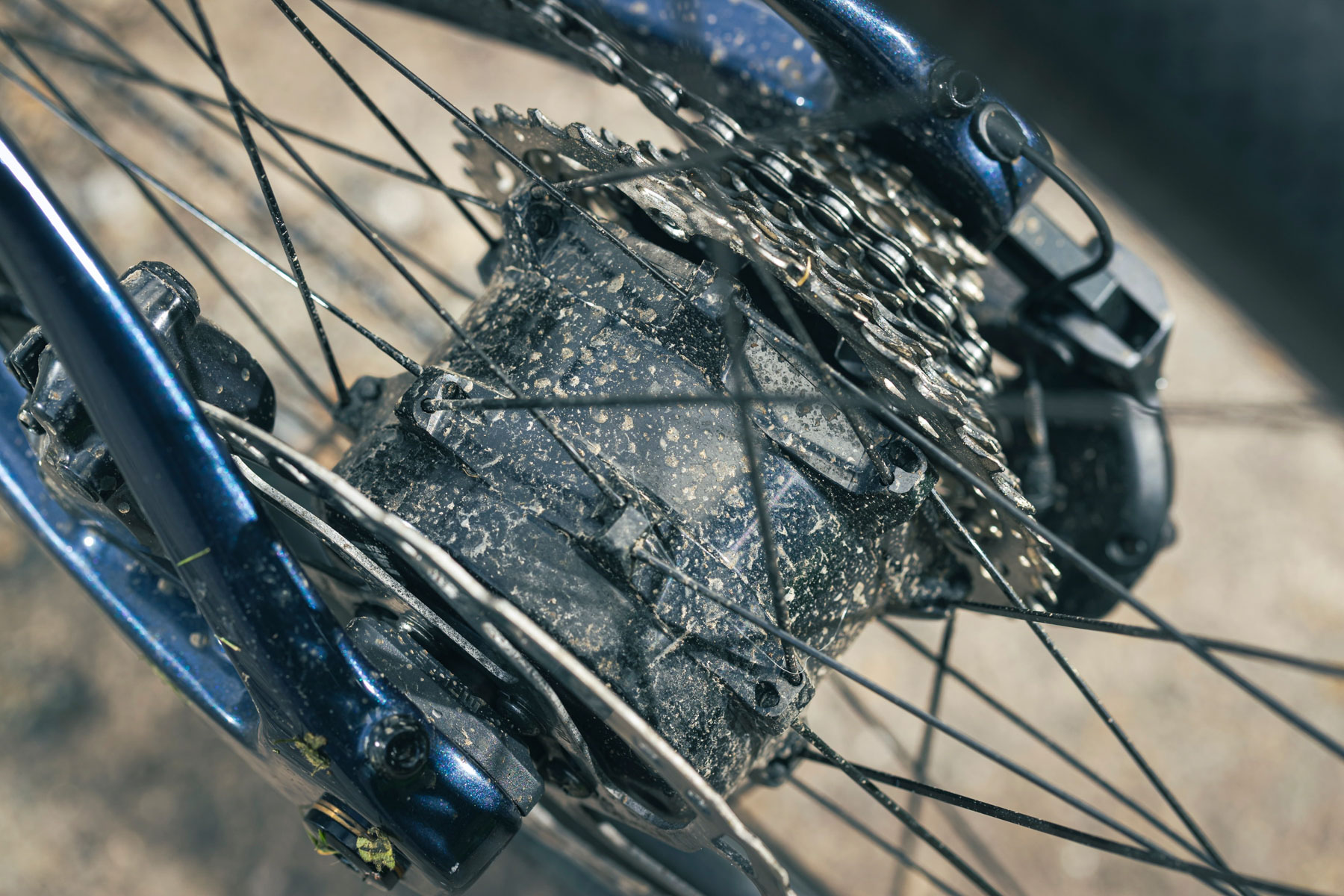
Electronic shifting uses solenoids. Just like electric motors, solenoids convert electrical energy into mechanical force. Electronic shifting replaces the energy that would be expended by the rider pushing a shifter, amplifying their muscular energy to move the chain between the cogs with energy stored in a battery.
Electronic shifting has existed in professional road racing since as far back as 1993 when Tony Rominger used Mavic’s pioneering Zap system in the Tour de France. Shimano’s Di2 went mainstream in 2009 and SRAM pioneered wireless electronic shifting with its Red eTap groupset in 2016.
These systems are in such common use that they’re almost de rigueur on top road, cross-country (XC), and CX bikes, and with SRAM’s new XX DH Transmission, electronic shifting is in the downhill World Cup field too. So any changes in the legality of electronic shifting in UCI events would have far-reaching consequences.
While the energy electronic gearing could save a rider might be considered minimal, isn't it still saving that rider energy? Maybe that'd be fine if every racer was using electronic gears. But what about riders who use mechanical gearing in the same race? Surely that's not fair?
Electronic suspension systems

Bicycle suspension typically uses a hydraulic damper to provide resistance to the suspension’s compression and rebound cycles. Electronic suspension works in the same way, but uses solenoids to switch between the modes.
Suspension thresholds provide extra damping to reduce suspension movement, making a bike more efficient. They reduce the amount of energy lost moving the suspension up and down while the rider pedals.
The latest suspension systems use sensors (usually on the brake calipers and sometimes on a power meter) to sense which suspension mode the rider is most likely to use and change it for them, as and when necessary, completely automatically. These are legal in UCI competition, despite some cunningly composed Instagram satire circulating recently.
There are, of course, cable-actuated equivalents that require you to push a lever or twist a shifter in order to firm up or open the fork and shock. Imagine the cumulative energy required to do this over the course of a long ride or marathon event. Electronics help save energy by taking this task on for you.
Electronic and automatic dropper posts

Dropper posts are common in XC racing, where a higher seat is advantageous when climbing, but a lower seat improves descending.
Mechanical droppers actuate the post with a cable or hydraulic line, whereas common electronic dropper posts use a solenoid and a battery.
BMC took it one step further with the Autodrop seatpost, which uses a reservoir of compressed air to lower the seatpost, whereas a traditional dropper post relies on the rider’s weight to push the post down to a lower position. This is a great example of a non-electronic energy source, which does the work traditionally done by the rider’s body.
Mechanical doping classification needs to change

Cycling is a competition of human strength and endurance as well as skill.
Using batteries to replace work traditionally done by the rider’s muscles (even those in their fingers) has a physical benefit for the rider, especially during competition. At least, that's what I think.
Because there are rules preventing using electronics doing the work performed by the rider’s legs, it doesn’t make sense to me that riders can use electronics to do the work of their hands.
Even if there is only a marginal gain from using the onboard electronics described in this article, it seems absurd to allow riders to use electronics (and compressed air) to reduce their calorific and respiratory output to help them in competition.
I believe mechanical doping should be defined as anything on the bike that consumes energy from a source outside the human body. Current rules only prevent riders using electronic power for propelling the bicycle, but I suggest any external source of power performing work on the bike that would traditionally be performed by the rider’s body should be outlawed.