Tyre widths have quietly become one of the most interesting battlegrounds in professional road racing.
A decade ago, a 23mm tyre was still commonplace in the Tour de France, with 25mm considered progressive and 28mm reserved for the roughest cobbled stages. Fast forward to 2025, and the picture has changed dramatically.
Looking across a sample of 13 bikes we got hands-on with from this year's Tour de France – spanning both road and time trial machines – the data suggests the peloton’s trend towards the use of wider tyres shows no sign of abating.
That said, nominal tyre widths are misleading. While tyre sidewalls still read 28mm or 30mm, the tyres teams are racing on are frequently much larger once mounted to modern rims.
Plus, the tyre widths observed on time trial bikes continue to lag behind those for road racing.
Here’s what we can say about tyre sizes from our sample.
The era of the true 30mm race tyre has arrived
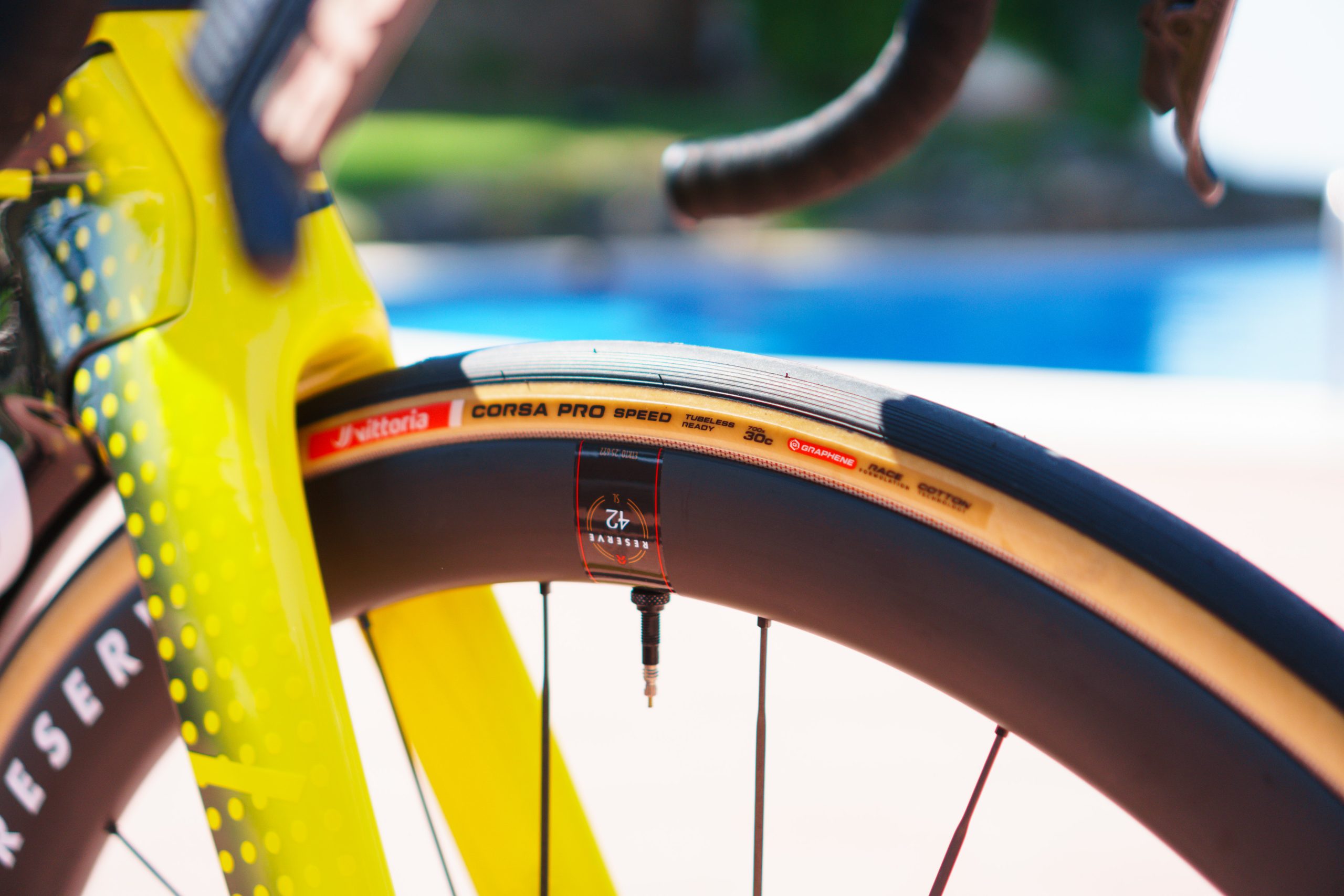
For years, wider tyres have been creeping steadily into the professional peloton.
While nominal tyre sizes still range from 25mm to 30mm, the tyres riders are racing on average just over 30mm wide once mounted to their wheels.
The data paints a fascinating picture of how modern race bikes are being optimised, and why the number printed on the tyre sidewall no longer tells the full story.
Across 26 individual tyres, the mean measured width comes out at 30.29mm, despite the median nominal size being only 28.5mm.
In other words, the average WorldTour race tyre, from our sample, measures 1.79mm wider than the size printed on its sidewall.
That growth is likely the product of two trends working together. The first is the widespread adoption of wider rims, with internal widths of 22mm to 25.4mm now common among the biggest wheel manufacturers.
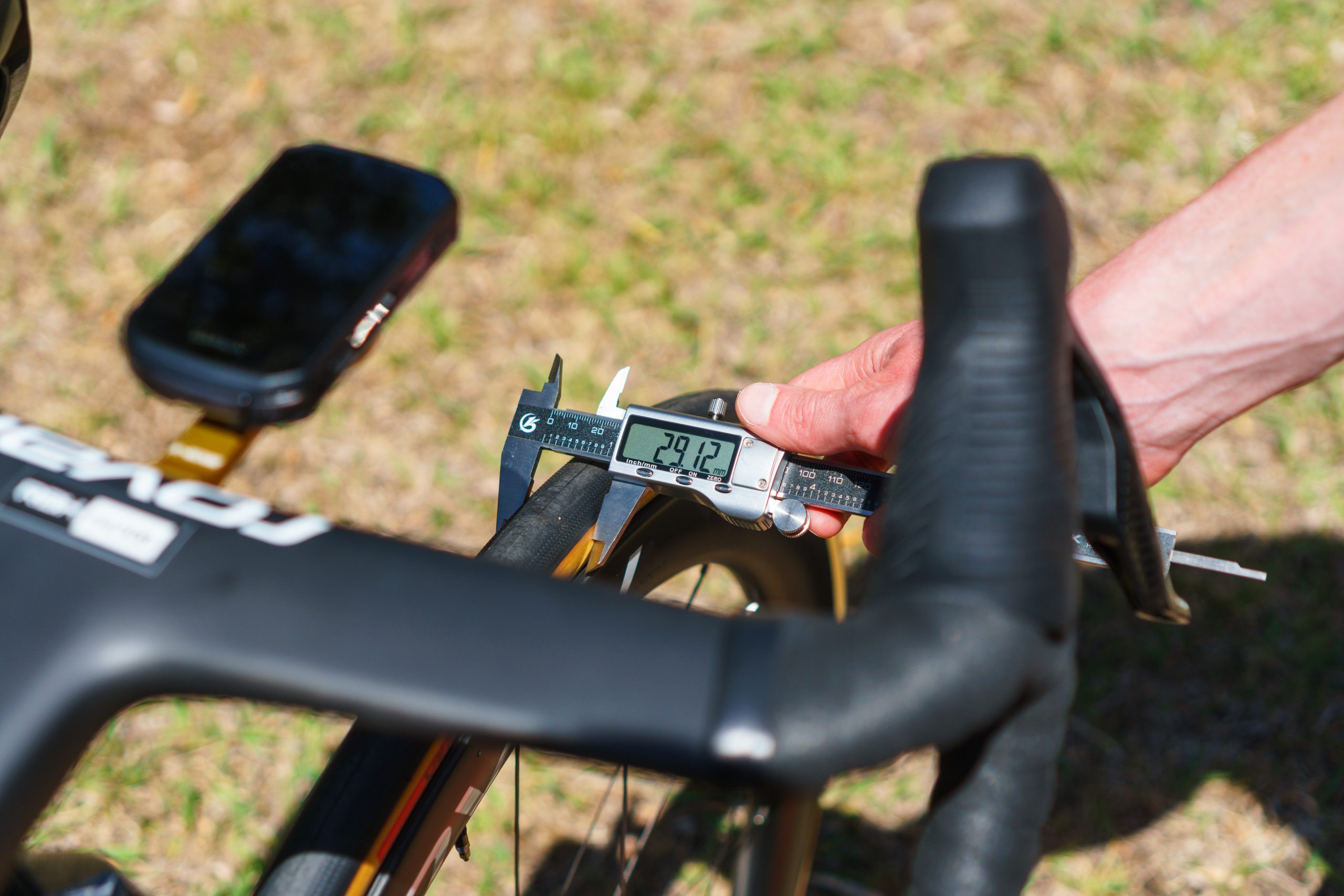
Remember, a rim measuring 21mm across internally, bearing a nominally 28mm-wide tyre, should measure 28mm wide, according to the ETRTO.
The second factor is tyre construction itself, with modern casings designed to spread wider once installed.
The result is a nominal 30mm tyre frequently measures 31–33mm in real-world use on these wider rims, while nominally 28mm tyres often end up close to 30mm.
Perhaps the biggest surprise, though, is that 30mm has overtaken 28mm as the most common nominal tyre size in this sample, appearing on 12 of the 26 tyres measured. 28mm tyres made up 11 of the 26 sampled, though, so it remains close.
Only a single sampled bike still used nominal 25mm tyres for racing: Tadej Pogačar's Colnago TT2 time trial bike, although we also know that the rest of his UAE Emirates-XRG team were sporting the same setup.
TT bikes remain more conservative
Accordingly, the distinction between road and time trial bikes has become increasingly clear.
Road bikes in our sample averaged a measured tyre width of 30.82mm, compared with 29.68mm for TT bikes.
1.14mm may sound insignificant, but in elite racing it's a meaningful difference, with multiple potential causes.
Another notable trend is front tyres averaged 30.72mm, compared with 29.87mm at the rear. That reflects the increasing prevalence of wider front-tyre setups in the modern peloton. Teams are seemingly placing a greater emphasis on front-end grip, comfort and rolling efficiency, while maintaining slightly narrower rear tyres for aerodynamic integration and frame clearance.
Vingegaard’s use of a 30mm nominal front tyre and a 29mm rear tyre is the clearest example of this in action.
The demands of modern road racing also generally places increased value on reduced rolling resistance, rider comfort and grip on imperfect road surfaces, with rim and bike frame designs changing to accommodate wider tyres in an aerodynamically optimised package.
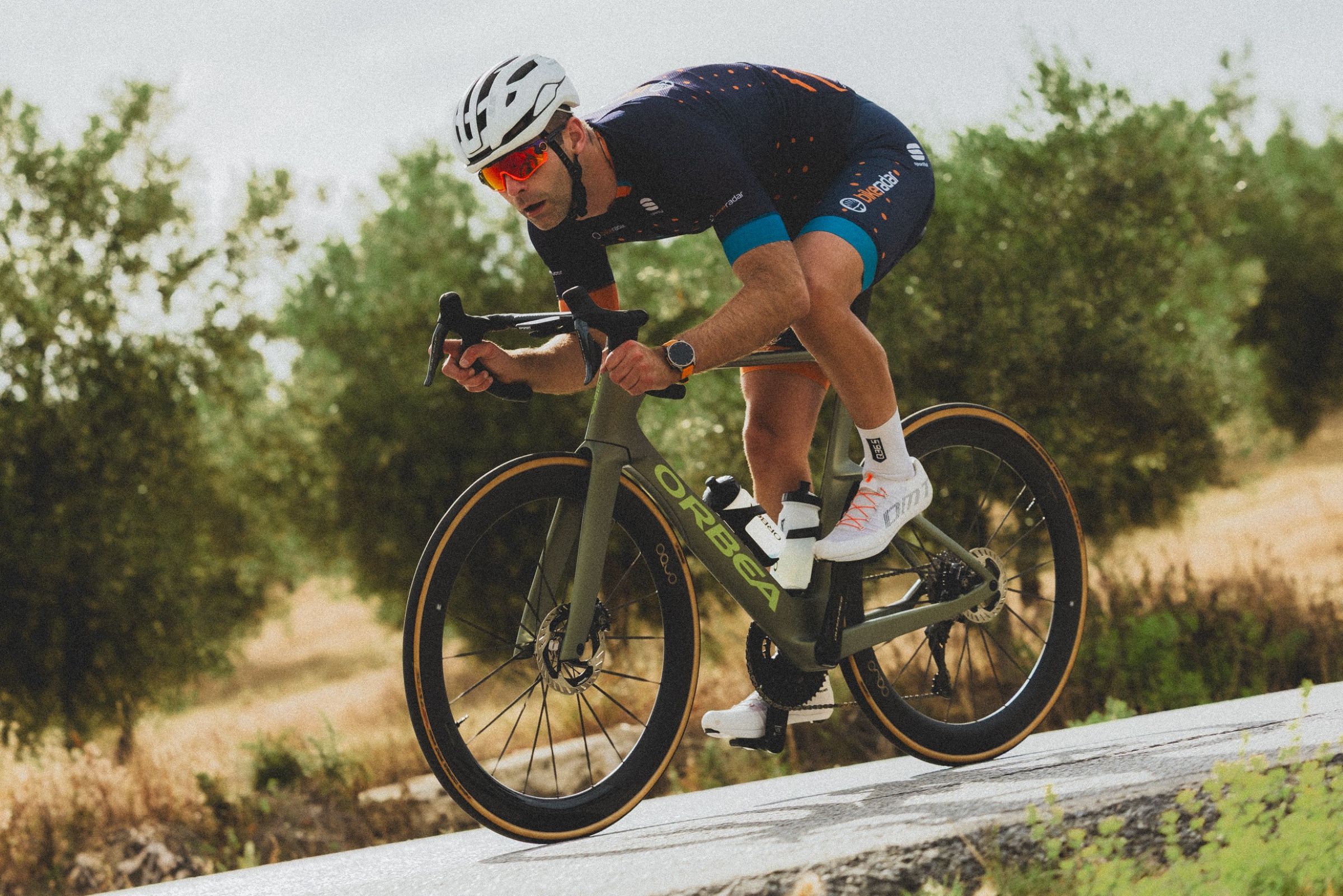
A great example of this is the Orbea Orca Aero, which can sport 37mm tyres (measured), while it’s been common for a while to see race bikes with capacity for upwards of 32mm.
The efficacy of time trial bikes, by contrast, remains defined by aerodynamic priorities to the exclusion of almost everything else. Broadly speaking, designers are still trying to minimise frontal area while carefully managing airflow around the fork, frame and wheels.
The regulations governing the design and use of time trial bikes aren’t a million miles away from those controlling road bikes – but there are differences, including the ability to use specific handlebars, while riders can adopt a more aerodynamic tuck position.
While many modern TT bikes now accept significantly wider tyres than their predecessors, aerodynamic integration still encourages teams to use slightly narrower tyre packages than on their road bikes. That means narrower tyres continue to have a place against the clock, even as road racing moves decisively towards larger volumes.
Of course, ‘narrow’ remains a relative term – when race bikes commonly used nominal 23 or 25mm tyres, it wasn’t unheard of to find 19 or 21mm tyres fitted to TT bikes.
The biggest tyres are now remarkably big
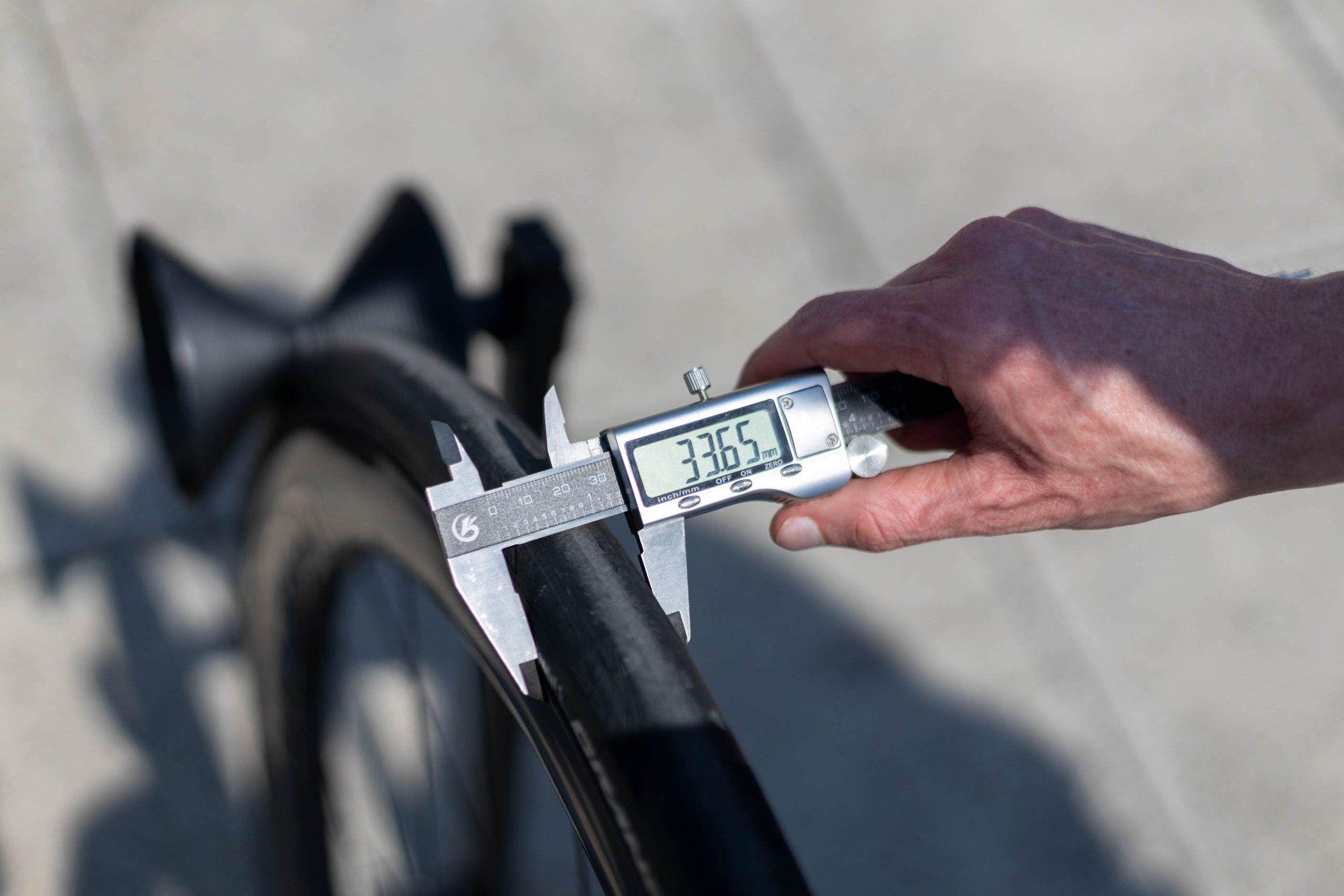
If there's one bike that encapsulates the wider-is-better trend for road bikes at the Tour de France, it's Matej Mohorič's Bianchi Specialissima.
His nominally 30mm tyres measured a startling 33.31mm at the front and 33.65mm at the rear. These were the largest tyres we measured.
They're closely followed by the front tyre on Jonas Vingegaard's Cervélo S5, which measured 33.2mm. Vingegaard’s was the only bike we measured running a nominally wider tyre at the front, which we speculated could be to help his bike make the UCI’s 6.8kg weight limit.
That said, it’s fair to say these widths would have looked at home on an endurance bike, rather than a Tour de France race machine.
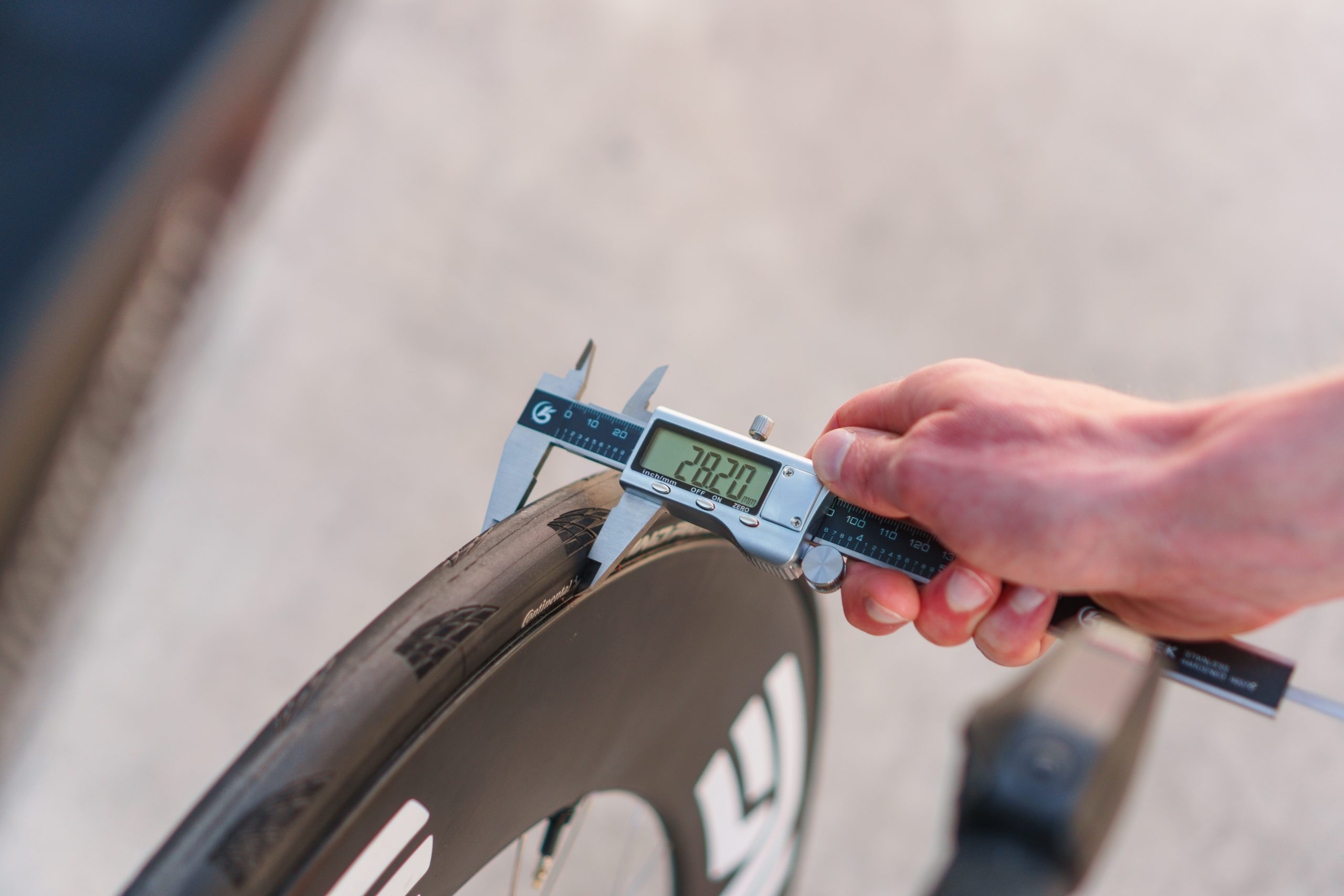
At the other end of the scale sits Pogačar's TT bike, with its 25mm-labelled tyres measuring 28.2mm at the front and 27.94mm at the rear – the narrowest tyres we recorded.
But even these are substantially wider than what many professionals raced a decade ago.
Rim width matters, but it's only part of the story
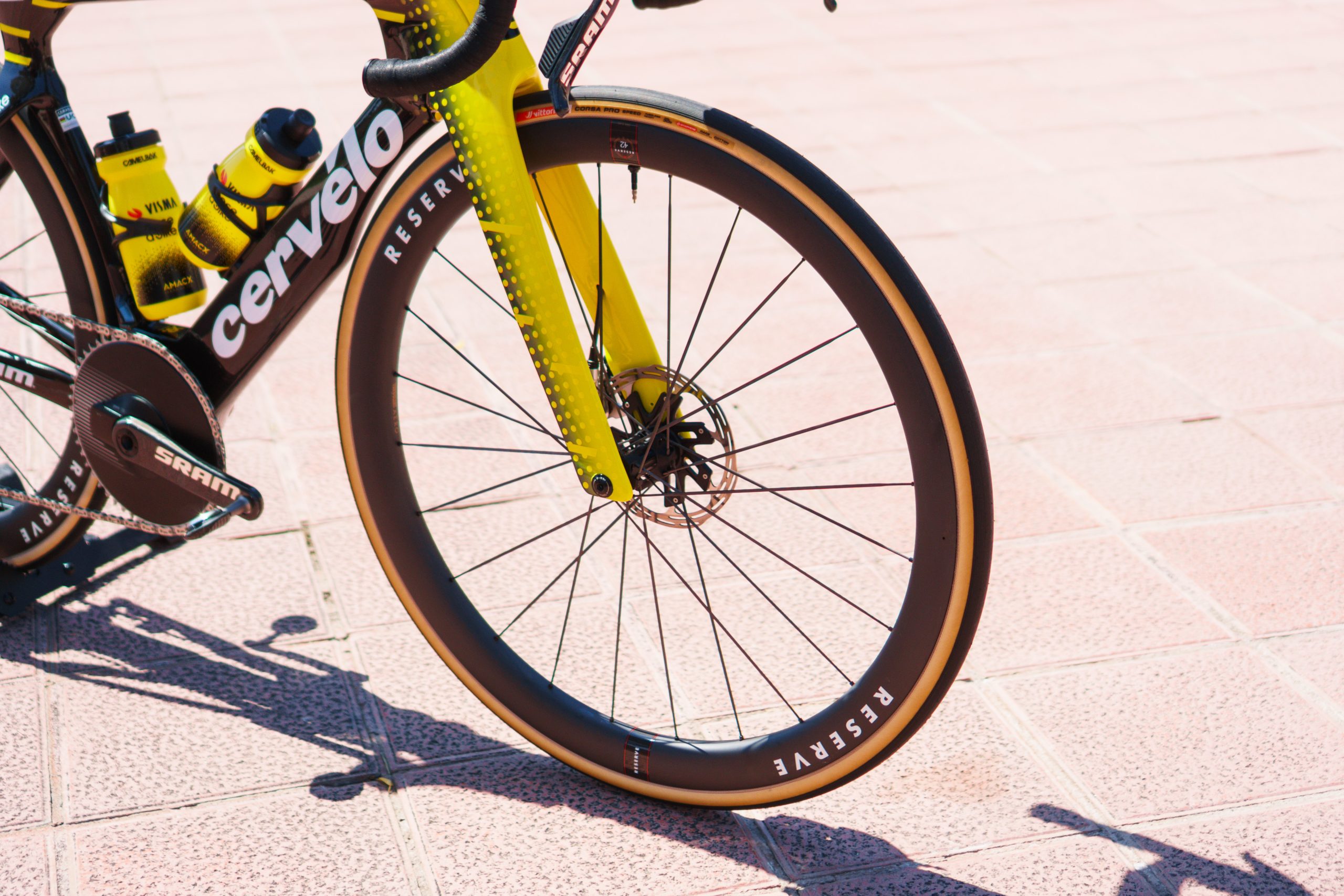
The data reinforces the general takeaway that wider internal rims produce wider measured tyres.
The widest rims in the sample – the 25.4mm internal width of the Reserve wheels on Vingegaard’s Cervélo S5, and teammate Per Strand Hagenes' Cervélo P5 – also unsuprisingly produced some of the widest measured tyres.
The relationship between internal rim width and measured tyre width is broadly consistent, though. Rims measuring around 22-23mm internally typically produce tyres (which are most often 28mm or 30mm nominally) around 1-2mm larger than their nominal size, while the widest rims in the sample (25.4mm internal) consistently produce some of the largest measured tyres.
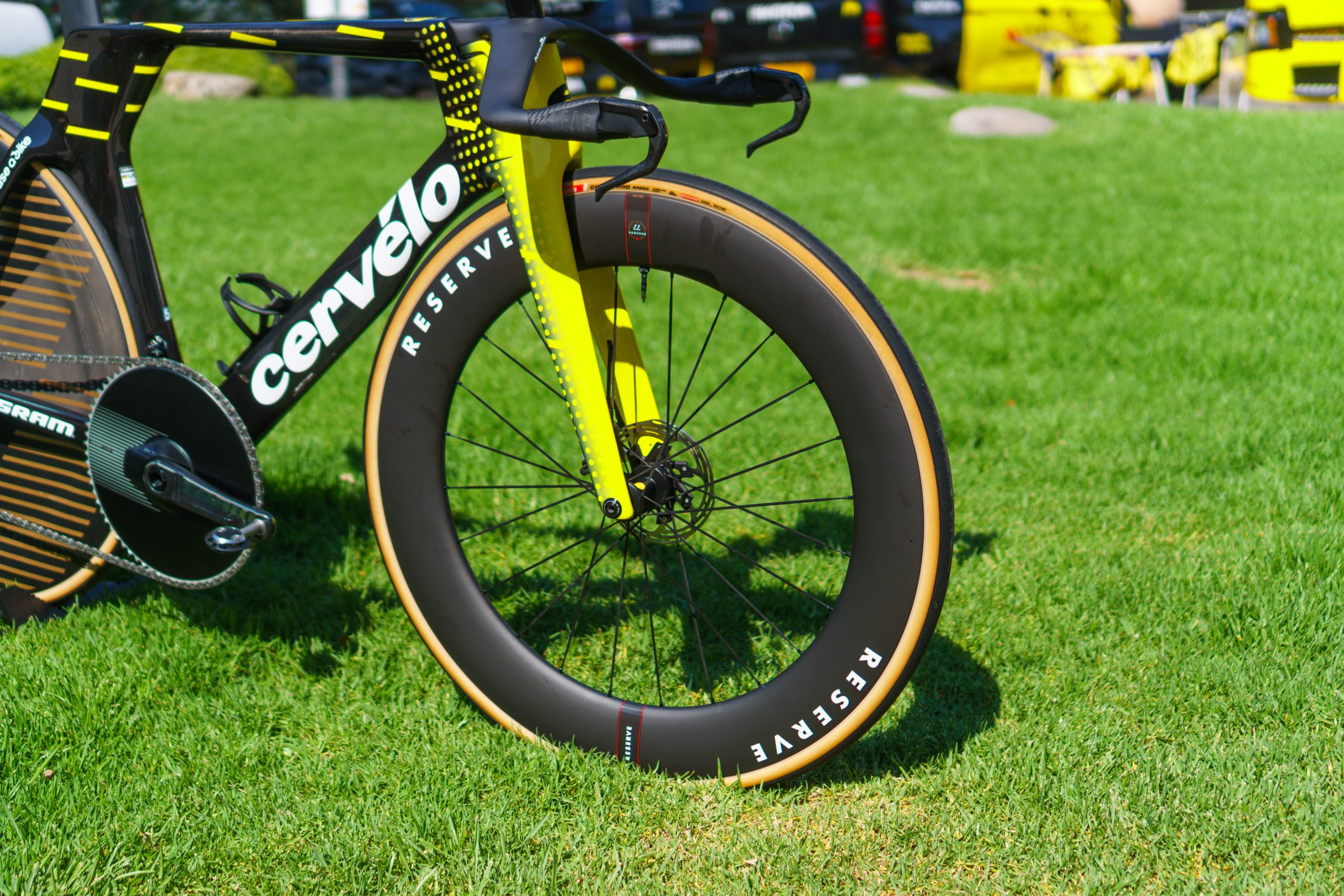
The biggest exception remains Mohorič's Specialissima, with tyres measuring more than 33mm on relatively conventional 23mm rims, suggesting tyre construction can be just as influential as rim width.
The clearest illustration is Lenny Martinez's Continental Grand Prix 5000 TT TR-equipped Bianchi Aquila RC. Despite using nominally 28mm tyres on 23mm hooked rims, its front tyre measured 31mm – wider than the nominally 30mm Cadex tyres fitted to Luke Plapp's Giant Propel Advanced SL on 22.4mm hookless rims.
Hooked, hookless or mini-hook? The bead profile isn't driving tyre width
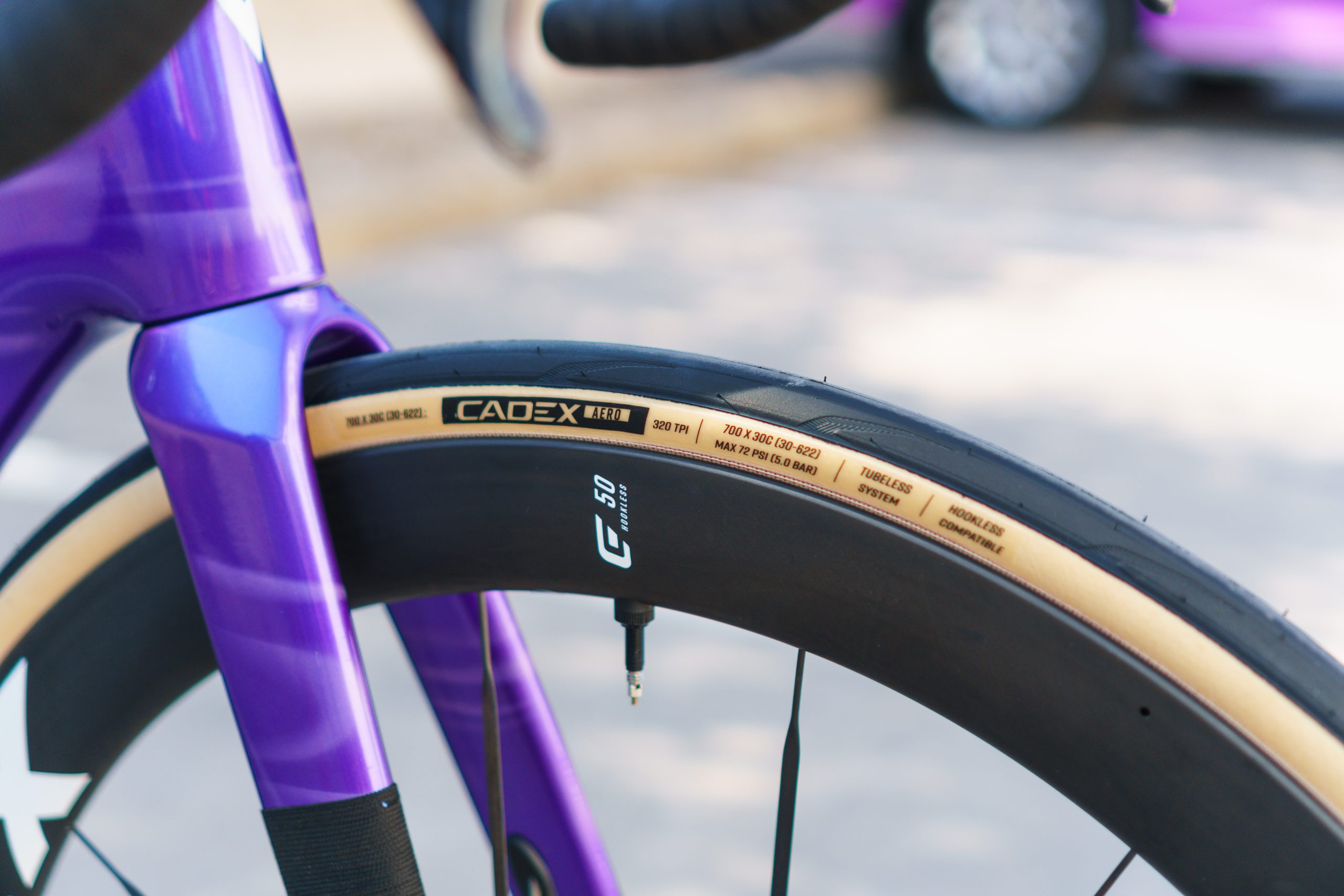
One of the more interesting questions raised by the data is whether rim design influences measured tyre size.
Hookless wheels produced the smallest average increase over nominal tyre size in our sample, at 0.61mm, compared with 1.70mm for conventional hooked rims and 1.90mm for so-called mini-hook designs.
However, those figures shouldn't be interpreted as evidence that bead design itself determines tyre width. The hooked and mini-hook rims in our sample also tended to sport wider internal rim profiles and different tyre models, both of which are likely to have a much greater influence on the final measured width than the presence or absence of a bead hook.
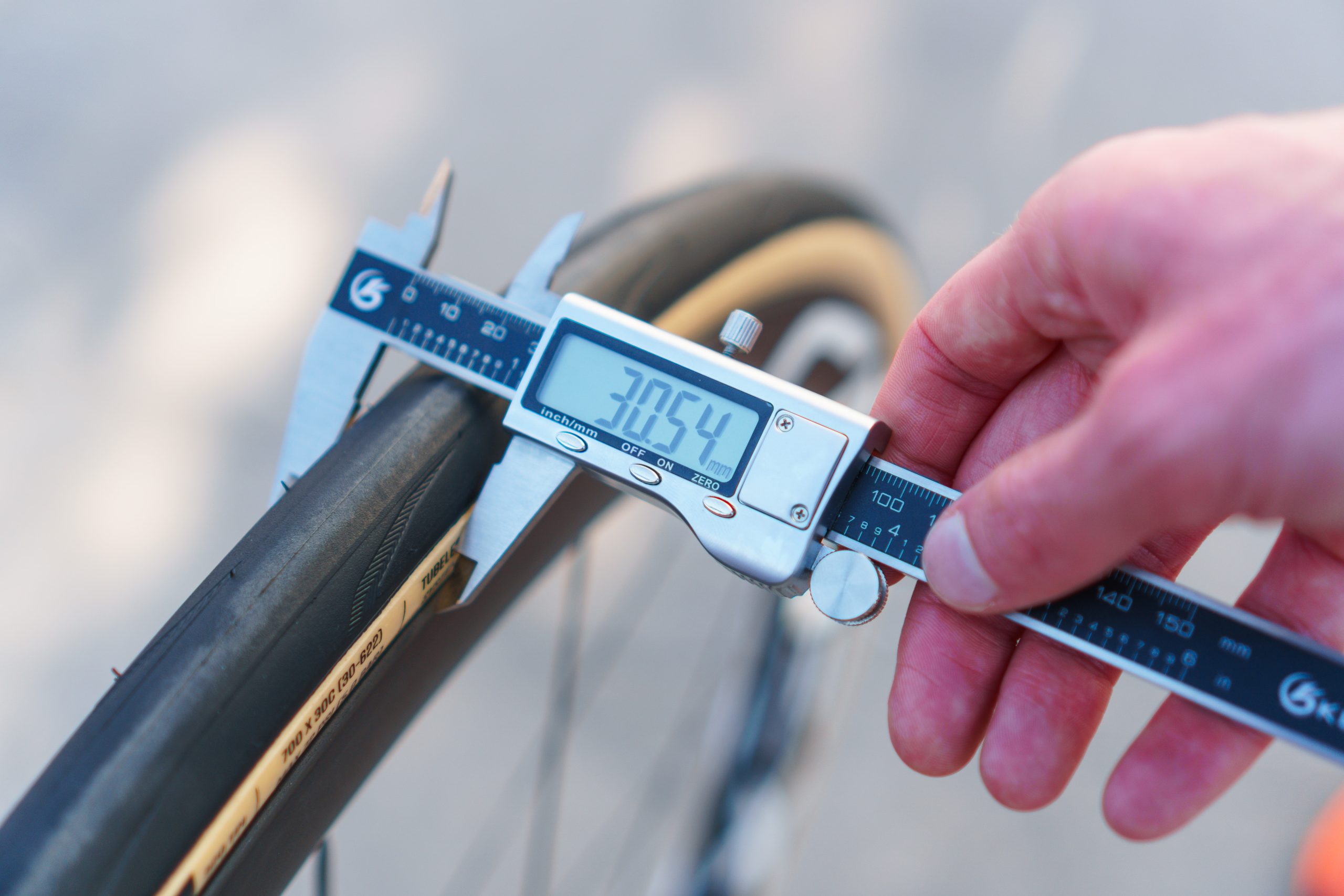
For example, consider Plapp’s Giant Advanced SL with hookless Cadex wheels and Mohorič’s Specialissima with hooked Vision wheels. These featured the same nominal tyre sizes (30mm), but the different tyre constructions from Cadex and Continental, respectively, and rim designs from Cadex (hookless) and Vision (hooked) resulted in different measured widths.
Mini-hook rims, as their name suggests, retain a very small bead hook to help with tyre retention while, it’s claimed, enabling the rim to benefit from the traits of what is officially a hookless design (according to the ETRTO).
However, the data doesn’t clearly suggest that any of these rim design solutions are specifically impacting width.
The sidewall number is becoming meaningless
| Rider | Bike | Nominal tyre size (front) (mm) | Nominal tyre size (rear) (mm) | Measured tyre size (front) (mm) | Measured tyre size (rear) (mm) | Internal rim width (front) (mm) | External rim width (rear) (mm) | Hooked/Hookless | Road / TT |
|---|---|---|---|---|---|---|---|---|---|
| Jonas Vingegaard | Cervélo S5 | 30 | 29 | 33.2 | 29.92 | 25.4 | 24.8 | Mini-hook | Road |
| Luke Plapp | Giant Propel Advanced SL | 30 | 30 | 30.54 | 31.04 | 22.4 | 22.4 | Hookless | Road |
| Matej Mohorič | Bianchi Specialissima | 30 | 30 | 33.31 | 33.65 | 23 | 23 | Hooked | Road |
| Milan Fretin | Look 795 Blade RS 3 | 28 | 28 | 29.63 | 29.32 | 23 | 23 | Hooked | Road |
| Remco Evenepoel | Specialized S-Works Tarmac SL9 | 30 | 30 | 29.42 | 28.89 | 21 | 21 | Hooked | Road |
| Tadej Pogačar | Colnago Y1Rs | 28 | 28 | 31.6 | 30.84 | 23.5 | 23.5 | Hooked | Road |
| Tobias Halland Johannessen | Prototype Ridley | 28 | 28 | 29.43 | 29.32 | 22 | 22 | Hooked | Road |
| Lenny Martinez | Bianchi Aquila RC | 28 | 28 | 31 | 28.5 | 23 | 19.5 | Hooked | TT |
| Mauro Schmid | Giant Trinity Advanced SL | 28 | 28 | 28.78 | 28.13 | 22.4 | 22.4 | Hookless | TT |
| Per Strand Hagenes | Cervélo P5 | 30 | 30 | 32.32 | 31.17 | 25.4 | 24.5 | Mini-hook | TT |
| Soren Wærenskjold | Ridley Dean | 30 | 30 | 31.32 | 30.36 | 20 | 20 | Hooked | TT |
| Tadej Pogačar | Colnago TT2 | 25 | 25 | 28.2 | 27.94 | 22 | 22 | Hooked | TT |
| Tom Pidcock | Pinarello Bollide | 28 | 28 | 28.66 | 28.49 | 23 | 23 | Hookless | TT |
Perhaps the most striking conclusion isn't that Tour riders are using 30mm tyres – it's that they're often not.
They're using tyres that say 28mm or 30mm on the sidewall but measure anything from around 28mm to nearly 34mm, once mounted.
As rims continue to widen and tyre constructions evolve, nominal sizing is becoming less useful as a point of comparison.
For consumers, it's a reminder to pay attention not just to the printed size, but also to measured width, rim compatibility and frame clearance.
More on the 2026 Tour de France
- ‘I wanted to enjoy myself’: Baptiste Veistroffer shares the stats behind his 144km Tour de France solo break
- "It’s outstanding" – Norwegian who was treated for cancer now leads the Tour de France
- Ridley built this custom yellow-jersey Noah Fast for Torstein Traen in less than 30 hours after he took the lead in the Tour de France
- Who is Isaac del Toro? 4 things you need to know about the Mexican who could be a future Tour de France winner
- Why are Pogačar and Del Toro riding different bikes?
- Isaac del Toro's stage-winning Colnago V5Rs may sit exactly on the UCI weight limit
- A Tour de France breakaway only has a 2% chance of winning, so why join one?
- Every team bike at the 2026 Tour de France