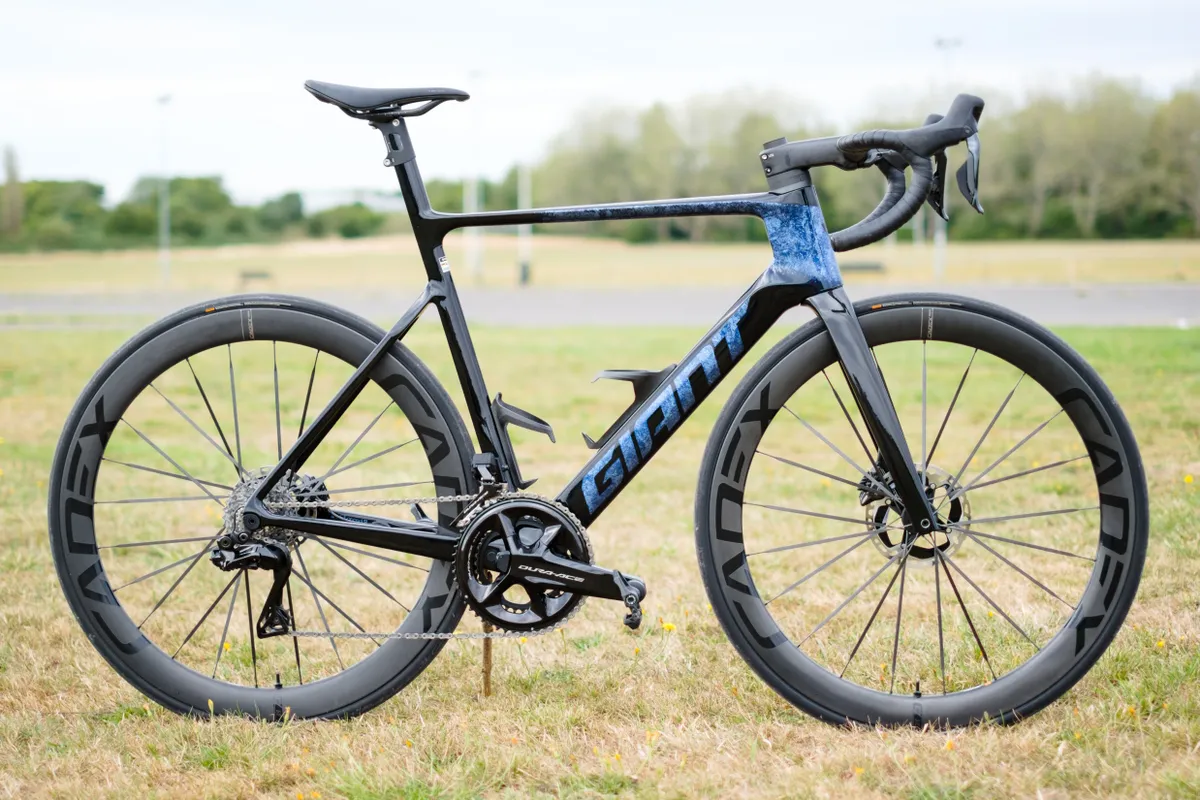
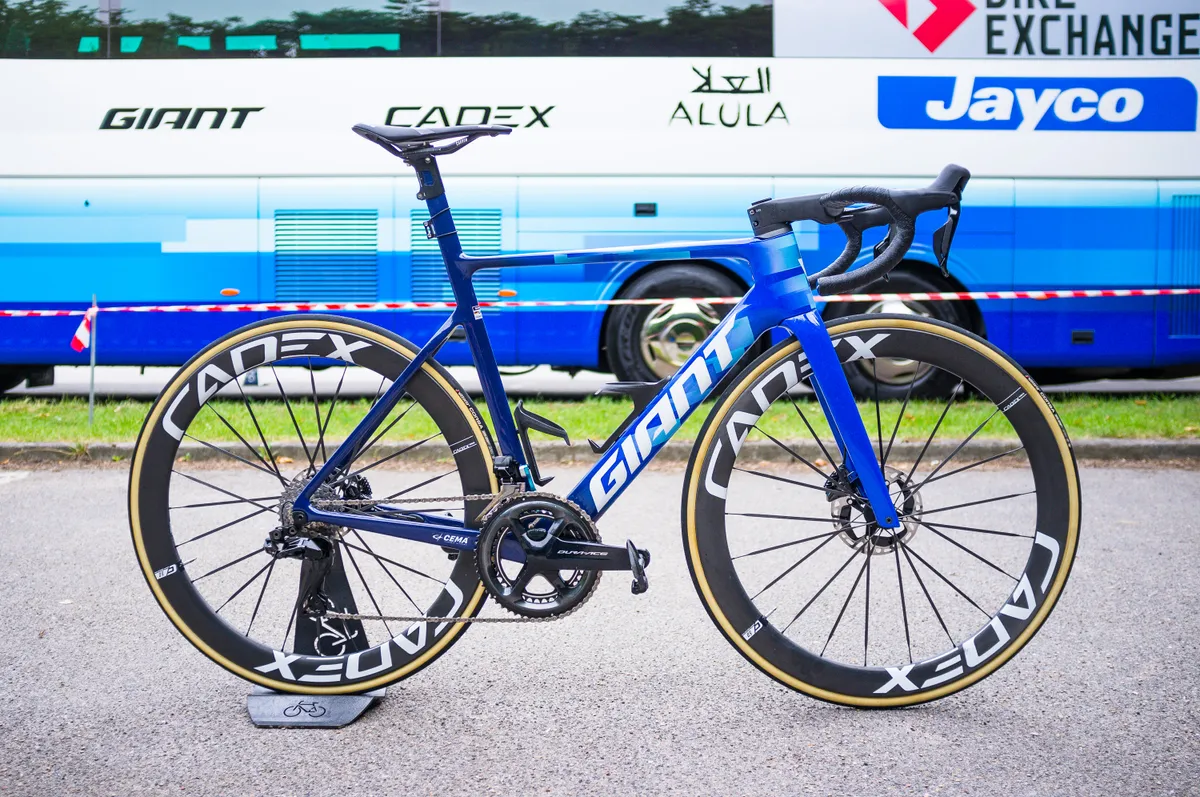
The fourth-generation Giant Propel is here and it weighs as little as 6.56kg in a top-spec, size-medium build.
Despite a reduction in complete bike weight of around 350g (for the top-spec, Advanced SL 0 model), Giant claims the new version doesn’t skimp on aerodynamics or efficiency.
In total, Giant says the 2026 Propel has an 18.4-watt 'advantage' at 40kph over the previous model, thanks in part to a suite of new and improved components and finishing kit.
Ahead of the bike’s launch, we got our hands on the flagship, Propel Advanced SL 0 AXS (£10,499 / $13,500 / €11,999), the mid-range Advanced Pro 0 Di2 (£5,799 / €6,499) and the cheapest bike in the range, the Advanced 2 (£2,599 / €2,999).
Let’s take a look at what’s changed, and how much difference it makes going from the flagship Propel down to the more affordable models.
Total System Speed

While many aero road bikes take an ‘aero is everything’ approach, the Propel has always been more weight-conscious.
The latest model doubles down on that ethos, shaving weight from almost every part of the bike.
Nevertheless, the new Propel looks almost identical to the old one at a glance.


As with the latest Cannondale SuperSix EVO, there are plenty of small changes – which Giant says add to a big overall improvement. However, it’s fair to say Giant has refined the Propel formula rather than reinventing it.
That’s nothing to grumble about. Both the Advanced SL and Advanced Pro versions of that bike performed extremely well during testing (bar a couple of somewhat outdated spec choices), so a more drastic change to the design would have likely alienated fans of its existing charms.
In terms of what’s new and improved, let’s run through the headline features on the 2026 Giant Propel platform.
Frameset refinements

While the overall silhouette is very similar, the 2026 Propel gets subtle reshaping across the frameset to improve aerodynamic performance, as well as a bump in tyre clearance to 32mm (up from 30mm).
Vertical compliance at the rear of the bike is also said to be 25 per cent better, thanks to more heavily dropped seatstays, and Giant has refined the carbon layup to save 40g and improve the bike’s pedalling and handling stiffness.


It also gets a Universal Derailleur Hanger rear dropout, for compatibility with SRAM’s recently launched direct-mount rear derailleurs.
As before, the Advanced SL frames get an integrated seatpost and Giant’s lightest carbon fibre blend, while Advanced Pro and Advanced frames use a telescoping aero seatpost plus a heavier (and cheaper) carbon layup.
The more meaningful changes come elsewhere on the new Propel, however, with new and updated components bringing more tangible gains – especially at the front of the bike…
Integrated and narrower cockpits

While many (myself included) valued the adjustability of the old two-piece cockpit, the direction of travel in road cycling is clear – fully integrated, one-piece handlebars are more aerodynamic, lighter and, perhaps most importantly, make a bike more attractive to prospective customers on shop floors. They’re what 99 per cent of pros use at the Tour de France, after all.
Notably, Giant has also got on board with the trend for narrower handlebars and flared drops – which contributes to that 18.4-watt advantage.

A size-medium Propel, for example, now comes with a 400mm-wide bar (measured centre-to-centre at the drops), compared to 420mm on the previous model, and that 400mm bar measures only 370mm-wide at the brake hoods.
Bike fitters will be relieved to read there are plenty of choices, with bar widths from 360 to 440mm and stem lengths from 80 to 140mm. The D-shaped OverDrive Aero steerer and cable-routing system is also carried over from the previous model, so riders can still use a two-piece setup (or a third-party option) if desired.


The top-spec Contact SLR 1 Aero handlebar is claimed to tip the scales at 286g (420x100mm), saving 77g compared to the old two-piece cockpit.
Advanced Pro builds also get an integrated cockpit, albeit a slightly heavier, 350g version. The Advanced builds make do with the two-piece setup from the previous Propel, with an aluminium stem and aero handlebar.
Trickle-down carbon spokes and Aero tyres

We got a taste of what was coming in terms of rolling stock last week, with the launch of the new Cadex Max 50 wheels and Aero tyres.
Designed as a "unified aerodynamic system", these 1,290g, carbon-spoked wheels and aero-optimised tyres come fitted to Propel Advanced SL models, such as the Advanced SL 0 AXS model we got hands-on with prior to the launch.

As detailed in our news story on those wheels and tyres, the carbon spokes are bonded directly into the hub flanges for a lightweight and reactive construction, while the new Aero tyres are claimed to have lower rolling resistance as well as a tread pattern that helps improve aerodynamic performance.
All bikes in the new Propel range are specced with 28c tyres, up from 25c on previous models, which is a welcome update (even if pro choices are trending wider nowadays, as evidenced by our bike checks at this year’s Opening Weekend).
Together, these wheels and tyres cut another 240g of weight compared to the top-spec old model – the most significant saving of all the changes.

The two pricier Advanced Pro builds, which feature Shimano Ultegra Di2 (£5,799 / €6,499) and SRAM Force AXS groupsets (£5,999 / $7,800 / €6,499), have Giant wheelsets with identical rim dimensions and carbon spokes, but more conventional hubs. This bumps the weight up to 1,410g. They also get the Cadex Aero tyres.
The Advanced Pro 1 (£4,599 / €4,999), with Shimano 105 Di2, sees a step down to steel, Sapim CX-Ray spokes, plus Giant’s Gavia Course 0 tyres. These have also been updated to feature a lower-rolling-resistance rubber compound and an aero tread pattern, Giant says.

Advanced builds also feature Giant’s SLR 2 carbon wheels and the Gavia Course 0 tyres, except on the cheapest, Advanced 2 model (£3,499 / €4,399), which rolls on aluminium Giant P-A1 hoops.
All of the carbon rims are hookless or Tubeless Straight Side, meaning they’re only compatible with tubeless tyres.
What does it all mean?

Giant says the net effect of these changes is an 18.4-watt improvement to aerodynamic and rolling efficiency, compared to the previous model, plus – according to our scales – a drop in weight of roughly 350g.
Showing it's working, Giant breaks down where these efficiency savings come from in its press materials:
| Model | Previous Propel Advanced SL (watts) | New Propel Advanced SL (watts) |
|---|---|---|
| Linear drag (+/- 20 degrees yaw) | 234.9 | 222.48 |
| Wheel rotating drag (front & rear) | 5.46 | 5.04 |
| Tyre rolling resistance (front & rear) | 27.4 | 21.8 |
| Total resistance | 267.76 | 249.32 |
| Total energy savings | -18.44 |
The previous Propel was set up with the old two-piece cockpit, with Cadex Ultra 50 wheels and 25c Cadex Aero tyres. The new one had the new one-piece cockpit, plus the new Max 50 wheels and 28c Cadex Aero tyres.
Both bikes were 'ridden' by Giant's Grischa 2.0 dummy, which simulates a rider on the bike with articulating legs.

To underscore how impressive the Advanced SL 0's 6.56kg weight is, that figure represents a fully painted bike with aero components, bottle cages, a computer mount and sealant in the tyres.
Essentially, it’s ready to race once you add pedals, and riders with smaller sizes taking part in UCI-sanctioned events might even need to add some ballast to their bike to comply with the minimum bike weight rule.
Of course, the big caveats to that are that we’ve not yet had a chance to ride the new Propel, and the Advanced SL build is obviously very expensive (£10,499 / $13,500 / €11,999).


Stepping down to the Advanced Pro 0 Di2 build still nets you a lightweight bike, though, with the size-medium model we saw weighing only 7.18kg.
That’s also impressive, given it costs just over half what the Advanced SL 0 AXS does and it stacks up very well compared to the competition. The £6,995 / $6,999 Cannondale SuperSix Evo 3 I tested recently weighed 7.7kg, for example.
Unsurprisingly, the Advanced 2 build (£2,599 / $2,500 / €2,999) is substantially heavier, at 8.73kg for a size medium.


You’re still getting a full-carbon frame and fork with the same aero shaping as the more expensive models, though, with plenty of scope to upgrade the spec down the line, should you wish.
All things considered, it looks to be an impressive package at first glance. Giant hasn’t simply put the Propel on a crash diet and compromised its aerodynamic capabilities just to shed a few grams and grab some headlines.

It’s a restrained update, but one that appears to smartly refine and modernise the Propel platform. It still doesn't have the outlandish design features of pure aero bikes such as the Ribble Ultra SL R, Factor One or Cervélo S5 (and may not be as slippery as a result), but it also looks to retain the all-rounder characteristics that make the Propel a compelling bike to own and ride.
As with any new bike, though, the proof is in the riding, so we’ll reserve final judgement on the new Propel until we’ve had a chance to test one fully.