SQUIRREL_14032623
Amflow’s PX Carbon Pro was designed to showcase the powerful Avinox M2S motor and show what the compact, high-output system can do in a lightweight, purpose-built chassis.
The Amflow's carbon frame delivers 150mm of rear-wheel travel, paired with a 160mm Fox 36 Factory fork, while a 700Wh battery powers the M2S motor. The bike can be run with mixed or full-29in wheels and offers extensive geometry adjustment through its headset, bottom-bracket and chainstay settings.
At £8,999, the PX Carbon Pro gets suitably high-end kit, including Fox Factory suspension, SRAM X0 Eagle AXS Transmission, Magura Gustav Pro brakes and Amflow XMC-30 carbon wheels.
It’s the strongest technical climber in our Mountain Bike of the Year 2026 test, with excellent motor control, balanced weight distribution and plenty of traction. Downhill, it feels light, agile and easy to place, but it delivers more feedback to the rider on faster, rougher trails and can't match the composure or the range of the best bikes in the test.
Three key things you need to know
- The motor doesn’t surge when you rest a foot on the pedal; its assistance closely matches how firmly you push
- Its low weight, balanced position and long-chainstay option make it the best technical climber in this test
- The 40 theoretical geometry combinations can turn it from an agile trail bike into a much more stable, enduro-biased machine
The full Bike of the Year 2026 shortlist
- Amflow PX Carbon Pro – £8,999 / $10,199 / €9,999
- Atherton S.170E.2 – £7,999 / $N/A / €7,599.05 (before applicable local taxes)
- Marin Alpine Trail EXR – £6,899 / $8,999 / €7,999
- Merida Lithos 8000 – £8,500 / €8,899
- Specialized Levo 4 Evo Pro – £9,699 / $10,499 / €10,999
- Yeti LTe T4 – £12,999 / $14,900 / €14,500
The motor isn’t the scary bit
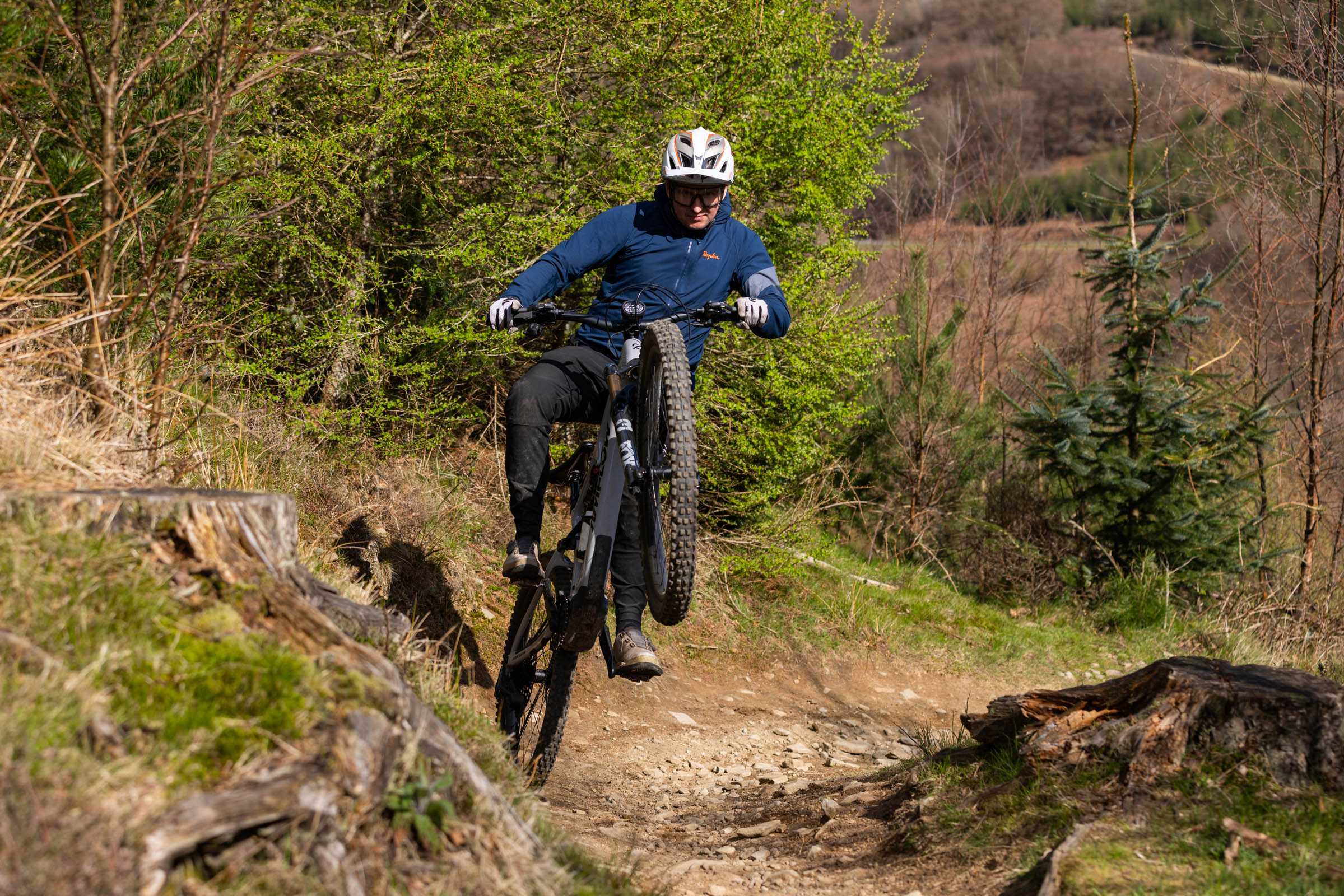
While the Avinox M2S motor's headline figures are startling, the useful engineering lies in the first few millimetres of pedal pressure. A light touch produces a measured response; a committed stroke releases the motor’s full power.
This makes low-speed balance far calmer than on Bosch-equipped bikes, where the strongest modes sometimes release a shove before you’re fully set to ride. The M2S reacts more intelligently without confusing speed of response with aggression.
On technical climbs, that precision enables the rider to balance traction with their feet rather than the brakes. The ‘Auto’ mode adds output as the terrain demands, while ‘Turbo’ and ‘Boost’ only overwhelm the rear tyre when you ask for maximum power.
The chassis gives the motor an excellent platform – I ran my size-medium test bike with the slack -1-degree headset cup, a low geometry setting and the chainstays in their longest 451mm position, matching it more closely to the more enduro-focused bikes on test.
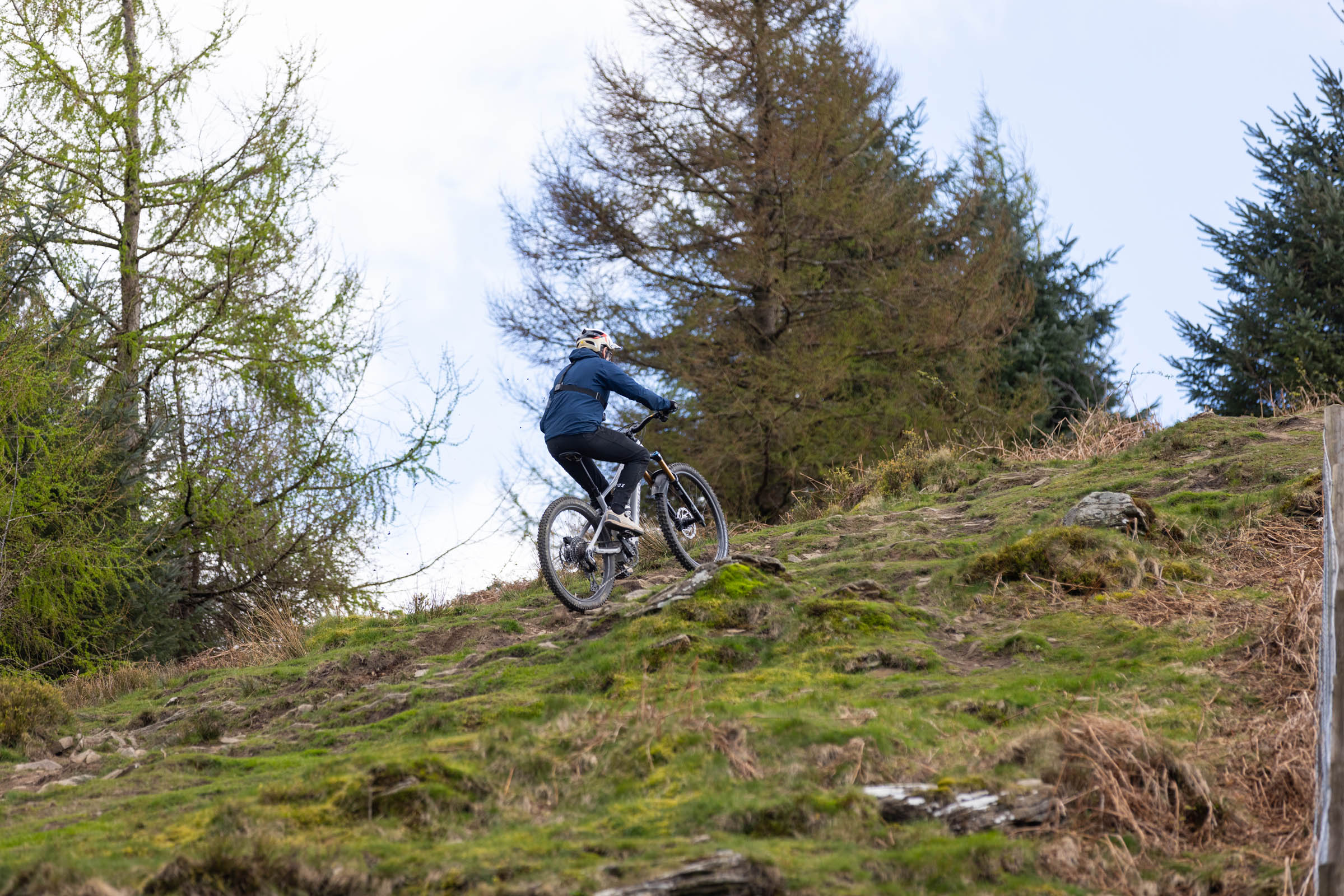
While climbing, the long rear centre helped balance my weight between the wheels, while the low stack and 160mm-travel fork helped keep the front tyre suitably weighted on steeper inclines.
The excellent 40mm-rise bar prevents the front end feeling slammed, though. It tracks accurately on steep gradients without requiring exaggerated body movement, and remains controlled and genuinely fun on even the hardest climbs.
The suspension generates good traction without feeling vague – there’s a useful seated platform, while some movement when standing helps the rear tyre follow uneven ground. Wheel spin was rarely an issue and the bike didn’t hang up badly on square edges.
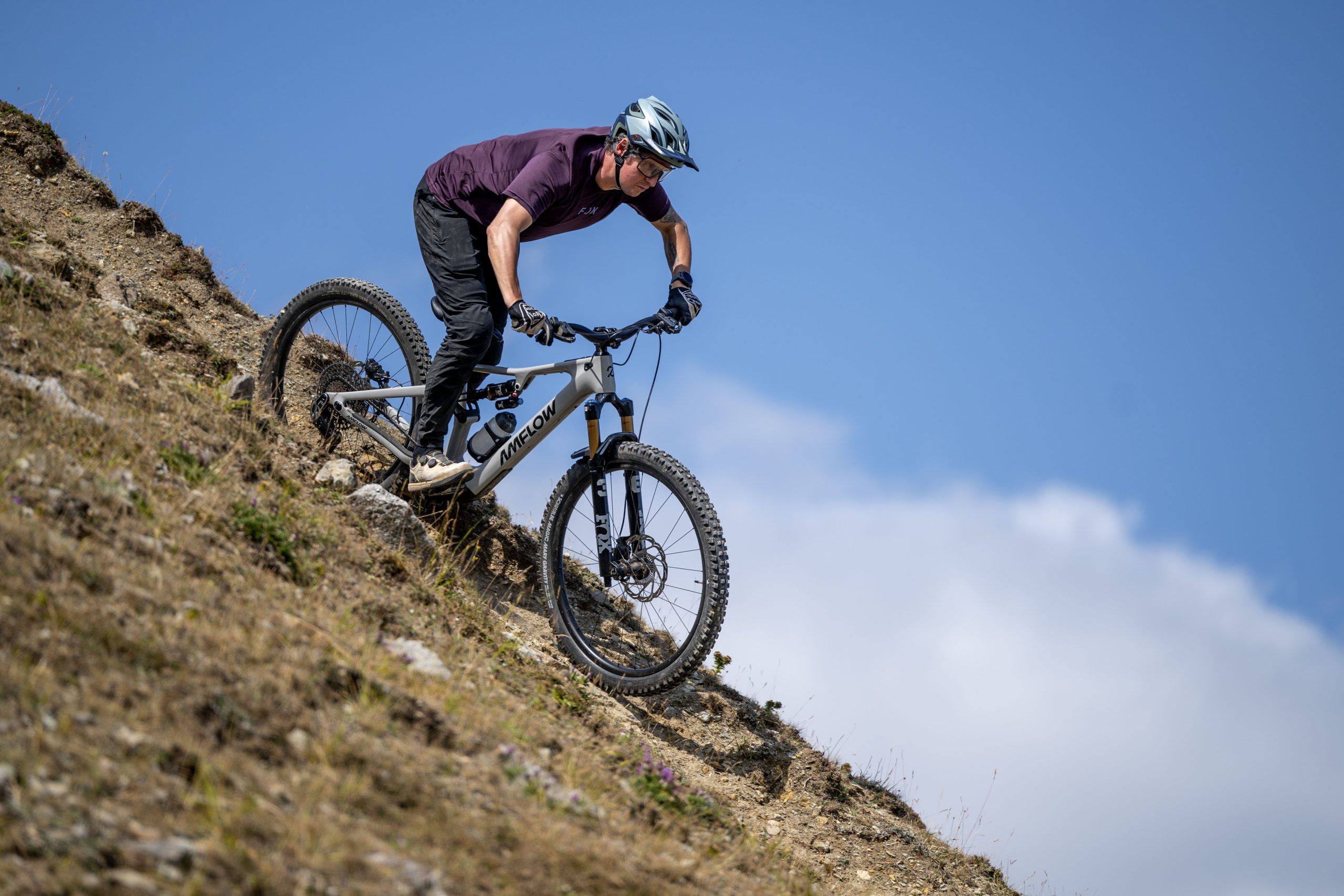
At 21.34kg, the Amflow isn’t featherweight, but it’s significantly easier to guide through technical terrain than the Specialized or Marin. Lifting the front wheel, changing line and correcting mistakes take less effort. The short 155mm cranks also provide useful clearance, and pedal strikes weren’t a meaningful problem.
On smoother climbs, the position remains comfortable and progress is almost effortless. The 700Wh battery returned 23km and 1,390m of elevation in the full-power range test, behind the larger-capacity bikes. Its rapid charger partly offsets that result, with Amflow claiming it takes 76 mins to get to 80 per cent charge from zero.
More than a motor with wheels
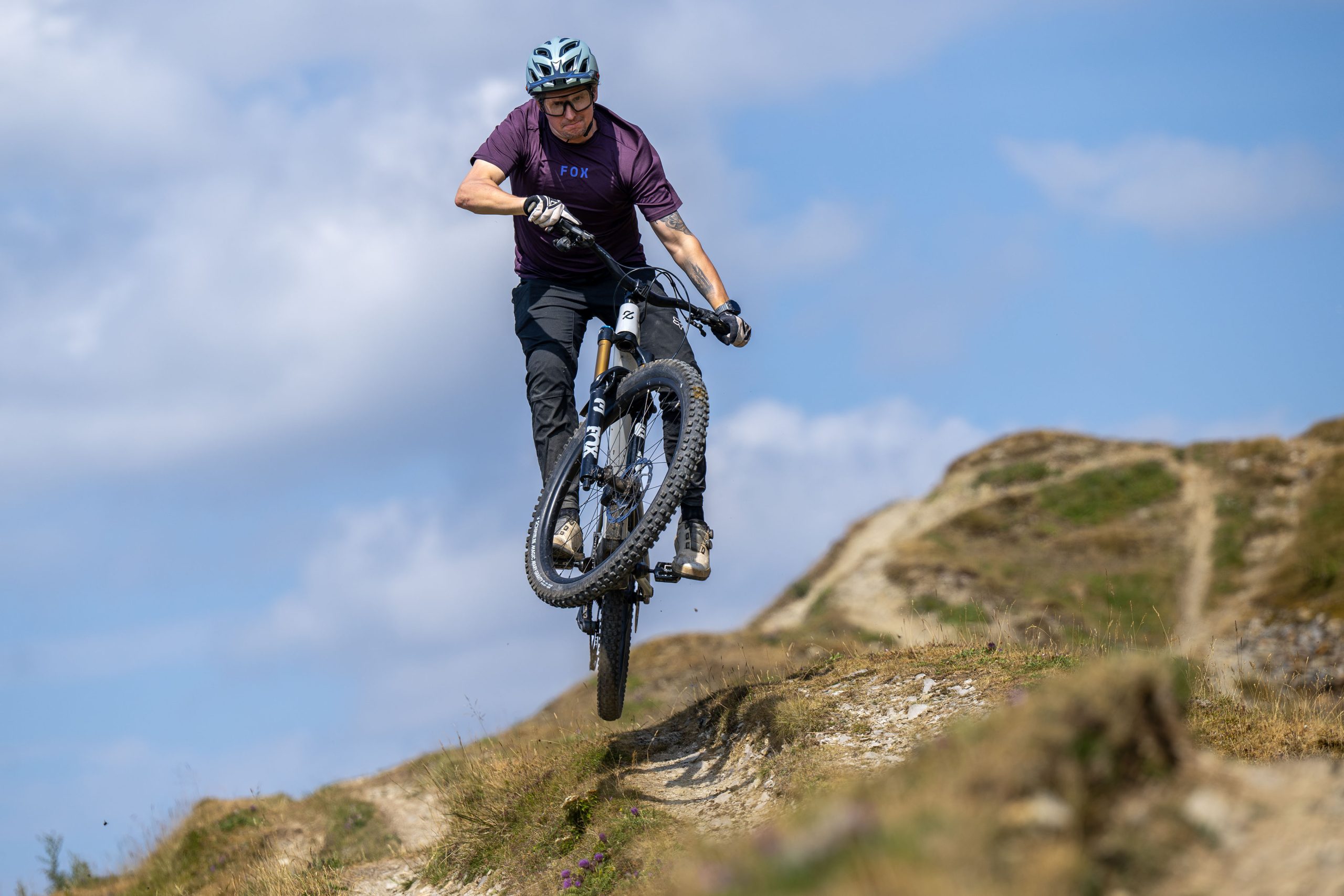
Point the PX downhill and it quickly proves the chassis deserves attention. In my stable setup, the ride position felt centeed on steep terrain and the bike remained calm as speed increased. It didn't pitch or dive when committing to a chute, and the relatively low weight made it easier to move around than most full-power electric mountain bikes.
Cornering is a highlight, with the bike carving naturally and giving enough support to load the tyres confidently. Even with the long chainstays and slacker front end, direction changes remain quick, helped by the mixed-wheel setup.
Through undulating terrain, the suspension offers a useful platform for pumping and cornering, helping the PX preserve speed instead of sitting deeply in its stroke.
Long, repetitive roughness exposes the boundary of the 150mm-travel chassis. Roots, rocks and braking holes pass more energy into the rider than they do on the Lithos or S.170E, even when the Amflow’s geometry is set for maximum stability.
Heavy braking also reveals less rear-wheel freedom than on the Yeti. The chassis stays orderly, but the tyre doesn’t cling to chopped ground with the same consistency.
That distinction matters – judged as a 150mm all-rounder, its descending performance is excellent. But compared directly with 170mm full-power enduro bikes, it gives away comfort and ultimate composure.
The components support its intended use well. Schwalbe’s Gravity Radial tyres generate dependable grip, the Magura Gustav Pro brakes suit its speed, and the own-brand carbon wheels proved accurate and impressively robust throughout my testing. SRAM’s X0 Transmission shifted cleanly under load, while the own-brand finishing kit felt properly considered rather than a cost-saving afterthought.
A geometry toolkit, not a gimmick
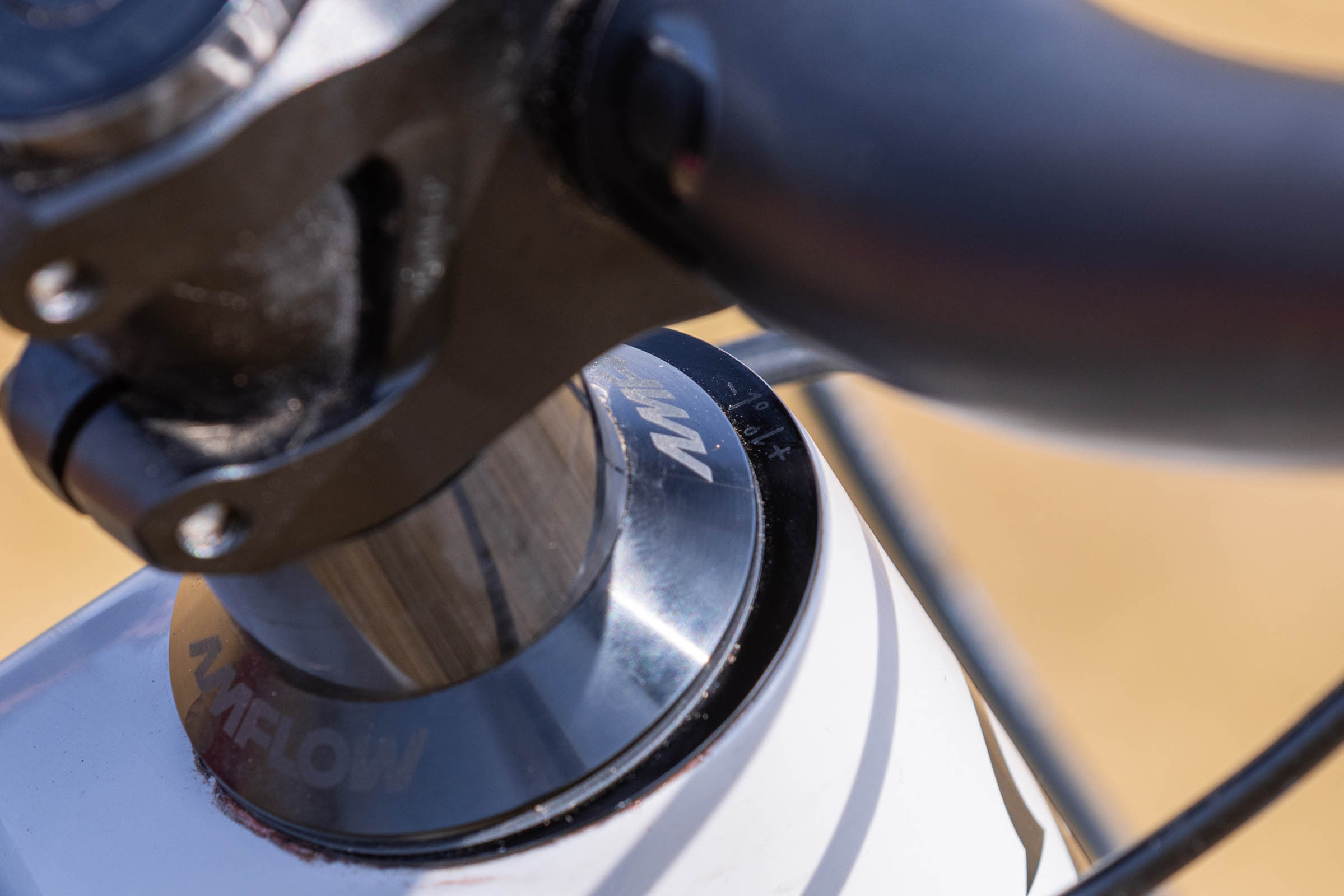
The PX’s carbon frame uses a four-link suspension layout and offers an unusually broad range of adjustment. Interchangeable headset cups provide five head-angle positions, a shock-yoke chip changes bottom bracket height and rear flip chips alter the chainstay length. The PX can take either a 27.5in or 29in rear wheel.
The 40 theoretical combinations sound excessive, but the adjustments create meaningful differences. The longest rear setting improved climbing balance and stability without turning the bike into a bus, while the headset cups enable riders to prioritise agility or descending confidence.
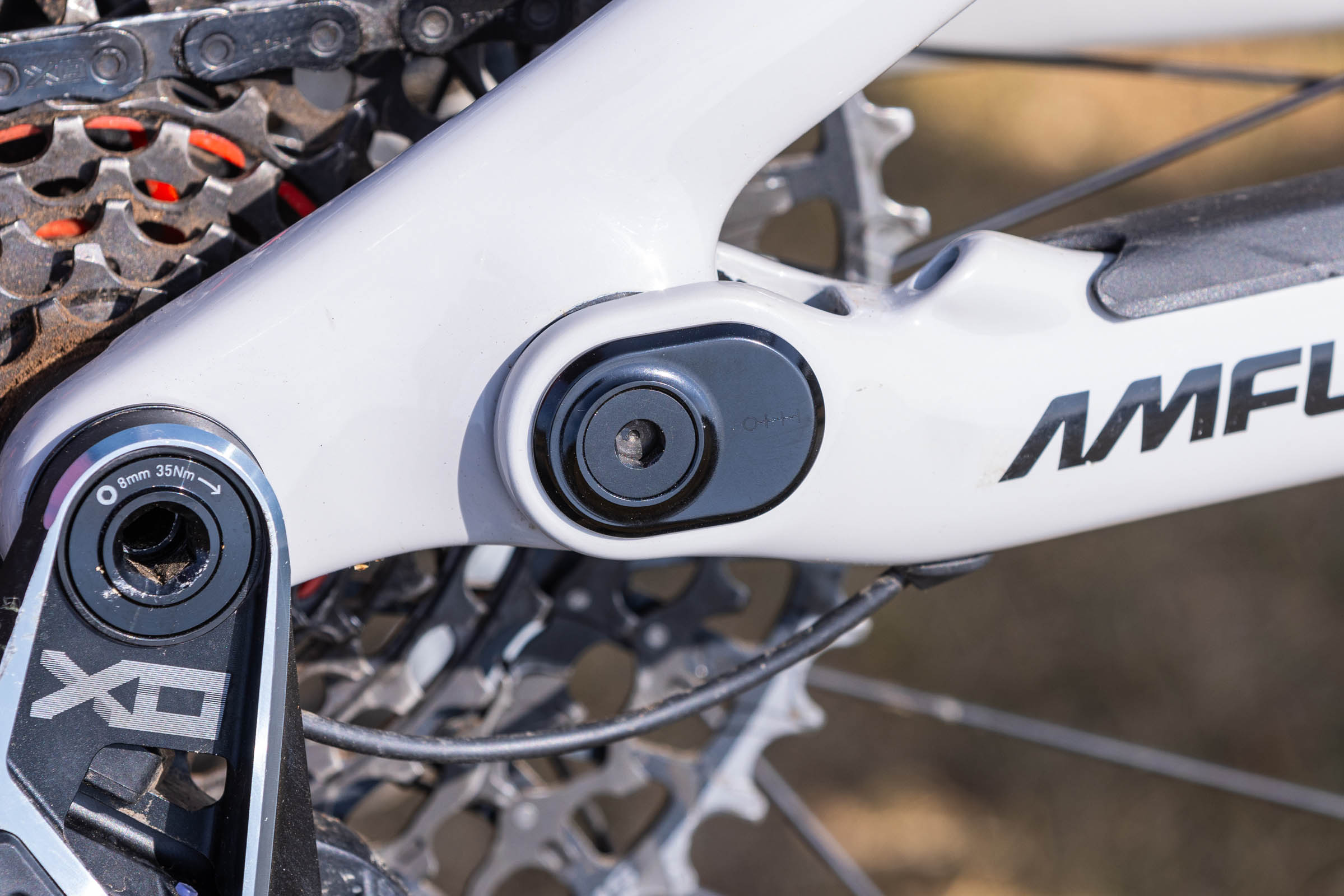
The system does demand some understanding. Changing several settings at once could make it difficult to identify which adjustment has improved or worsened the ride, so it’s worth starting from a known baseline and altering one element at a time.
The integrated battery helps create a remarkably slim frame, although it can’t be removed quickly for charging or replacement. The top-tube OLED display and wireless remotes are among the neatest interfaces available. The screen is clear, the controls are intuitive and the app manages assistance settings, navigation and security features without making basic operation dependent on a phone.
Value for money
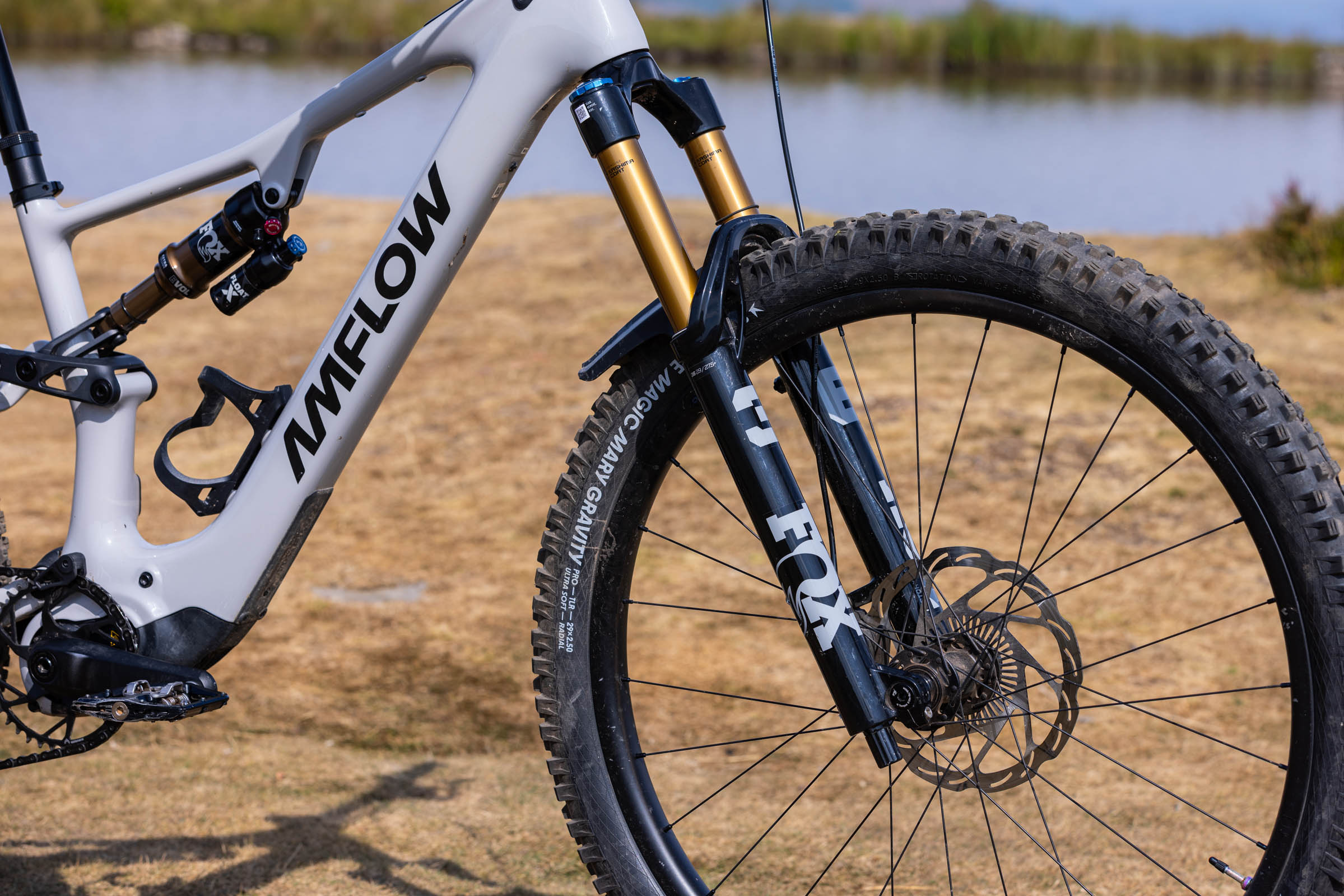
At £8,999, the Pro justifies part of its premium through low weight, Factory-level suspension and accurate carbon wheels – none of which would be cheap to add later.
The £6,499 PX Carbon nevertheless preserves the defining ingredients: the M2S motor, 700Wh battery, Gustav brakes, tyres and adjustable chassis. For many riders, that’ll be the smarter purchase.
That makes the cheaper model the better-value option for many riders. The Pro version justifies its premium through weight, suspension adjustment and higher-end components, but it doesn’t offer a fundamentally different riding experience.
The PX Carbon Pro turns extraordinary motor output into genuine climbing control. Its balanced setup and manageable weight make severe ascents feel more precise and less physical than on any rival.
It remains impressively capable downhill, with supportive suspension and quick handling, but repeated rough terrain exposes the limits of its rear travel. Riders prioritising maximum descending isolation may prefer a heavier, longer-travel enduro bike. For anyone wanting huge climbing performance, broad adjustability and a full-power eMTB that still feels agile, the Amflow is one of the most complete options.
How I tested | Bike of the Year 2026
I rode all six bikes back to back across the same mix of technical climbs, trail-centre loops, steep natural descents, rough braking-bump sections and larger bike-park features. To compare motor response, climbing traction, geometry, suspension support, braking control and handling as fairly as possible, I repeated key trails, adjusting setup between runs where required.
Each bike also completed the same maximum-assistance range test, while the three finalists were timed on the Forest of Dean’s FOD Thursday downhill and ridden by a second tester to cross-check my conclusions.
Also tested
- Merida Lithos 8000
- Specialized Levo 4 EVO Pro
- Marin Alpine Trail E XR
- Yeti LTe T4
- Atherton S.170E.2
Amflow PX Carbon Pro bottom line
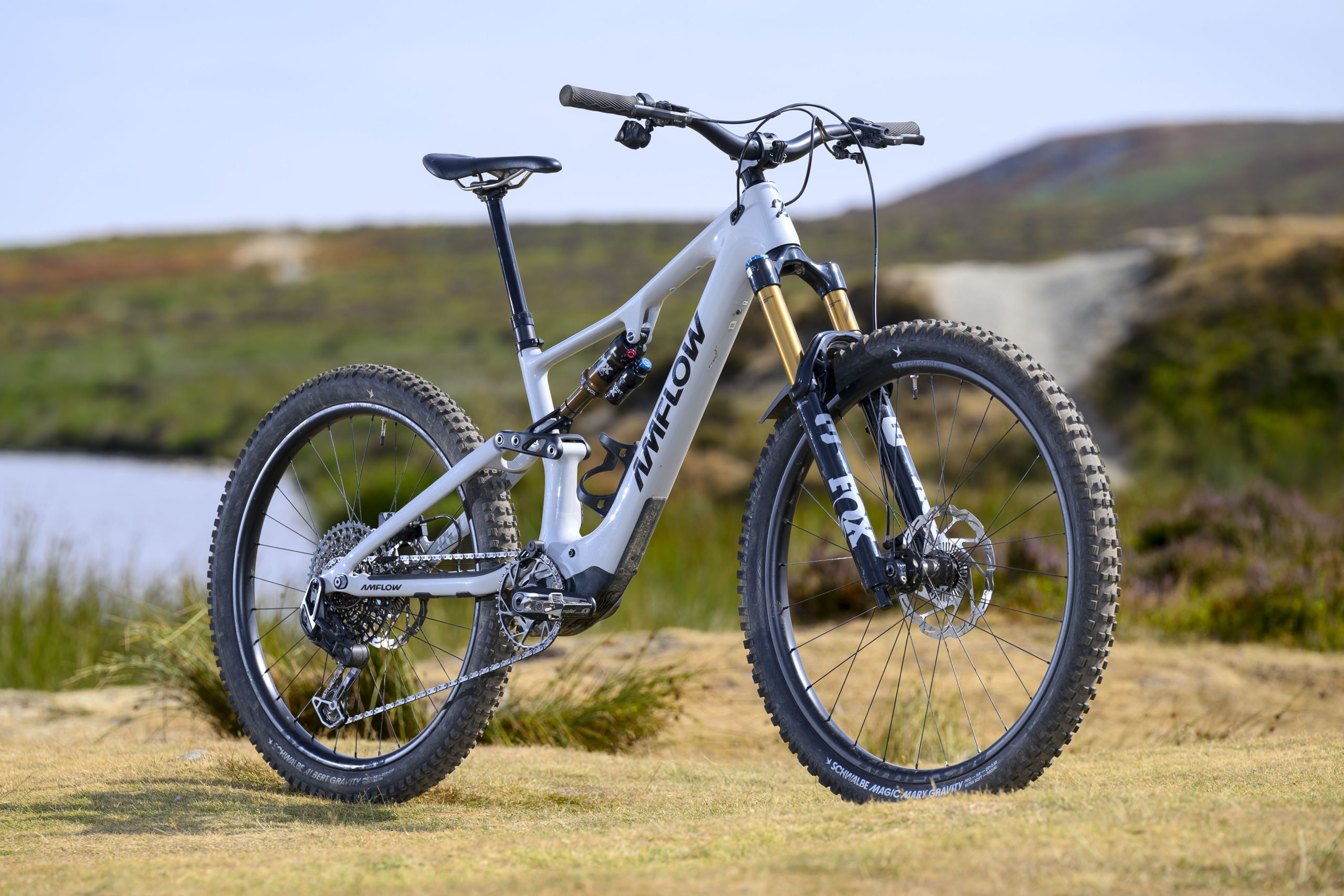
The PX Carbon Pro is not merely a light frame carrying a spectacular motor. Its power control, geometry range and low mass combine to make it the outstanding technical climber of our Bike of the Year group.
Its geometry gives it genuine breadth, creating a stable, enduro-biased machine without losing responsive handling. Rough descents expose less isolation than the best long-travel bikes, while the 700Wh battery limits range against larger-capacity rivals.
For riders who value technical climbing, huge power and having one bike capable of covering an unusually broad spread of terrain, the PX is brilliant. The Pro build is expensive, but the underlying bike is one of the most impressive and complete eMTBs Amflow has produced.
SQUIRREL_14032623
Product
| Brand | Amf |
| Price | €9999.00, £8999.00, $10199.00 |
| Weight | 21.34kg |
Features
| Fork | Fox 36 Factory, GRIP X2 |
| Stem | Amflow Split 35mm |
| Chain | X0 Eagle Transmission |
| Frame | Carbon fibre, 150mm travel |
| Motor | Avinox M2S |
| Tyres | Schwalbe Magic Mary Radial Gravity Pro Ultra Soft 29x2.5in; Albert Radial Gravity Pro Soft 27.5x2.5in |
| Brakes | Magura Gustav Pro four-piston, 203mm rotors |
| Cranks | Avinox SL, 155mm, 38t |
| Saddle | Amflow MTB titanium-railed saddle |
| Wheels | Amflow XMC-30 carbon, 29in front/27.5in rear |
| Shifter | SRAM AXS Pod Rocker |
| Cassette | SRAM XS-1295 10-52t |
| Seatpost | Amflow adjustable-travel dropper, 190mm |
| Grips/tape | Amflow Enduro Grip 2 |
| Handlebar | Amflow Enduro carbon, 800mm |
| Rear shock | Fox Float X Factory |
| Available sizes | M, L, XL, XXL |
| Rear derailleur | SRAM X0 Eagle Transmission |
| Front derailleur | SRAM X0 Eagle Transmission |