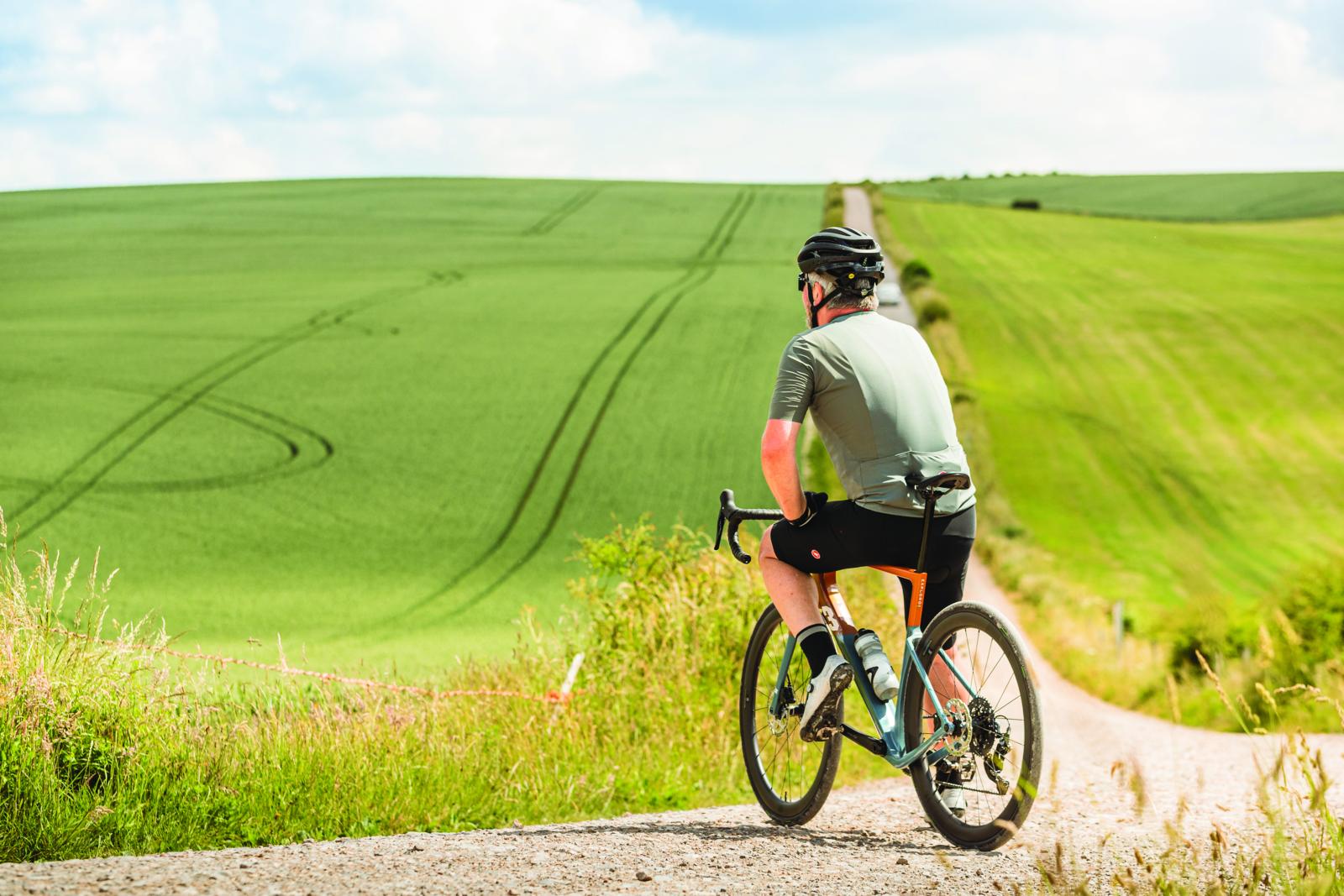
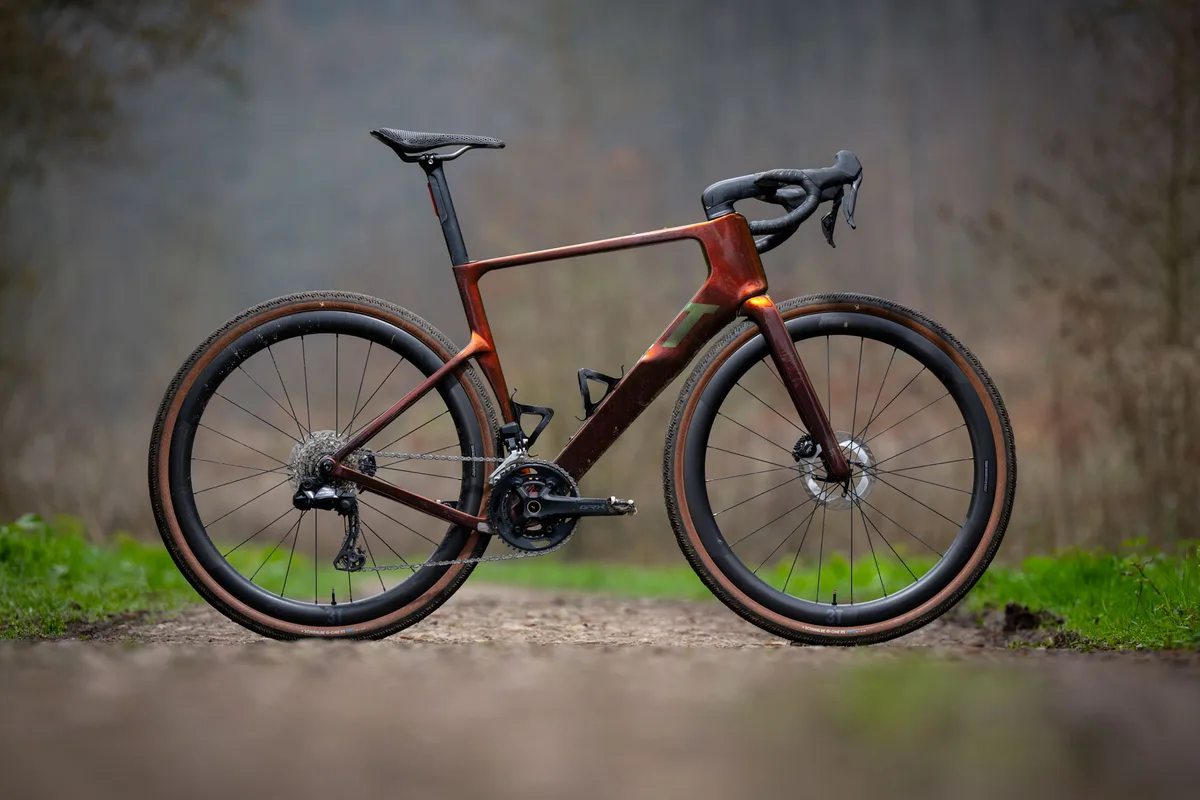
The new Van Rysel RCR-G was developed with input from Decathlon-CMA CGM team riders in search of speed on gravel, and takes its inspiration from the WorldTour-proven RCR-R Pro.
As you’d expect with that background, the RCR-G is an uncompromising gravel bike built to race. With a five-figure specification but with a four-figure price tag, the RCR-G is value packed, with a full SRAM RED XPLR AXS drivetrain with power meter, carbon wheels, carbon cockpit, and premium finishing for its £6,500 price tag.
A lively ride and snappy handling are benefits of the low weight, but it’s not as composed and comfortable as the best examples of the latest race-ready gravel rigs. I also have reservations around the handlebar choice, and the tyre clearance is conservative compared to the latest trends.
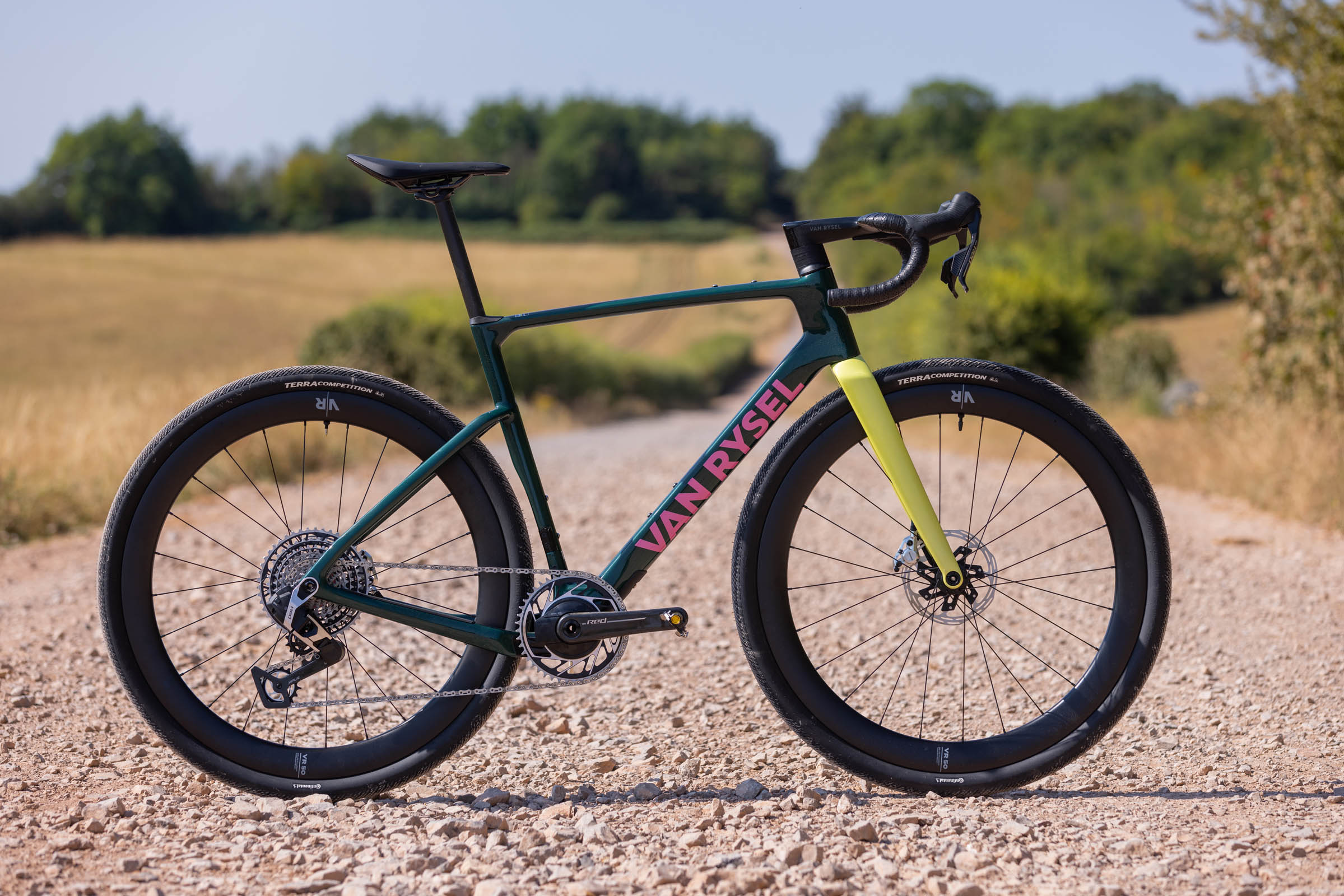
Van Rysel says the RCR-G was developed alongside the road going RCR-R with plenty of CFD and wind tunnel research going into the frameset.
The RCR-G’s design aims to improve aerodynamics over the previous GCR gravel bike both on road and off, while increasing tyre clearance and refining the handling too.
Van Rysel claims the new RCR-G is 8.6watts more efficient than the older bike.
What you need to know about the Van Rysel RCR-G
- 885g frame and 415g fork make for a lightweight bike
- Clearance for 50mm tyres
- UDH dropout
- Race bike derived geometry
- 1x and 2x compatible
- One-piece carbon cockpit
- Triple bottle and bento box mounts
Van Rysel RCR-G performance
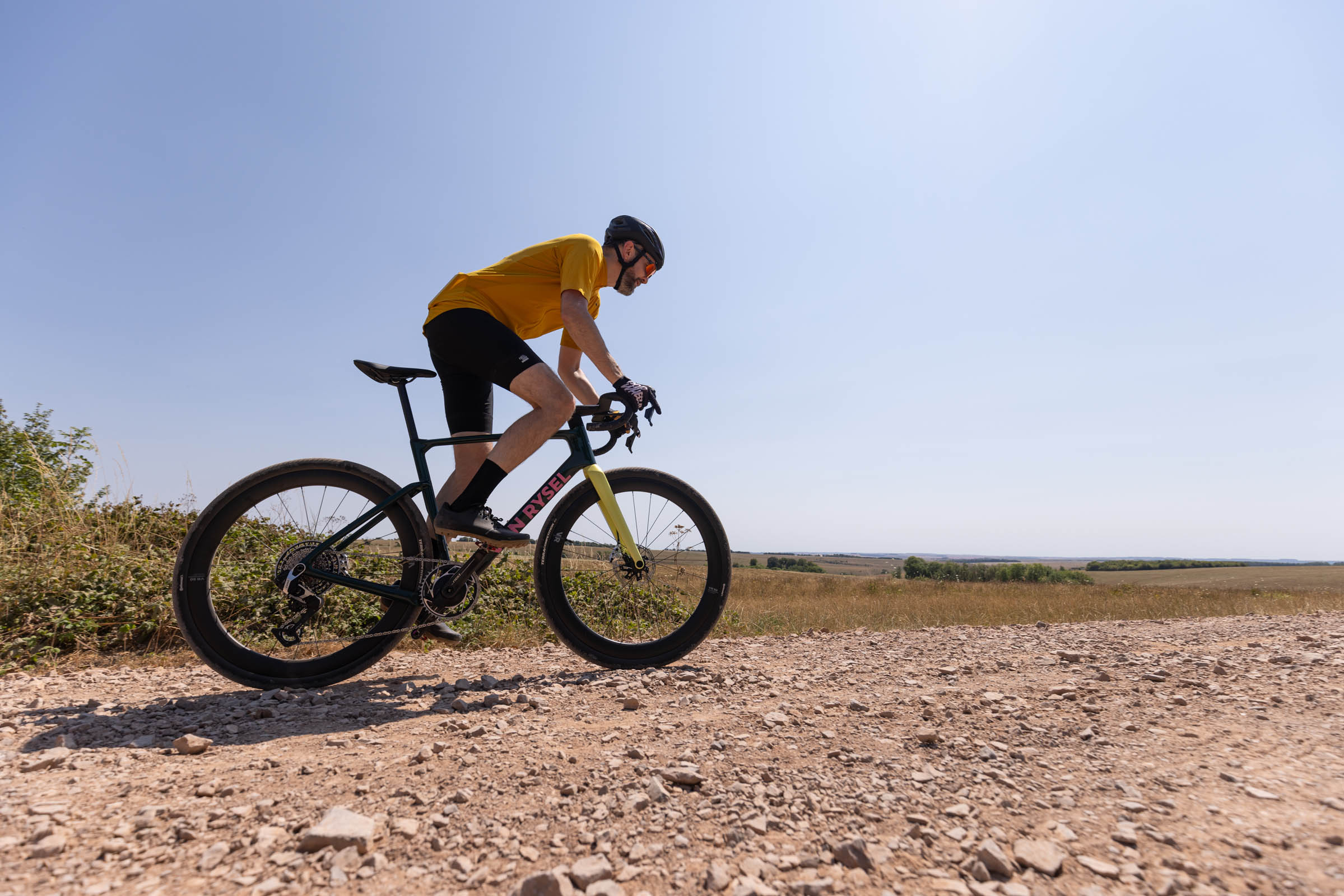
Unlike high-performance rivals like the Ridley RSS Prototype, BMC Kaius, and Argon 18 Anti Matter, the RCR-G retains 2x drive train compatibility. This results in a maximum chainring size of 50t in 1x and 52t in 2x.
In comparison, Argon 18’s Anti Matter can have a max chainring size of 52t in 1x, and Ridley’s RSS Prototype can use a huge 56 tooth chainring with its 1x setup.
I was never found wanting with the 44-tooth chainring fitted – it offers plenty of range across the 13 speed 10-46 cassette – but it may not be enough on flatter terrain and the very fastest gravel routes.
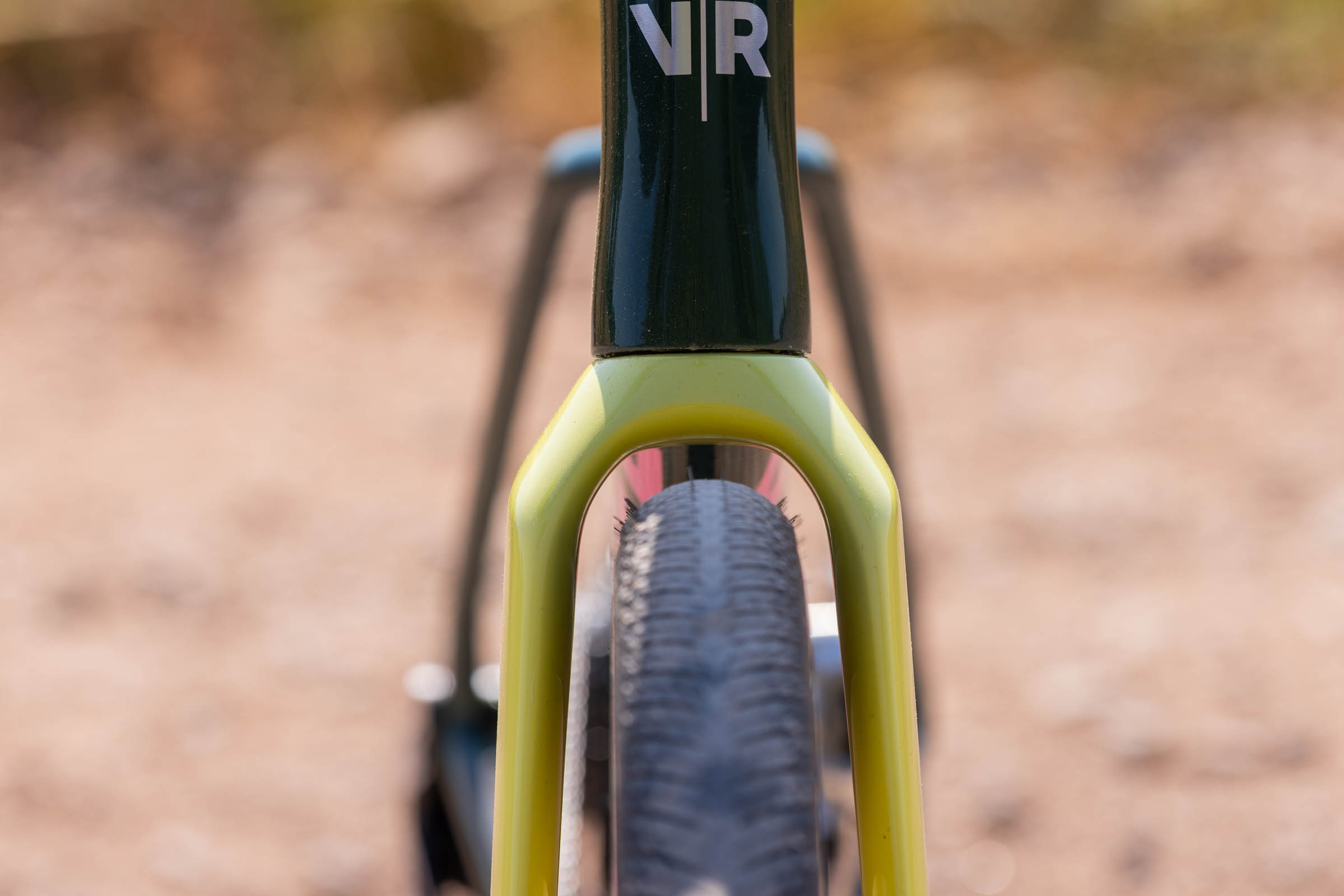
My large test bike doesn’t stray from the norm when it comes to geometry. The slightly steepened 73.5-degree seat angle and a slightly relaxed 72-degree head angle gives the RCR-G a road bike-like manner. This is especially true when combined with the short (426mm) chainstays and both a low stack and reach, 573mm and 400mm respectively. This means the RCR-G is an aggressive gravel bike.
Compared to similarly svelte Giant Revolt Advanced SL 0 its 19mm lower, but 10mm shorter in the same size, while the Revolt has both longer chainstays and a longer wheelbase. It does have a higher tyre capacity than the Van Rysel, at 53mm.
| | XS | S | M | L | XL |
|---|---|---|---|---|---|
| SEAT TUBE | 465 | 475 | 495 | 520 | 550 |
| HEAD TUBE | 103 | 115 | 130 | 150 | 175 |
| TOP TUBE | 515 | 538 | 555 | 570 | 595 |
| HEAD ANGLE | 70 | 71.2 | 72 | 72 | 72 |
| SEAT TUBE ANGLE | 75 | 74 | 73.5 | 73.5 | 73.5 |
| FORK LENGTH | 396 | 396 | 396 | 396 | 396 |
| FORK RAKE | 50 | 50 | 50 | 50 | 50 |
| CHAINSTAY | 426 | 426 | 426 | 426 | 426 |
| BB DROP | 74 | 74 | 74 | 74 | 74 |
| STACK | 521 | 537 | 554 | 573 | 597 |
| REACH | 375 | 384 | 391 | 400 | 412.5 |
| WHEELBASE | 1010.8 | 1014 | 1019 | 1034.5 | 1054.5 |
On gravel roads and byways, the RCR-G is swift. The low ride position encourages you to hunker down and get on the power and the stiff frameset rewards your efforts.
When the surface gets a bit choppier, or when you venture into rockier and root strewn single track territory, the RCR-G more quickly finds its limits. The front end loads up with vibrations, and there’s plenty of chatter felt through the rear too.
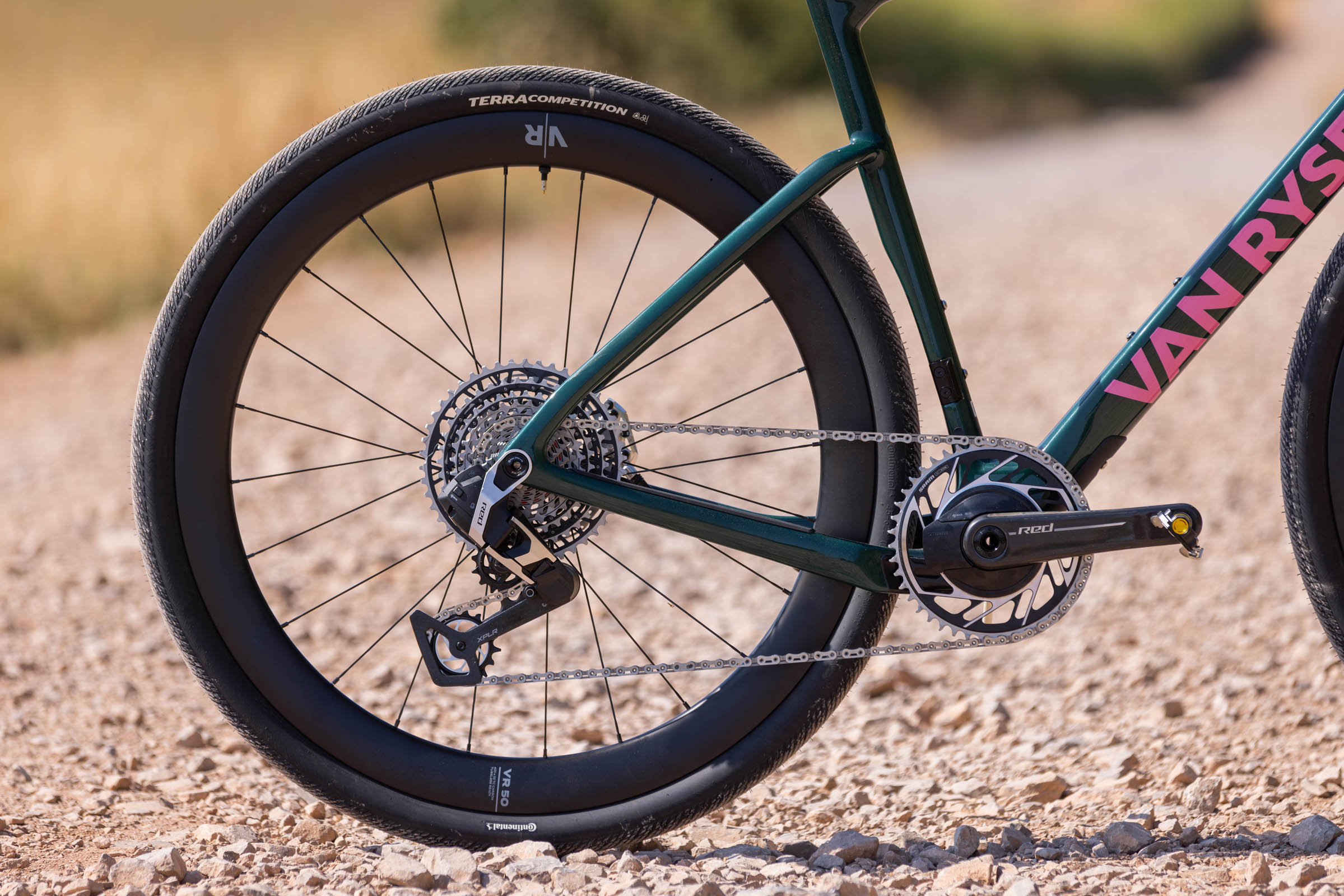
Some of that is down to the fast 45mm Continental Terra Comp tyres with their smooth tread and relatively narrow width, but the lion’s share is the stiffness of the frame and fork.
So what rewards you with responsiveness on roads and smooth gravel tracks becomes a bit more wearing with stuttering vibrations that sap energy and speed.
The one-piece cockpit has a nice broad shape at the top section. On longer slogs it's easy to hold or rest your forearms on the bar in a time trial style. But it is the same cockpit as RCR-R road bike, so it lacks any significant flare to the drops. It’s also relatively narrow at 40cm measured centre-to-centre at the hoods on this size large test bike. That’s fine for aerodynamics on the road, but it’s more of a compromise on rougher terrain.
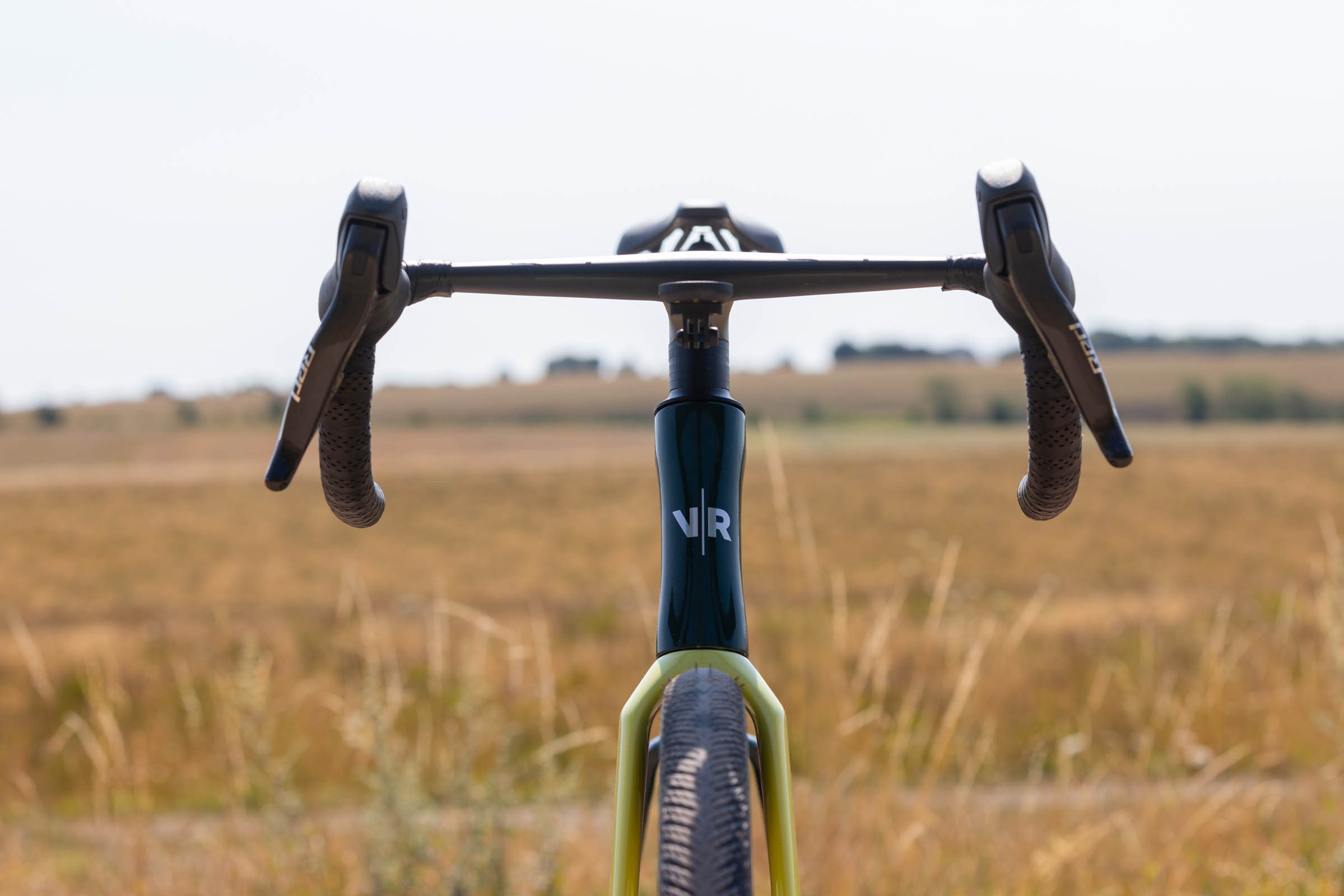
I also found my wrists occasionally slapped against the bar when in the drops and sprinting out of the saddle. A gravel handlebar with more flare in the drop would be a bonus here.
Accordingly, the handling is swift, and it copes with the twists and turns of more technical trails very well. Though it’s not a bike you can really relax into and flow through the twists and turns like you can with true singletrack slayers like Parlee’s Taos or Mondraker’s Arid, and it can’t quite match Giant and Ridley’s latest offerings for all-round poise either.
That said, it is still far better than the first generation of gravel racers like the Factor Ostro Gravel and the first-generation BMC Kaius.
The VR50 carbon rims are 50mm deep, with a 22mm internal width. They’re laced to DT Swiss’s sturdy 370 hub set for a complete weight of a claimed 1,550g. The 22mm internal width is optimal for gravel tyres from around 38 to 50mm, so they’re a good pairing for the 50mm clearances of the frameset.
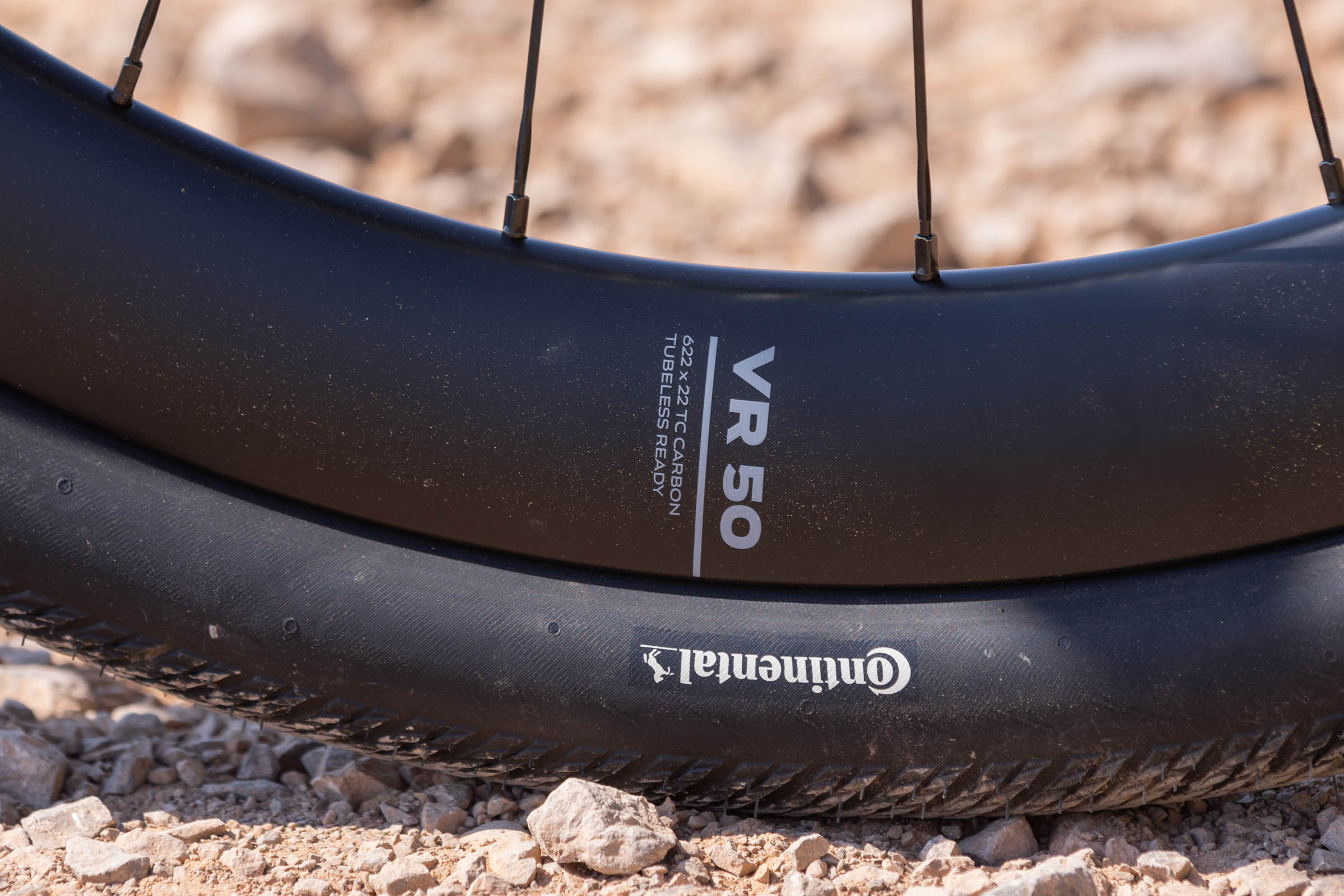
Of course, you have to be happy that 50mm tyres is the widest you’ll even want to run, when rivals are starting to edge toward 60mm clearance.
The 8.28kg complete weight on my large test bike is a boon on longer steady climbs both on road and off, and the long reach means it’s a great bike to stand up and attack short steep ramps too. It gives you plenty of room to move, and to shift your weight to hold traction. Compared to its rivals, as you’d expect from a brand born out of the Decathlon empire, the RCR-G is excellent value with its £6,500 / $10,999 / €6,599 price tag (albeit US buyers get a ‘less great’ deal).
A Red XPLR AXS equipped Giant Revolt Advanced SL 0 is £9,999 / $12,000. Specialized’s S-Works Crux 5 with the same groupset is nearly twice the price at £11,999 / $14,000. Ribble’s Ultra-Grit with is just £49 more at £6,549 / €8,275 / $8,640 but with an arguably superior Zipp 303SW XPLR wheelset.
The same goes for Canyon’s racy Grail CFR AXS, which is also cheaper (albeit dated with its 42mm tyre clearance), currently on offer at £6,529 / $7,199 / €6,999.
Van Rysel RCR-G bottom line
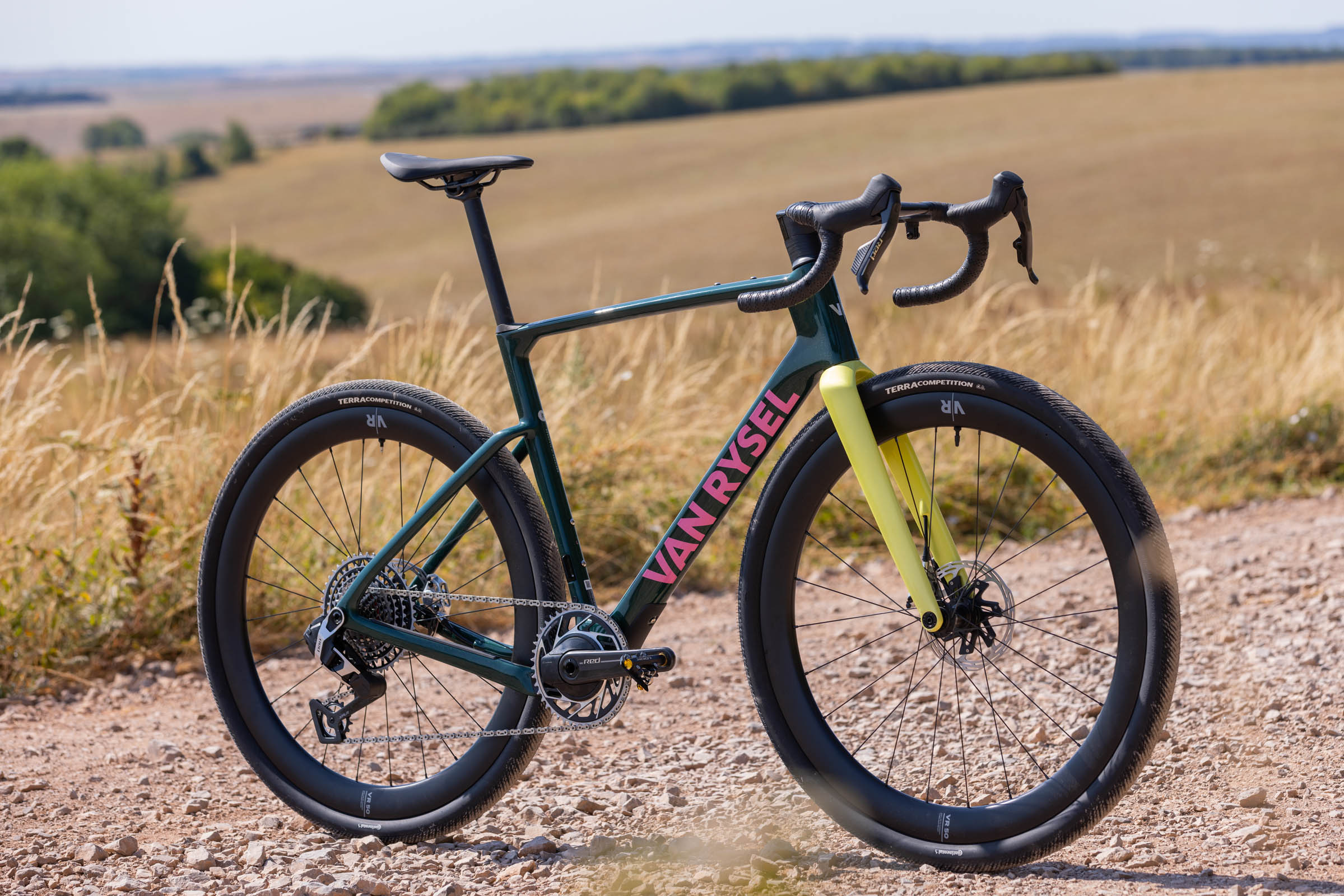
The RCR-G is a great bike. The lightweight and racy ride position make it fast on and off road. The competitive price is very hard to ignore, and it is certainly a fun bike to explore the great outdoors.
However, it delivers a firmer ride than some of the best gravel race bikes right now. The 50mm tyre clearance feels somewhat conservative compared to the best new gravel designs, and it misses a gravel-specific handlebar.
While it’s a good gravel bike at a great price, the RCR-G is arguably already outclassed by the best gravel bikes of 2026.