SQUIRREL_14013577
Giant’s Propel has been around since 2013, but you can still sense the original’s sharp, truncated aerofoil shapes and aggressive race-oriented design in the latest, fourth-generation bike. However, it's not only the design that has been smoothed here, it’s the ride too.
As soon as you ride the latest Propel, you enjoy the same sense of wind-cheating speed as its predecessor but, most importantly, this model feels more refined in its ride comfort and has a sharpness in its handling that’s as point-and-shoot perfect as the venerable TCR.
The latest Propel design smooths out some of the old sharp edges on the frame, integrates more of the components and loses a significant amount of weight. In the premium SL 0 version, that amounts to a 355g drop in mass, and a claimed weight for the top-spec bike of 6.5kg (medium).
On this second-tier Pro frameset, it amounts to a still impressively low weight of 7.39kg for the size large.
Giant Propel Advanced Pro 0-Di2 performance
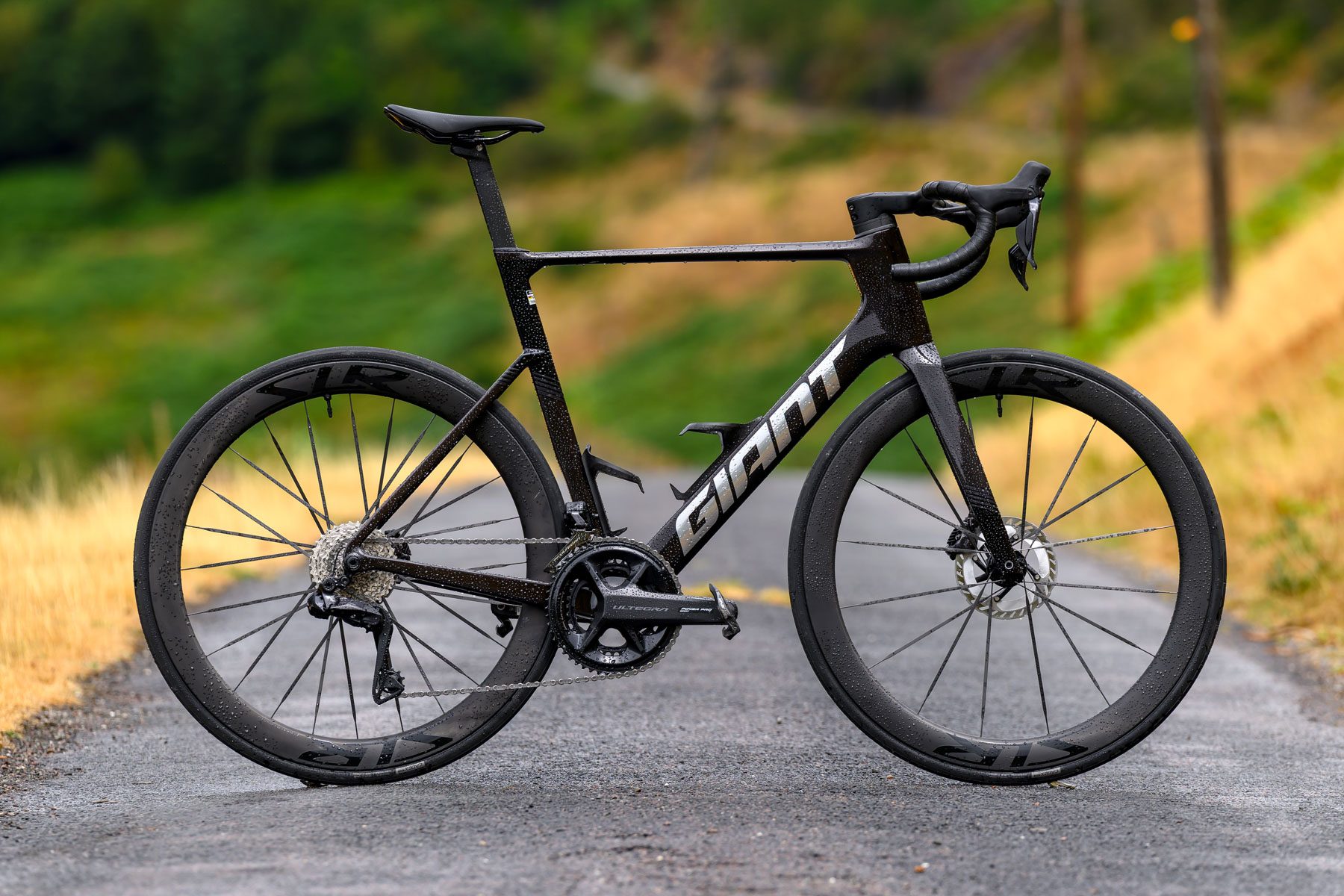
On the road, the Propel feels flighty, light and nimble. It has far more in common with the latest TCR than the previous-generation Propel – it’s close to half a kilo lighter than that bike in this spec.
The geometry doesn’t stray from the norm; Giant hasn't gone down the progressive route taken by the Merckx 525R or Factor One with their steepened seat angles and forward ride positions.
Instead, the Propel’s geo closely matches the nimble TCR thanks to parallel 73-degree angles and a short back end with 405mm chainstays (and now with a UDH dropout at the end). Along with the short wheelbase (1,006mm) and short trail (58.3mm), it makes the Propel far more agile than most aero race bikes.
| | S | M | M/L | L | XL |
|---|---|---|---|---|---|
| Seat tube length (mm) | 505 | 528.5 | 554 | 576 | 595 |
| Seat tube angle | 74.0° | 73.5° | 73.0° | 73.0° | 72.5° |
| Top tube length (mm) | 535 | 550 | 565 | 580 | 600 |
| Head tube length (mm) | 127 | 145 | 165 | 185 | 200 |
| Head tube angle | 72.5° | 73.0° | 73.0° | 73.0° | 73.0° |
| Fork rake (mm) | 45 | 45 | 45 | 45 | 45 |
| Trail (mm) | 61.4 | 58.3 | 58.3 | 58.3 | 58.3 |
| Wheelbase (mm) | 973 | 980 | 990 | 1006 | 1020 |
| Chainstay length (mm) | 405 | 405 | 405 | 405 | 405 |
| Bottom bracket drop (mm) | 72 | 69.5 | 69.5 | 67 | 67 |
| Stack (mm) | 530 | 546 | 565 | 582 | 596 |
| Reach (mm) | 383 | 388 | 392 | 402 | 412 |
| Standover height (mm) | 764 | 787 | 808 | 832 | 847 |
| Stem length (mm) | 90 | 100 | 110 | 110 | 120 |
The clearance has been upped to a 32mm maximum tyre size, which is a good thing, albeit tighter than the 34mm clearance you’ll find on last year’s Race Bike of the Year, the Cervélo S5.
The bike comes with Cadex’s Aero tyres in a nominal 28mm size. The wheelset is aerodynamically optimised for tyres between 28 and 30mm, so I switched in the 30c-equipped wheelset from the Merckx. They share the same groupset and ratios – and just that small upscale in volume made a big difference.
I can see why Giant would opt for a light, fast tyre, though. It looks good on spec sheets and on the scales, but on mixed-quality road surfaces, it’s the single flaw I found with this Propel. It doesn’t cushion the road as much as a wider tyre run at slightly lower pressures.
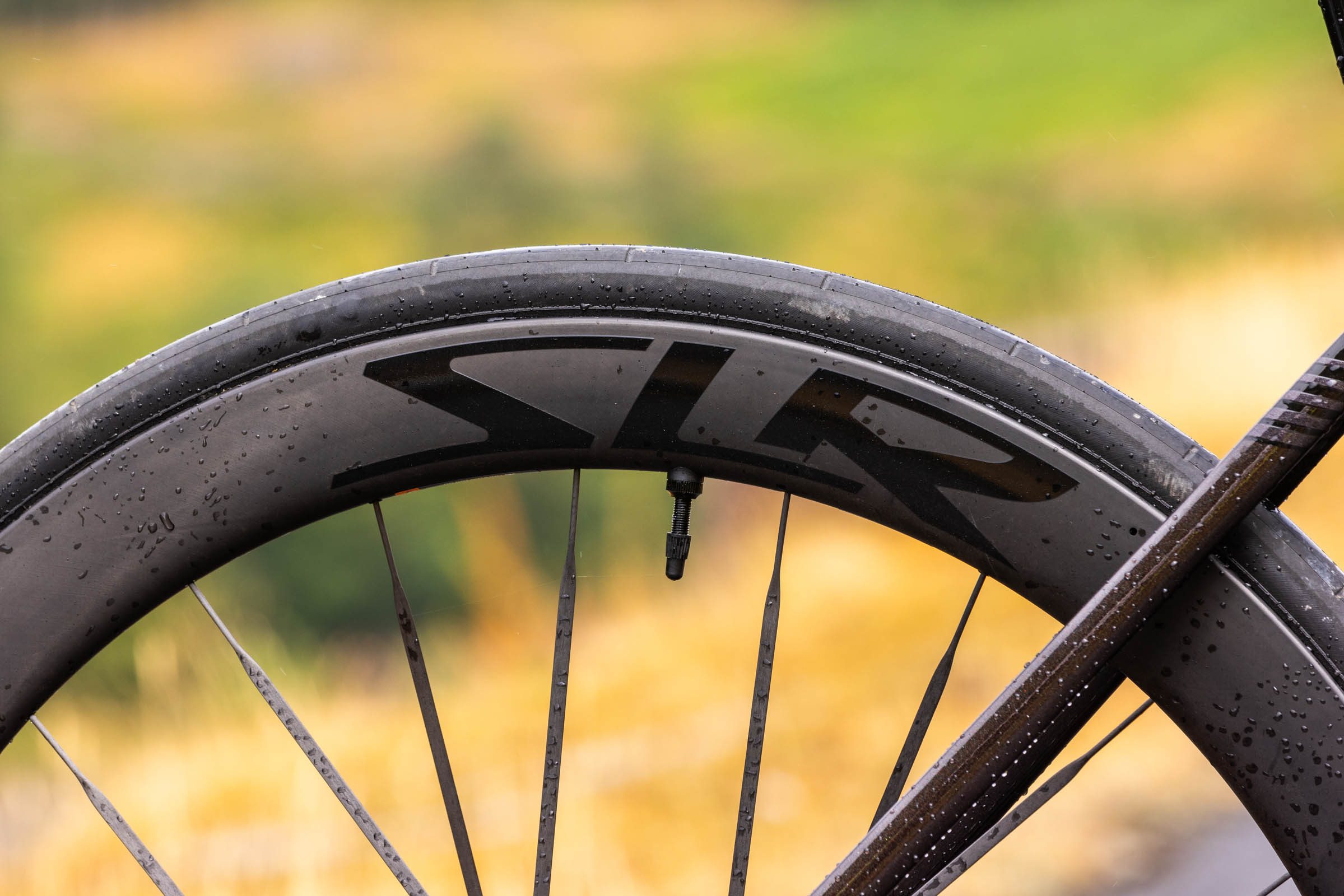
Still, the new 50mm-deep Giant SLR wheelset is light enough at a claimed 1,410g with tape and valves, and the 22.4mm inner width will certainly support larger tyres with ease.
However, on one of my longer rides I felt the need to stop and add a few more psi to the tyres over my preference because on pitted, potholed poor surfaces I could feel the tyre pinching and getting very close to grounding the carbon rim. A larger tyre would mitigate this issue and, at most, you’d only be paying a 40g per tyre penalty to go bigger.
A power meter you might recognise
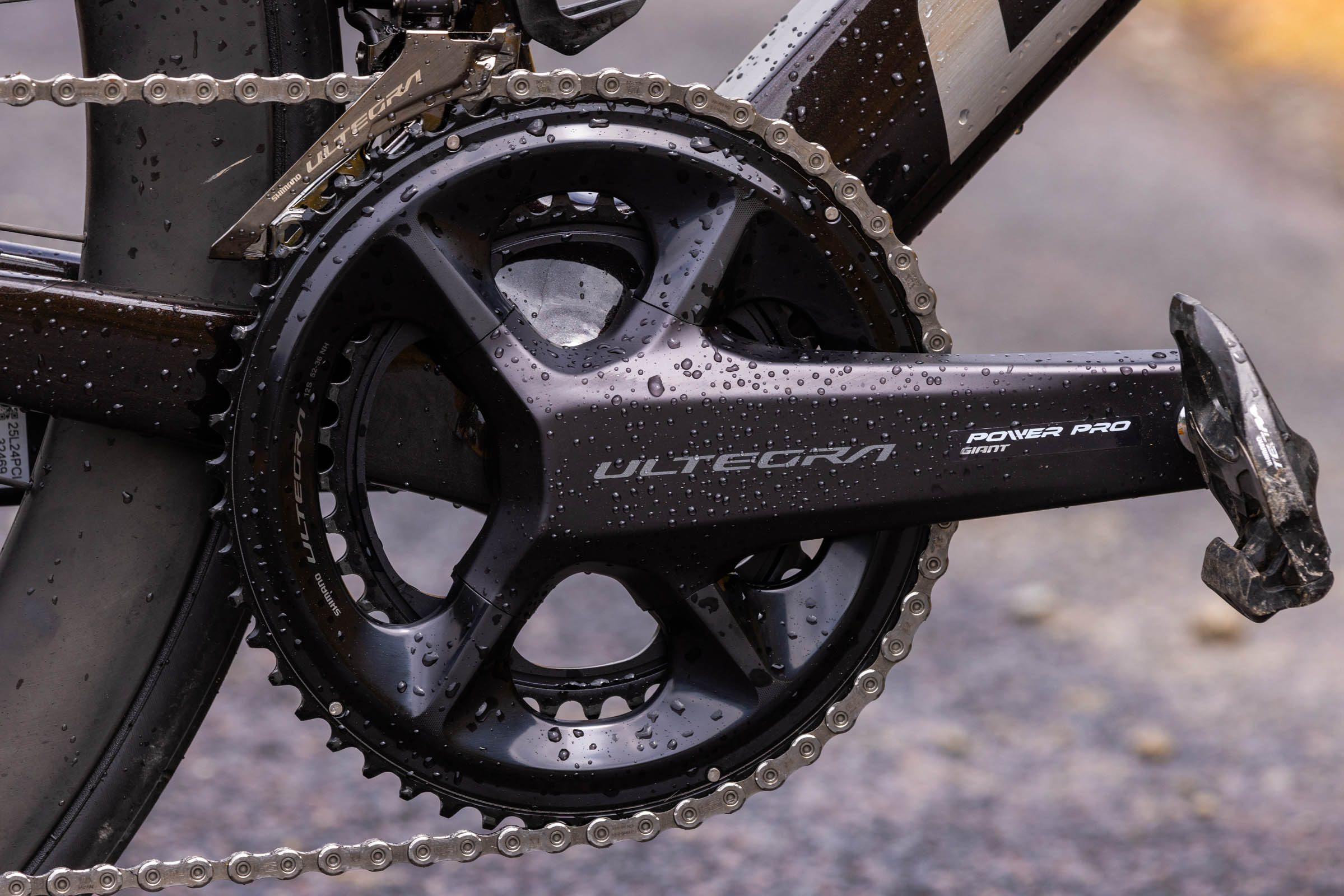
The drivetrain is Shimano’s Ultegra Di2 R8100, using the 52/36-tooth crankset and close-ratio 11-30 cassette.
The left crank arm is upgraded with Giant’s Power Pro power meter. The machined slot may well look familiar, because back in September 2024 Giant acquired the assets of folded power-meter brand Stages and has quickly integrated the tech into its performance-level bikes.
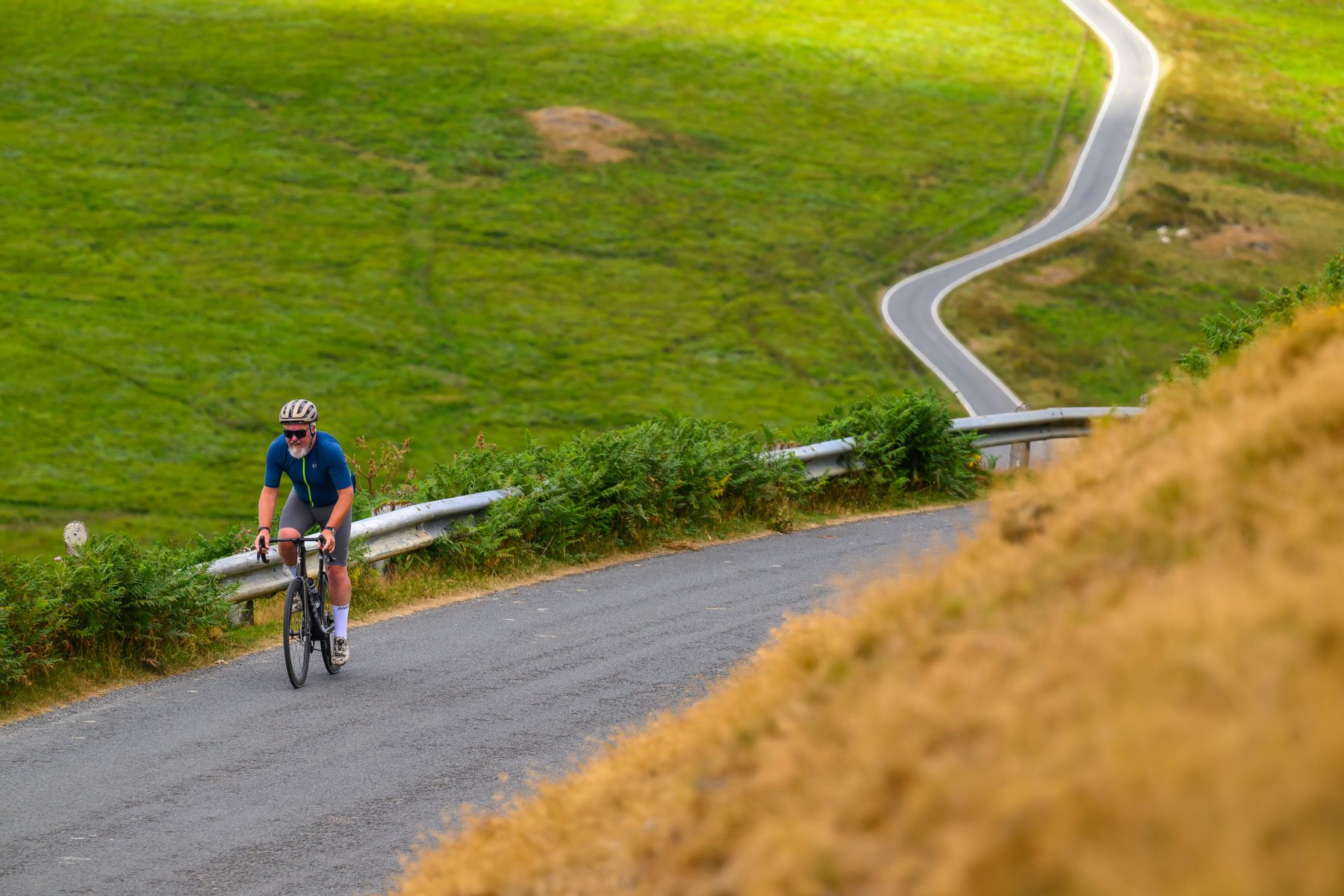
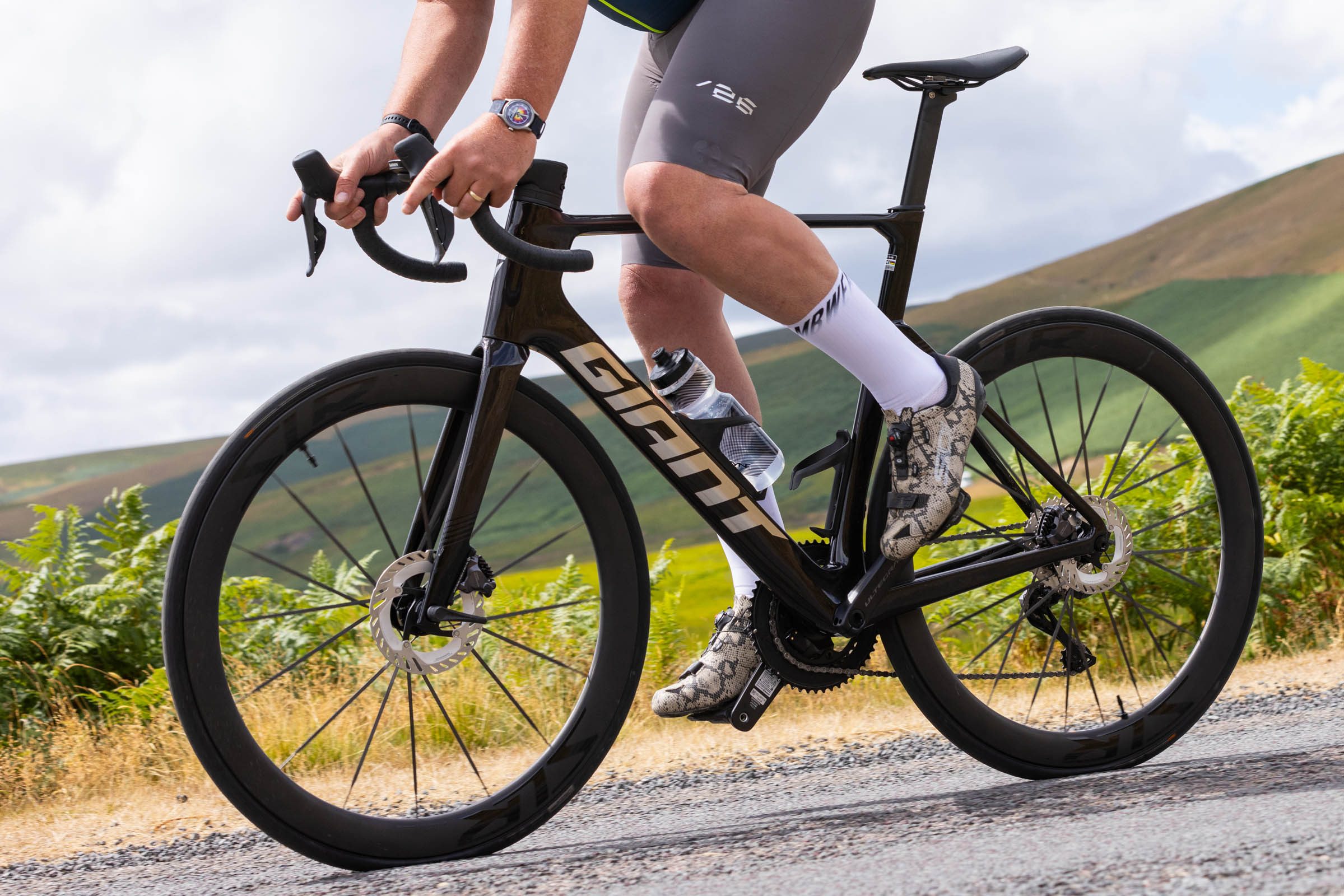
In the past, aero road bikes have proven themselves devastatingly fast on the flat and very quick over rolling terrain. The difference here, thanks to the geometry, low overall weight and light wheels, is this Propel feels equally quick when you head uphill.
I loved the way the Propel responded when I eased out of the saddle to attack the first hundred metres or so of a steep ramp. It punches forward with every pedal stroke (much like the TCR). But settle into the saddle for a longer yomp up a bigger climb and the Propel again feels settled and efficient.
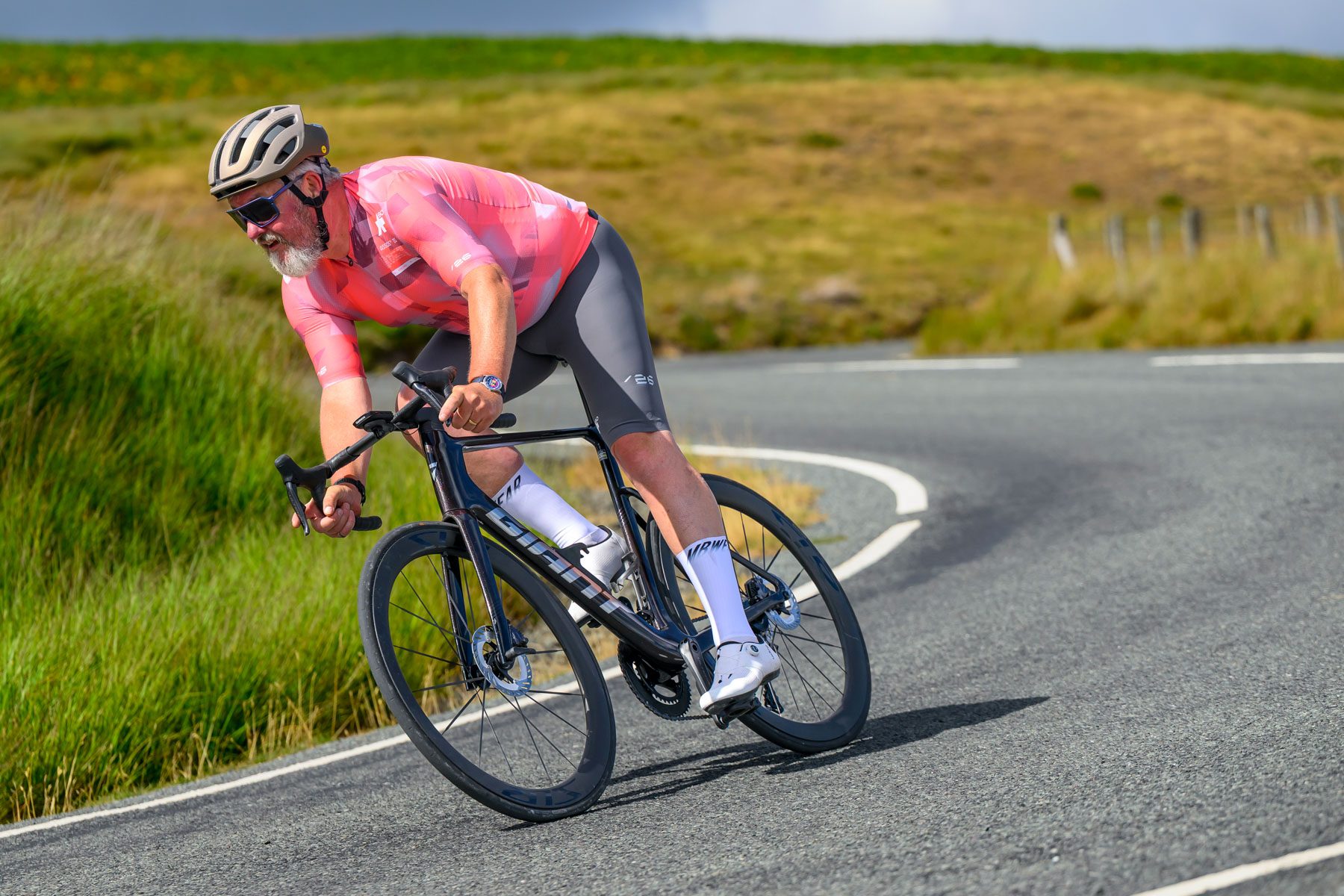
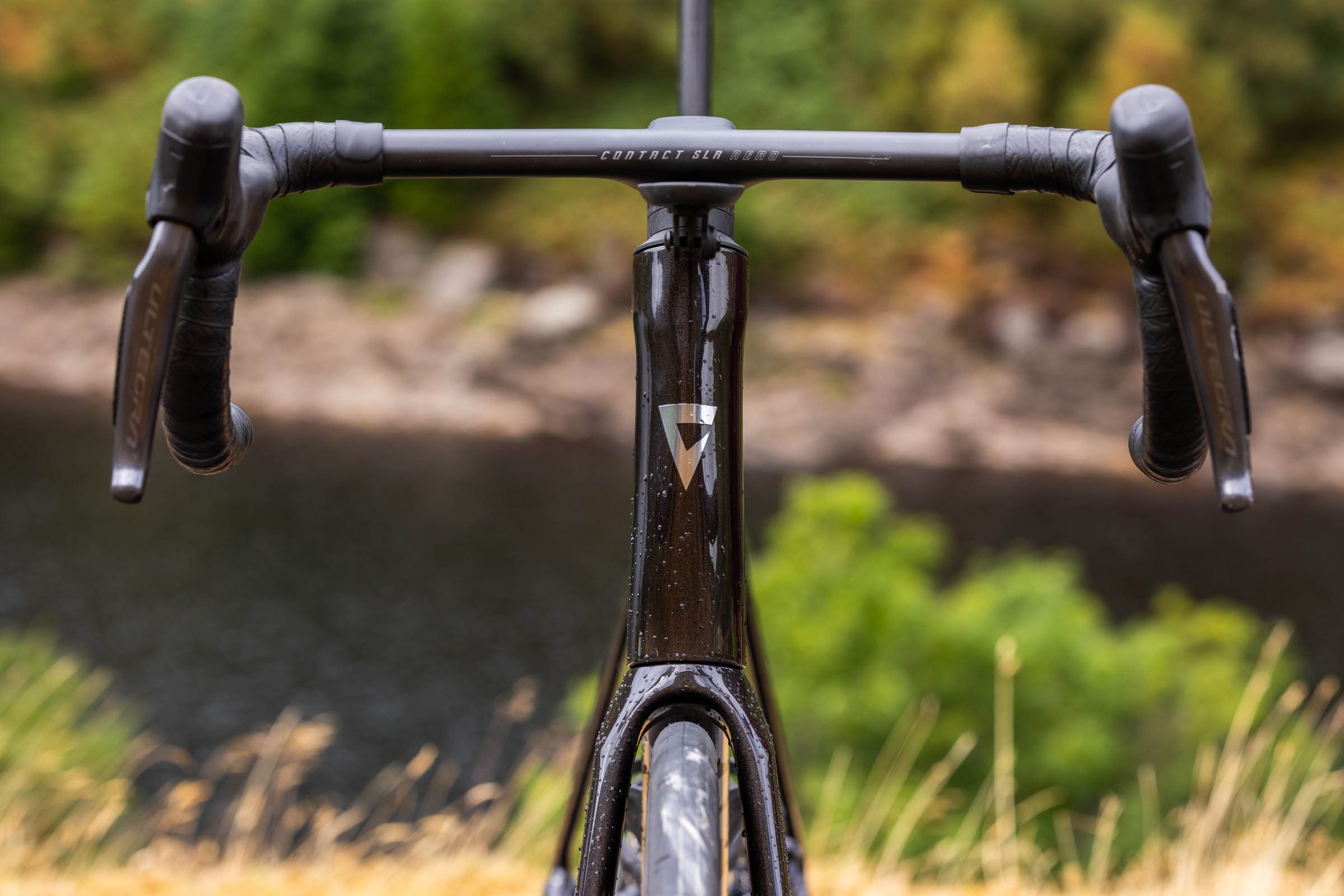
When you crest a climb, it’s a great bike to descend on. Giant has embraced a narrower bar setup, but hasn’t gone to the extremes of fellow Taiwanese brand Merida with its super-narrow Reacto cockpit.
Here on my large (58cm) equivalent, it’s a 390mm-wide bar with a 420mm-wide drop, and effective 110mm stem. Up on the hoods, it’s narrow but not uncomfortable. Yet down in the drops, it feels planted, secure and confidence-inspiring when descending.
The shape of the new cockpit is excellent. Its slightly forward shift to the tops gives more than ample wrist/forearm clearance when in the drops, and a nicely angled position when you want to take a breather and hold the tops mid-climb.
The Propel’s overall road manners are light but not lacking stiffness. It's fast-handling but not flighty, firm but not uncomfortable. It’s akin to the Goldilocks of race bikes; it gets everything just right, save for the arguably conservative tyre width.
Competitive price point
The Propel Advanced Pro 0-Di2 tested here is priced very competitively at £5,799 / €6,600. A SRAM Force AXS-equipped Cervélo Soloist is £7,249 / €7,499. This specification of the Propel isn’t available in the States, but the Force-equipped equivalent is priced at $7,800.
It’s also cheaper than the Merckx 525R, at £6,299, and the Giant has the power meter included. However, opt for the Merckx 525R, with SRAM Force and a power meter, and the price drops to £6,119.
Specialized’s Tarmac SL8 (which has recently been superseded by the S-Works-only SL9) is priced at £7,249 / $8,499 / €9,000 in equivalent spec.
Trek’s Madone SLR 7 with Force AXS is priced at £7,700 / $8,500 / €8,499 – £451 more than the Propel – and Cannondale’s SuperSix Evo Hi-Mod 2 with Shimano Ultegra Di2 is £8,250 / $8,300 / €8,999.
It seems Giant has got the edge on its mainstream rivals when it comes to pricing, albeit direct-to-market opposition such as Rose’s Shave FFX, at €5,600 or €5,900 for Ultegra Di2 or Force AXS respectively, is cheaper than the Propel.
Giant Propel Advanced Pro 0-Di2 bottom line
The latest generation of the Propel gets nearly everything right; the balance between light weight, aerodynamics and handling is very hard to fault. The finishing of the bike is exceptional and the equipment levels are spot-on.
My only criticism of the complete package concerns the tyres. In an age when many are embracing larger volumes, especially here in the UK where we’ve had to deal with deteriorating road surfaces for more than a decade, Giant’s conservative choice of 28c tyres feels a little out of step.
That said, the overarching feel of the Propel is that it’s a complete racer. For Giant, it creates a huge conundrum – when your aero race bike is this good, this light and this much fun to ride, do you really need to continue making the TCR?
Product
| Brand | Giant |
| Price | €6600.00, £5799.00 |
| br_whatWeTested | Giant Propel Advanced Pro 0 |
| Weight | 7.39kg |
Features
| Fork | carbon |
| Chain | Shimano Ultegra, CN-M8100 |
| Tyres | CADEX Aero, tubeless, 700x28c (28mm), folding |
| Brakes | Shimano Ultegra Di2 hydraulic, Shimano RT-CL800 rotors [F]160mm, [R]140mm |
| Cranks | Shimano Ultegra, 36/52, with Giant Power Pro power meter, 172.5mm |
| Saddle | Giant Fleet SL |
| Wheels | Giant SLR 0 50 Carbon Wheel System, 50mm, Giant Aero Hubs, 40T ratchet driver, CenterLock. Aero carbon spokes |
| Shifter | Shimano Ultegra Di2 ST-R8170 |
| Cassette | Shimano Ultegra, 12-speed, 11-34 |
| Seatpost | Giant Vector, composite, -5/+15mm offset |
| Grips/tape | Stratus Lite 2.0 |
| Handlebar | Giant Contact SLR 0 Aero Integrated, 420/390mm |
| Bottom bracket | Shimano, press fit |
| Available sizes | XS, S, M, M/L, L, XL |
| Rear derailleur | Shimano Ultegra Di2 RD-R8150 |
| Front derailleur | Shimano Ultegra Di2 FD-R8150 |
| Features | Computer mount, water bottle cages, tubeless prepared |
SQUIRREL_14013577