This year, the Tour de France starts with a 19.6km team time trial. It’s the first team time trial, or TTT, in the race since stage two of the 2019 Tour. And it’s the first opening stage team time trial since 1971, when the stage was won by the Molteni team of Eddy Merckx, who took the yellow jersey on the stage and won the race for the third time overall three weeks later in Paris.
Team time trials test the team’s ability to work together as a unit, with riders rotating through and keeping as close as possible to the wheel of the rider ahead to keep the pace as high as possible.
However, with a change in the format for 2026, this year's Tour de France time trial is a particularly intriguing affair. It should make for captivating racing and will be a unique tactical spectacle for the opening stage.
A rule change
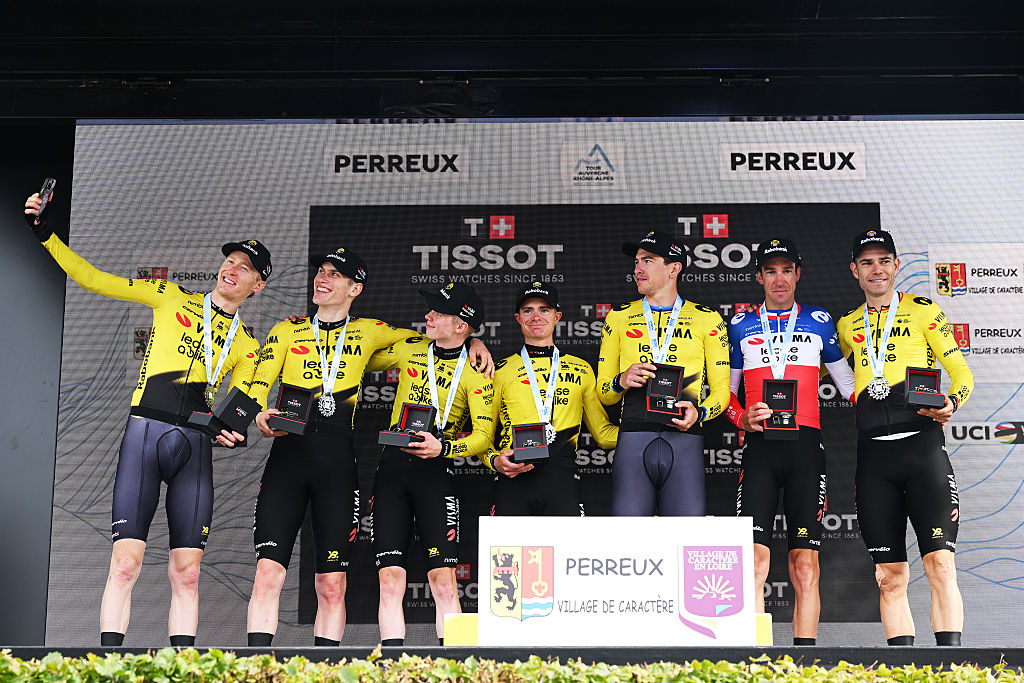
This year, the rules for the team time trial stage at the Tour de France have changed. Typically in the past, the team’s time has been taken from the fourth rider to cross the line, with all riders given the same time, both for the stage and the general classification (GC). This means the GC shows a cluster of riders from the same team all on the same time after a Stage 1 TTT.
The team leader usually leads the team across the line, so that he is awarded the stage win and gets to wear the yellow jersey.
In this year’s team time trial, though, individual rider times are taken at the line and these count for the GC, although the stage win is granted to the whole team, not the fastest individual rider. If multiple riders from the team finish in a group, they are all awarded the same time.
A possible change in tactics
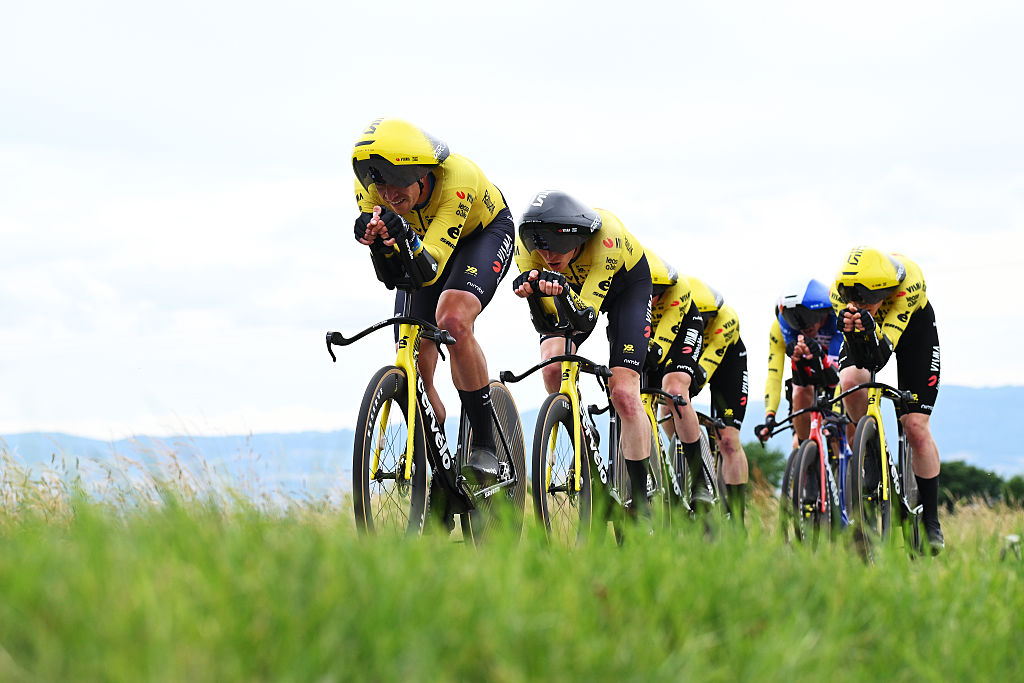
In the past, in TTTs, teams would typically rotate regularly, with several riders often dropped as the team approached the line. There have been disasters where multiple riders have crashed, particularly if the road is wet, and the whole team has had to wait for enough riders to pick themselves up for a fourth rider to cross the line in the group.
The new format may result in different tactics being chosen by different teams. The punchy finish may encourage teams to protect their GC rider for the final effort to the line, for example, so he may not take turns at the front. However, if that rider's a particularly strong time trialist (for example, world and Olympic champion Remco Eveneopoel), there's a question as to how they balance their effort and contribution on the flat, with an explosive finish.
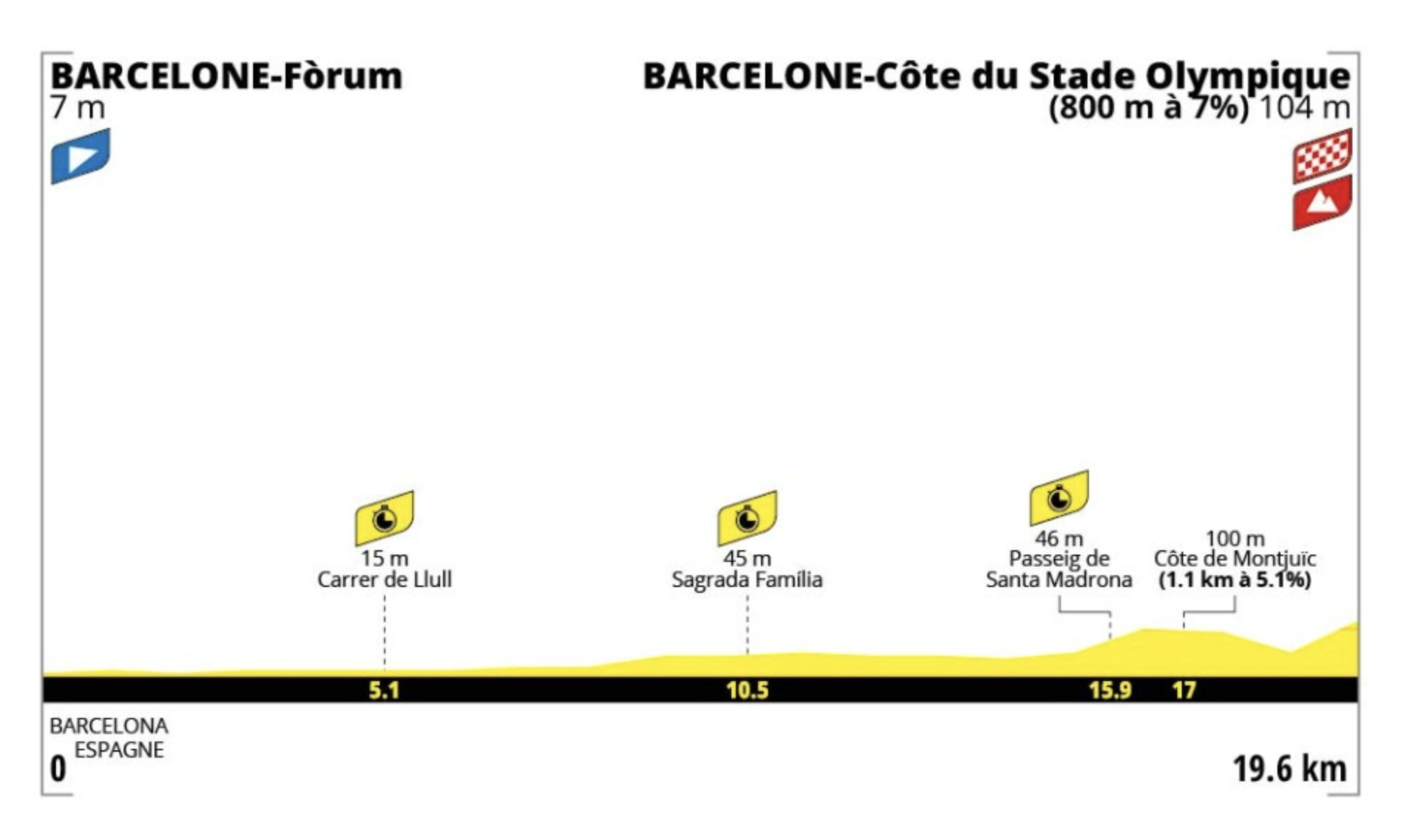
With two short climbs in the closing stages of the route, we may see team leaders (or a small group of riders with GC ambitions) launch from the rest of the team in a bid to secure the fastest time possible on the uphill finish.
- Côte de Montjuïc – 1.1km at 5.1%
- Côte du Stade Olympique – 800m at 7%
Other teams may want to maximise their chances of getting close to the finish as a unit as fast as possible by having all eight riders rotate through. Some may allow weaker time trial riders to drop early, while a particularly powerful time trial rider may put in a huge effort then drop off the paceline.
As with road stages, there’s a time cut, so riders need to finish within a specified margin of the overall stage winner to avoid elimination from the Tour.
ASO's testing of the new formula
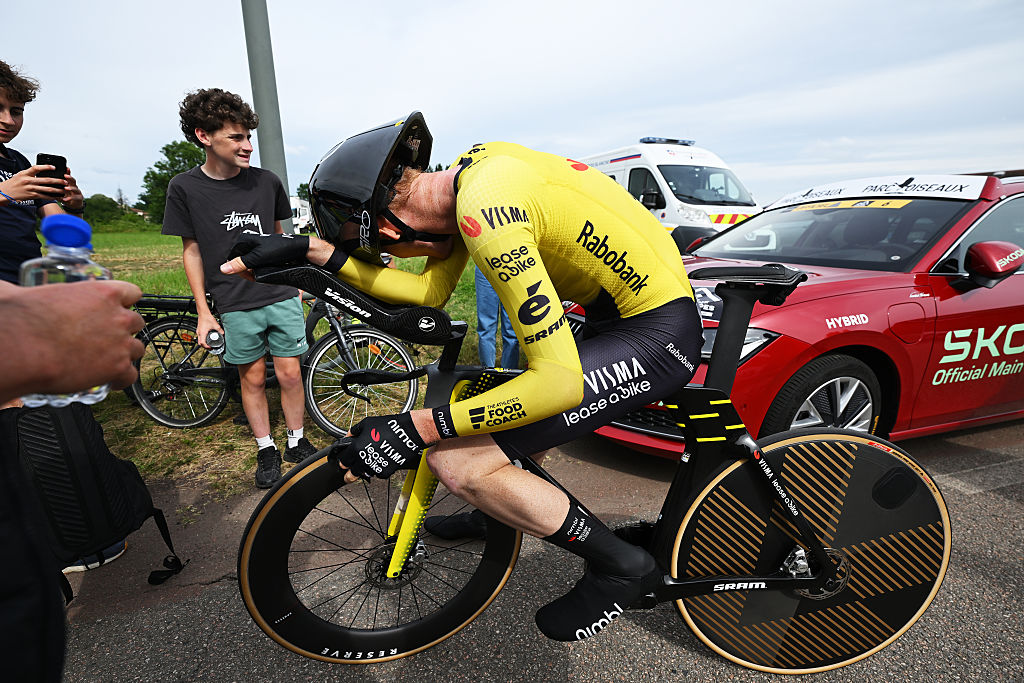
ASO, which organises the Tour de France and a number of other races, has been experimenting with the new TTT formula at Paris-Nice since 2023 and, most recently in the 28.4km stage three at the Tour Auvergne-Rhône-Alpes at the beginning of June.
At that race, the stage was won by Matteo Jorgenson of Visma-Lease a Bike, despite losing two riders earlier in the stage, one of whom was Wout van Aert.
Although Netcompany-Ineos was up to six seconds ahead of Visma earlier in the stage, Oscar Onley had mechanical problems and the team had to slow down for a short period to enable him to rejoin. The team came second because Kévin Vauquelin's ride time was second fastest.
"It's a pleasure to be part of a team like this, where we have people who look after all the details and make such a clear plan for us," Jorgenson commented after the finish, hinting at the degree of preparation that goes into a successful TTT.
Mathieu van der Poel looks to be targeting victory in the stage one TTT in Barcelona, and along with it the first yellow jersey of the 2026 Tour de France. He was beaten by Tadej Pogačar in the stage four individual time trial at the Tour de Suisse by only 0.04 of a second and the punchy uphill finish in Barcelona will suit his riding style.
More on the 2026 Tour de France
- We weighed Tadej Pogačar’s 2026 Tour de France bike – and it’s heavier than you might think
- Jonas Vingegaard’s Cervélo S5 for the 2026 Tour de France is bang on the UCI’s 6.8kg weight limit
- Spotted! Remco Evenepoel will ride this prototype Specialized Shiv time trial bike at the Tour de France
- Can the Tour de France ever be Pogačar-proof? The race organisers face a near-impossible task
- From a rare team time trial to a brutal Alpe d’Huez finale: 8 questions answered about the 2026 Tour de France route
- Live Tour de France coverage to be broadcast on S4C and BBC iPlayer