Summers in the south of France have always been hot, but they’re getting hotter and two heatwaves already this summer have exacerbated conditions.
Even in the Deux-Sèvres department north of Bordeaux rivers have dried up, despite widespread flooding during the winter. Across France, 16% of rivers are reported to have run dry.
There’s a high risk of wildfires throughout France, with the Pyrenees particularly affected. That led the Tour de France to tell fans not to travel to watch stage 3, when the race first passed from Spain into France, so that firefighters and police could concentrate on controlling the fires and on rescue operations. It also stopped the pre-race caravan.
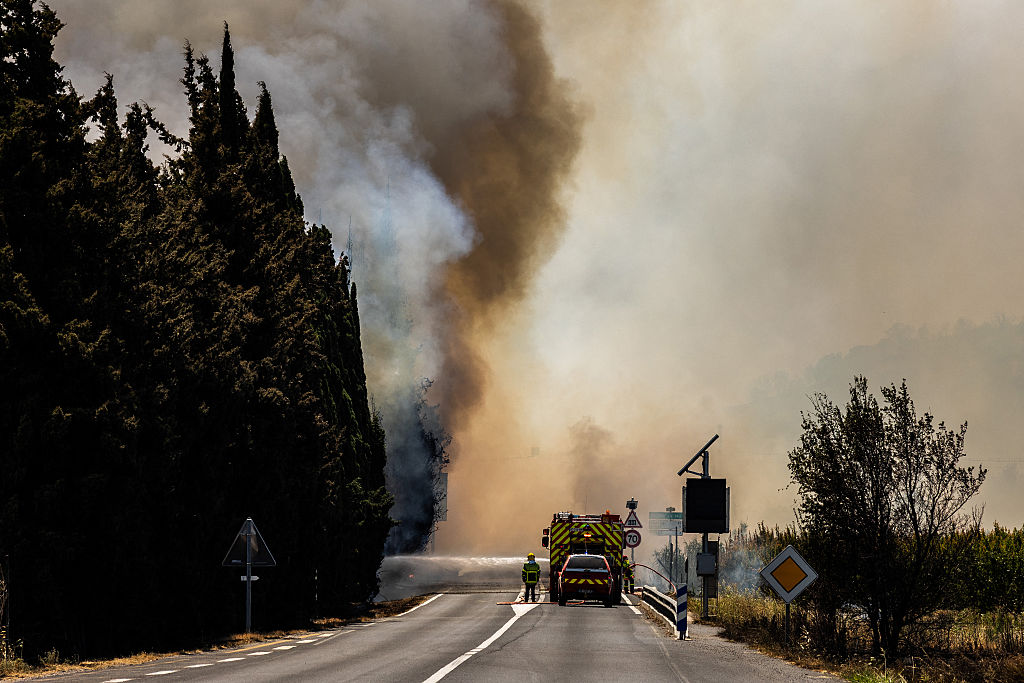
Oddly, there were no restrictions on the Spanish side of the border, despite Spanish firefighters assisting their French counterparts. The restriction on spectators was lifted for subsequent stages too, although the Tour advised them to seek shade as soon and possible after the race had passed, wear a hat and drink regularly.
Exceptionally, Reuters reports, the French Ministry of the Interior gave permission for local officials to cancel stages passing through their jurisdictions, although this hasn’t occurred to date.
Too hot to ride?
It’s not only spectators who are impacted by the extreme weather, the Tour’s organisers, the teams and the UCI – cycling’s governing body – have also had to make changes.
Stage 9 on Sunday was shortened by 30km to 155.5km by the race organisers, due to a forecast afternoon peak temperature that could exceed 41º C.
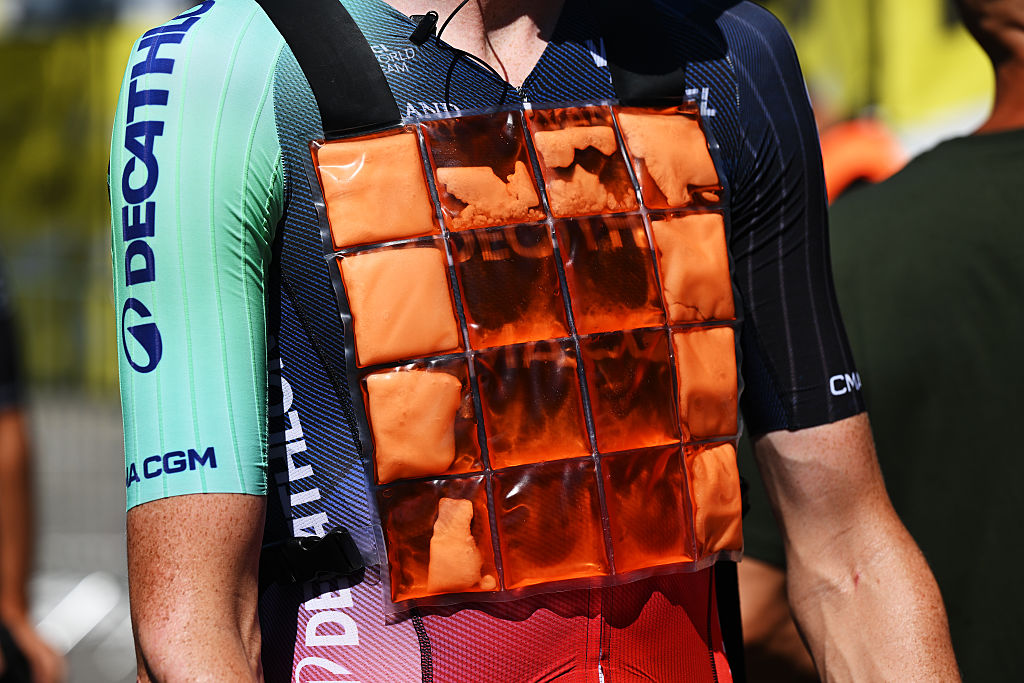
Wearing an ice vest to cool down ahead of stage 3, Matteo Trentin of Tudor Pro Cycling commented to WielerFlits: “It’s for sure not healthy. I don’t know if it’s safe but it’s for sure not healthy at all. It’s always been hot, but lately heatwaves have been different. It doesn’t come cool in the night any more.”
Stages typically start in the early afternoon and are planned to end around 5.30pm – peak viewing time – but Trentin suggested earlier stage starts in future years, when the air temperature should be cooler.
Red Bull-Bora-hansgrohe team doctor Samuel Fisser, speaking on the team’s YouTube channel said: “It’s becoming hotter and hotter every year. We focus a lot on cooling and sleep quality, because if they [the riders] sleep well they’re definitely less likely to become sick.”
Team Cofidis sports director, Bingen Fernández, told BikeRadar that the real issue is climate change: “We‘re doing things to cool down the body, but we should do things to cool down the planet.”
Even race leader Tadej Pogačar admitted to having had a headache from the 40oC heat at the start of stage 4 in Carcassonne.
Red Bull-Bora-hansgrohe were tracking the heat every few kilometres of the course ahead of stage 4, with temperatures forecast to be in the high 30s for the majority of the route and just one 32oC as respite. It had an ice bath prepared for the riders after the stage, with each rider taking it in turns to sit in it as they arrived back at the team bus.
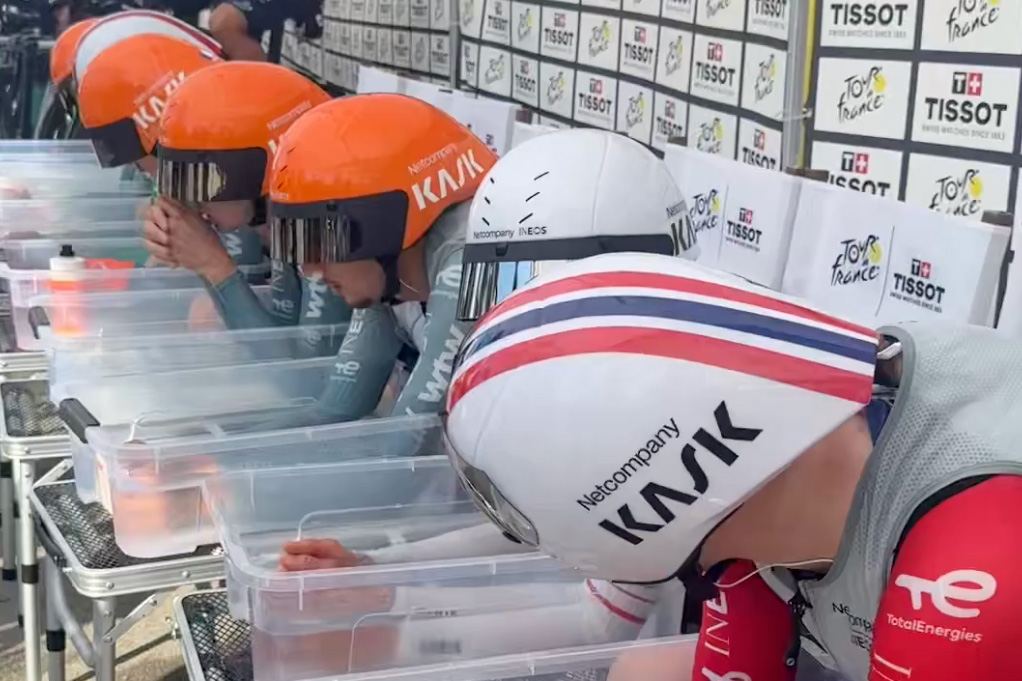
The heat has been affecting the race right from the start this year. Ahead of the first-stage team time trial in Barcelona, riders from Netcompany-Ineos pedalled to warm up with their forearms resting in plastic tubs of water to help keep them cooler.
Riders from other teams, including Visma-Lease a Bike, employed ice socks stuffed down the necks of their skinsuits, but were forced to remove them on the start ramp, because the UCI commissaires judged that they altered the riders’ morphology, which is not permitted under its extensive race rulebook.
The UCI seems to have relaxed the rules for the road stages, though. You’ll regularly see team cars handing out ice packs for riders to stuff down their jersey collars to help keep them cooler. Riders will routinely use cooling vests before the start and post-race to help cool them down too.
More fluids during the race
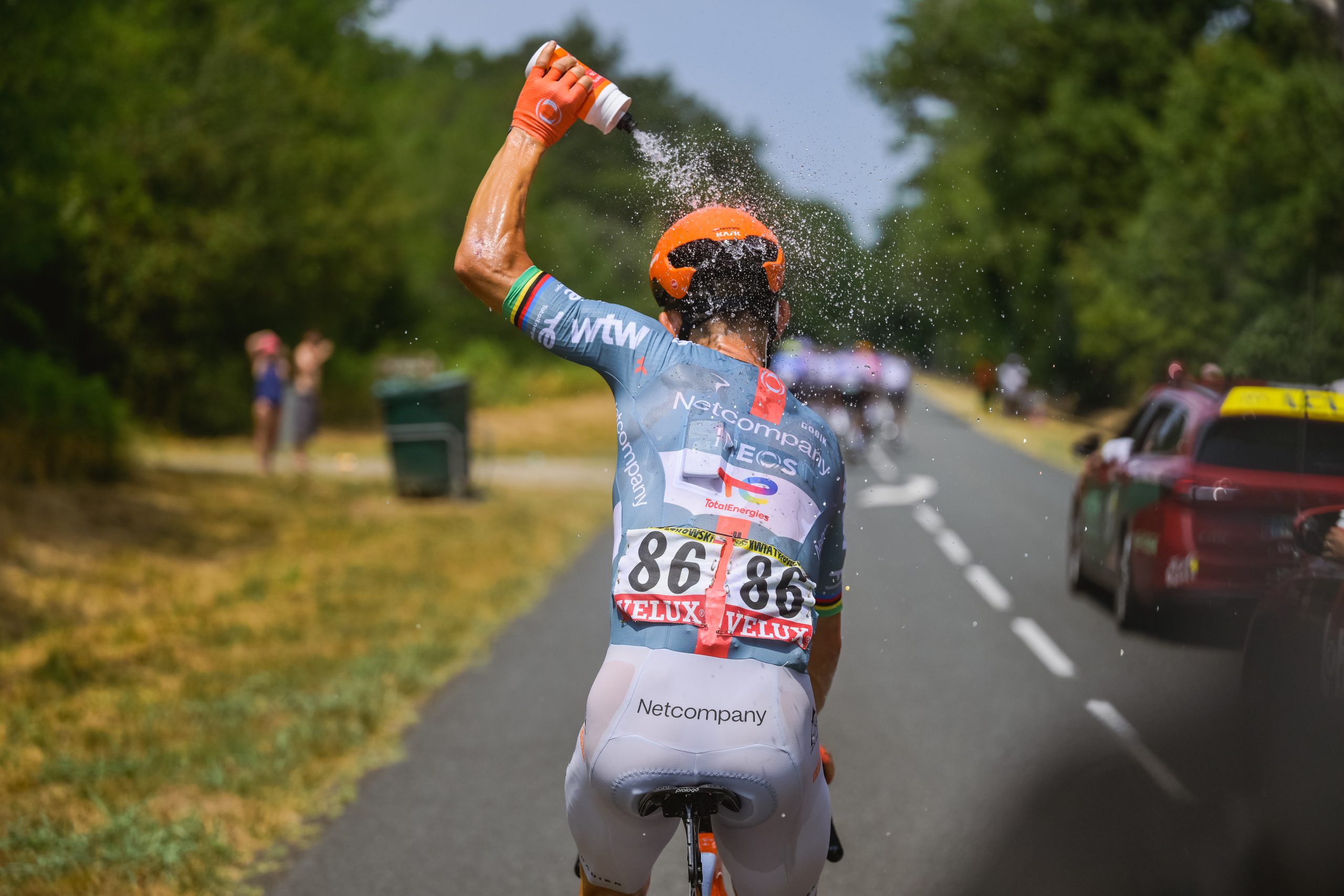
Race director Christian Prudhomme told L’Equipe: “We ourselves are going to deploy an additional cooling motorcycle. We’ve requested extra ice.”
That’s a measure recommended by the UCI’s extreme heat protocol, while other changes to cope with the heat have also been allowed by the UCI. It’s relaxed its restrictions on feed zones to allow teams to hand out feed bags containing multiple bottles in areas where they’re normally only allowed to provide single bottles to riders.
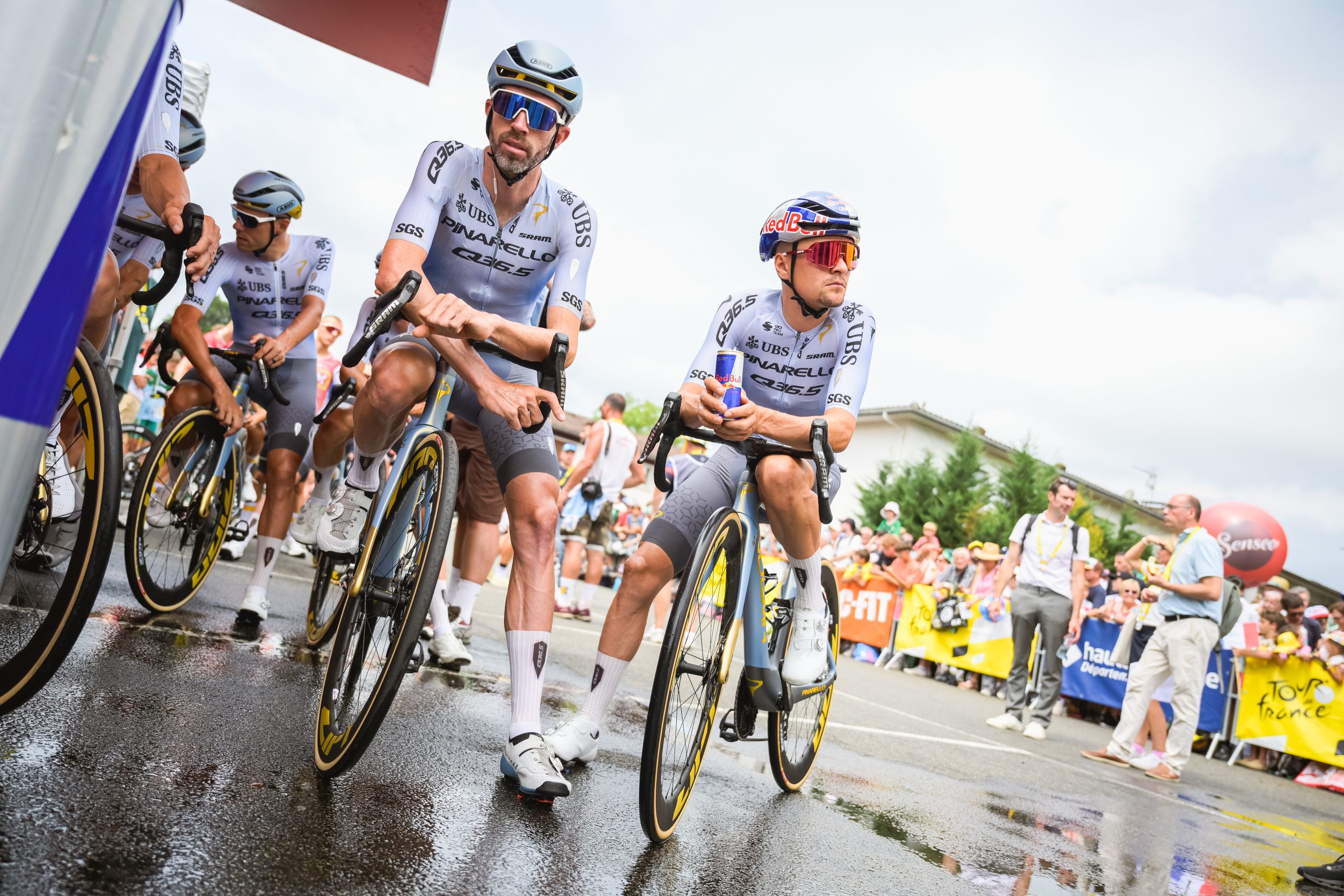
Tom Pidcock is another rider who has complained of the excessive heat in the early stages of this year's Tour. Speaking to IDL Pro Cycling, Kurt Bogaerts, Pidcock’s coach, claimed the Pinarello-Q36.5 team’s eight riders had gone through 160 water bottles on stage 2. Most had probably been poured over heads, but that’s still an average of 10 litres per rider. Ahead of stage 9, Picnic-PostNL coach Matt Winston claimed the team was going through 28 bottles per rider per stage.
It’s a far cry from earlier Tours, when until 1968 riders were not allowed to take on extra fluids above two extra bottles during the race. Even into the 1970s, the riders’ mantra was “driest is fastest” and riders would restrict their fluid intake during a stage.
UCI high temperature protocol invoked
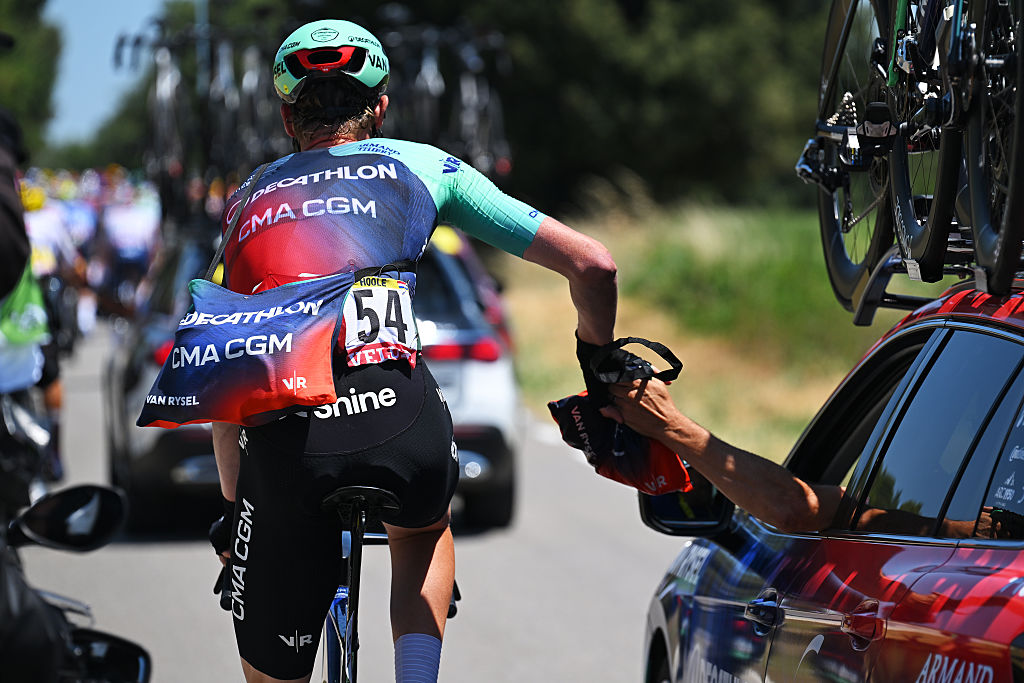
The UCI now has rules governing what is defined as 'hot' during a race and what race organisers should do to mitigate the effects of extreme heat.
"There is a heat protocol in place for several years now, which takes into account not only the temperature but also humidity, wind and speed, bearing in mind that the riders are top-level athletes, well accustomed to high temperatures," Prudhomme told reporters.
The high-temperature protocol was passed as an addendum to the UCI's extreme-weather protocol as recently as 2024 – prior to this, the extreme weather this covered had included rain, snow, poor visibility and air pollution, among other hazards, but not high temperatures.
The protocol sets heat risk zones based on the wet bulb temperature, which takes account of humidity not just heat, with five temperature zones.
In the highest-risk red zone, when wet bulb temperatures exceed 28oC, race organisers can change start times, neutralise part of a race such as a long climb or even cancel the stage.
Under the protocol, teams can use additional cooling measures for the riders during races such as ice vests and ice socks, and the race organisers are advised to provide additional neutral service motorbikes carrying liquids and ice packs.
Cooling weather for later stages?
Looking at the forecast, the high temperatures look to be abating somewhat, reducing to the low 30s in the Tour’s second week and maybe below 30oC towards the end of the week.
There’s the possibility of rain or thunderstorms in the Alps as the race heads to the final week showdown, although this brings its own risk of extreme conditions.
More on the 2026 Tour de France
- UCI changes Tour de France rules in light of extreme heat
- The Tour de France has lost some of its magic – and that could spell trouble for cycling’s future
- Forget VO2 max – a Tour de France cyclist's defining quality is their frightening capacity to suffer
- Who is Isaac del Toro? 4 things you need to know about the Mexican who could be a future Tour de France winner
- A Tour de France breakaway only has a 2% chance of winning, so why join one?
- Every team bike at the 2026 Tour de France