SQUIRREL_14012815
Merida’s latest Reacto builds on the aerodynamic lessons learned from the bike's previous generations with a new lightweight perspective. It all adds up to a potentially brilliant experience.
I say ‘potentially’ because its evolution is somewhat hampered by an overly narrow bar that spoils the otherwise smooth ride.
That's a shame because, while the Reacto 10k is priced a whisker under £10,000, it’s very good value for money.
Simple but effective
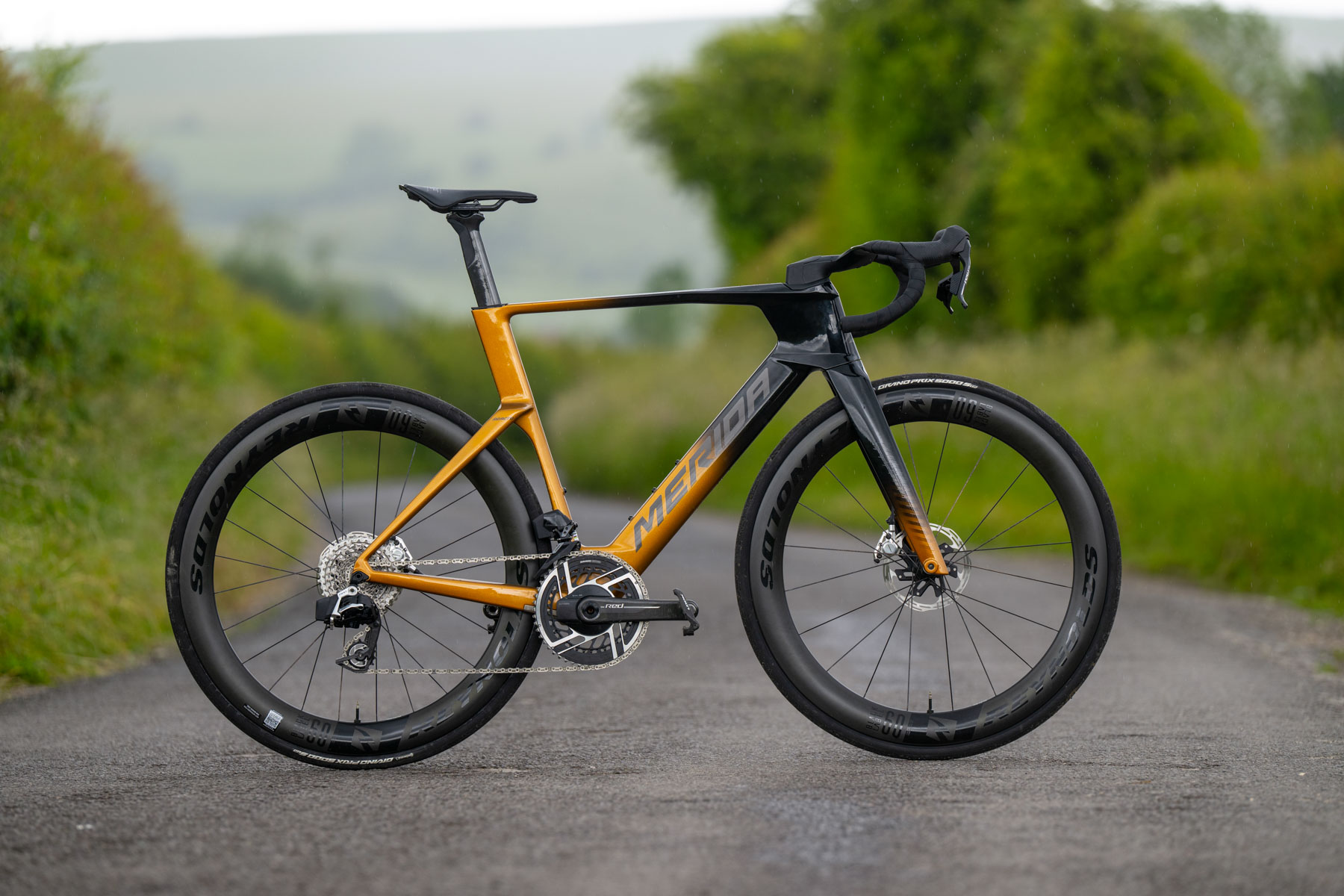
Merida’s Reacto has always been one of the easiest aero road bikes to live with. Like Giant’s Propel and Wilier’s Filante SLR, its relative simplicity compared to bikes such as the Cervélo S5, and the gone-but-not forgotten Specialized Venge Vias and Cannondale SystemSix, was its strength.
The Reacto didn’t rely on complex proprietary parts that made maintenance and repair a challenge. Not to mention the issue of travelling with a bike you needed engineering qualifications to disassemble and rebuild. The Reacto kept things simple while still being fast.
The new bike continues that theme, but brings refined aerodynamics, lower weight and a smoother-than-ever ride.
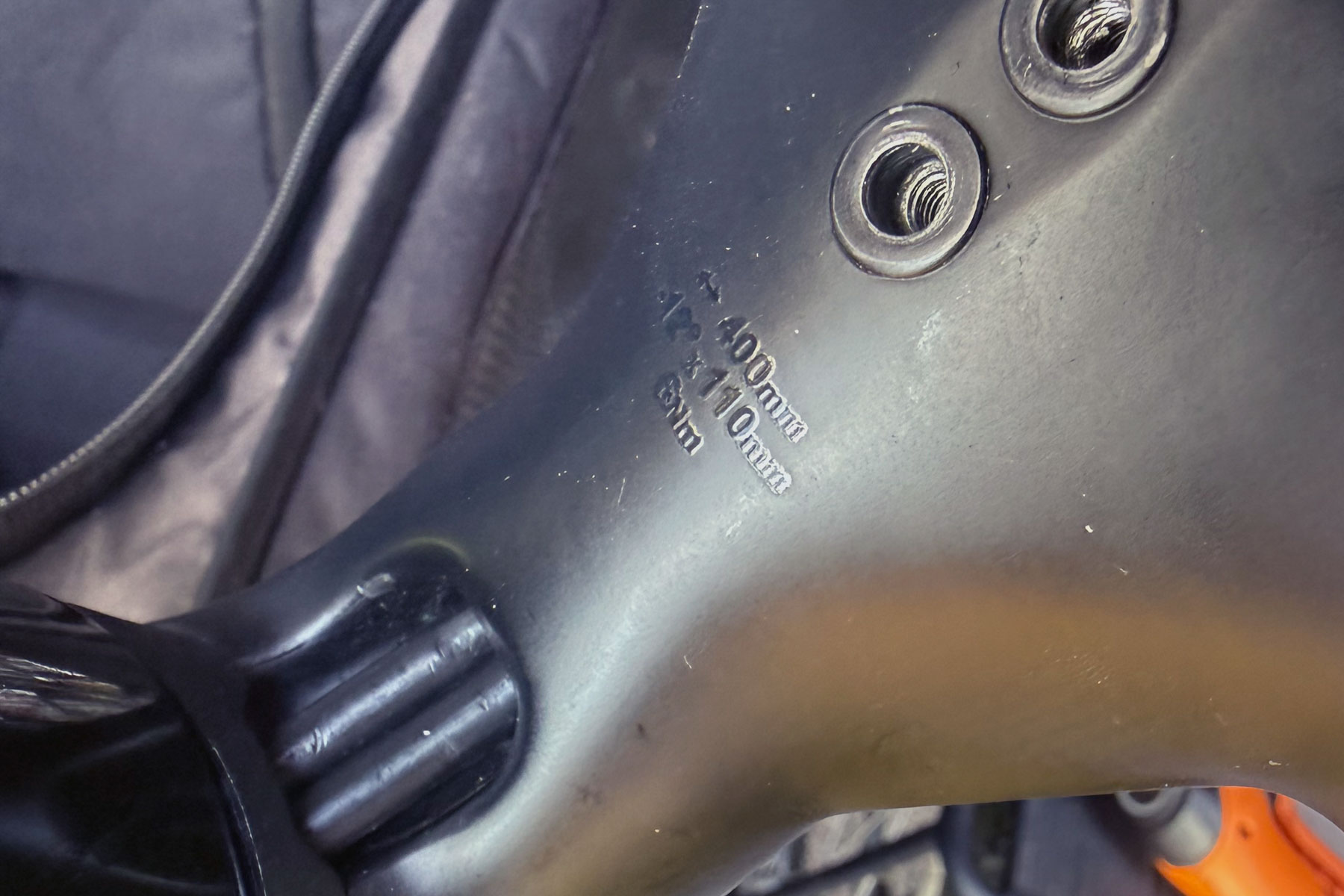
That’s the good news. The bad news is the UCI one-piece cockpit is a misstep. I like the 'delta' shape styling, but despite being nominally 400mm wide, in reality it isn’t.
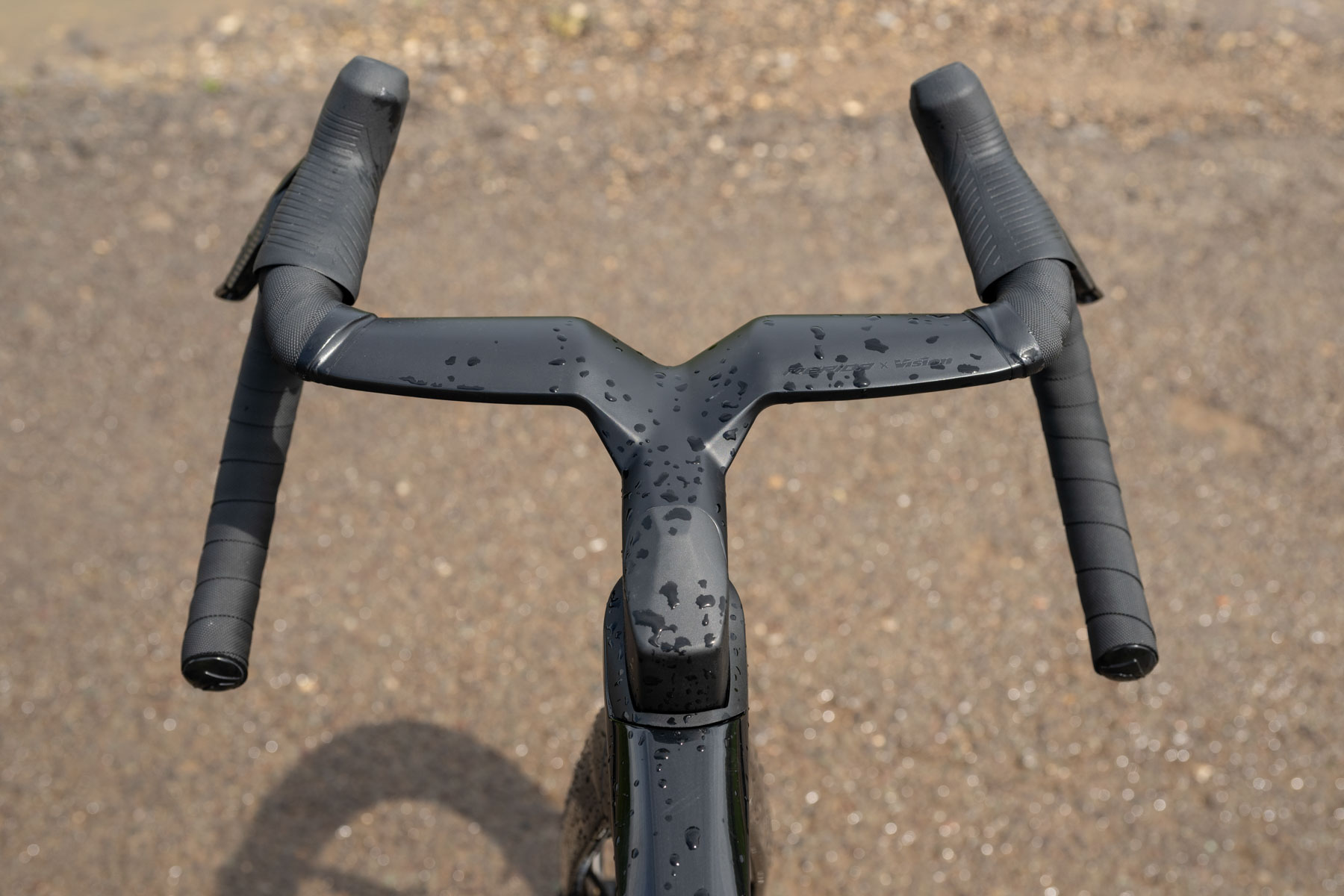
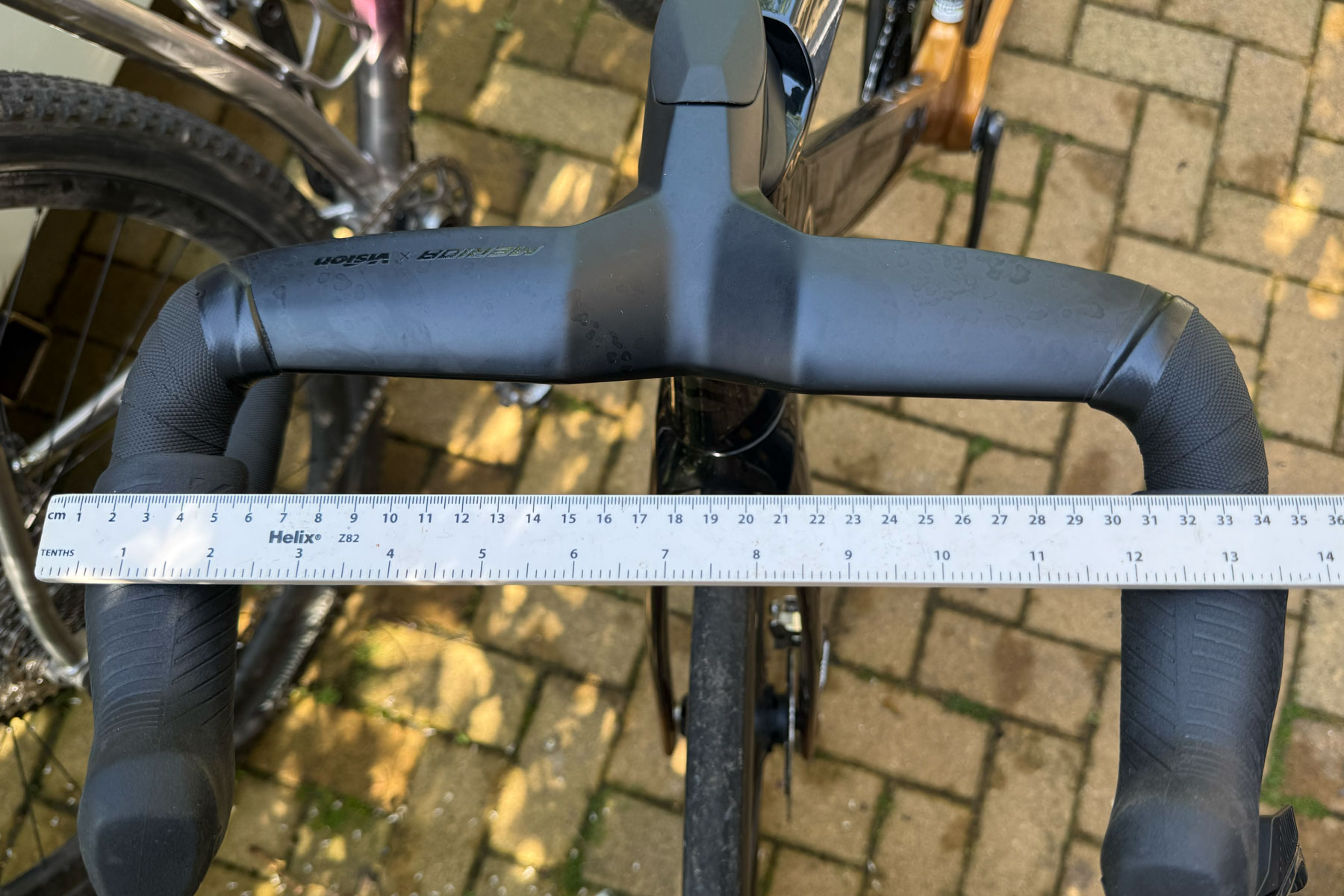
I’ve measured across the hoods and across the widest part of the tops, and it never gets even close to 400mm wide, maxing out at 360mm. The very end of the drops flares out to 420mm, but that’s in a place where you’d never hold the bar.
Of course, some will like the narrow bar setup and the theoretical benefit to aerodynamics it offers. I appreciate the narrow tucked-in shape when seated and pushing the pedals on flat and rolling terrain.
Here, the Reacto feels blisteringly rapid. But when the roads get a bit more twisty, the steering feels weighted, requiring more effort than a wider bar to move. An instant later, it may feel somewhat twitchy.
Bearing in mind I ride a size XL, which is Merida’s equivalent of a size 58cm, I found my knees came uncomfortably close to my elbows when climbing seated, and out-of-the-saddle climbing felt unbalanced because I couldn’t get leverage from the narrow width.

I never felt I could fall into a proper rhythm on longer or steeper climbs.
Merida claims the new Reacto is 5% faster than the previous generation, with almost half of that improvement down to the narrow bar.
The bar comes in three sizes, depending on frame size: nominally 380mm on the smallest sizes, 400mm on the medium and large, and 420mm on the XL – but where you hold it, it’s much narrower than that.
The ride quality is impressive for a bike that’s all about stiffness and aero efficiency. Despite its 28mm tyres, which are modest by 2026 standards, the vibration-reducing ride is impressive – especially at the rear.
Once I got accustomed to the narrowness of the bar – even though I’ve never warmed to it – I could appreciate Merida’s charms. However, for me, the bike would be improved immeasurably by having a wider bar, something more akin to the better-proportioned example on the Merckx 525R.
The UCI ruling states bars must be 400mm wide outside-to-outside, and there must be a minimum distance of 280mm between the brake-lever hoods. The bar on my test bike complies with the brake hoods distance – just. So, the bar on smaller sizes would be illegal in UCI events.
The frame and fork have seen a major overhaul. The head tube is deeper, slimmer and integrates better with the broad fork crown. The tyre clearance is upped to 32mm front and rear, and a new more slender seat tube is claimed to improve aero and comfort.
For an aero bike, the Reacto is remarkably smooth-riding, especially at the rear, which bears out the design update.
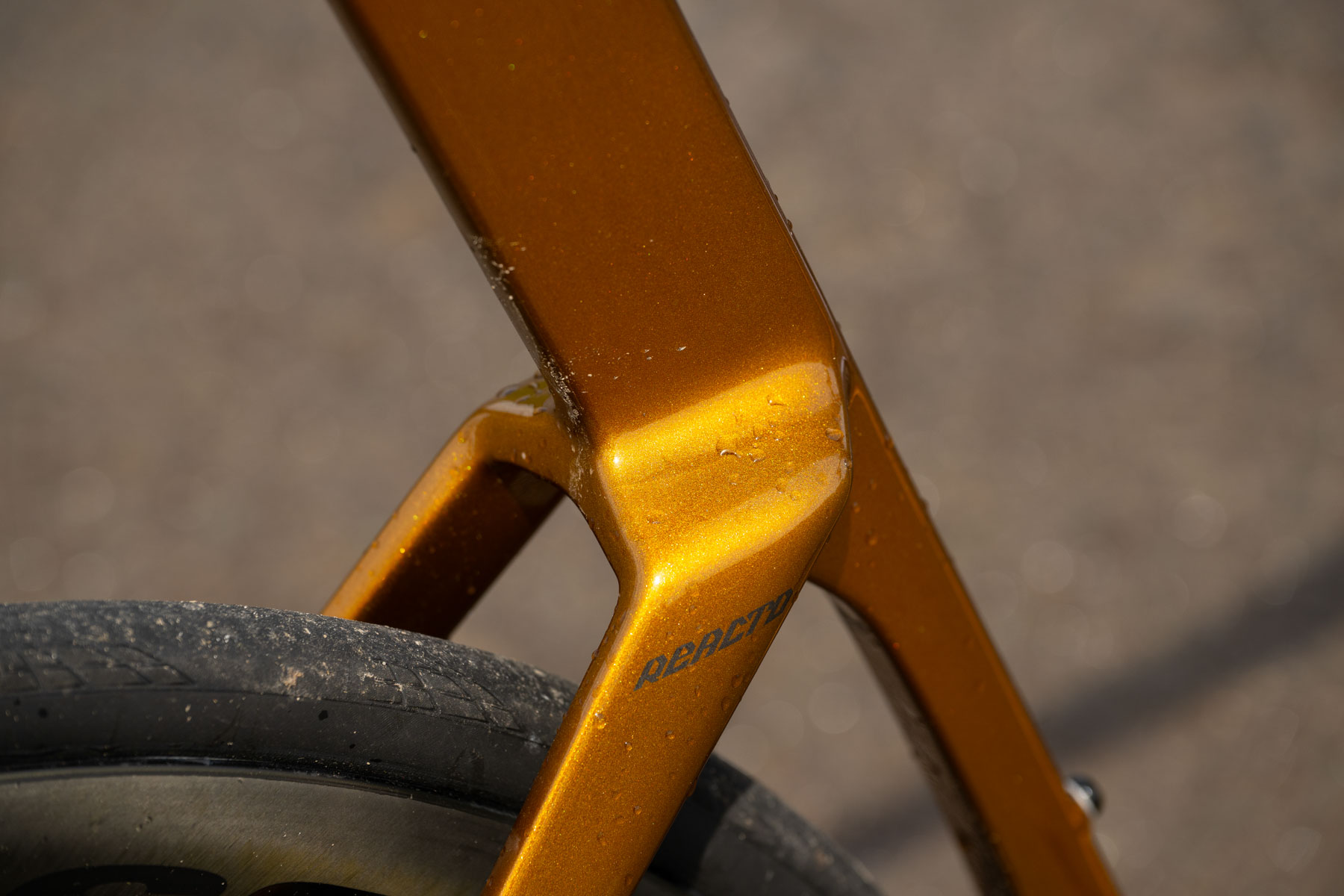
Weight-wise, the reduction is only 11g from the previous model's frame, which was already light compared to most aero bikes.
This frame's 950g weight (size L) is suitably svelte and helps the complete bike add up to an impressive 7.18kg for my large-sized test bike. It rides light and rolling terrain is easy to conquer. With a more suitable bar shape for me, it’d be a formidable climbing companion with weight this low.
Reacto geometry
The Reacto’s geometry doesn’t hold many surprises. It has a 73.5-degree head angle and a 73-degree seat angle. The stack is low at 571mm and the reach long at 400mm. With the effective 110mm stem on the cockpit, the Reacto delivers a long and low ride position. Short chainstays (410mm) and a tight wheelbase of 1,002mm add to the Reacto’s overall quick feel.
| Frame Size | 3XS | XXS | XS | S | M | L | XL |
|---|---|---|---|---|---|---|---|
| Seat tube (mm) | 440 | 470 | 500 | 520 | 540 | 560 | 590 |
| Top tube (mm) | 506 | 521 | 535 | 545 | 560 | 575 | 590 |
| Chainstay length (mm) | 410 | 410 | 410 | 410 | 410 | 410 | 410 |
| Head tube angle (°) | 70.5 | 70.5 | 72 | 72.5 | 73.5 | 73.5 | 74 |
| Seat tube angle (°) | 75.5 | 74.5 | 74 | 74 | 73.5 | 73 | 73 |
| Bottom bracket drop (mm) | 70 | 70 | 70 | 66 | 66 | 66 | 66 |
| Head tube (mm) | 100 | 105 | 112 | 128 | 140 | 155 | 175 |
| Fork length (mm) | 385 | 385 | 385 | 385 | 385 | 385 | 385 |
| Fork offset (mm) | 45 | 45 | 45 | 45 | 45 | 45 | 45 |
| Reach (mm) | 373 | 377 | 384 | 390 | 395 | 400 | 409 |
| Stack (mm) | 512 | 517 | 529 | 542 | 557 | 571 | 593 |
| Wheelbase (mm) | 981 | 987 | 984 | 992 | 992 | 1,002 | 1011 |
| Standover height (mm) | 727 | 746 | 771 | 792 | 810 | 826 | 853 |
Merida has historically been very strong on value and the Reacto 10k is no exception. A similar-specification Cervélo S5 (SRAM Red AXS, Reserve Wheels) would be over £3,000 more at £12,750 / $14,500 / €13,999. Giant’s Propel Advanced SL 0 is £1,000 more at £10,499 / $12,750 / €11,999.
Bear in mind this Reacto has a specification equal to those much more expensive bikes.
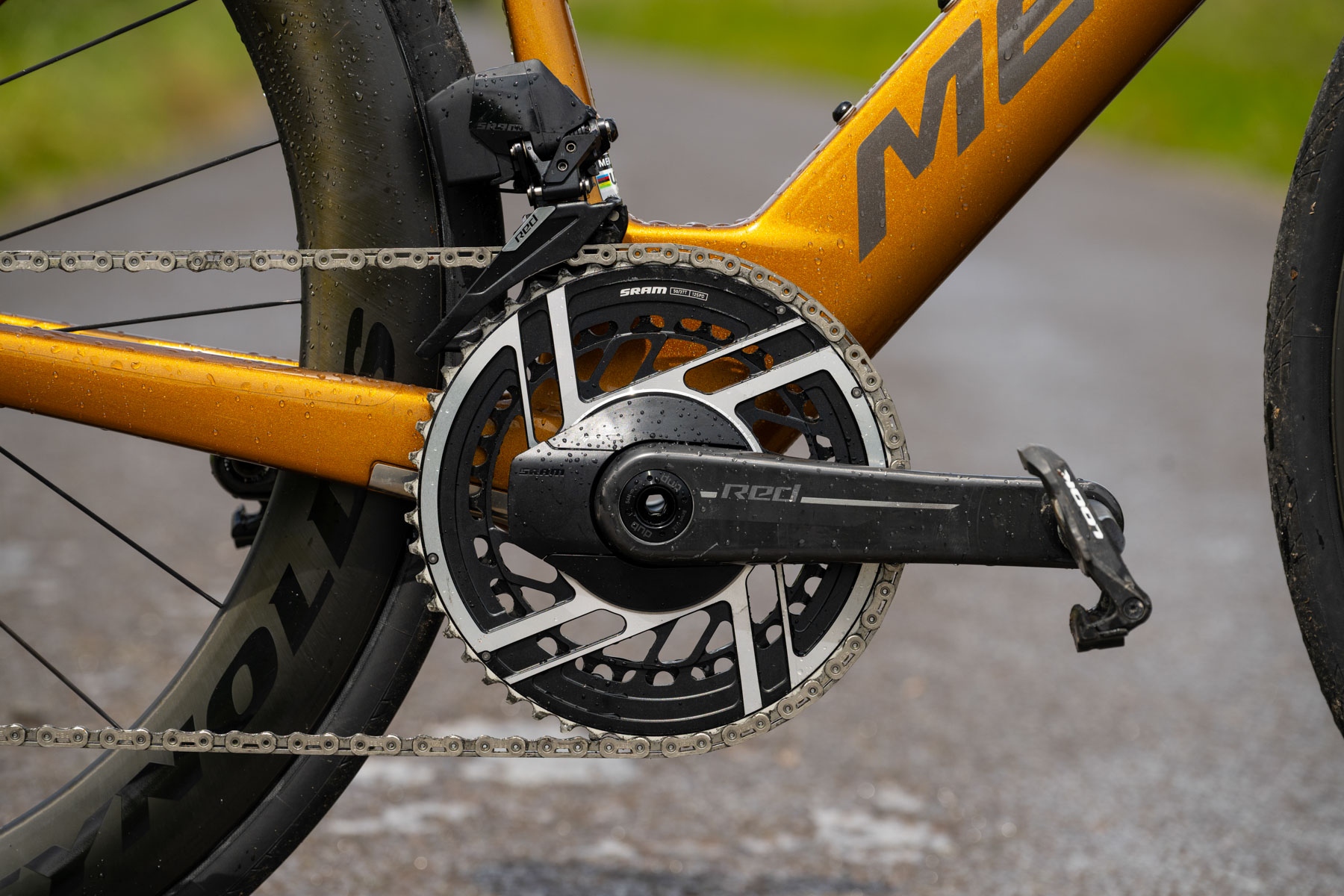
The SRAM Red AXS drivetrain, replete with a power meter, is as good as it gets on top-end bikes and adds value to the overall package. Here, it’s in suitably speedy ratios with a 50/37 crankset and 10-36 12-speed cassette.
The Reynolds Black Label 60 Pro wheels aren’t often seen on complete bikes, but they’re a fitting wheelset for a premium bike.
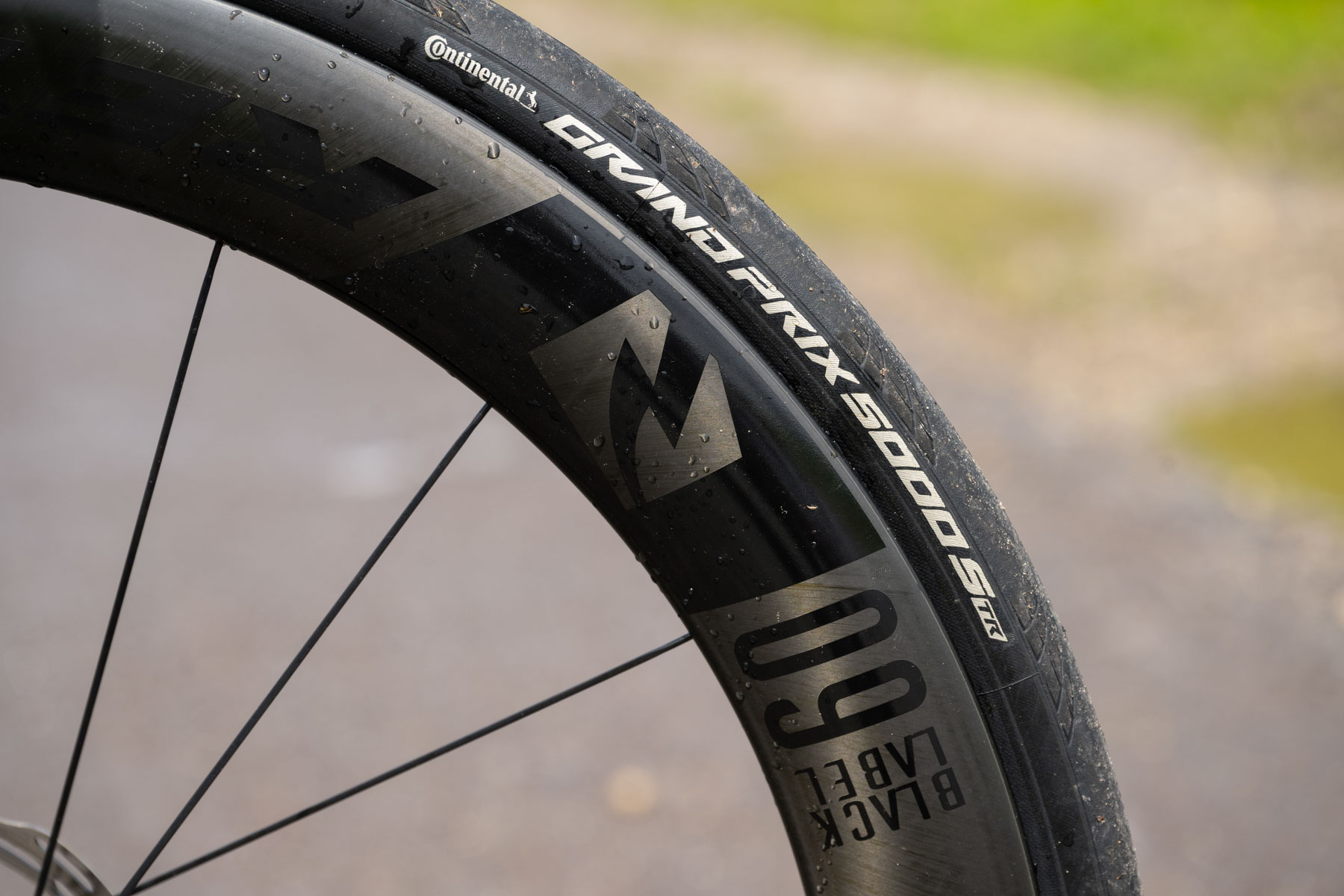
The 60mm-deep, 21mm internal-width rim is well suited to the excellent Continental GP5000 S TR tyres in 28mm width. The Reynolds hubs are made by Industry Nine, and the fast freehub brings 6-degree engagement and a wasp-like buzz on freewheeling. The 60mm-deep wheelset is claimed to weigh in at 1,500g.
Canyon’s Aeroad CFR Red AXS is cheaper, however, at £8,499 / €8,999 – as is the also direct-to-market Ribble Ultra-Aero SLR DA Di2 at £8,049.
Merida Reacto 10k bottom line
The Reacto is a very well-priced and a pure race bike. In the right conditions, it’s devastatingly quick. Straight-line speed when you’re tucked into the narrow bar is akin to a time trial bike. It has accomplished smoothness, it’s very light for a bike with deep aero wheels and features an aero-optimised frameset.
The downside is the cockpit. While looking radically stylish, it has pushed the boundaries on width far beyond what is sensible, even for those looking to maximise aero performance.
With a standard cockpit, the Reacto would be a five-star bike, but it's worse off for pushing the boundaries too far.
If you’re comfortable with a super-narrow bar setup, I’m sure you’ll love the Reacto. However, I was left equal parts impressed and frustrated.
Product
| Brand | Merida |
| Price | €10199.00, £9500.00 |
| Weight | 7.18kg |
Features
| Fork | REACTO CF5 V DISC |
| Chain | SRAM Red E1 |
| Frame | REACTO CF5 V |
| Tyres | Continental Grand Prix 5000S TR |
| Brakes | SRAM Red |
| Cranks | SRAM Red with power meter 50/37, 172.5mm |
| Saddle | Prologo Nago R4 PAS |
| Wheels | Reynolds Black Lable 60 Pro |
| Headset | FSA ACR NO.55R |
| Shifter | SRAM Red AXS |
| Cassette | SRAM Red XG-1290 10-36 |
| Seatpost | MERIDA REACTO V S-FLEX |
| Grips/tape | Merida |
| Handlebar | MERIDA TEAM CW 1P 400mm/110mm |
| Bottom bracket | SRAM Dub PressFit Road |
| Available sizes | XS/S/M/L/XL |
| Rear derailleur | SRAM Red AXS |
| Front derailleur | SRAM Red AXS |
SQUIRREL_14012815