Tadej Pogačar’s destruction of his Tour de France rivals on stage 6 in the high Pyrenees left many with that sinking feeling that his fifth yellow jersey is already sewn up.
A collective gloom has descended on everyone not in UAE Team Emirates-XRG colours after Pogačar did very Pogačar things, earlier than ever before.
His hunt for a third successive victory in the race – and a record-equalling fifth – had race director Christian Prudhomme talking up this 2026 edition as a race in crescendo, designed to dial up the excitement throughout three weeks and peak on the final weekend in the Alps with the toughest stages of the race.
That excitement was multiplied by the amplification of the new threats Pogačar would have to contend with this year: the arrival of French wonder kid Paul Seixas, a Jonas Vingegaard fully rejuvenated from the horrendous injuries that had hamstrung him through the previous two editions, and a rehomed Remco Evenepoel now riding for a team built to support his Tour de France ambitions.
In the space of four and a half hours on stage 6, Pogačar has blown those plans to smithereens, well before the first rest day.
Seixas was made to look what he is, a 19-year-old of rare talent – but still a teenager; Vingegaard as a man who’d ridden around Italy a little over a month ago and Evenepoel someone who we can finally say when it comes to his Tour de France team-mates: maybe it’s him, not them.
Best laid plans and all that…
- Read more: Can the Tour de France ever be Pogačar-proof? The race organisers face a near-impossible task
Can he lose it from here?
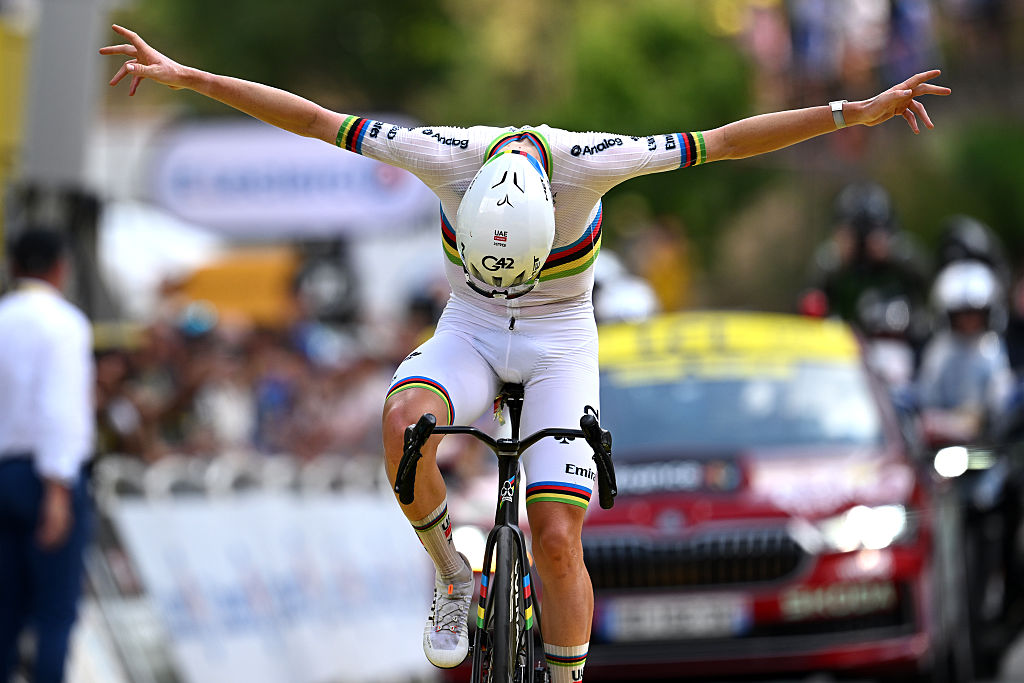
So, is there a world in which Pogačar doesn’t win a fifth yellow jersey from here? Well, theoretically, of course there is.
All the usual caveats still apply here: that the dynamic, open environment of the Tour de France still has over two thirds of the way to run, through multiple mountain ranges and potential heatwaves; that illness, injury and other slices of bad luck can happen to the very best; that some freak crosswind will catch him out on the stage to Bordeaux today; or a tactical blunder by UAE, or a masterstroke by an opponent, can turn the tables quickly.
Vingegaard, his biggest threat, will likely be better as the race progresses and he moves further away from his Giro d’Italia win.
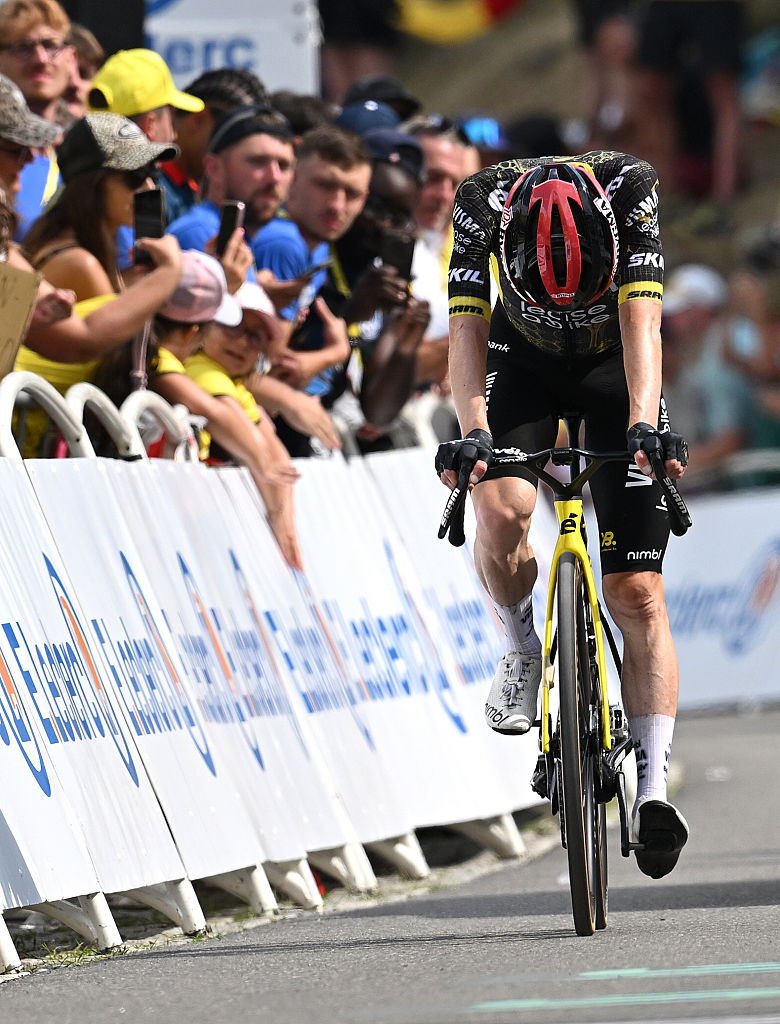
All this ignores history, however, both of the race and Pogačar himself. We’re conditioned to say the Tour is the Tour and anything can happen, but does that stand up to scrutiny, particularly when it comes to the likes of Pogačar?
Dominant champions – those who’ve won multiple Tours before and in the prime of their career – just don’t relinquish big leads in the race.
Not through tactical blunders, not through freak crashes and not through illness. It didn’t happen to Jacques Anquetil, or Eddy Merckx, or Bernard Hinault, or Miguel Indurain – all members of the five Tours club.
It didn’t happen to Lance Armstrong, either, winner – and subsequent loser – of seven Tours. His winning years, compared to what happened during his 2009/10 comeback, provide a classic example of the ‘luck’ that you have when you’re at the top of your game, and how trouble has a knack of finding you when you’re no longer riding high.
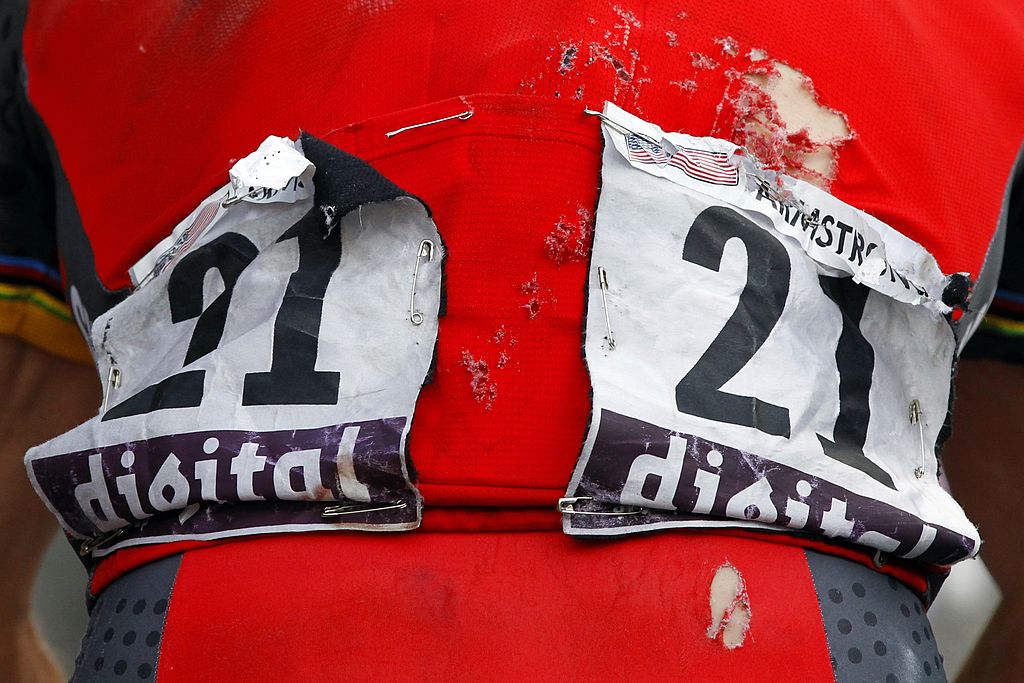
It’s not about having an invisible forcefield around you – it’s about having the best legs to keep you at the front, all day, out of bother.
On the contrary, the biggest turnarounds in the Tour typically benefit the biggest champions. See Luis Ocaña crashing out in 1971 and shipping a seven-minute-plus lead to Merckx, and Primoz Roglic’s 2020 collapse on the penultimate stage time trial to Pogačar himself.
Pogačar has continually demonstrated his ability as a frontrunner and has offered scant evidence of being vulnerable to collapse.
He’s not just content to sit and defend a lead either, not when there’s Mark Cavendish’s stage record to chase.
He’s well aware that these are the years of plenty and getting to 36 wins (he sits on 23) needs him to fill his boots now.
In so many ways, it’s incredible to watch. Yet perhaps for the first time yesterday, watching Pogačar obliterate his competition, on what I’m going to call the OMG-FFS spectrum, I tipped over into the latter. By the sounds of it, that’s how a lot of people are feeling at the race today.
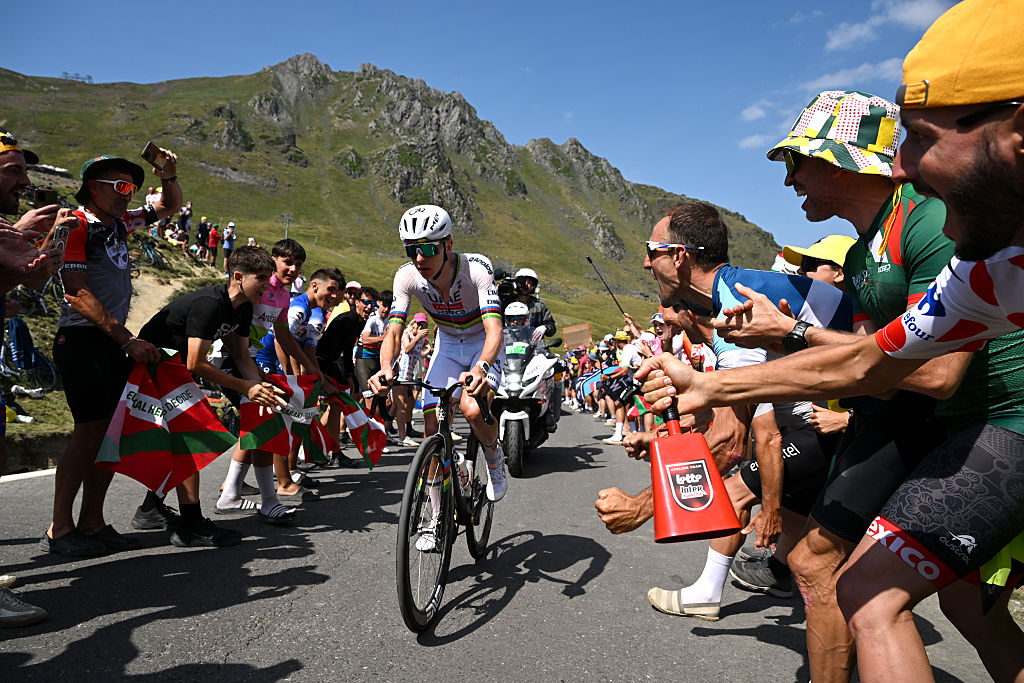
I grew up watching cycling in an era where successful long-range attacks happened once in a blue moon at the Tour de France.
That was the thrill. Now they happen multiple times each year and always by the same guy. When the only question is 'how many kilometres will he go solo from the finish today?' that jeopardy melts away.
So, if he isn’t going to blow his lead, what do we have left of this year’s race?
Maybe the wind will blow today and catch Pogačar flat-footed, or a freak storm will turn the Galibier into a river, or the UAE Team Emirates chef will have a kitchen nightmare.
After all, the Tour is the Tour, right? Right?!
More on the 2026 Tour de France
- ‘I wanted to enjoy myself’: Baptiste Veistroffer shares the stats behind his 144km Tour de France solo break
- "It’s outstanding" – Norwegian who was treated for cancer now leads the Tour de France
- Ridley built this custom yellow-jersey Noah Fast for Torstein Traen in less than 30 hours after he took the lead in the Tour de France
- Who is Isaac del Toro? 4 things you need to know about the Mexican who could be a future Tour de France winner
- Why are Pogačar and Del Toro riding different bikes?
- Isaac del Toro's stage-winning Colnago V5Rs may sit exactly on the UCI weight limit
- A Tour de France breakaway only has a 2% chance of winning, so why join one?
- Every team bike at the 2026 Tour de France