Remco Evenepoel won gold in the Olympic road race at the Paris 2024 games, and his Specialized S-Works Tarmac SL9 for the Tour de France shows the victory off with aplomb.
We got up close with the Red Bull - Bora - hansgrohe rider’s bike ahead of the Grand Départ in Barcelona, and it gave us another opportunity to see the SL9 in the flesh after it launched at the end of June.
Specialized’s new race bike may not be dramatically different from its predecessor. However, Evenepoel’s status as one of the favourites for this year’s race means his bike has been given the star treatment. That’s especially true now he’s using SRAM Red AXS for the first time.
Gold, gold and more gold
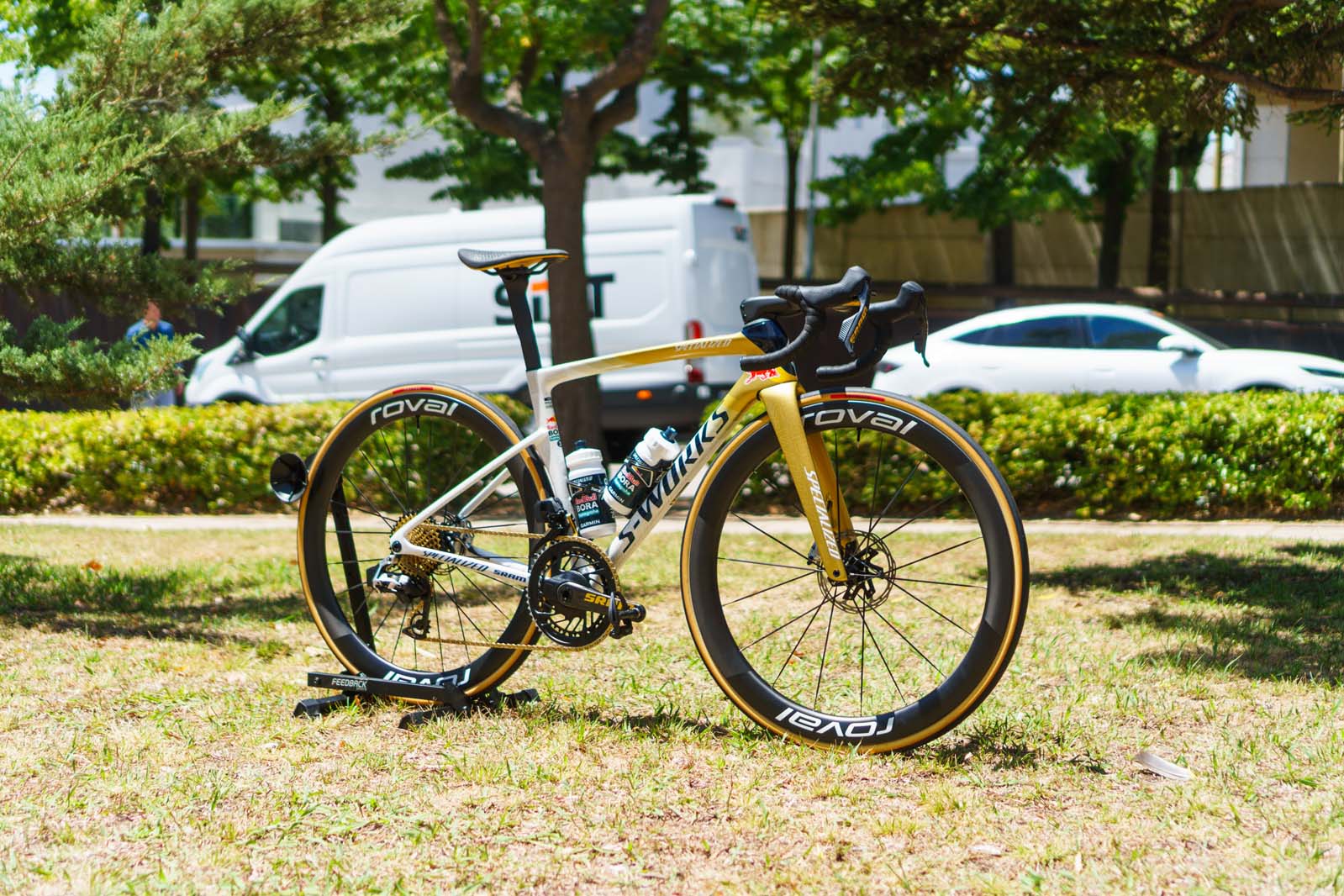
The immediately captivating detail of Evenepoel’s Tarmac SL9 is the paintwork. The bike’s fork and front end is covered in gold, making an unashamed point of the Belgian rider’s win at the last Olympic games.
Evenepoel is no stranger to captivating finishes. His 2024 Specialized SL8 for the Tour gleamed in the sun. And his bike for last year’s race had an even more spectacular gold paintjob.
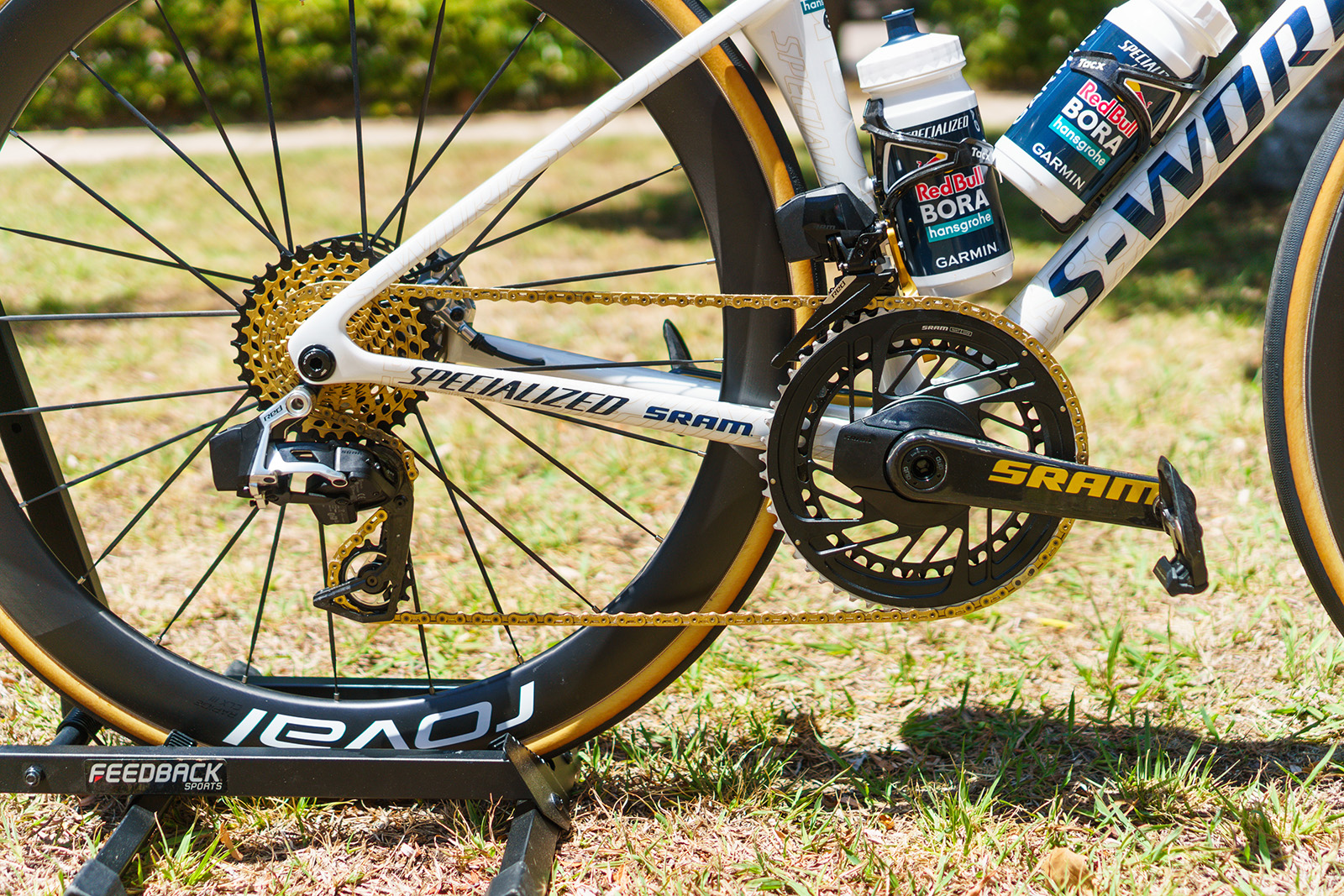
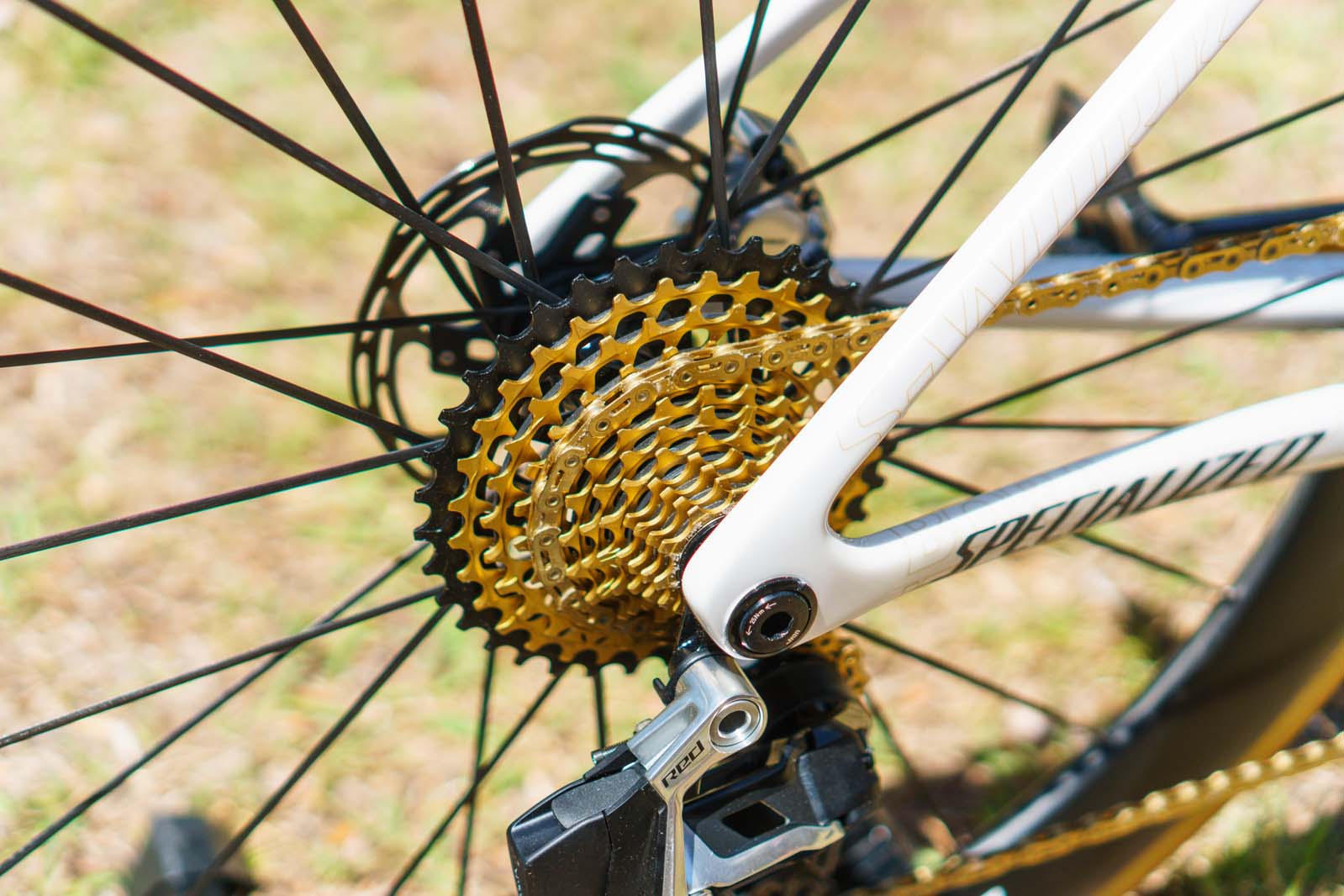
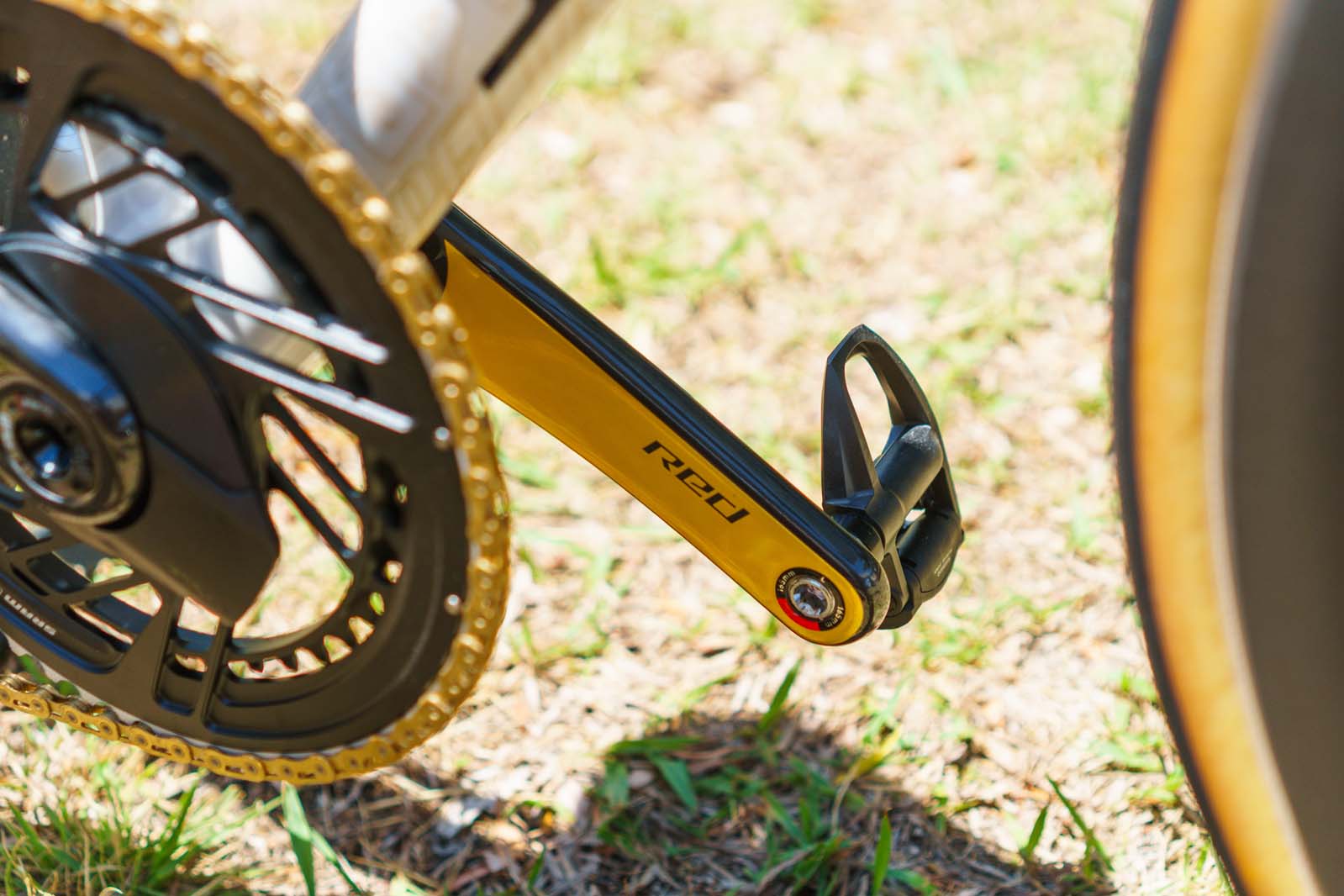
It seems Evenepoel's departure from Soudal Quick-Step means the Olympian had to sacrifice some frame space to one of his new sponsors, Red Bull. Yet the team move also meant a switch from Shimano to SRAM, and with it comes access for Evenepoel to the American groupset company’s gold components, reserved for Olympic and world champions.
As a result, Evenepoel’s 54/41-tooth crankset with 165mm cranks is finished in gold details, his 10-36-tooth cassette is all gold apart from the smallest cog, and he also has a waxed gold chain. The gold theme continues across the SRAM logos on the brake levers, the underside of the saddle, and the K-Edge chain catcher and computer mount.
A familiar spec with a few tweaks
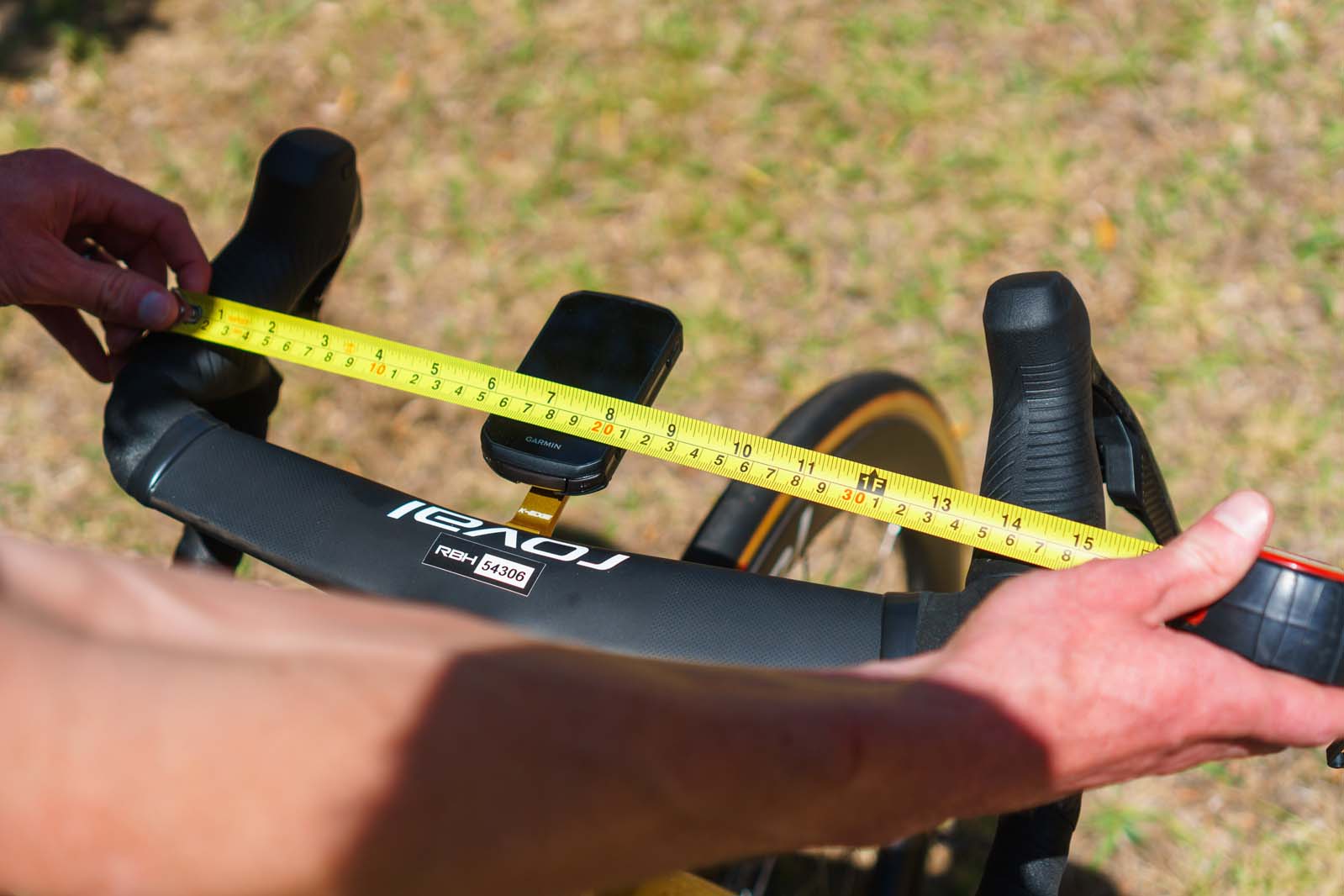
Aside from the switch in groupset provider, Evenepoel’s bike for the 2026 Tour de France has much in common with his SL8 for last year’s race, but with a few minor tweaks.
The 26-year-old is running the same Roval Rapide cockpit, which was carried over from the SL8 to the new SL9. But while his previous handlebar measured 38cm centre-to-centre, Evenepoel has switched to the slightly narrower 36cm bar. He also has his levers turned into 28cm, which is the minimum width allowed by the UCI. At the drops, the bar flares out to 42cm wide.
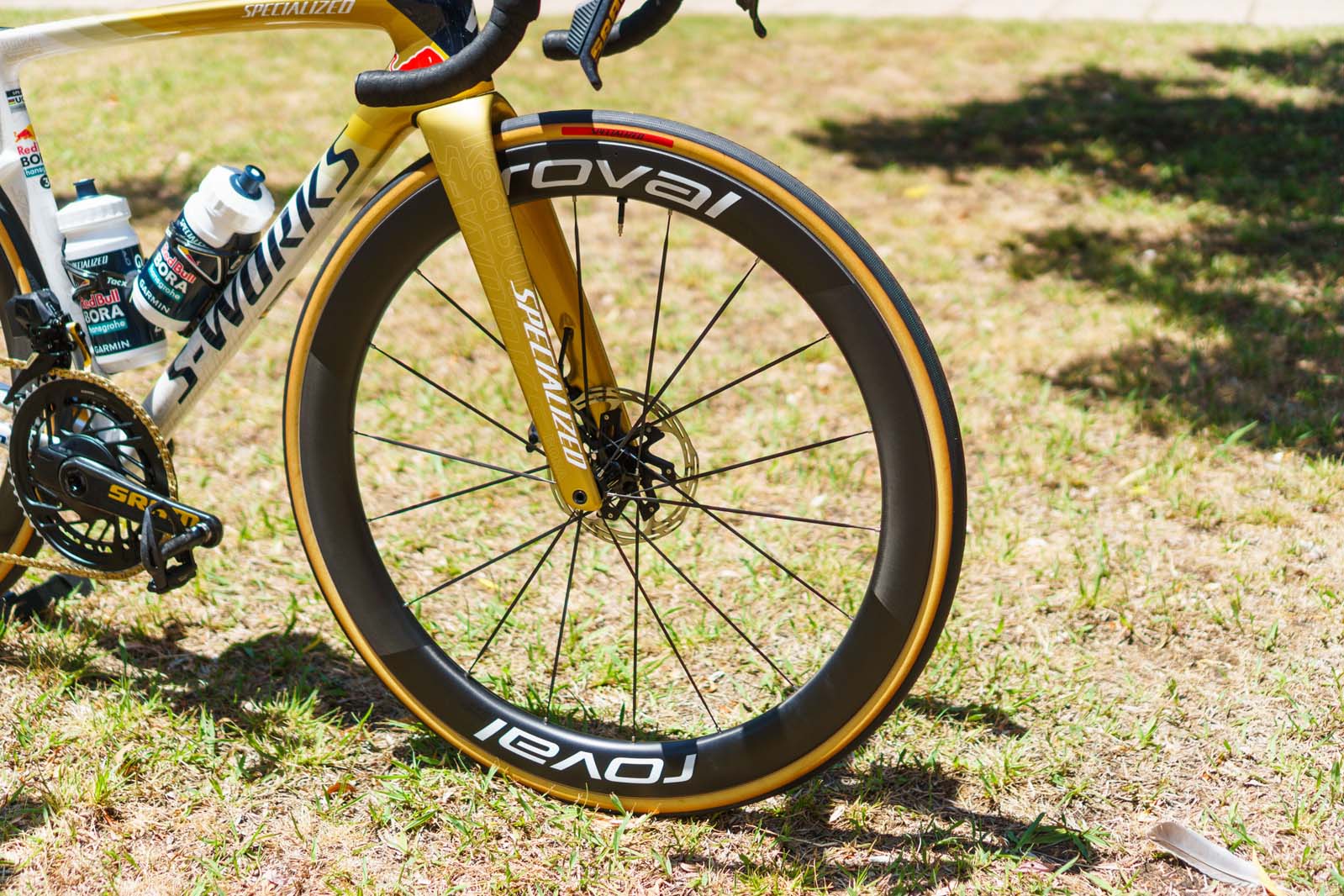
Another change is Evenepoel’s wheelset. Last year, he ran the Roval Rapide CLX Sprint wheels that launched just ahead of the 2025 Tour de France. These have a 63mm-deep front wheel and a 58mm-deep rear wheel.
But Evenepoel’s bike at the Barcelona Grand Départ was fitted with the slightly shallower Roval Rapide CLX III wheels, with 51mm front and 48mm rear rims.
It’s possible the bike was set up with these wheels ahead of the punchy parcours of stage 2, which climbed up to the finish at the Barcelona Olympic stadium, and where Evenepoel finished 17th. He may opt for the deeper Sprint wheels on flatter days.
Roval is Specialized's in-house component brand, and the company says it opted for a shallower rear rim after wind-tunnel testing. It says having a deeper rear rim doesn’t add any extra aero advantage, and only adds weight.
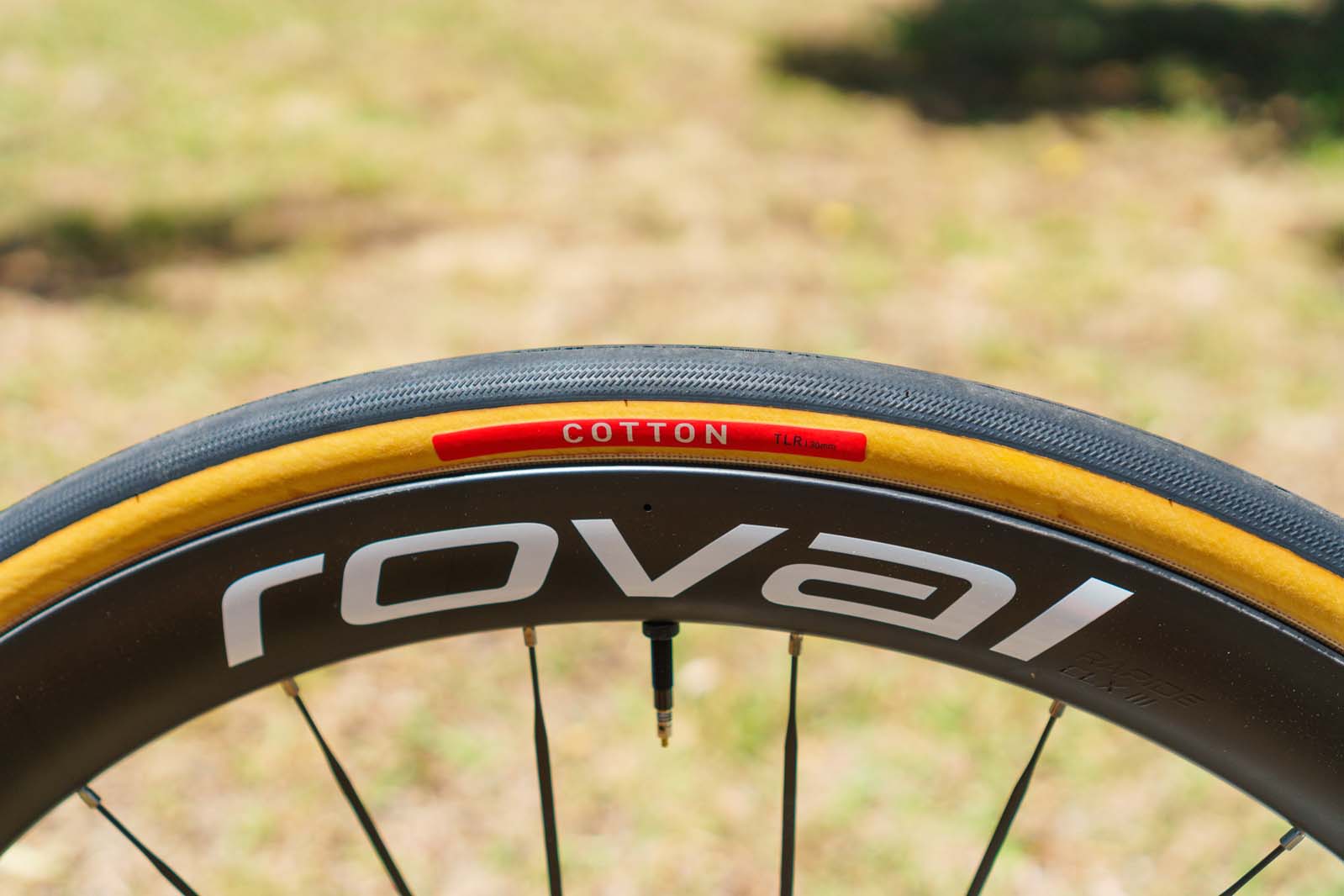
Evenepoel is also sticking to his preferred Cotton TLR tyres in the same 30mm width as his bike last year.
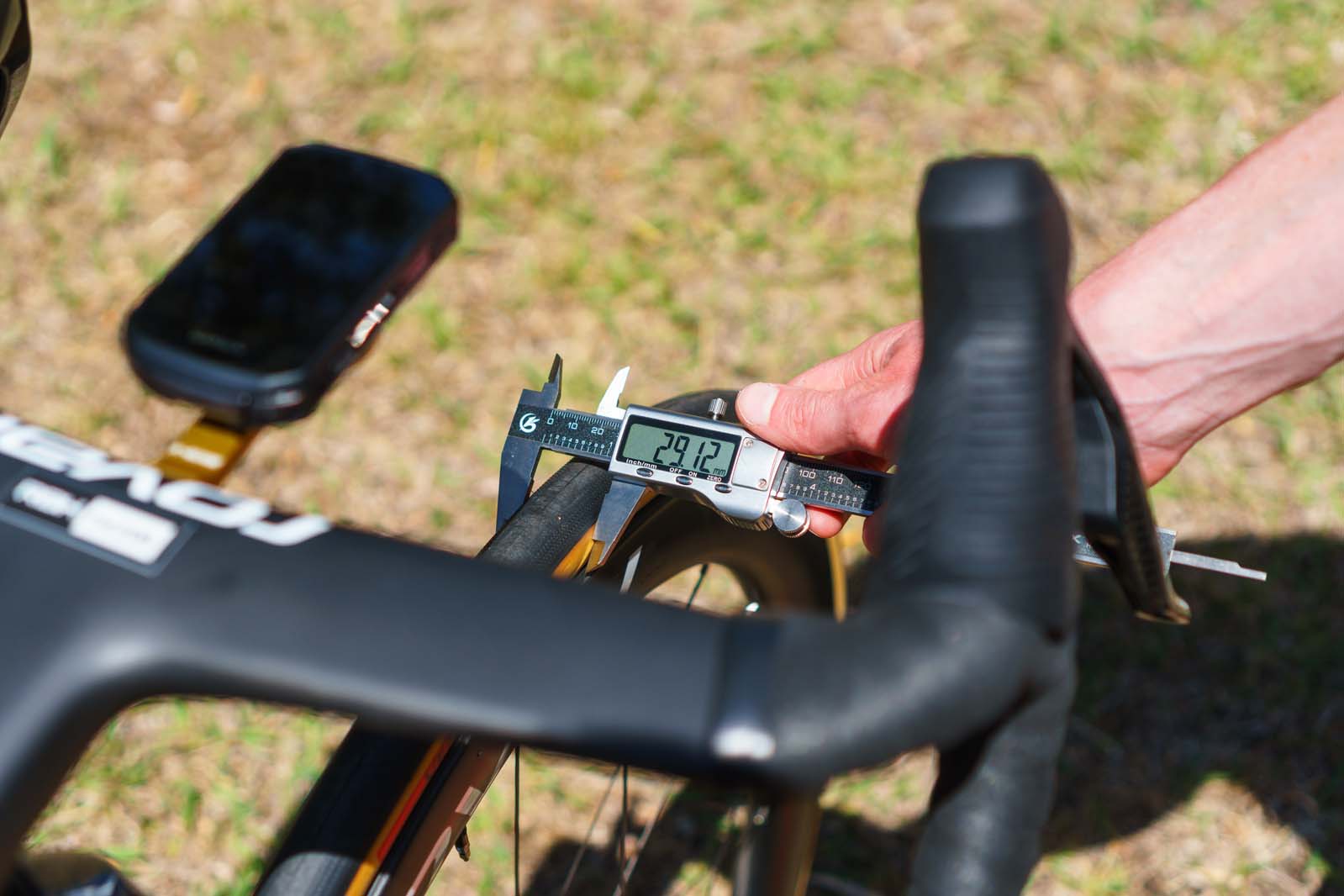
Tyres in this width are a bit of a trend at the Tour de France, but these Specialized tyres typically measure up slightly narrower than their stated width. The rear tyre on Evenepoel’s bike measured 28.89mm and the front tyre was slightly wider at 29.12mm.
Bang on 7kg
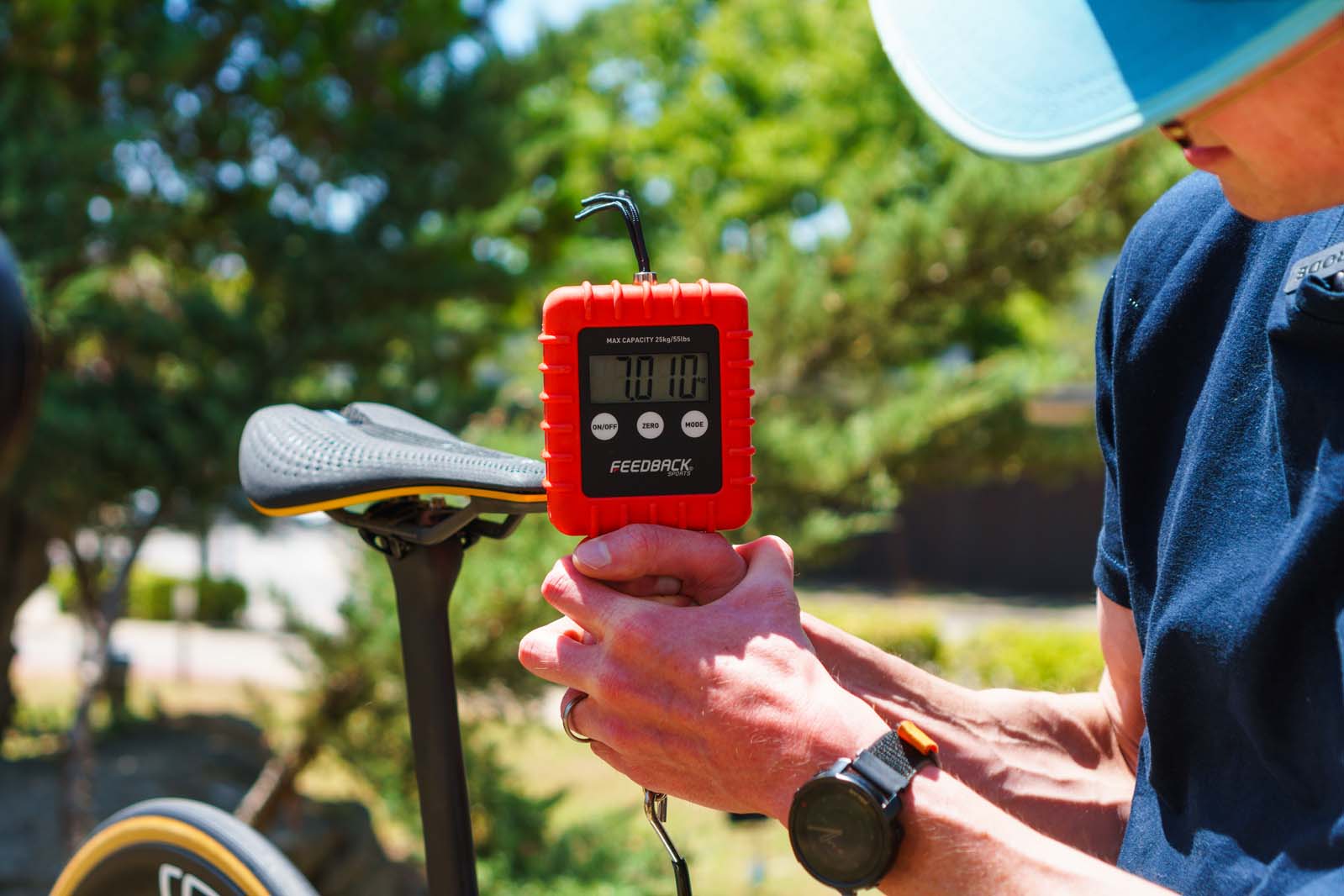
When we weighed Evenepoel’s bike, it tipped the scales at 7kg, which is 180g less than his Tour bike from last year.
That weight saving will be due in part to his lighter wheels, narrower cockpit and switch from Dura-Ace to Red AXS, which is marginally lighter than Shimano’s pro-level groupset.
What’s new with the SL9?
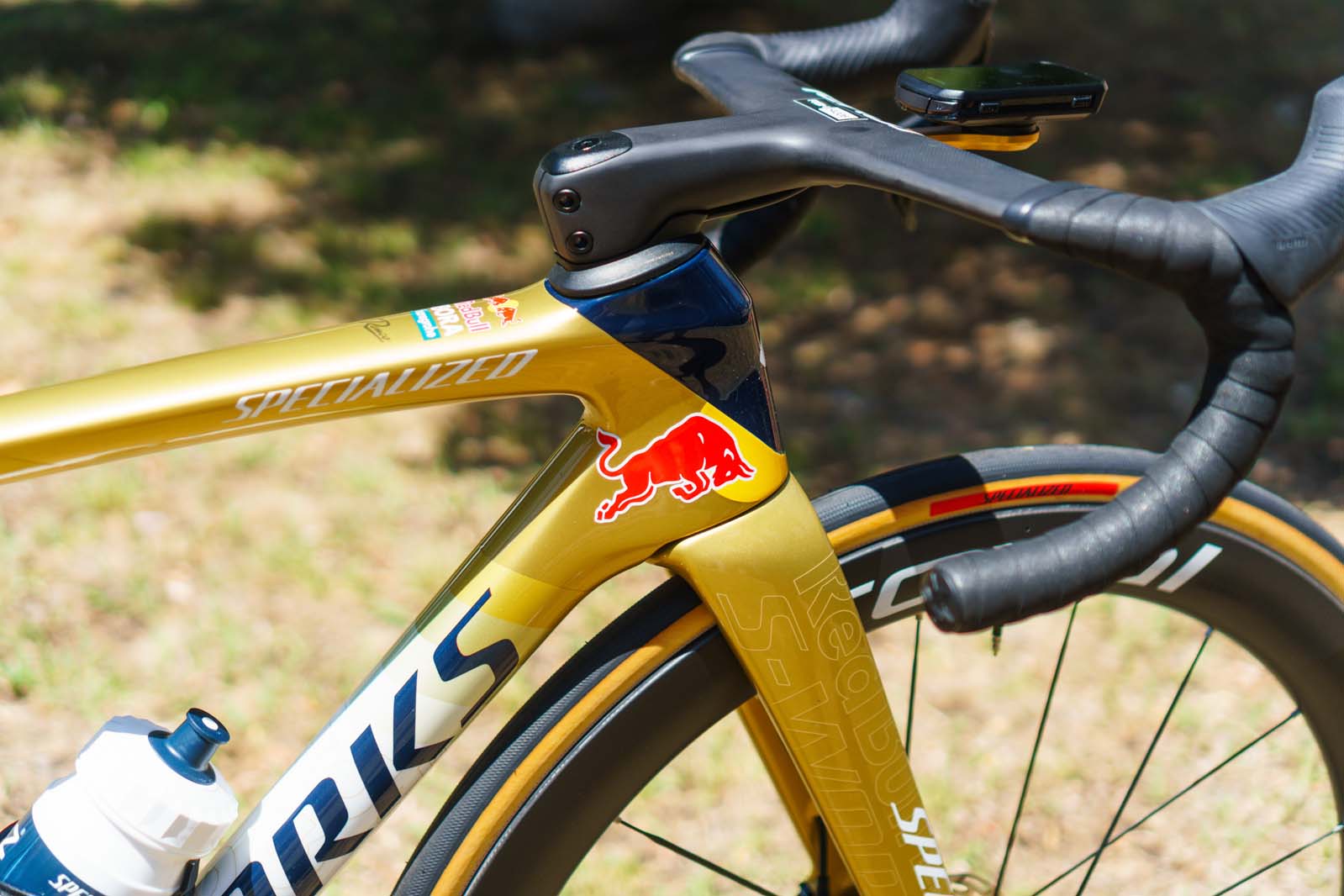
One part of Evenepoel’s bike that isn’t lighter than last year is the S-Works SL9 frame, which is said to weigh 2g more than the S-Works SL8.
But that extremely marginal, and completely negligible increase has been matched with subtle changes that led to Specialized claiming it’s “the fastest road bike ever made”. And yes, that includes aero bikes such as Tadej Pogačar’s Colnago Y1Rs.
These changes include extended fork legs, which mean Specialized’s ‘Speed Sniffer’ head tube doesn’t stick out so much. The fork has also been remodelled to direct airflow more cleanly.
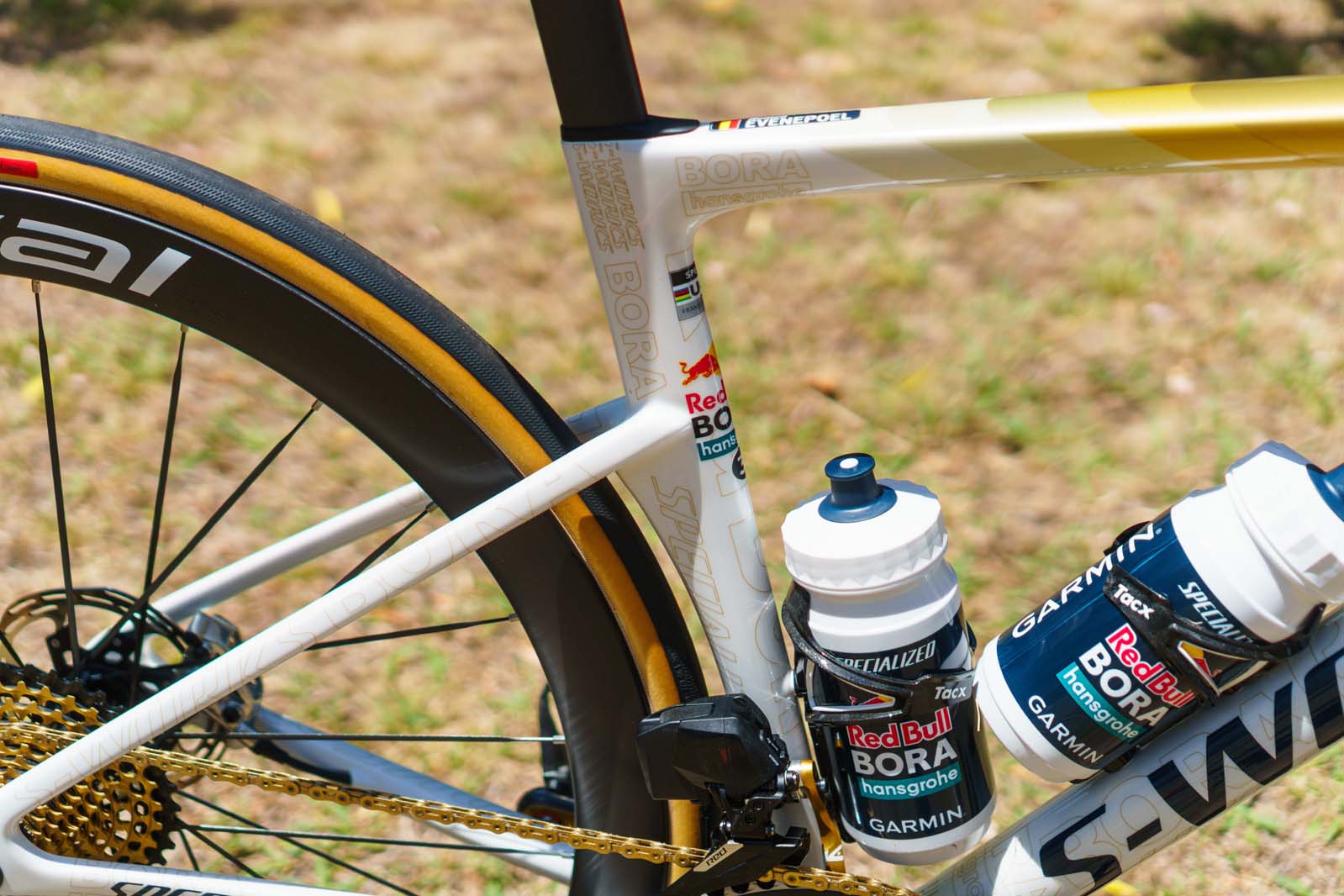
There is also a filled-in section between the rear wheel and seat tube, dubbed the ‘Win Fin’. This detail was included because Specialized deemed the pros ditched their second water bottle in the closing moments of the race or breakaways – although maybe this year’s heat might mean otherwise – and so the extra material helps smooth airflow, saving a grand total of 0.5 watts at 45kph.
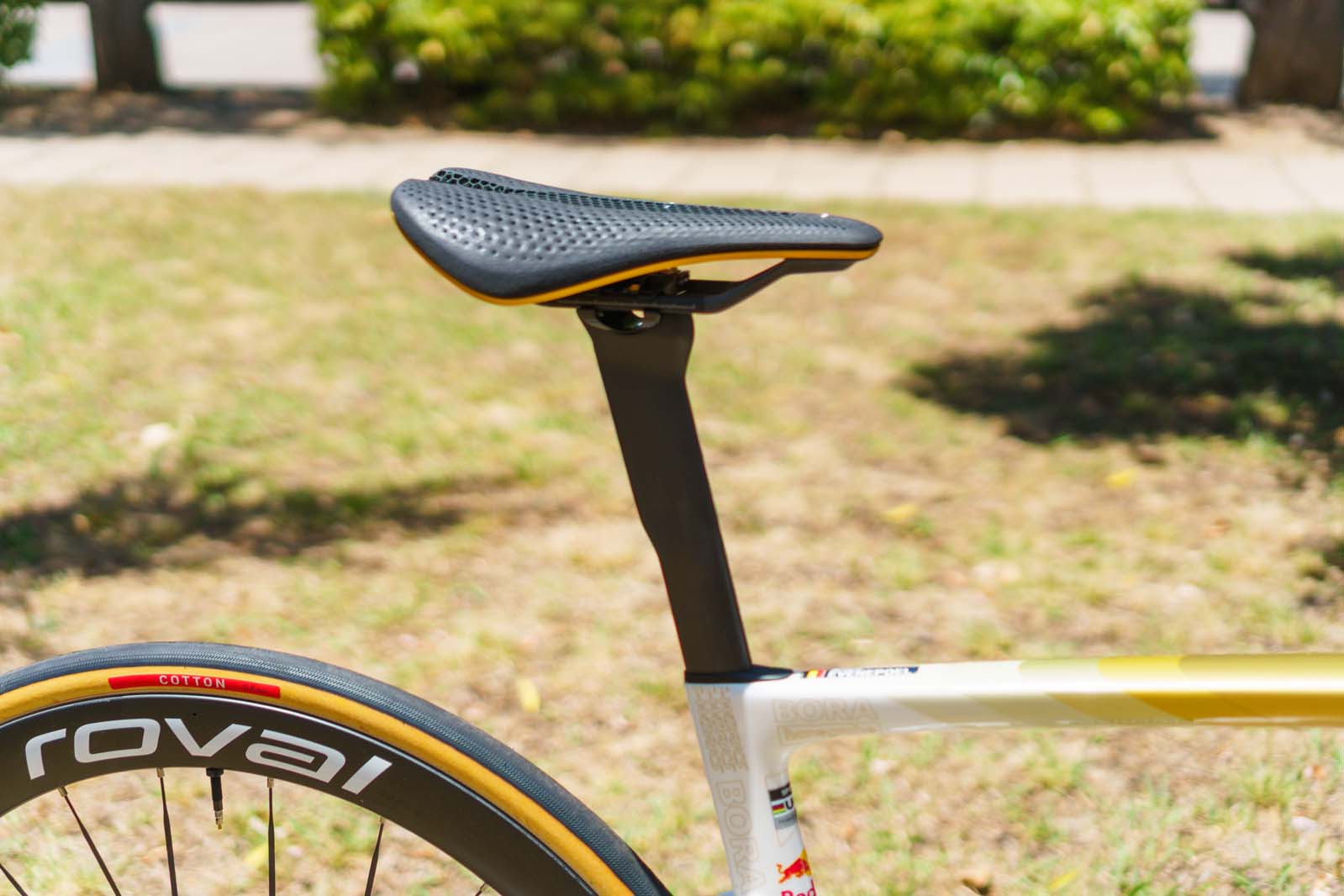
Specialized has also refined the SL9’s seatpost, which is now thinner than before to help reduce the bike's overall drag.
In total, these changes mean the Specialized Tarmac SL9 is 4 watts faster than the SL8.
Whether that means you agree with Simon von Bromley that Specialized didn’t go far enough with the SL9, or you see no harm in sticking to a winning formula, there’s no denying that Evenepoel’s bike is dialled in.
More on the 2026 Tour de France
- "It’s outstanding" – Norwegian who was treated for cancer now leads the Tour de France
- Ridley built this custom yellow-jersey Noah Fast for Torstein Traen in less than 30 hours after he took the lead in the Tour de France
- Who is Isaac del Toro? 4 things you need to know about the Mexican who could be a future Tour de France winner
- Why are Pogačar and Del Toro riding different bikes?
- Isaac del Toro's stage-winning Colnago V5Rs may sit exactly on the UCI weight limit
- A Tour de France breakaway only has a 2% chance of winning, so why join one?
- Every team bike at the 2026 Tour de France