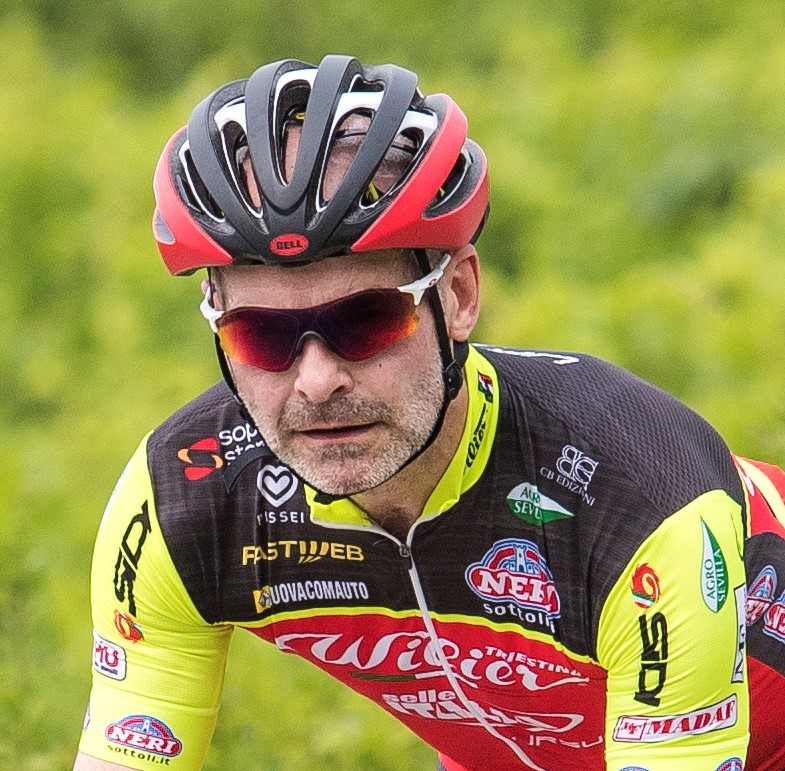
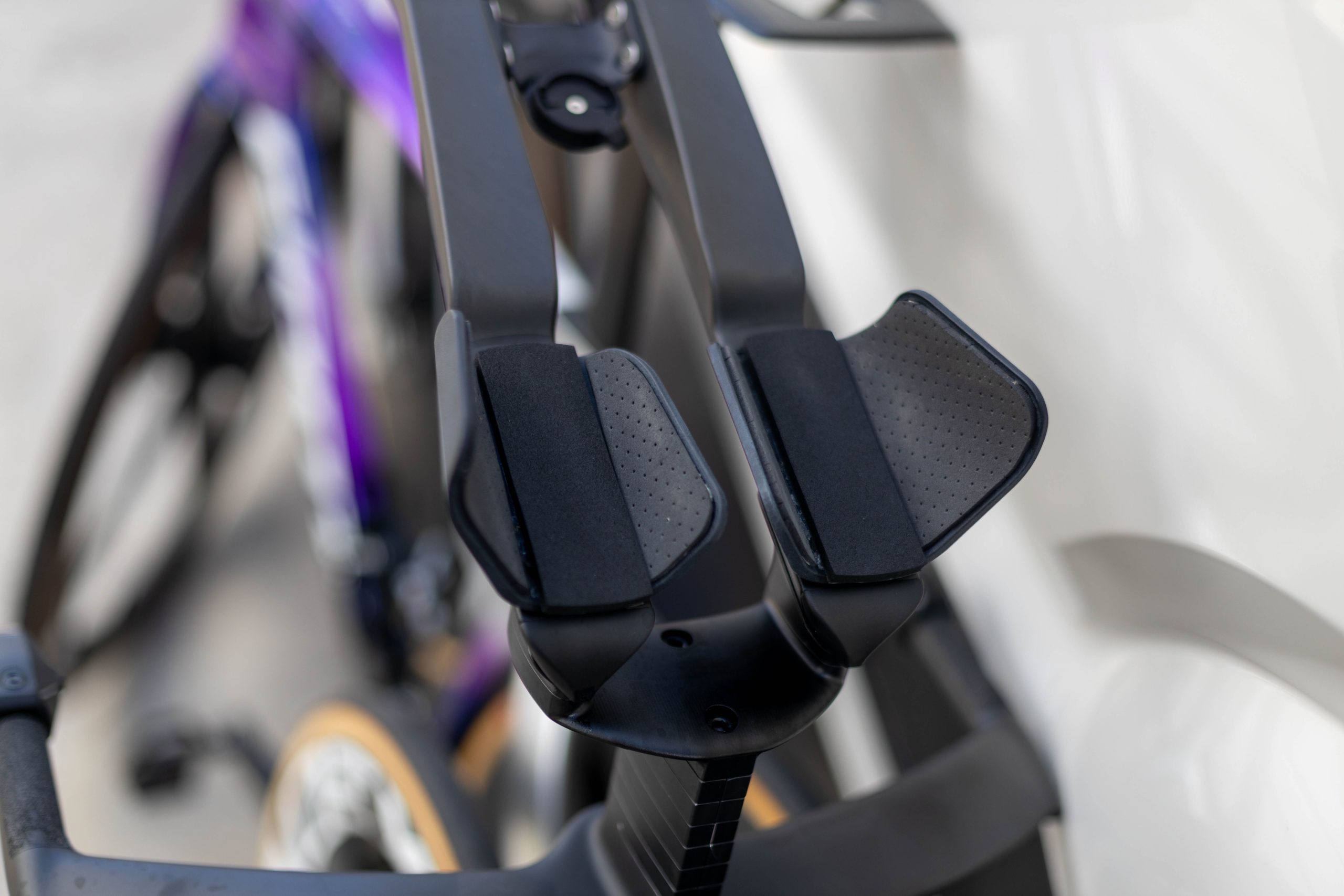
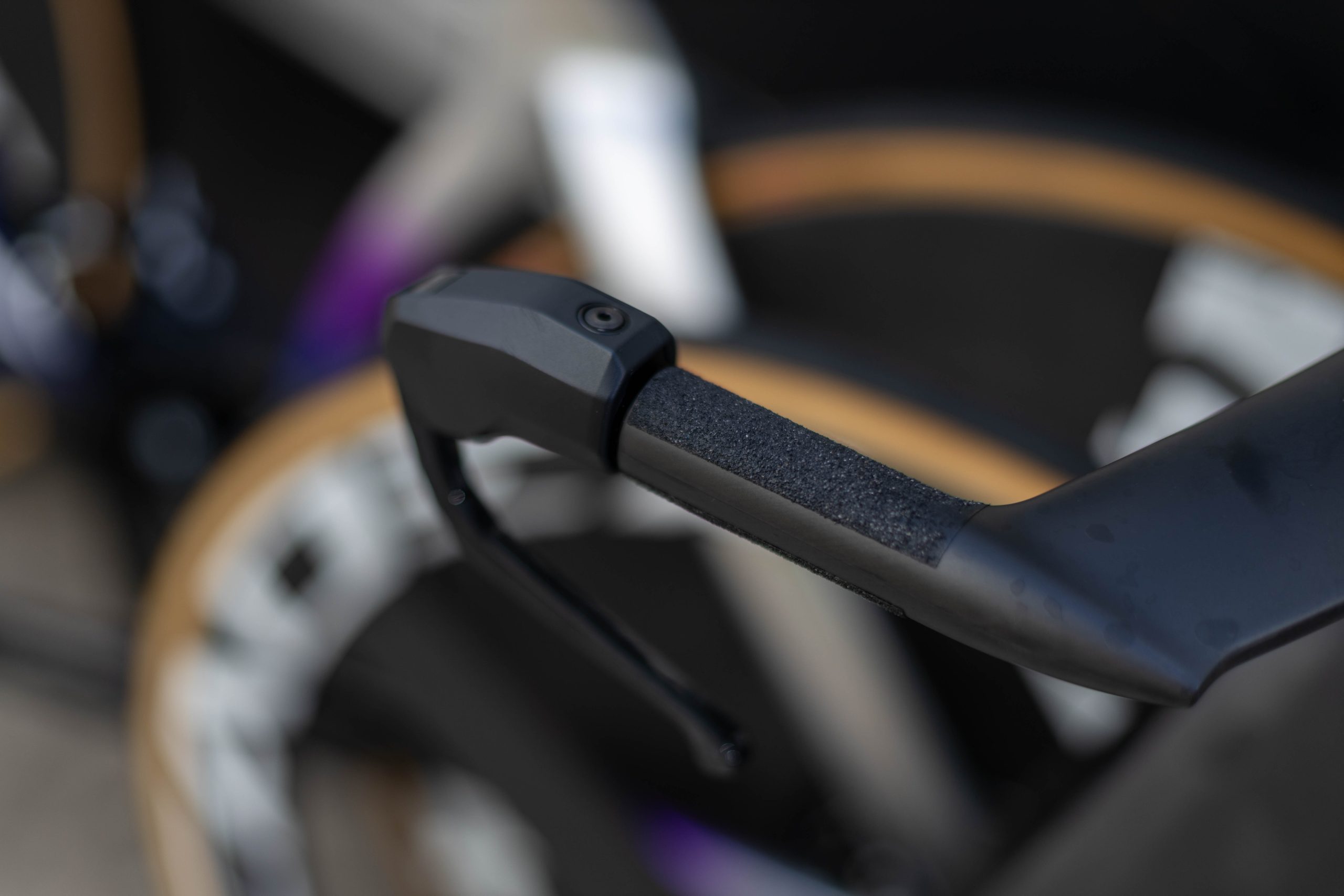
Ben O’Connor and his Jayco AlUla team-mates will be riding the Giant Trinity Advanced SL time trial bike in the opening stage team time trial at the Tour de France on Saturday (3 July).
But with the team trial rules changed, with individual times taken for each rider and feeding into the general classification, the team will be trying to get O’Connor – as the team leader – to the line as fast as possible.
The stage finishes with two punchy climbs, the Côte de Montjuic (1.1km long at 5.1%), followed by a short descent and the final 800m, 7% climb to the Barcelona Olympic stadium.
That means O'Connor will probably drop the rest of the team and tackle the final climb solo to set the fastest time possible – and this is the bike he'll be doing it on.
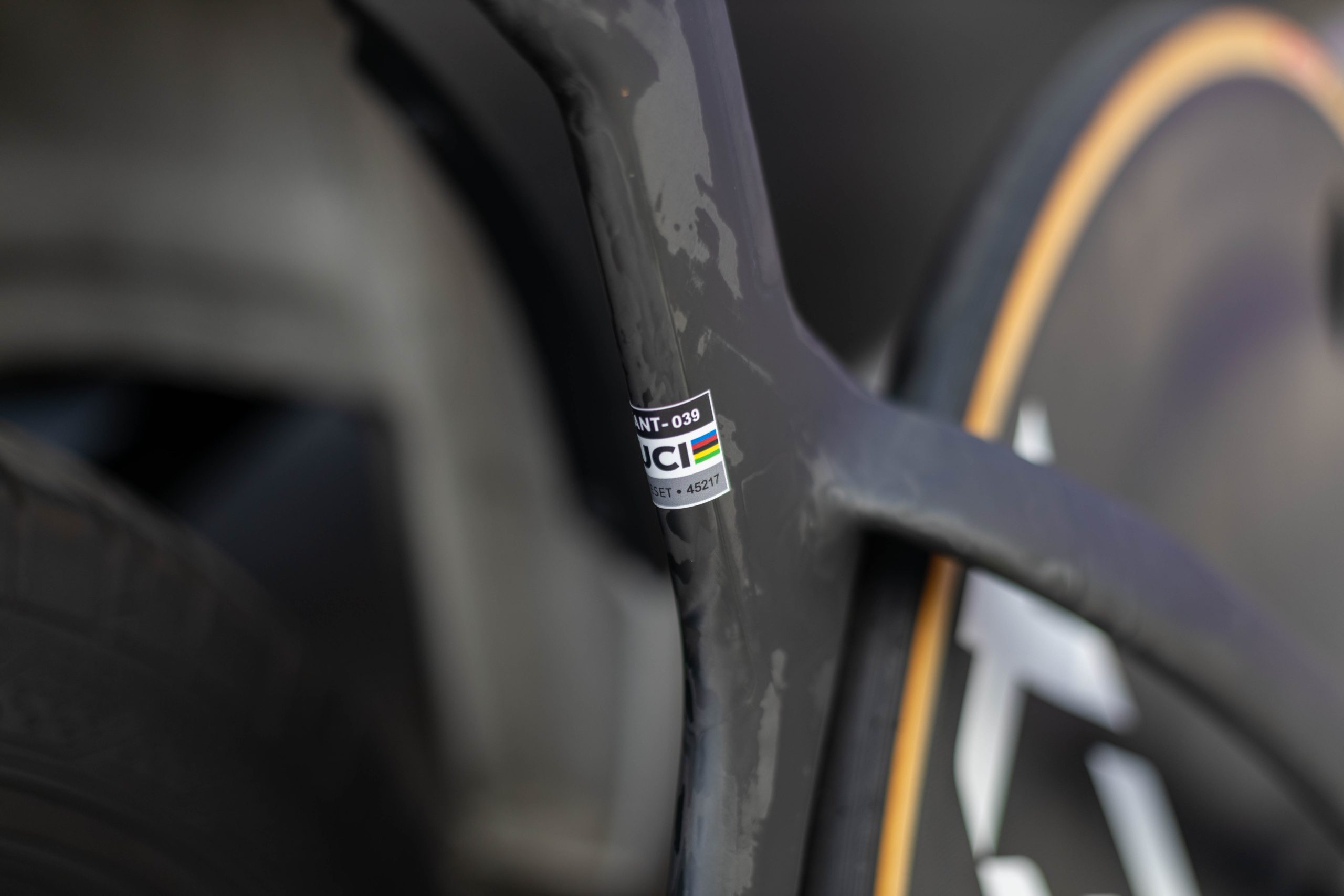
Although updated in January 2025, the Trinity Advanced SL isn’t the lightest time trial bike, with Giant claiming a 1,340g painted frame and 535g painted fork weight.
It’s a bike that does double-duty for triathlon, so it’s more designed for straight-line speed on flatter courses, rather than the technical, uphill finale of stage one, and the general trend towards hillier TT courses in professional cycling.
More tech from the 2026 Tour de France
- Spotted! Remco Evenepoel will ride this prototype Specialized Shiv at the Tour de France
- We weighed Tadej Pogačar’s 2026 Tour de France bike – and it’s heavier than you might think
- Jonas Vingegaard’s Cervélo S5 for the 2026 Tour de France is bang on the UCI’s 6.8kg weight limit
- Here's every bike at the 2026 Tour de France
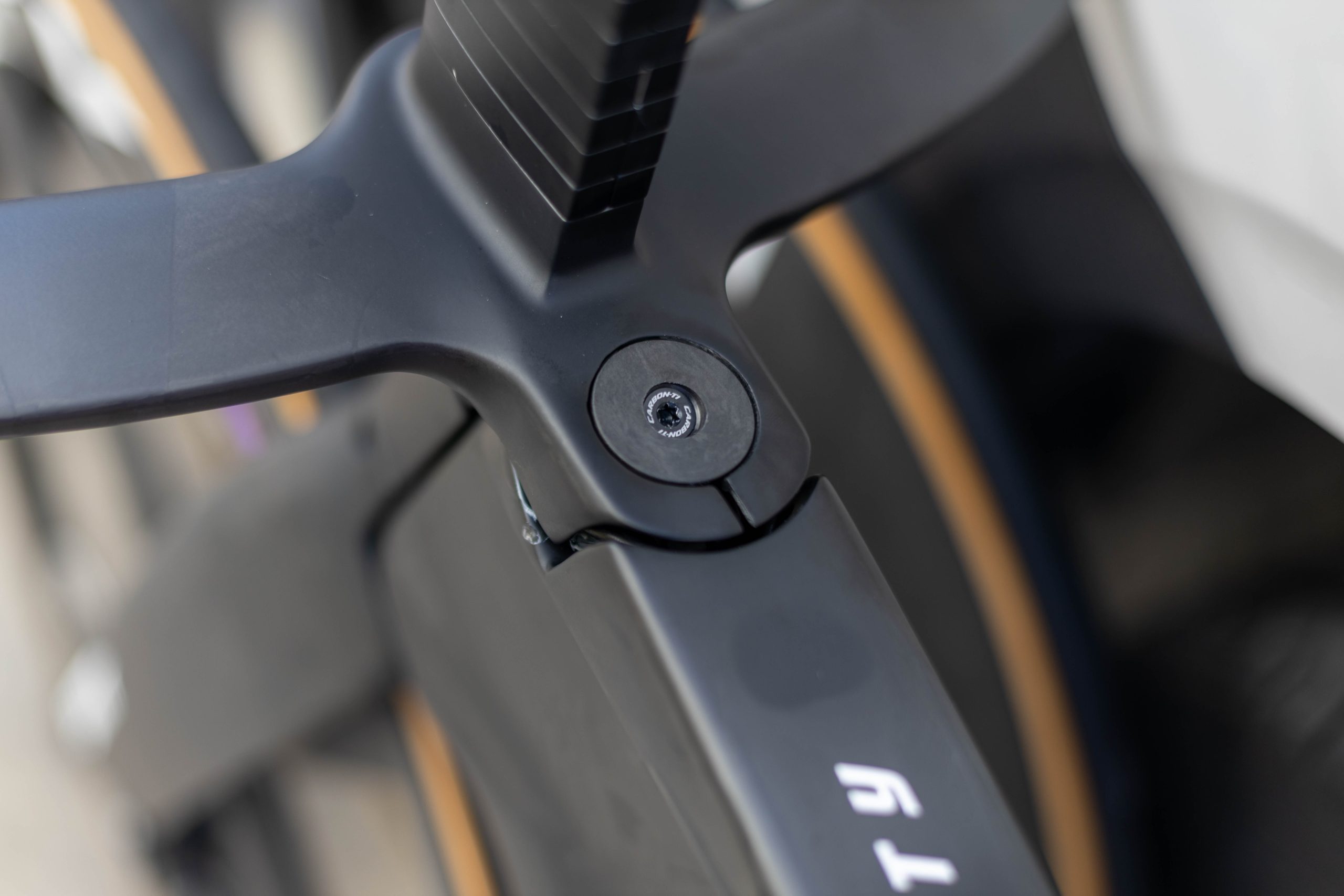
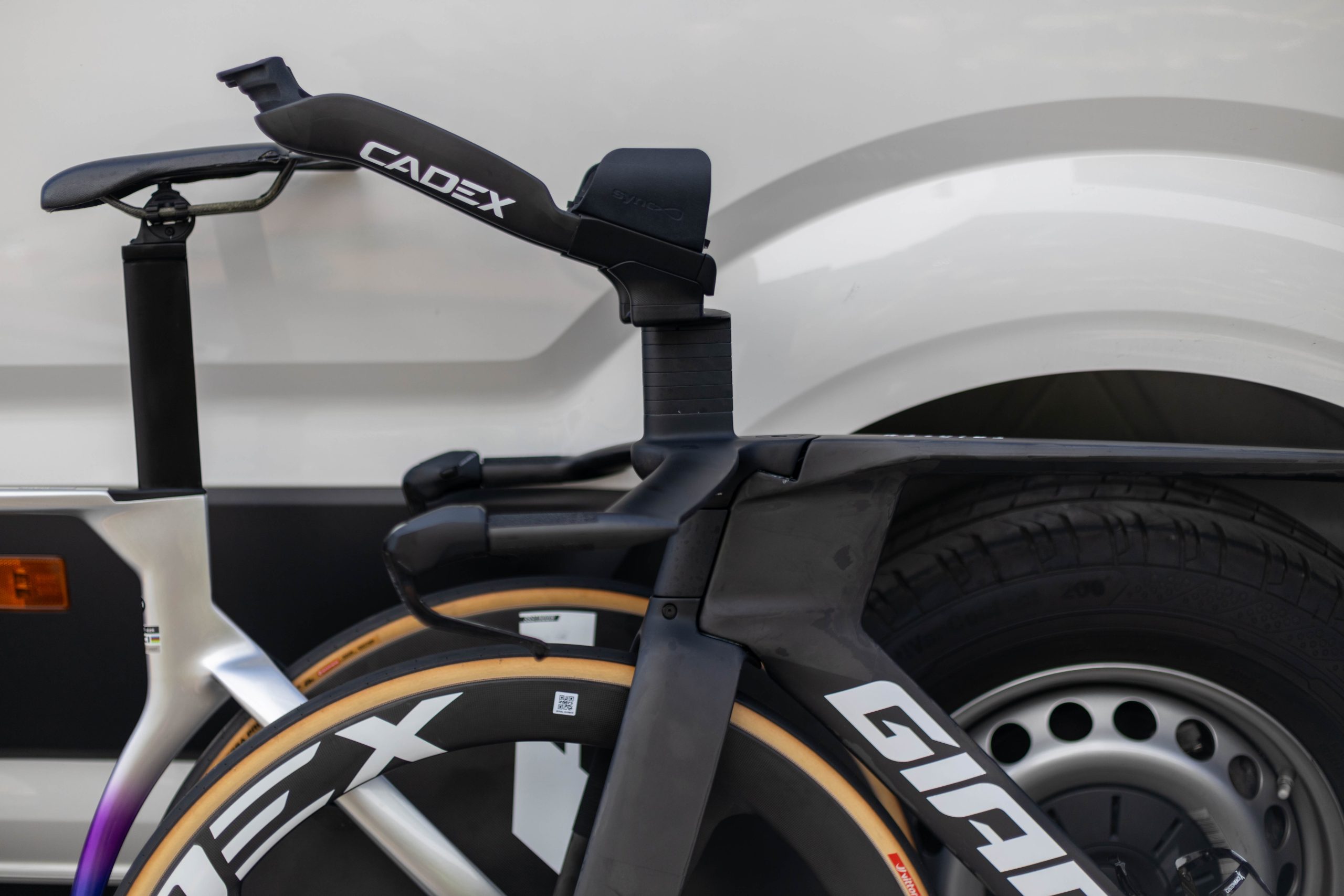
O’Connor’s Giant Trinity Advanced SL TT has been stripped of almost all its paint to help lower the bike weight.
More weight has been saved by switching to CarbonTi bolts and a Dash Cycles Stage G3 time trial saddle with a 130g claimed weight.
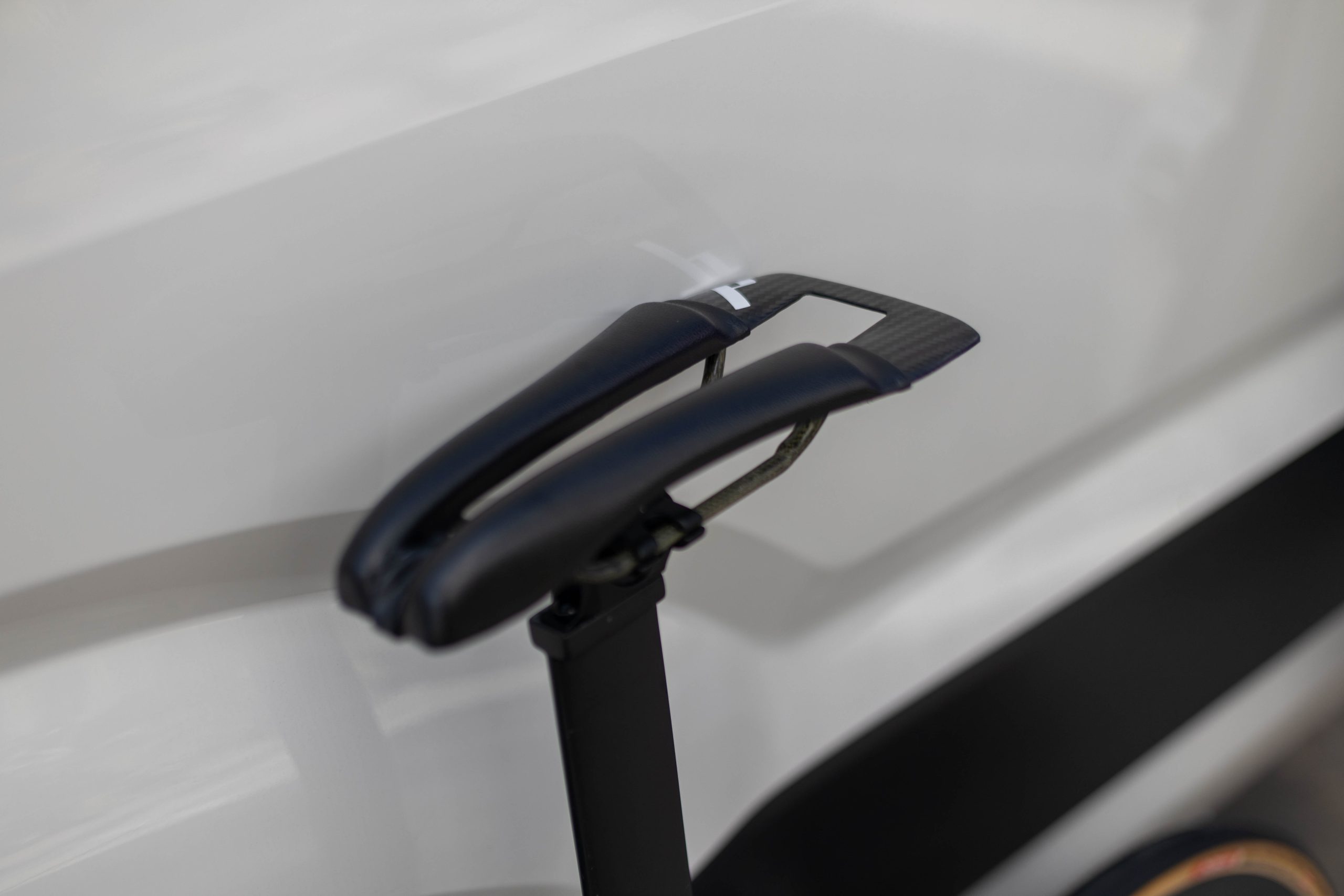
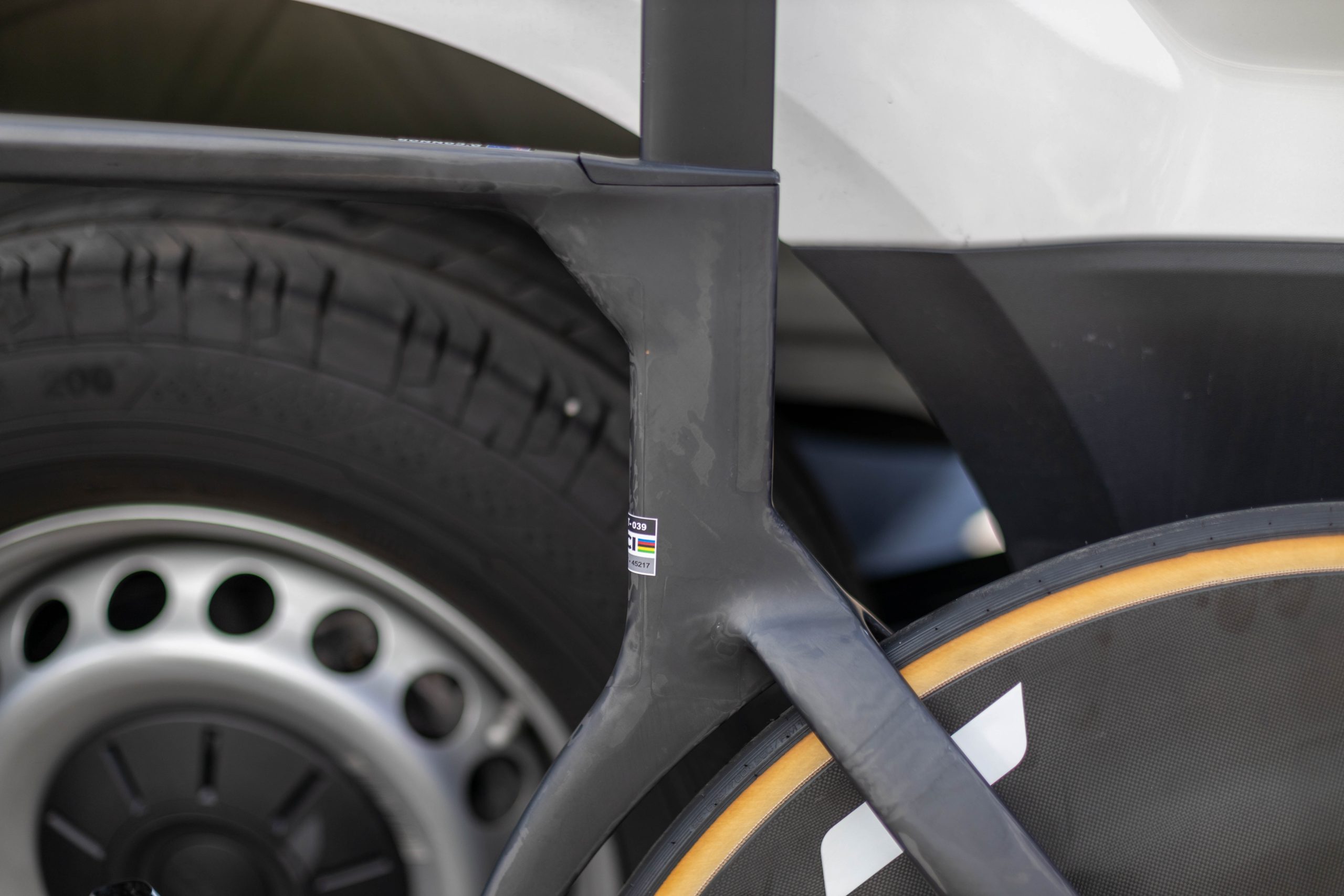
The saddle sits on a setback seatpost and is pushed as far back on the saddle rails as possible.
That’s to comply with the UCI’s saddle position rule, stipulating that the saddle nose must be at least 50mm behind the bottom bracket centre. The Trinity Advanced SL’s seat tube has a very steep 77-degree angle, and O'Connor has to compensate for this.
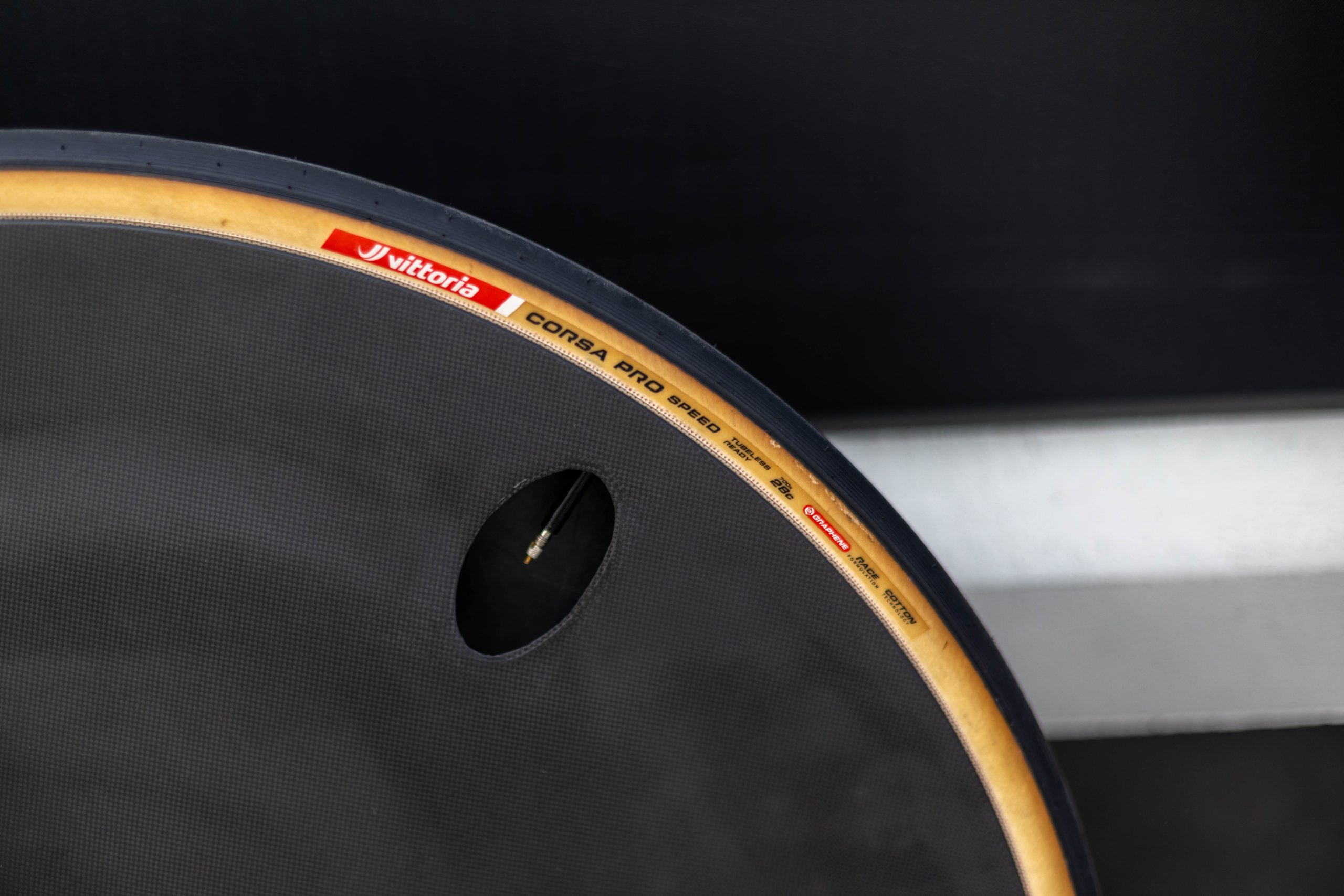
The Australian is running Cadex Max Aero wheels, which were launched along with the Trinity Advanced SL frameset.
The four-spoke front wheel has an 880g claimed weight and the rear 1,000g. They're shod with Vittoria Corsa Pro Speed tyres in 28mm width. Vittoria is a sponsor for time trial tyres, whereas the team uses Cadex tyres for road stages.
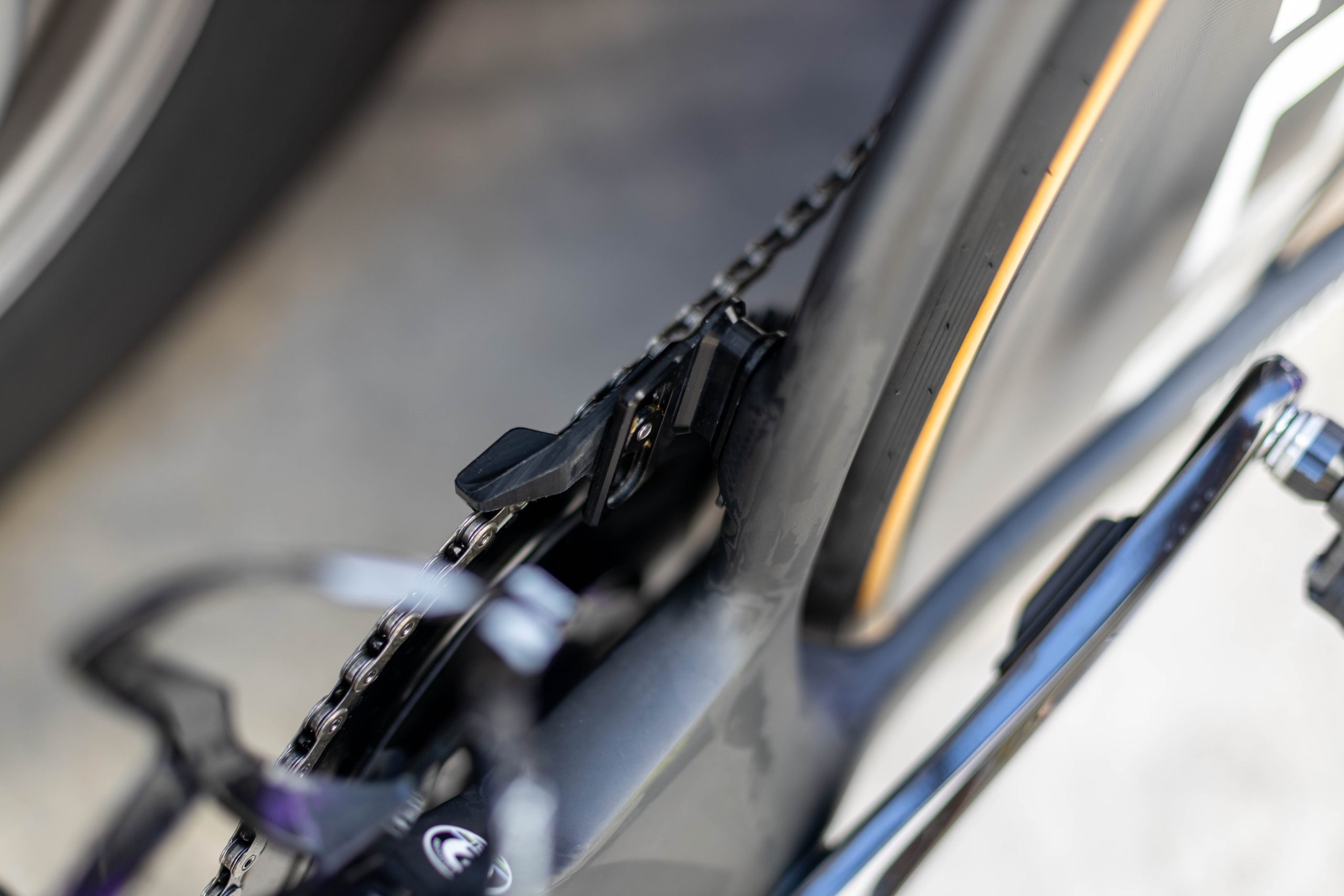
O’Connor is running a monster single chainring with a chain catcher. We weren’t allowed to count the unmarked chainring's teeth or weigh O’Connor’s bike.
While O’Connor's team has clearly gone to great lengths to shave weight from the Trinity Advanced SL, Tadej Pogačar has a bike that looks almost purpose-built for the 2026 Tour de France time trials, the just launched Colnago TT2.
The TT2's frame itself has a claimed weight of 985g and the fork 393g, with Colnago saying that a complete bike with a disc rear wheel can be built to the UCI’s 6.8kg limit.
That low weight, alongside a geometry designed to be agile, could offer an advantage to Pogačar – not just in the stage one team time trial, but also in the stage 16 individual time trial, which includes 500m of climbing.
More on the 2026 Tour de France
- We weighed Tadej Pogačar’s 2026 Tour de France bike – and it’s heavier than you might think
- Jonas Vingegaard’s Cervélo S5 for the 2026 Tour de France is bang on the UCI’s 6.8kg weight limit
- Spotted! Remco Evenepoel will ride this prototype Specialized Shiv time trial bike at the Tour de France
- Can the Tour de France ever be Pogačar-proof? The race organisers face a near-impossible task
- From a rare team time trial to a brutal Alpe d’Huez finale: 8 questions answered about the 2026 Tour de France route
- Live Tour de France coverage to be broadcast on S4C and BBC iPlayer