Three-time Tour de France winner Greg LeMond never needs to be asked twice to stick the boot into old adversary Lance Armstrong – and with good reason.
So, when interviewed by L’Equipe during this year’s Tour de France, nominally about the feats of Tadej Pogačar, he went in two-footed once more after the reporter brought Armstrong’s seven ‘wins’ into the conversation.
“Lance didn’t have his talent. He ‘found’ it at 28,” he said, the inference being Armstrong’s ability wasn’t innate, but medically enhanced. Who could possibly argue?
“Some people are born with a high VO2 max. That has nothing to do with a guy who has a low VO2 max and wins seven Tours de France," he continued.
“There is no doubt that Pogačar has exceptional talent. Every now and then, among millions of people, there is one who has 3 or 4% more. It is not much, but it changes everything in the Tour.”
LeMond knows a thing or two about a freak talent with an exceptional VO2 max – he was one of them, having had a phenomenal level of 92.5ml/kg/min recorded during his peak racing years.
The figure relates to the maximum amount of oxygen your body can use during hard exercise. Oxygen is called upon by the muscles to create energy and power performance, so VO2 max is often seen as a byword for aerobic fitness potential. Anything in the 90s is a rarity.
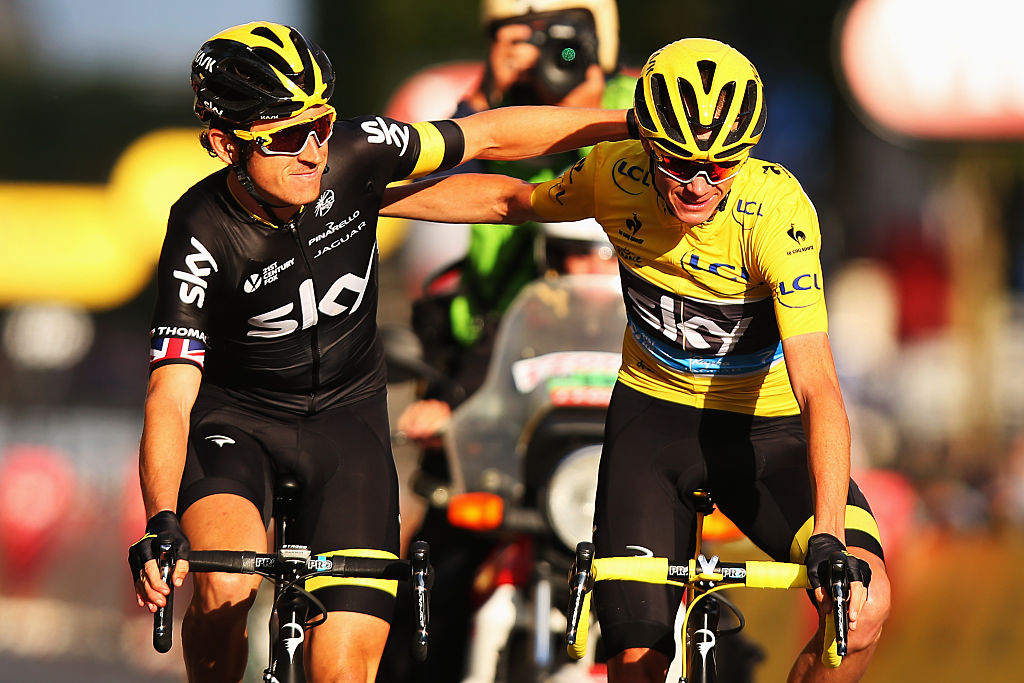
Armstrong’s figure was reportedly in the low 80s – a typical level for a pro cyclist – while even Chris Froome’s was ‘only’ 88.
Froome’s figure was in fact 84.4, recorded during the off-season of 2015 when he was heavier. It was adjusted to 88 to match his lighter July racing weight.
What do we know about Pogačar's physiology?
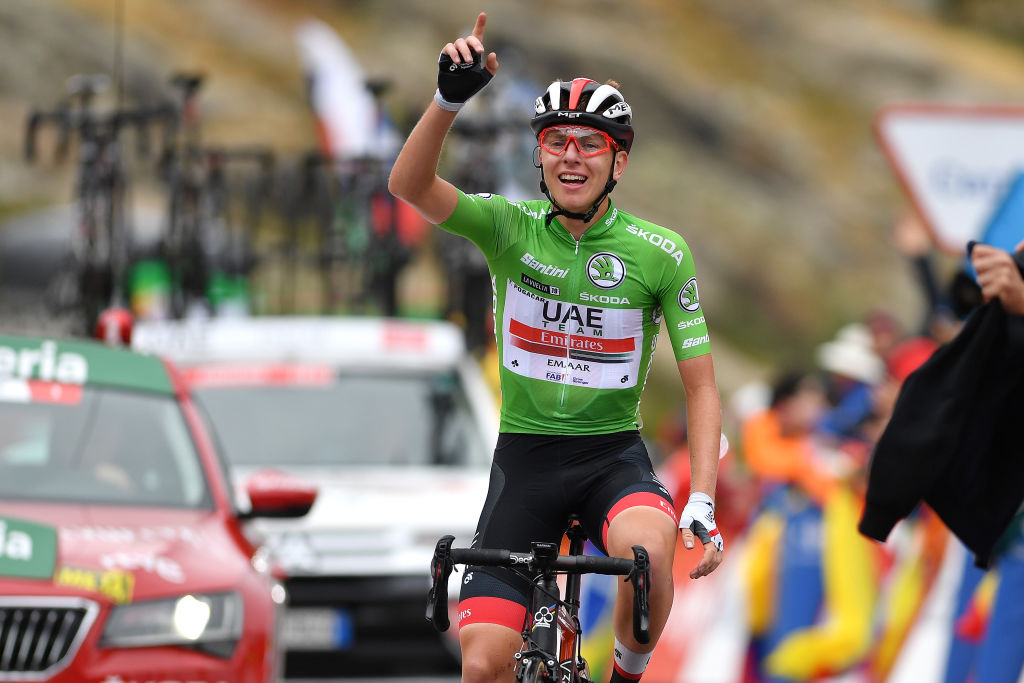
But back to Pogačar. Nobody – perhaps outside of his inner circle – knows what the five-time yellow jersey’s lab-measured VO2 max is.
Unlike Froome, who, similarly to Armstrong, emerged at the top of elite stage racing out of nowhere at the age of 26, Pogacar hasn’t received such deep scepticism about his performances.
No doubt, he gets some – but the fleeting enquiries that come, often towards the end of another Tour win, are small fry compared to what others have attracted.
As LeMond notes, Pogačar has been winning big since his teenage years, and was the second youngest winner of the Tour de France, aged 21, in 2020. That buys him some insurance.
He’s won on a scale that only Eddy Merckx can match, so his performances have been met less with incredulity and more with wide-eyed amazement – a puff-of-the-cheeks shock at the manner in which he’s been able to rip up the rulebook on how modern pro cycling races operate.
What’s propelling him to this level? What gifts from the gods lie beneath that baby-faced exterior?
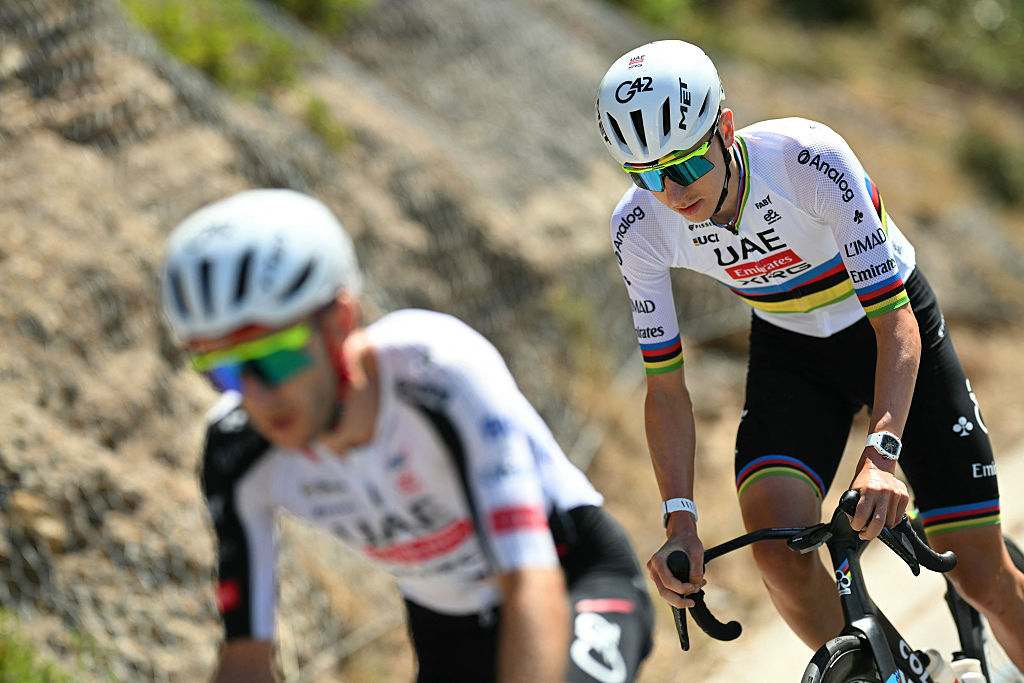
There have been only snapshots of official Pogačar physiology, such as the seemingly accidental reveal of a power file on a Strava post earlier in 2026 (which he normally doesn’t share) and snippets in interviews, such as when he told the Peter Attia Drive podcast in 2024 of his huge 340 watts zone 2 power.
That said, much can be unpicked and uncovered using data already out there – in cycling and elsewhere.
Just look at the things Bellingcat has achieved in its open-sourced journalism investigations, using tools such as social media and Google Earth. Breadcrumb trails are left, unintentionally or not, leading to hidden truths.
A new study due to be published shortly in the International Journal of Sports Physiology and Performance has used similar inspiration to try to crack one of the most sought-after numbers in professional cycling: Tadej Pogačar’s VO2 max. It's a much bigger extension of a study that one of the authors, Ole Kristian Berg, published last year.
For the researchers, Sebastian Sitko, Kristian Berg and Pedro Valenzuela, the lack of a lab-derived number for the Slovene wasn’t seen so much as a problem as an opportunity for exploration and innovation.
The problem with lab figures, they note, is they aren't necessarily reliable when it comes to measuring who’s going to be good at winning bike races in the real world.
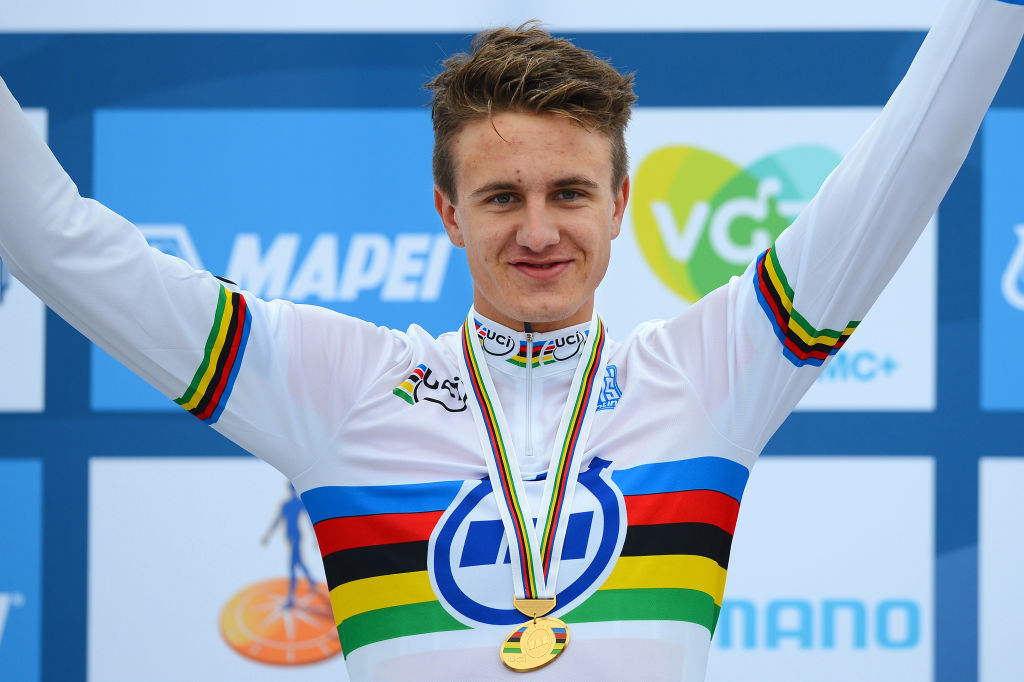
Norwegian Oskar Svendsen famously recorded one of the highest-ever VO2 max’s, 96.7, in the lab of Lillehammer University College, just before winning the junior world time trial title in 2012. By 2014, his pro career was over. He’s cited in this study by that massive number, if not by name.
While it remains the gold-standard measurement, a lab-based VO2 max test may, in differing circumstances, both overestimate and underestimate the level a rider is capable of achieving in a race.
Influencing factors, the authors say, include static bikes that don’t accurately reflect a bike on the road, not having to account for the outdoors environment when indoors and breathing mask interference.
Perhaps most of all, an indoor test lacks the motivating factor of, say, racing up Alpe d’Huez during an infernal Tour stage, chasing down the remnants of the day’s break in pursuit of a near 30-year record.
How did they estimate Pogačar’s VO2 max?
The authors buried deep into publicly available data. This included relevant climb stats (length, gradient, altitude), time taken to climb, Pogačar’s publicly available physical data (such as weight), bike weight, air density, dehydration [2% reduction in body weight was assumed for the climbs at the ends of stages], available data from other cyclists on the same day and known power data from other cyclists, including Froome.
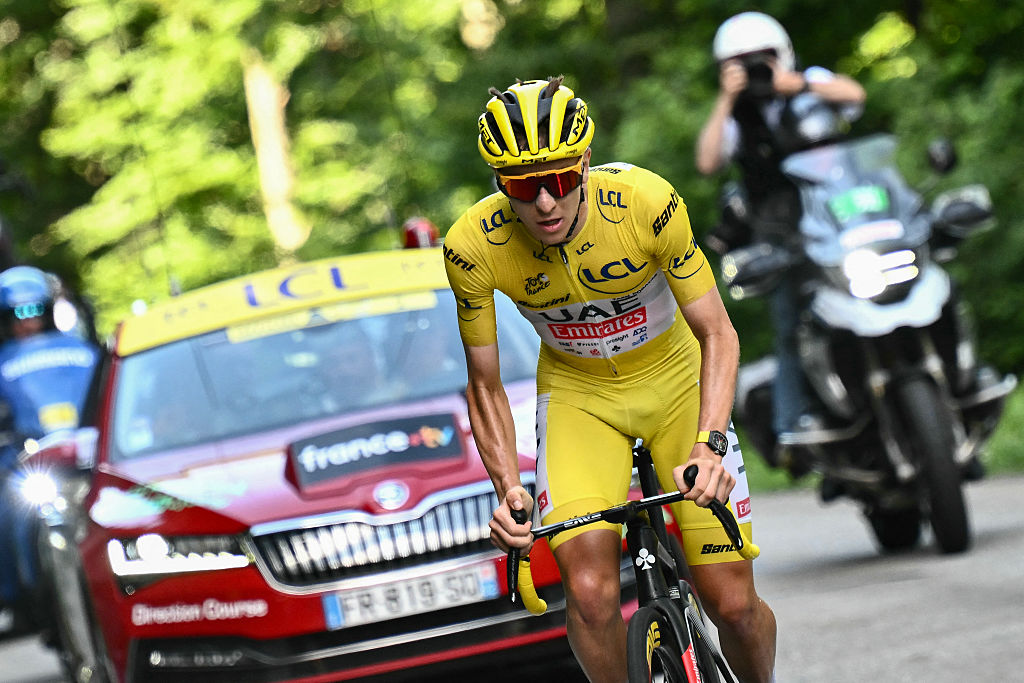
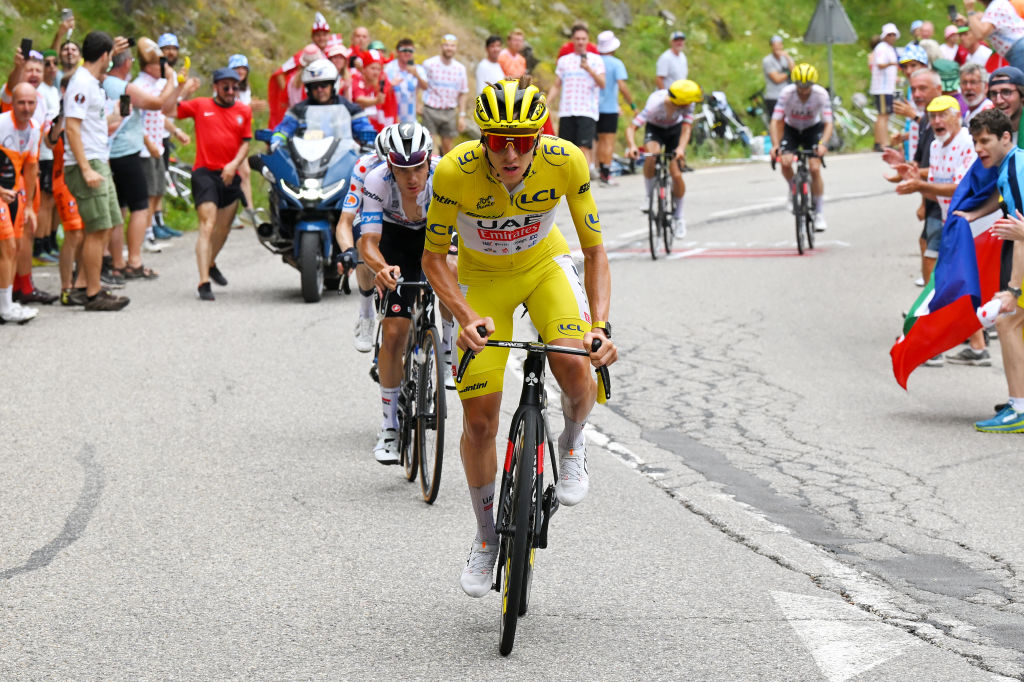
They chose to focus on Pogačar’s performance on four climbs over the 2024 and 2025 seasons, the two full seasons of peak Pogačar dominance to date: Plateau de Beille (stage 15) and Isola 2000 (stage 19) from the 2024 Tour de France, Peyragudes (stage 13) from the 2025 Tour and Passo di Ganda (Giro di Lombardia 2025).
They were picked for their distinct character, to include a mountain time trial, high mountains and a one-day race, and also because they were four efforts that were "situations most likely to elicit near-maximal physiological responses".
Clearly, not every piece of the puzzle was available to the researchers to nail his VO2 max. The result they came to is an estimate, because certain assumptions needed to be made.
Pogačar's weight is one, but the big ones are his actual power on these climbs – specifically how close to his aerobic ceiling he was riding – and gross efficiencies (GE – more on this shortly).
Instead, they used an equation, with assumptions such as the mass of Pogačar and his equipment, to work out the energy needed to overcome known obstacles such as gravity, and rolling and air resistance.
Figures for each of these could be estimated, using things such as rider mass (gravitational power) and the Rolling Resistance Database (rolling resistance).
This was then compared with publicly available Strava power data from the three closest riders to Pogačar on the finish line.
With the power estimate (corrected to factor in varying altitudes, and the known loss of power the higher the road), they could first work out energy expenditure, then oxygen consumption and finally VO2 max estimates, adjusted to a range of GEs.
This refers to the fact that humans don’t burn energy in the most efficient way and the energy doesn’t burn the same way every time.
Not all of the energy you get from a calorie of food goes into power through the pedals, with plenty lost along the way through heat. The authors used likely GEs often seen in pros, between 22 and 24%. 25 and above is an exceptional efficiency rarely seen.
To validate this model for VO2 max estimation, they verified it with Froome’s data from 2015: he had both competition data available (they used his stage-winning performance on La Pierre St Martin) and a lab-measured VO2 max score from the same season. The result they estimated for Froome, 85.3, was very close to his actual lab measurement (84.4).
What is Pogačar’s estimated VO2 max?
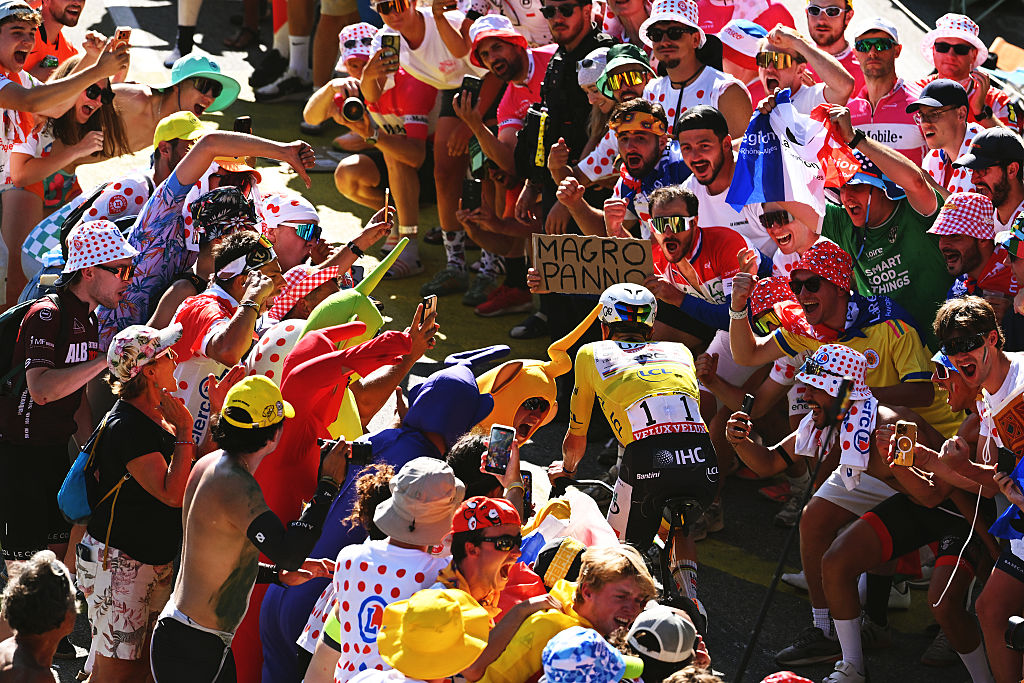
As you might suspect of a rider who only a fortnight ago smashed Marco Pantani’s Alpe d’Huez time by nearly two minutes, the study found Pogačar’s aerobic capacity to be colossal. Across the four mountain efforts examined, and with three GE assumptions (22, 23 and 24%), his VO2 max is estimated to be between 94 and 98ml/kg/min, with an average of 96 – the same as Svendsen’s lab figure.
The results, say the authors, were in a narrow window that shows a consistency that “reinforces their confidence in the model”, reflecting a stable aerobic capacity across types of climb.
What it means
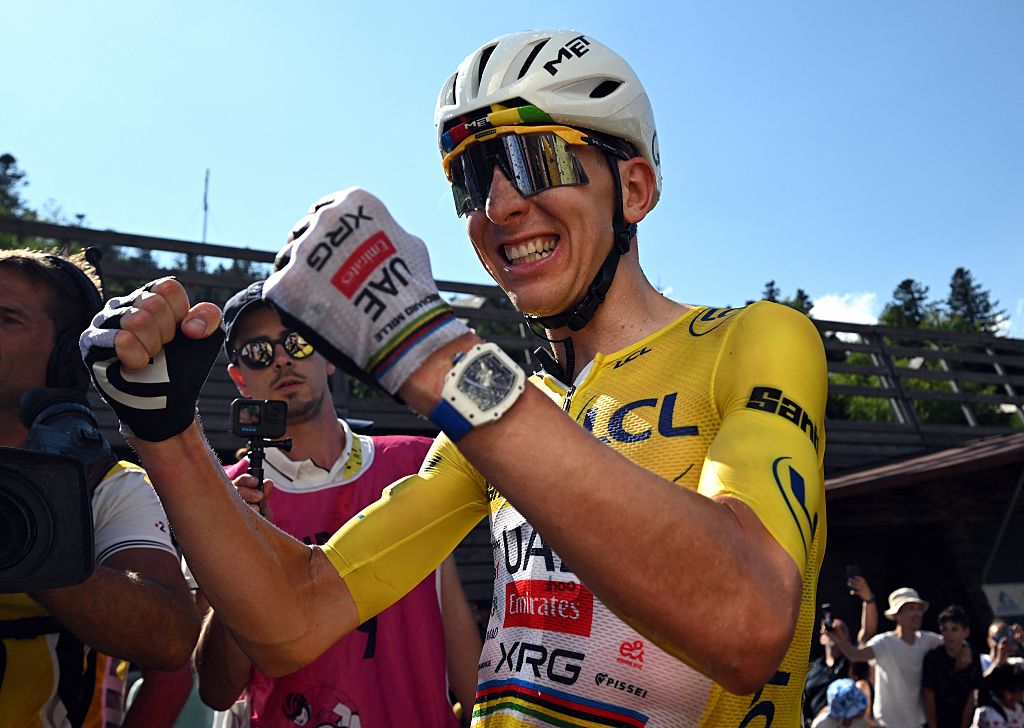
There are limitations in the study’s methods, which the authors acknowledge. The word ‘estimate’ is doing a lot of the heavy lifting here and until there’s a lab VO2 max measurement to back it up, or Pogačar's power files are made public, it remains just that.
That said, the Froome lab and field reference goes some way to giving ballast to the study, while the authors believe the real-world nature of the study may offer a novel glimpse of VO2 max measurement beyond the lab.
What of Pogačar himself? We’ll leave that to the authors: “The results indicate that the athlete examined in this study exhibits an exceptionally high aerobic capacity that appears to extend beyond currently documented physiological ranges.”
Pogačar’s 2026 Tour de France was his most devastating yet, on every single level: the winning margin, the devastating stage wins, the astonishing single climbing records shattered.
However, even the man himself said there wasn’t any great leap forward from previous seasons in terms of his power numbers. What he did say was his racing brain was getting sharper, and he was learning to make better decisions more regularly.
Perhaps a character as swaggering as Pogačar would test lousily in a sterile lab setting – he’s a rider who feeds off the atmosphere as much as the lactate gels he was quaffing during the Tour.
As is often said of road racing, whatever level you race at, the number in a lab counts for nothing once that flag drops on the road.
It’s how a rider responds in that moment a race is on that separates Pogačar from Svendsen.
Note: we'll update this article with a link to the study when it becomes publicly available.
Q&A: Sebastian Sitko, study co-author
The study produced a remarkable result and we were keen to put some questions to its authors about its origins, accuracy, limitations and implications.
One of them, Sebastian Sitko, is a sports science professor at the University of Zaragoza, who also coaches pro and amateur cyclists.
He released his training manual, Cycling 2.0: Evidence-Based Training for Peak Performance on the Bike, earlier this year and we interviewed him about it in June.
Where did the idea for this study begin?
It came from two lines of a work meeting. Pedro [Valenzuela, co-author] and I had spent years building the "record power profile" of professional cyclists – essentially mapping the ceiling of what the human engine produces – and across 2024 and 2025 Pogačar kept breaking through that ceiling.
In parallel, there had been interesting attempts to put numbers on these rides, from the old Alberto Contador and LeMond analyses in the cycling media to Ole's [Berg, co-author] own work, but none had been done with the full physiological machinery — altitude, air density, dehydration, a realistic range of efficiencies — and then put through peer review.
We wanted to do it properly. We weren't chasing a headline number. We were asking a scientific question: what does the human body actually have to be capable of to do what he does?
Does this mean that you've found a new real-world methodology for estimating VO2 max, and what are the implications of that if so?
[Pogačar's] VO2 max was the goal, but the validated method turned out to be the more durable result. The pivotal step was testing it on someone we could check: we estimated Chris Froome's VO2 max from a 2015 climb using only public data and landed at 85.3, against his lab-measured 84.4 – a difference of less than one point.
That tells us the approach reproduces a known laboratory value from a bike race. The implication is that for the tiny group of athletes who will essentially never do a maximal lab test mid-season, a well-documented climb can act as the laboratory – for monitoring and for putting performances in context, not for replacing the gold standard.
When your method recovers a known lab value from a race to within a single point, you start to trust what it says about the cases you can't measure.
Pogačar's ride to Alpe d'Huez this summer was probably his best climb yet. Were you keen to run those numbers through your model?
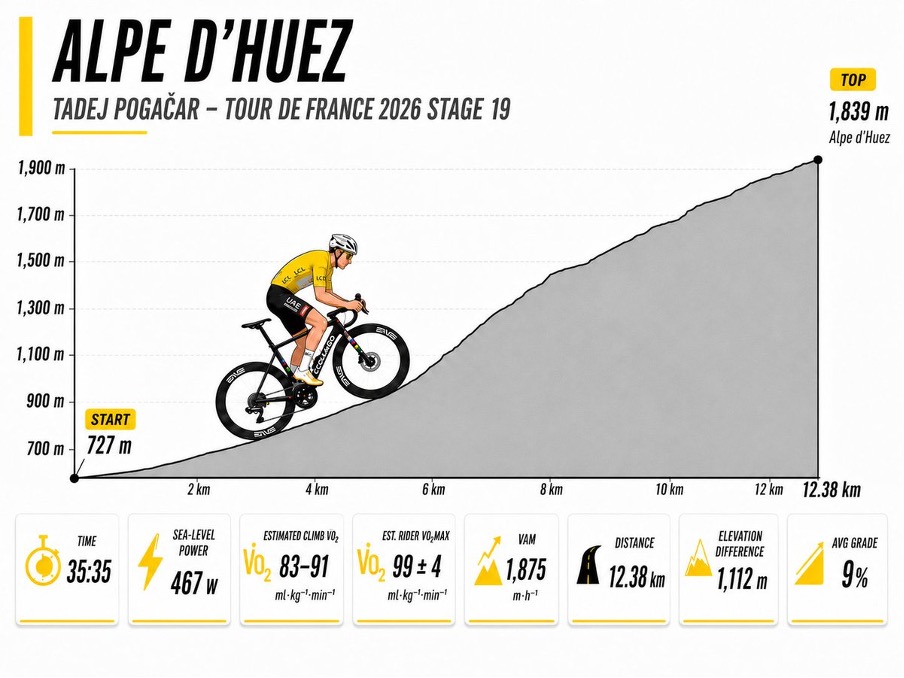
Very – that's almost the ideal input for the model. A long, steady, well-documented climb is exactly where our assumptions are safest, because the effort is sustained and evenly paced and gravity dominates the equation [so reducing impact of aerodynamics – ed].
We already saw the model's strength internally: four completely different efforts – a fatigued Grand Tour climb, a mountain time trial, and a one-day-race ascent — all converged on essentially the same VO2 max.
A ride like Alpe d'Huez would be another independent test of that convergence. The honest caveat never changes: the estimate is only as good as the inputs I'm forced to assume.
I assume you'd love to get hold of the key data – power, weight, gross efficiency – to fill the gaps and see how it affects your estimates?
That's exactly it. The physics of a climb we can pin down tightly; the biology is where the uncertainty lives. The two dominant unknowns in the model are his real gross efficiency and how close to his true ceiling he was actually riding – both are things a genuine power file plus a single lab test would resolve almost completely.
Everything else – body mass, air density, rolling resistance – we showed shifts the estimate by less than 2%. So yes: give me his power and an efficiency measurement and the range would collapse to a number I'd defend with far more confidence.
We've squeezed the physics as far as it will go. The last real uncertainty is biology that only he and his team can measure.
Do you hope he or his team read it and respond? Will we ever see detailed data? Why are riders and teams so protective of it?
I'd genuinely welcome a response – including a rebuttal – because the way you settle this is with data, not opinion.
I've seen that a Spanish outlet already carried the reaction from his camp calling our figures exaggerated, and honestly that's the response you'd expect, and I don't hold it against them: this data is competitive intelligence and it's reputationally loaded, so a rider and his staff have every incentive to play it down. But [saying it’s exaggerated] is a communications position, not a scientific counter-argument.
Because here's what doesn't move. The power outputs are real, and we validated them against actual power-meter files to within about 3% – the same margin of error you get from a commercial power meter.
Once the watts are fixed, physics fixes the oxygen cost of the climb, and the only two dials left are efficiency and VO2 max.
We turned both to their most conservative, literature-based settings and the VO2 max still won't fall below 92.
The only way to make it "normal" is to assume a gross efficiency higher than anyone has ever recorded, which doesn't make the ride ordinary — it just relocates the extraordinariness.
And we deliberately stacked the deck against ourselves: we left out his most explosive efforts, used the gentlest altitude correction (a steeper, equally defensible one pushes the [VO2 max] estimate toward 100), and assumed he's perfectly heat- and altitude-acclimatised and fatigue-resistant.
Relax any of those and the number goes up, not down. You can argue about whether it's a 94 or a 100 – you can't make these rides physiologically ordinary. The watts are real, and the body has to pay for them one way or another.
So do I think we'll see his lab or training numbers? Probably not voluntarily – in cycling this information is both tactically and historically sensitive, and silence is the safe default.
But the invitation is open and sincere: release the power files or a lab test and we'll happily reconcile our model against them.
Being shown to be slightly off by real data would be a perfectly good outcome for science. Being told "it's exaggerated" without the data that would demonstrate it is not a rebuttal – it's the answer their environment almost has to give.
You can follow Sebastian Sitko and his study colleagues, Ole Kristian Berg and Pedro Valenzuela, on X/Twitter.