
If you read the marketing materials for any new road bike launch, you’ll always find a line telling you how incredibly light it is.
Thanks to the brand’s amazing, proprietary carbon blends and unmatchable manufacturing skills, these featherweight yet aero bikes justify their outrageous prices because they’re the Formula 1 cars of cycling.
They’re so light, in fact, that they’re illegal to ride in UCI-sanctioned races!
And yet, every year, when we go to the Tour de France – the biggest and most important bike race of the year – we very rarely see bikes that hit pro cycling’s minimum bike weight of 6.8kg.
In fact, in the five years I’ve been going to the race, I can only remember a handful of pro bikes that have even weighed less than 7kg – and just one solitary bike that came in below 6.8kg (Tadej Pogačar’s Colnago V5Rs at the 2025 Tour).
With that in mind, let's take a look at what the average weight of a Tour de France bike is in 2026, and why – almost three decades after road cycling’s minimum bike weight rule was imposed – so many brands still can’t make a bike that hits that limit ready-to-ride.
2026 Tour de France average weight
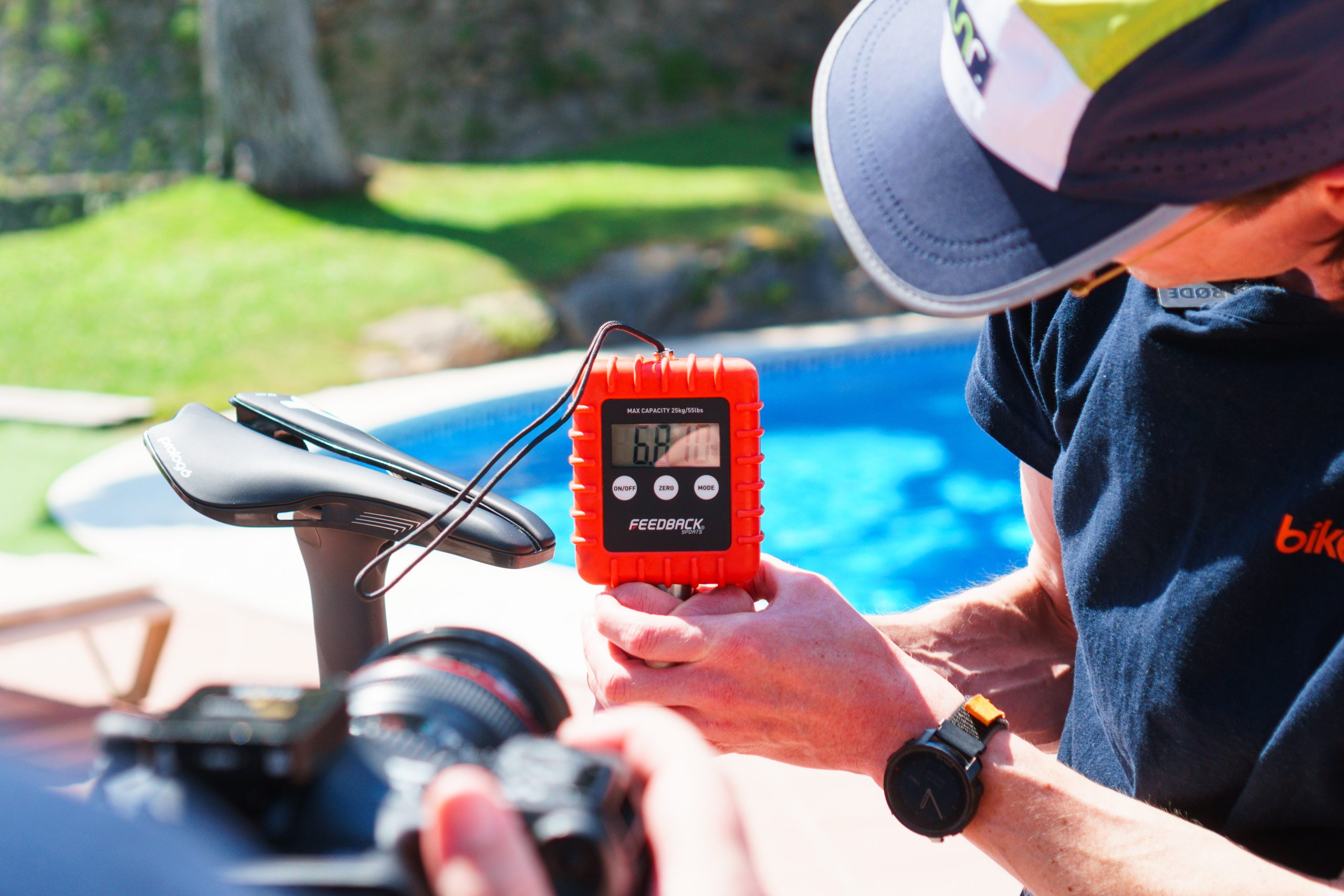
So, let’s start with how much the average Tour de France bike weighs in 2026.
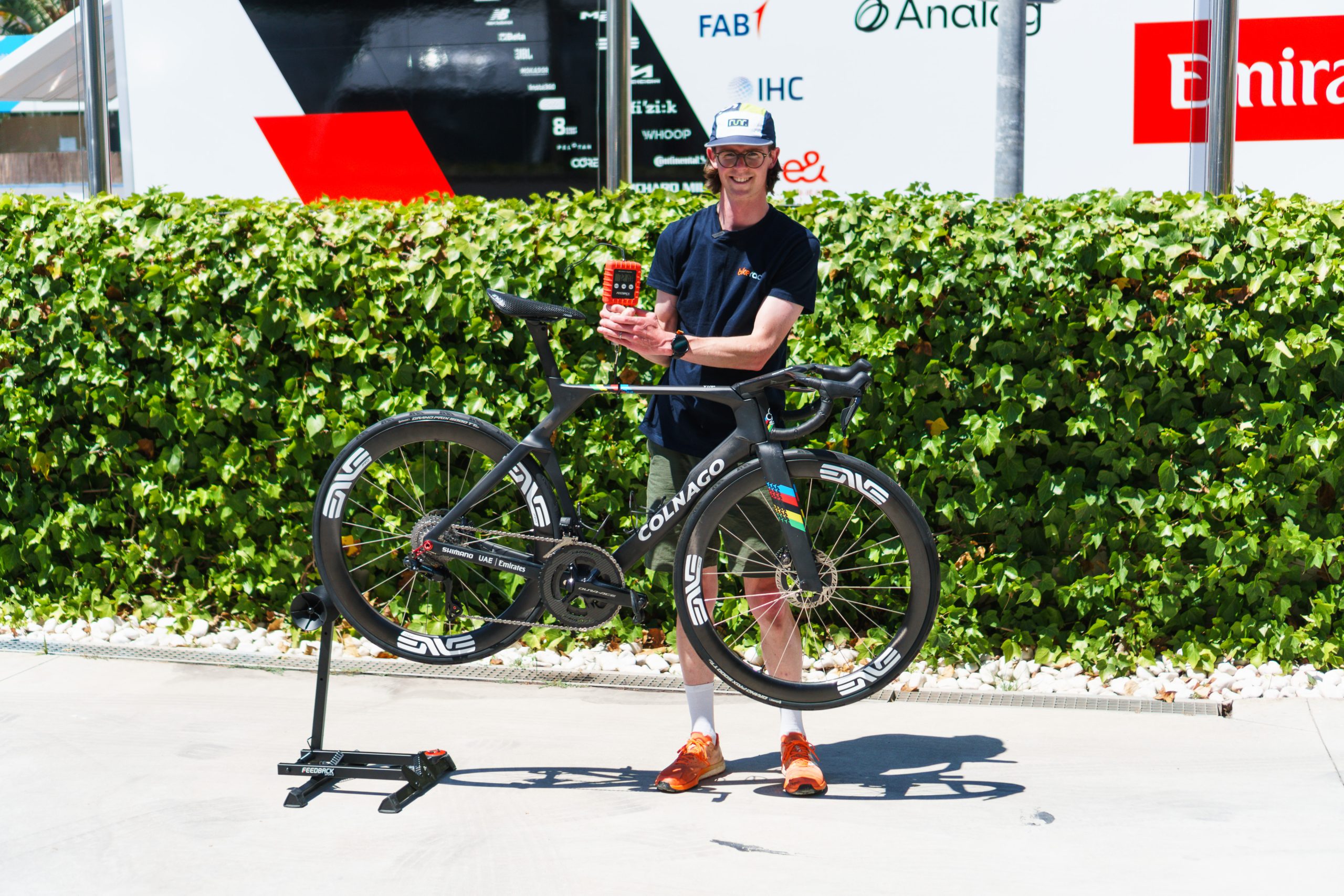
Of the seven road bikes we weighed, the average weight was just over 7kg – around 200g more than the weight limit.
| Rider | Team | Bike | Weight (kg) | Frame size | Notes |
|---|---|---|---|---|---|
| Matej Mohorič | Bahrain Victorious | Bianchi Specialissima RC | 6.9 | 55 | |
| Jonas VIngegaard | Visma-Lease a Bike | Cervélo S5 | 6.8 | 51 | |
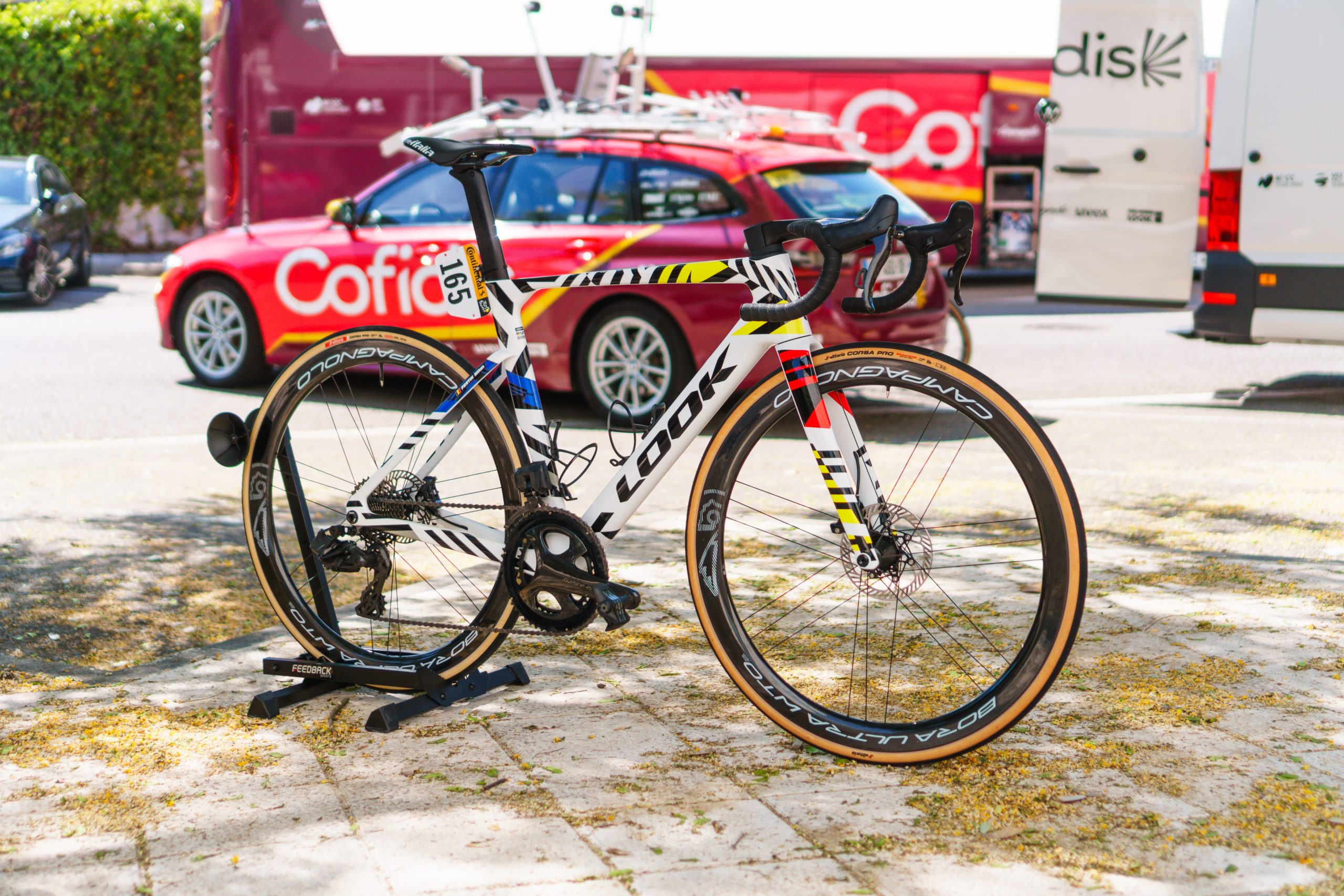
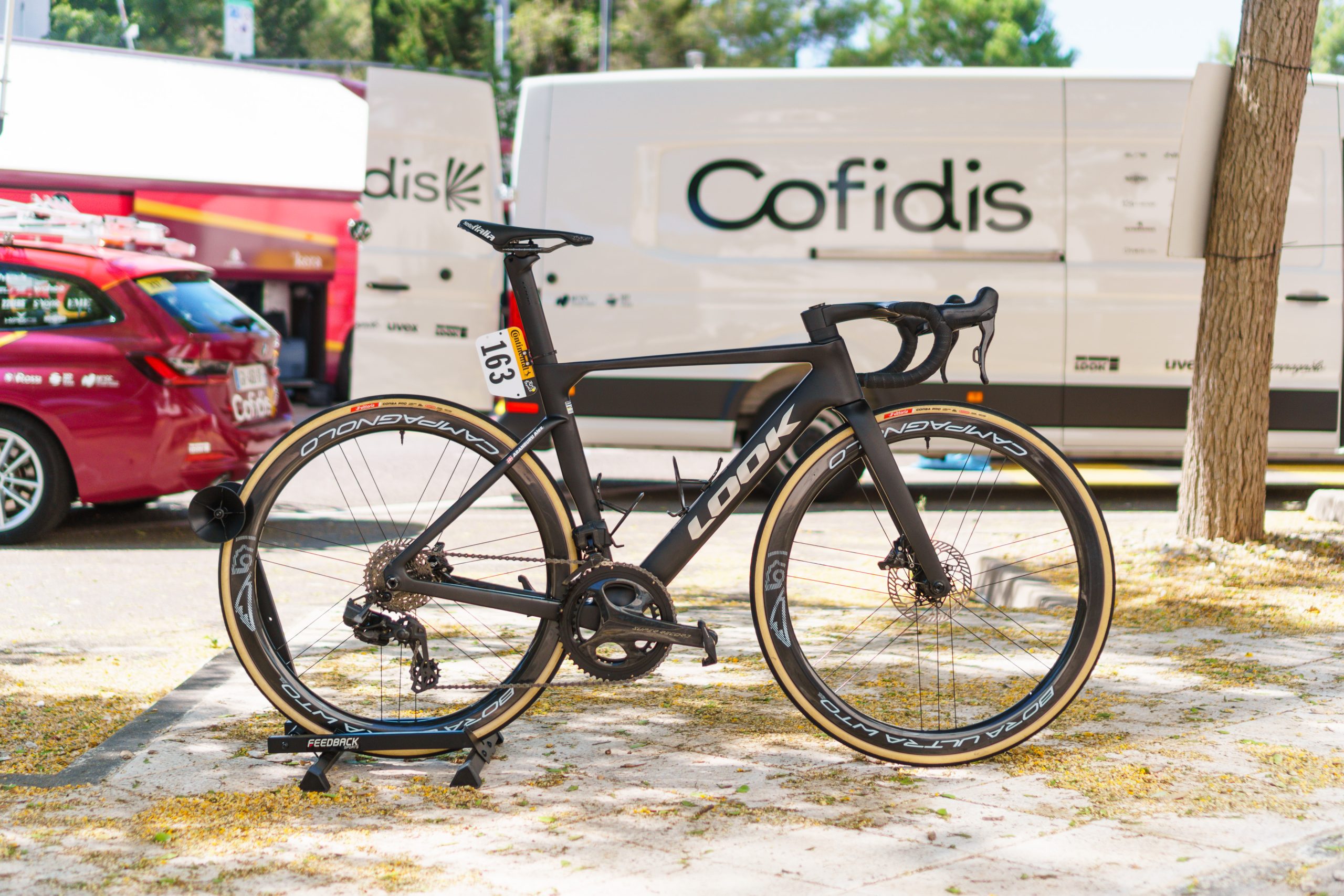
| Milan Fretin | Cofidis | Look 795 Blade RS | 7.4 | Medium | Team paintjob |
| Alex Aranburu | Cofidis | Look 795 Blade RS | 7.2 | Small | Black paintjob |
| Luke Plapp | Jayco AlUla | Giant Propel Advanced SL | 7.1 | M/L | |
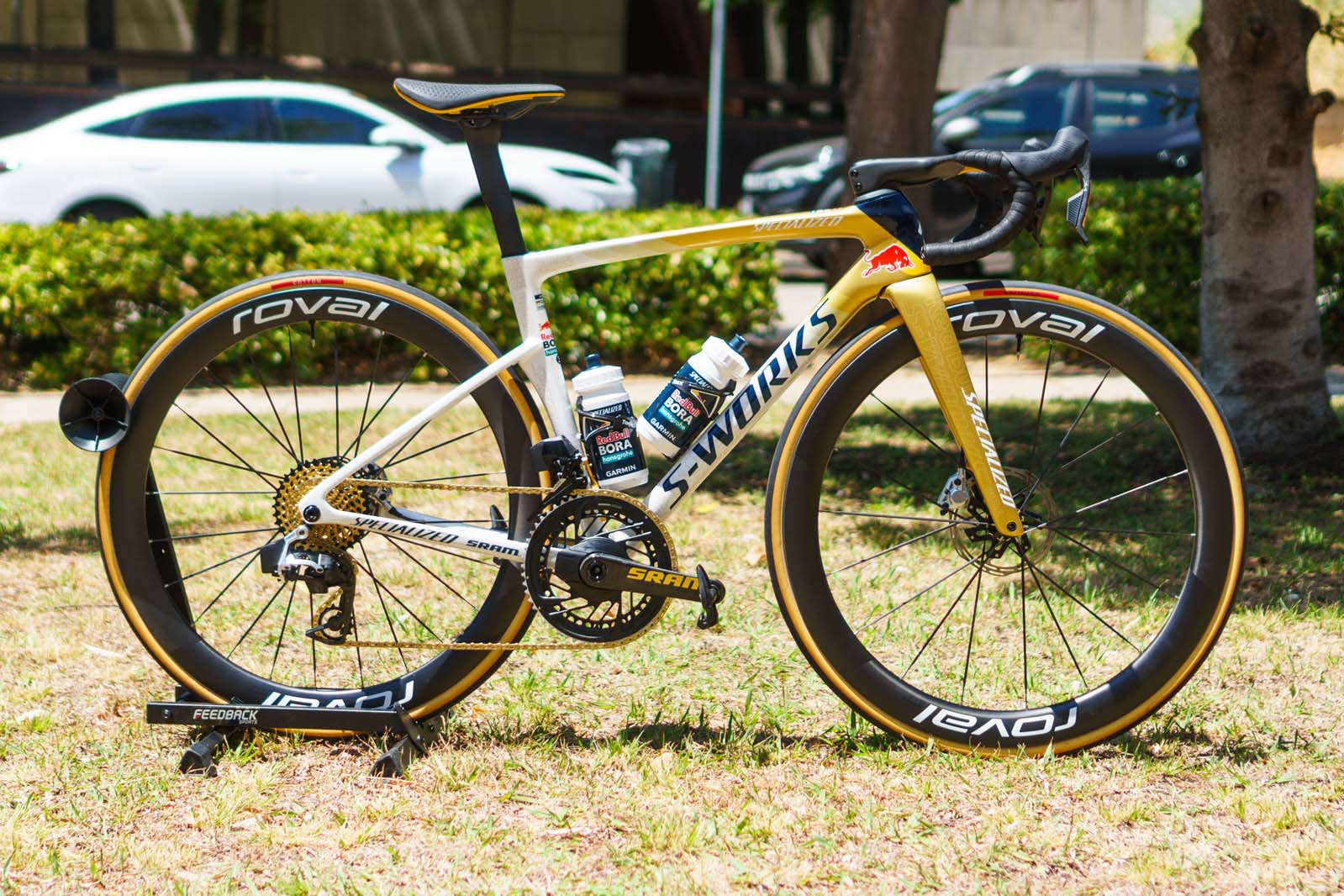
| Remco Evenepoel | Red Bull - Bora - Hansgrohe | Specialized S-Works Tarmac SL9 | 7 | 52 | Gold paintjob |
| Tadej Pogačar | UAE Team Emirates XRG | Caolngao Y1Rs | 7.2 | Medium | Raw carbon |
| Tobias Halland Johannessen | Uno-X Mobility | Ridley prototype | 6.9 | Medium | |
| Average | 7.063 |
It’s fair to say seven bikes is a tiny sample size (we weighed fewer road bikes this year because we also did checks on a number of time trial bikes). However, we weighed the bikes of some of the major contenders for the overall race victory – who it’s fair to assume have some of the most optimised bikes in the peloton – and a number of new road bikes that are on the cutting edge of lightweight road-bike technology.
And given what we’ve seen in previous years, where we’ve weighed more aero road bikes, we suspect our average is a fairly generous interpretation of the situation.
Why are bikes so much lighter in 2026?
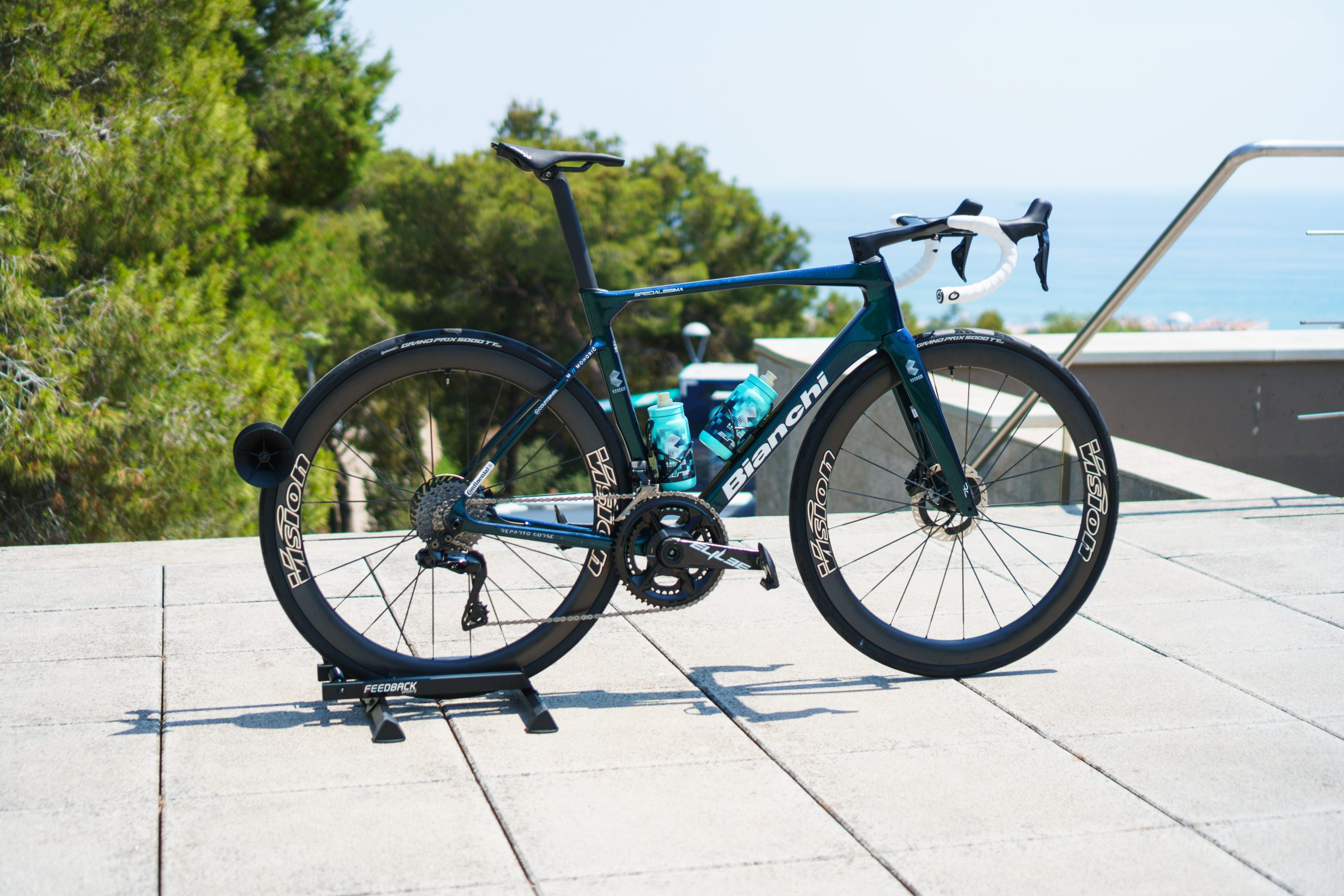
Since the 2025 Grand Départ in Lille, then, the average weight of a Tour de France bike is down almost half a kilo.
At a glance, that seems quite impressive. Cutting 500g off any bike, let alone a pro-spec one usually isn’t easy or cheap, after all.
The most obvious reason for this is that we simply didn’t weigh as many heavy aero bikes as in 2025 – and that’s likely because of the terrain facing the riders during this year’s Grand Depart in Barcelona, Spain.
After a team time trial on stage one, this year’s race featured two ‘hilly’ stages and one ‘mountain’ stage before the first ‘flat’ stage on the fifth day.
With those opening stages in mind, it’s no surprise that more riders opted for bikes and components that keep weight to a minimum.
In contrast, last year’s race kicked off in Lille with a flat stage that saw riders pulling out all of the aero stops.
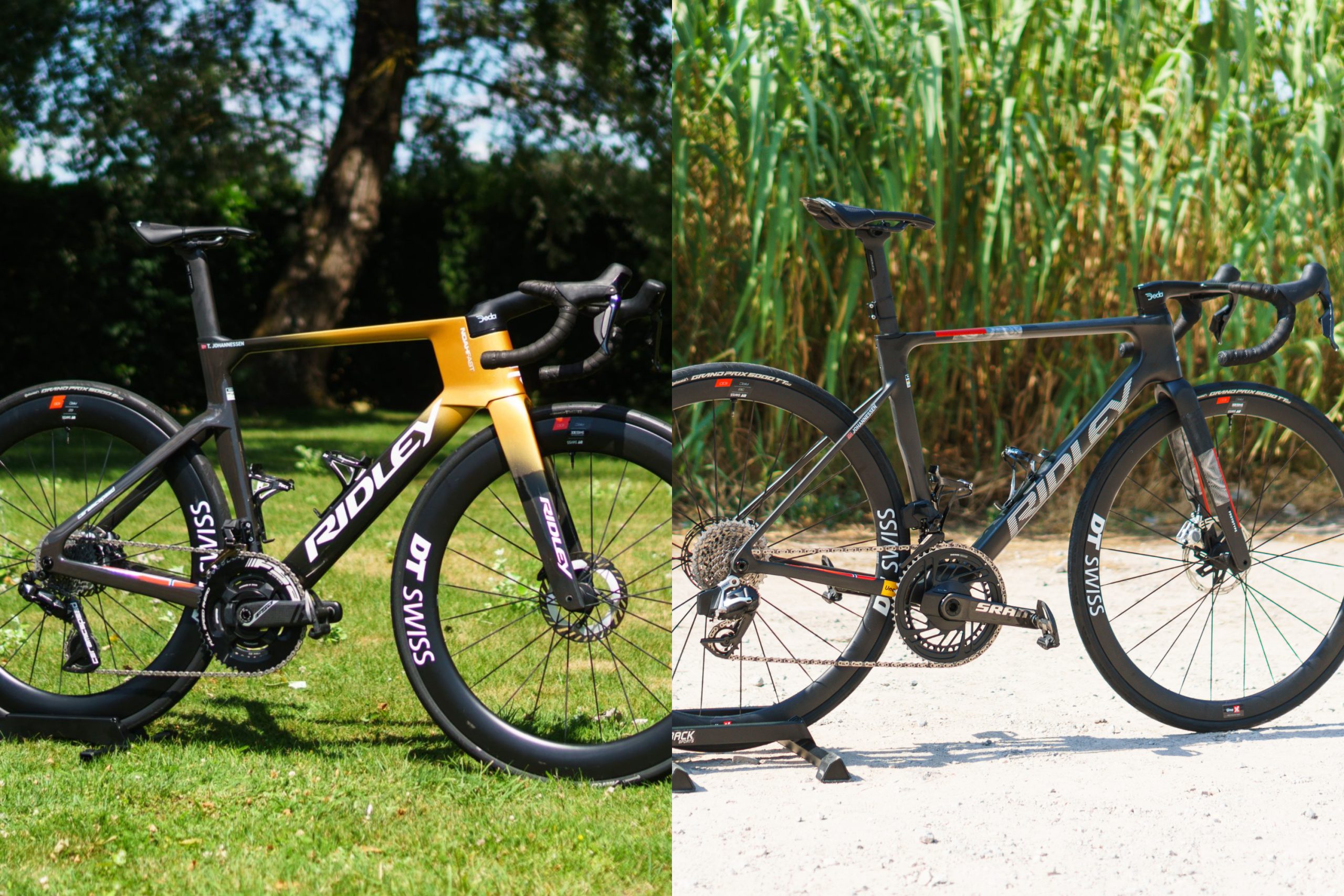
To give a specific example, we weighed Tobias Halland Johannessen’s Ridley Noah Fast at a whopping 8.2kg at last year’s Tour, whereas the prototype lightweight Ridley he had for this year’s race weighed 6.9kg.
Looking at the two bikes side by side, it’s easy to see why the former is so much heavier than the latter – there’s simply ‘more’ of it.
Why modern race bikes aren’t all 6.8kg
While 6.9kg ready-to-ride is good, it’s also still 100g over the weight limit, and there are plenty of brands who claim to have high-end road bikes that weigh much less than that.
Giant and Specialized, for example, say the new Propel Advanced SL and S-Works Tarmac SL9 both weigh around 6.5kg. On our scales, though, both of the pro builds we saw tipped the scales at more than 7kg.
The explanation behind this inconsistency is complicated, but it has to do with the fact pro bikes can be very different from the ones you can buy in the shops – just not in the way you might think.
It’s a common trope that pros get special bikes from manufacturers – bikes that are better than you can get on the shop floor, whether that’s because of custom geometry or improved carbon layup.
But according to pro cycling’s rules – which are laid out by the sport’s governing body, the Union Cycliste Internationale (UCI) – bikes and equipment used in UCI-sanctioned events and competitions must be commercially available, so making custom frames and parts for pro teams technically isn’t permitted (unless the brand also commits to doing so for anyone else, of course).
And based on our experience of weighing pro bikes over the past few years, it's more often the case that the opposite is true. Pro bikes are frequently heavier than what you can buy in the shops.
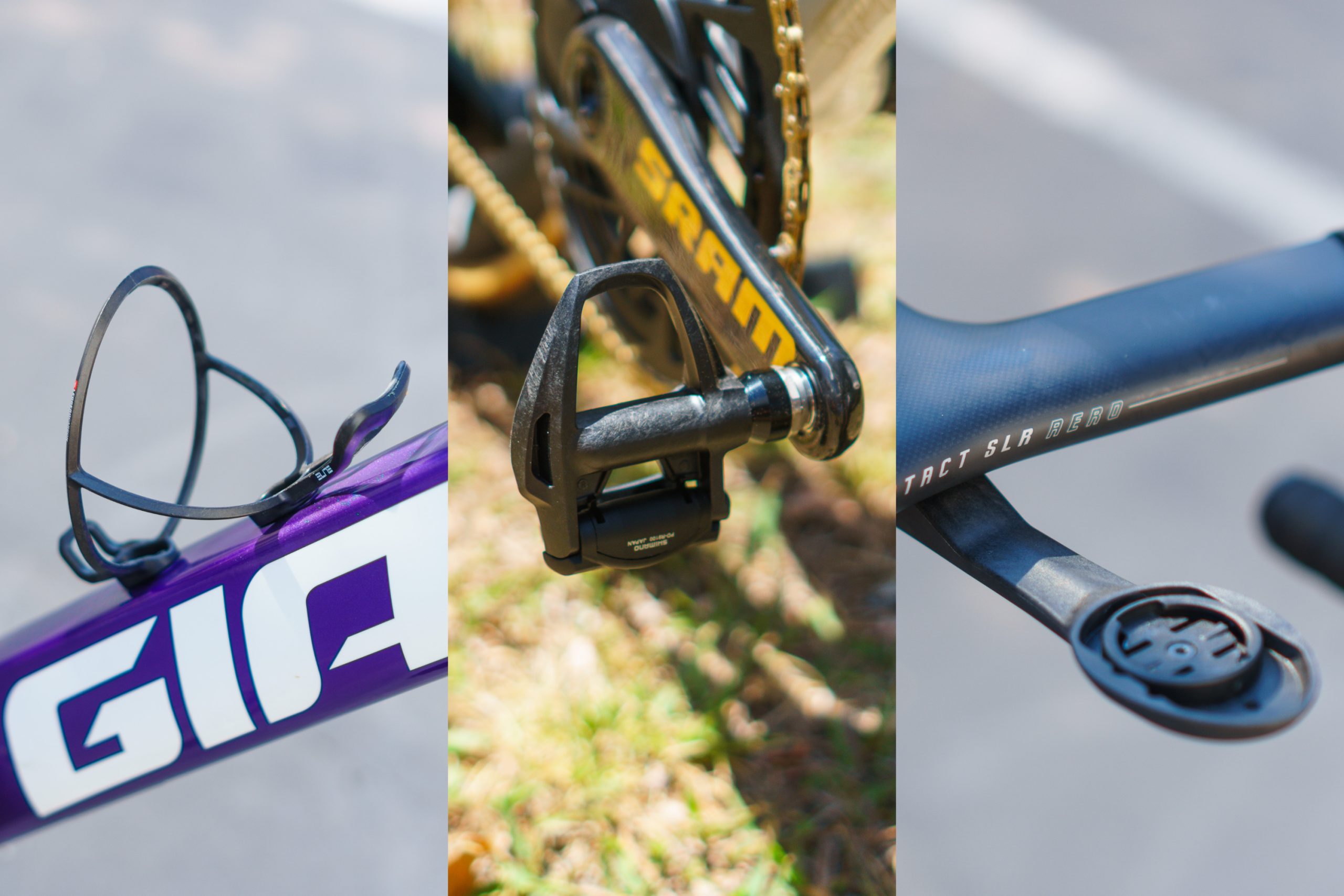
Beyond the fact that claimed weights for bikes typically don’t include essentials such as pedals, bottle cages or bike computer mounts, most pro bikes also have elaborate paintjobs designed to attract attention and show off team sponsors during races.
While it might seem like a small detail, paint can add a significant amount of weight (hence why black is such a popular colour for carbon bikes).
We got a perfect illustration of this when we visited Cofidis – which had both an elaborately painted Look 795 Blade RS and an all-black one. According to our scales, the difference this made was around 200g.
And although the build specs are slightly different (in terms of wheels and tyres), Tadej Pogačar’s raw carbon Colnago Y1Rs weighed just over 7.2kg on our scales at this year’s race, while the world champion’s themed one we weighed last year in Lille was well over 7.5kg.
Tellingly, although Red Bull - BORA - hansgrohe insisted we film with Remco Evenepoel’s gold-themed Tarmac SL9 at this year’s Tour, we also spotted that the team had an all-black one (which otherwise appeared identical) with his name sticker on it as well.
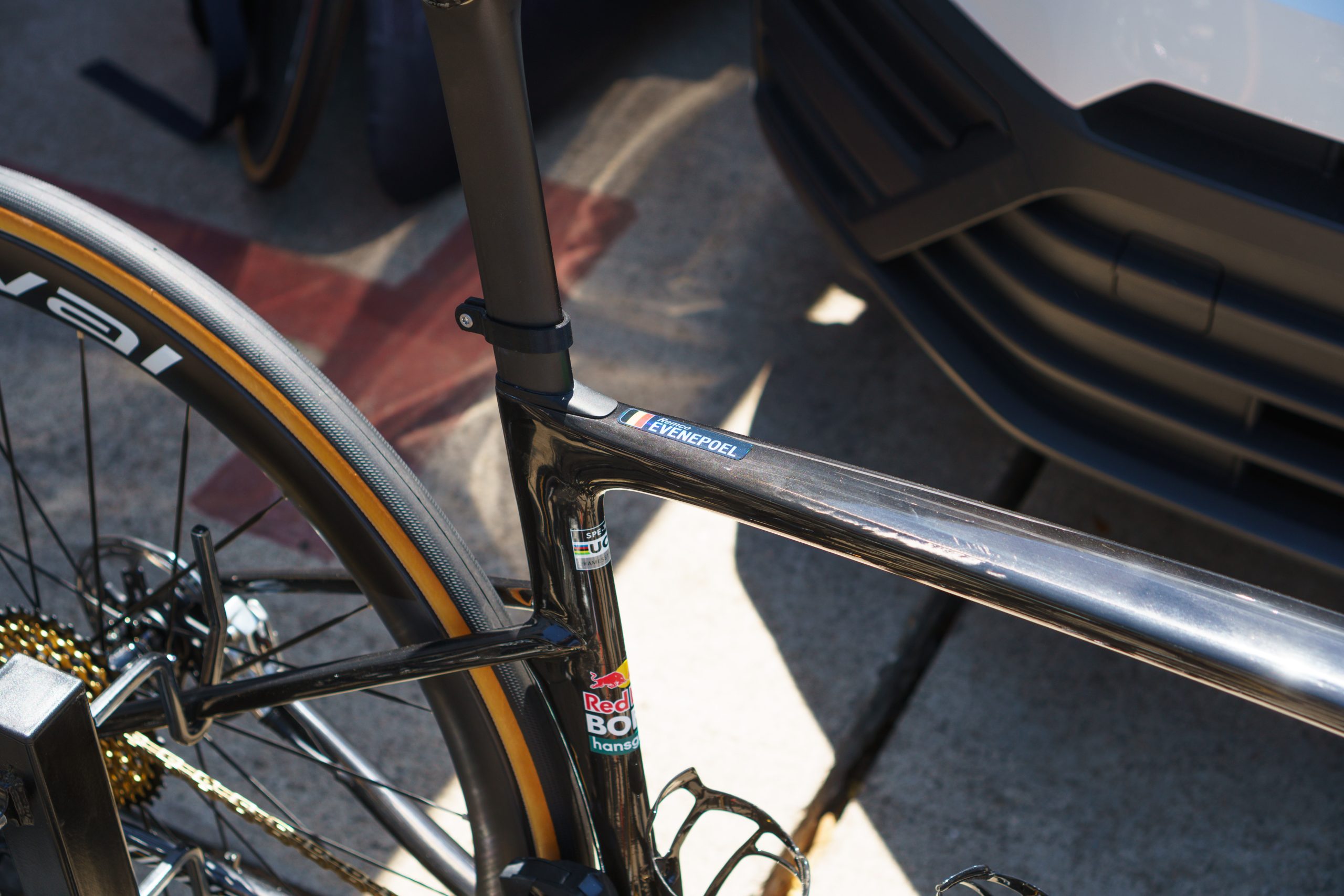
If it’s roughly 200g or so lighter because of the difference in paintjob, that would put that bike spot on 6.8kg ready-to-ride – and sure enough, come the first hilly day of the race on stage 2, Evenepoel was riding it.
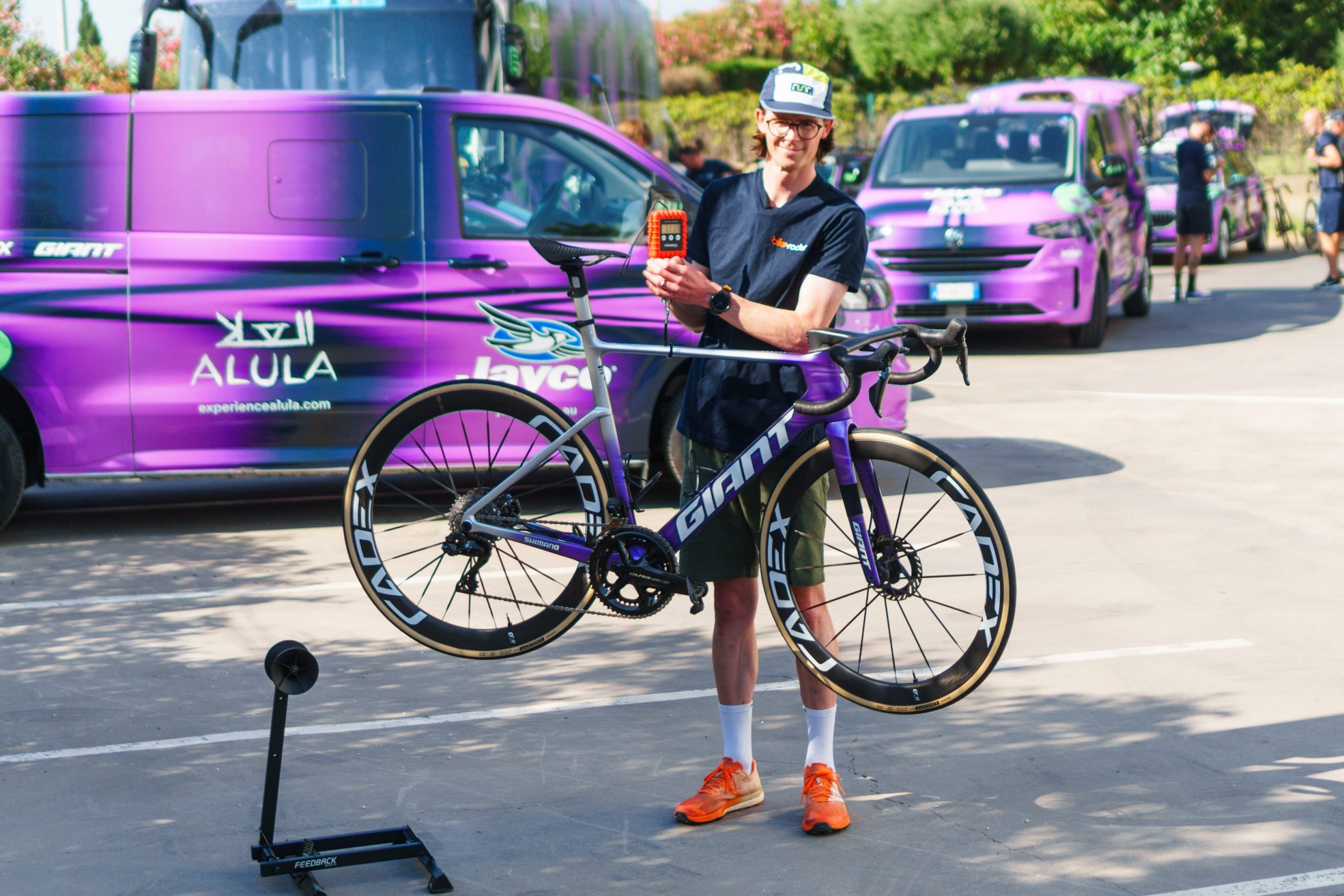
As for the Giant – we know there are painted builds that weigh 6.56kg without pedals, but with bottle cages and a computer mount, because we weighed one in our workshop earlier this year when it launched.
The difference with Luke Plapp’s 7.1kg Propel, then, can be accounted for with the addition of a pedals, a Dura-Ace, rather than slightly lighter SRAM Red AXS groupset, and a set of larger, 30c tyres compared to the 28s that come on the stock bike.
Why aren’t road bikes lighter, though?
All of those small details still don’t explain why bike manufacturers, despite decades of research and development, still struggle to get pro-spec road bikes down to a weight limit that’s existed for almost three decades, however.
Despite how much focus they receive, it’s generally not the bike frames to blame.
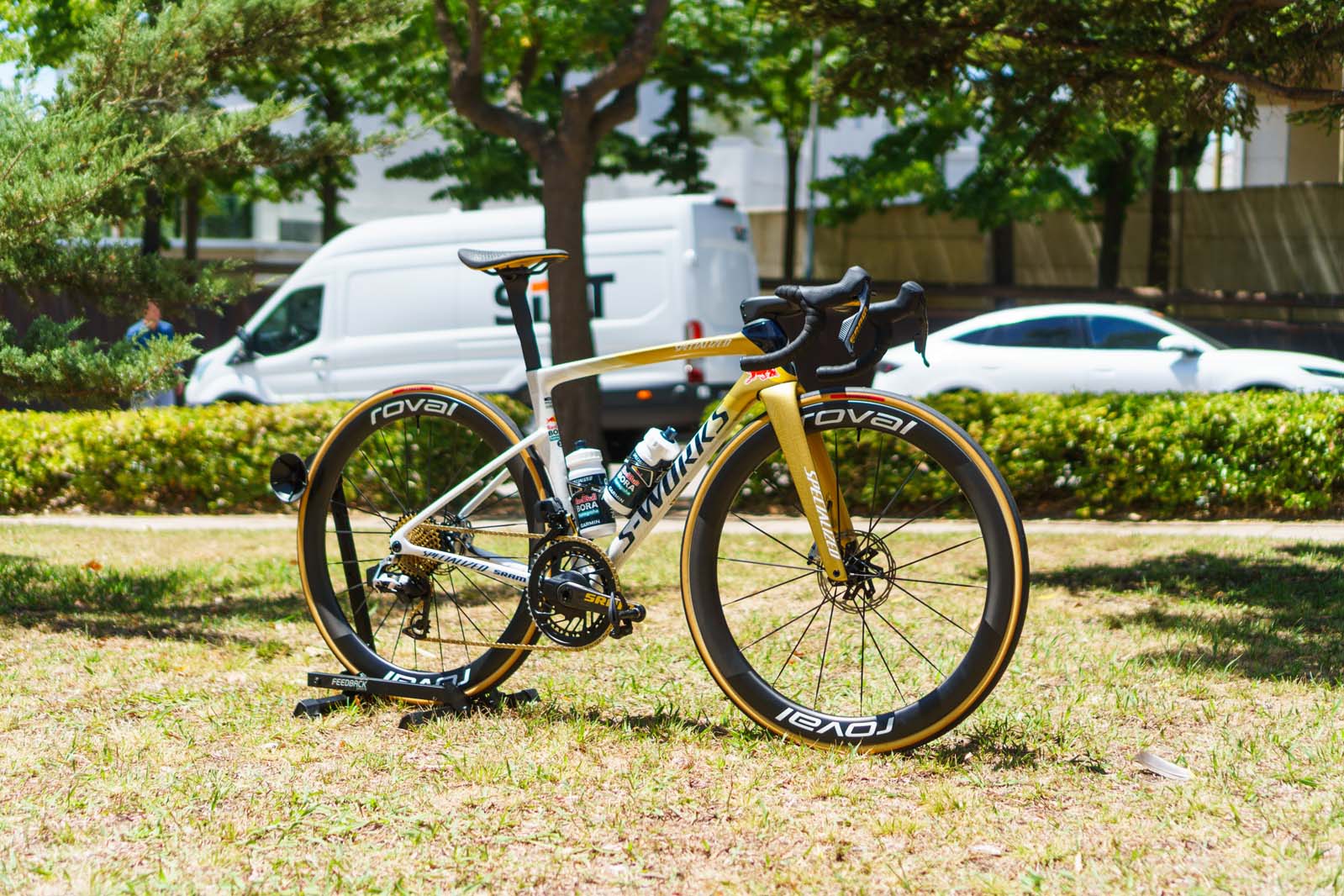
A Specialized S-Works Tarmac SL9 frame is claimed to weigh only 687g, for example, which is impressively light for a bike that Specialized says is more aerodynamic than a Factor One.
To put that into perspective, 687g is about the same as a lightweight front wheel or a couple of 30c Continental GP5000 S TR tyres.
Given this, it’s hard to see how much more material can be cut from road bike frames without compromising their ride quality or structural integrity – at least until we get another materials revolution, like the move from aluminium to carbon fibre.
The other 6kg or so is accounted for by everything else in the build – components, wheels, tyres, the groupset and so on. And in the era of hydraulic disc brakes and derailleur drivetrains, there’s only so much weight that can be cut from wheels and groupsets.
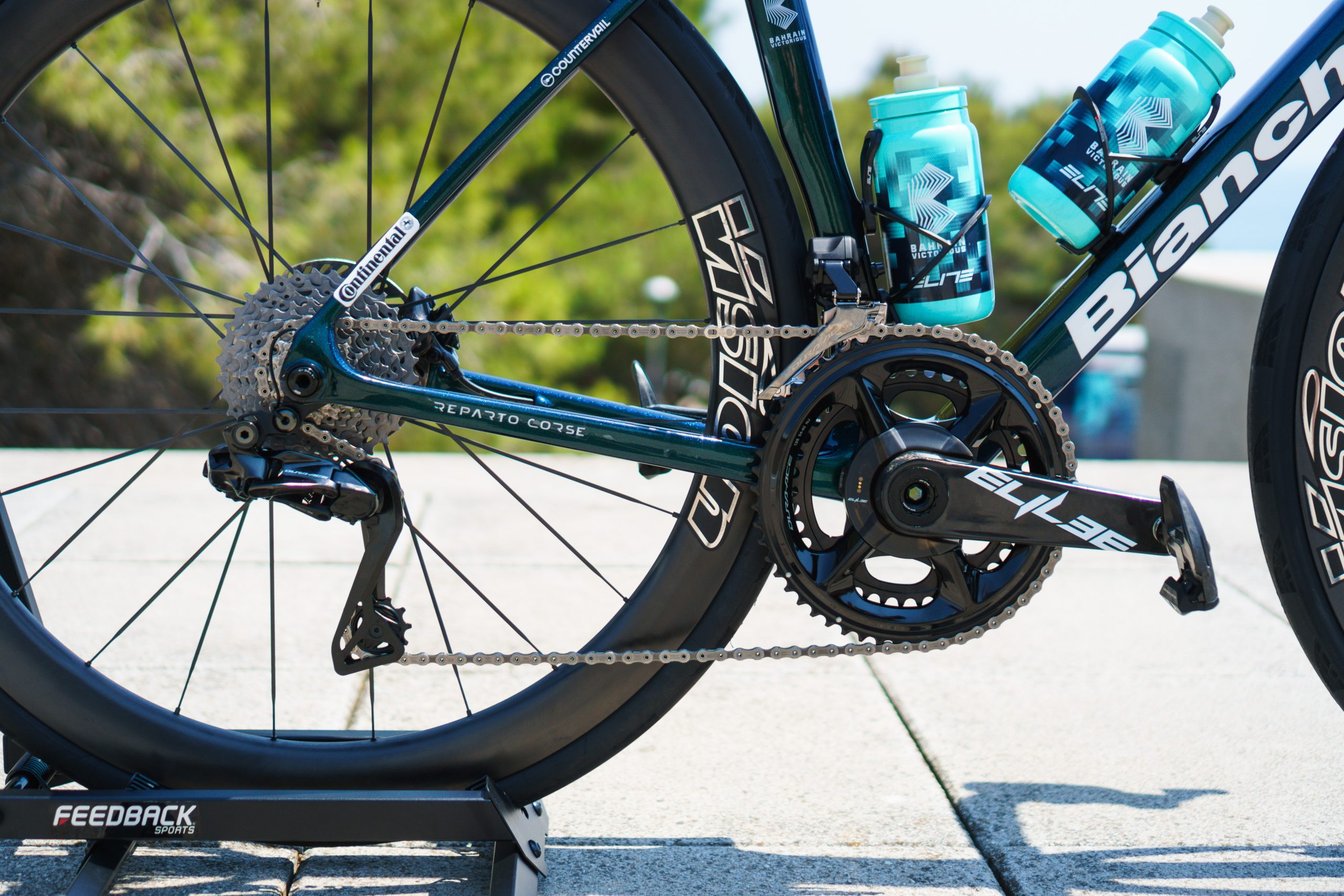
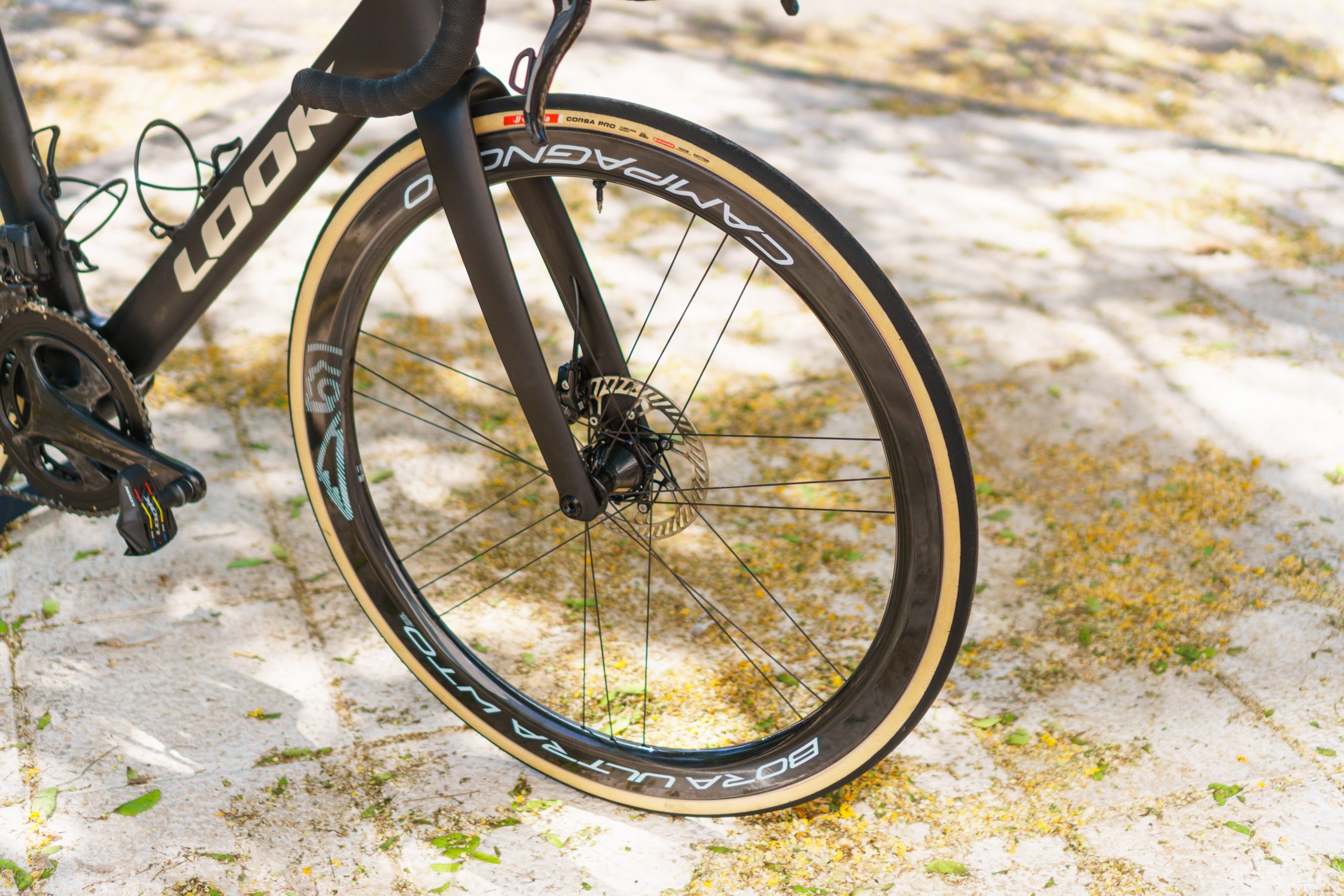
As most hill climb racers know, if you want to build a light bike, it’s still hard to beat rim brakes.
And if you go to any hill climb in the UK – where UCI rules typically don’t apply – it won’t be difficult to find bikes lighter than 6.8kg.
The pros don’t ride rim-brake bikes anymore, though, because most brands no longer sell them.
Nevertheless, within the confines of what their sponsors offer, many pros could choose to ride lighter frames, wheels, bars or tyres and so on, if they wanted to.
A Specialized S-Works Aethos frame weighs around 100g less than a Tarmac SL9 frame, for example, and the brand’s sponsored riders could also switch to Specialized’s lightweight ‘Alpinist’ wheels and components to help shave off even more weight.
Plapp could likewise switch to the Giant TCR Advanced SL, which is said to be 137g lighter across the frame and fork compared to the latest Propel.
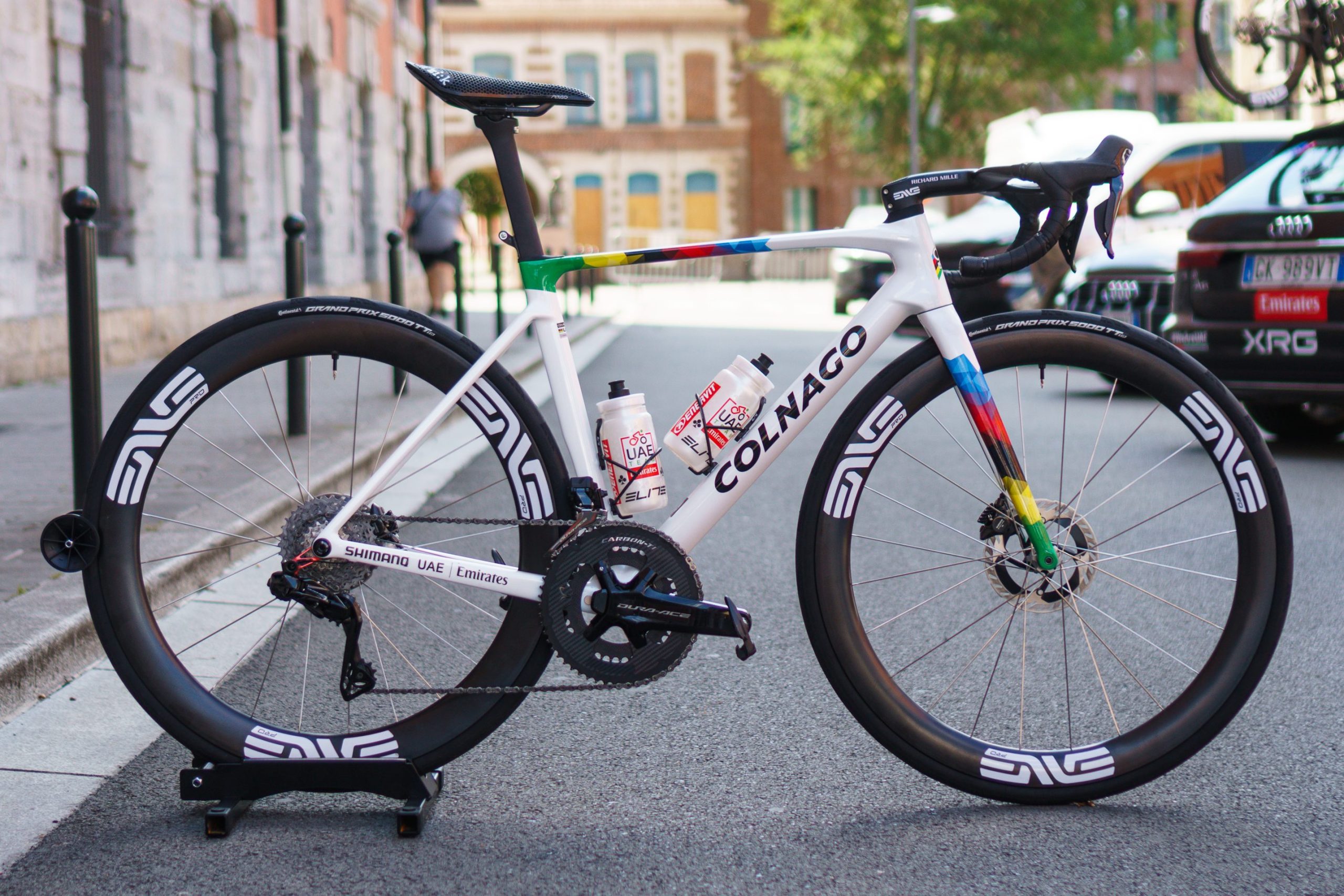
But doing so typically means giving up big chunks of aerodynamic efficiency, which would ultimately hurt a professional rider’s performance more than the extra grams in most race scenarios.
This likely explains why we see Pogačar persisting with the Y1Rs despite the fact it’s 400g or so heavier than his V5Rs.
Of course, were the UCI’s minimum bike weight rule ever to be amended, or even scrapped, the calculations may change depending on the terrain at hand.
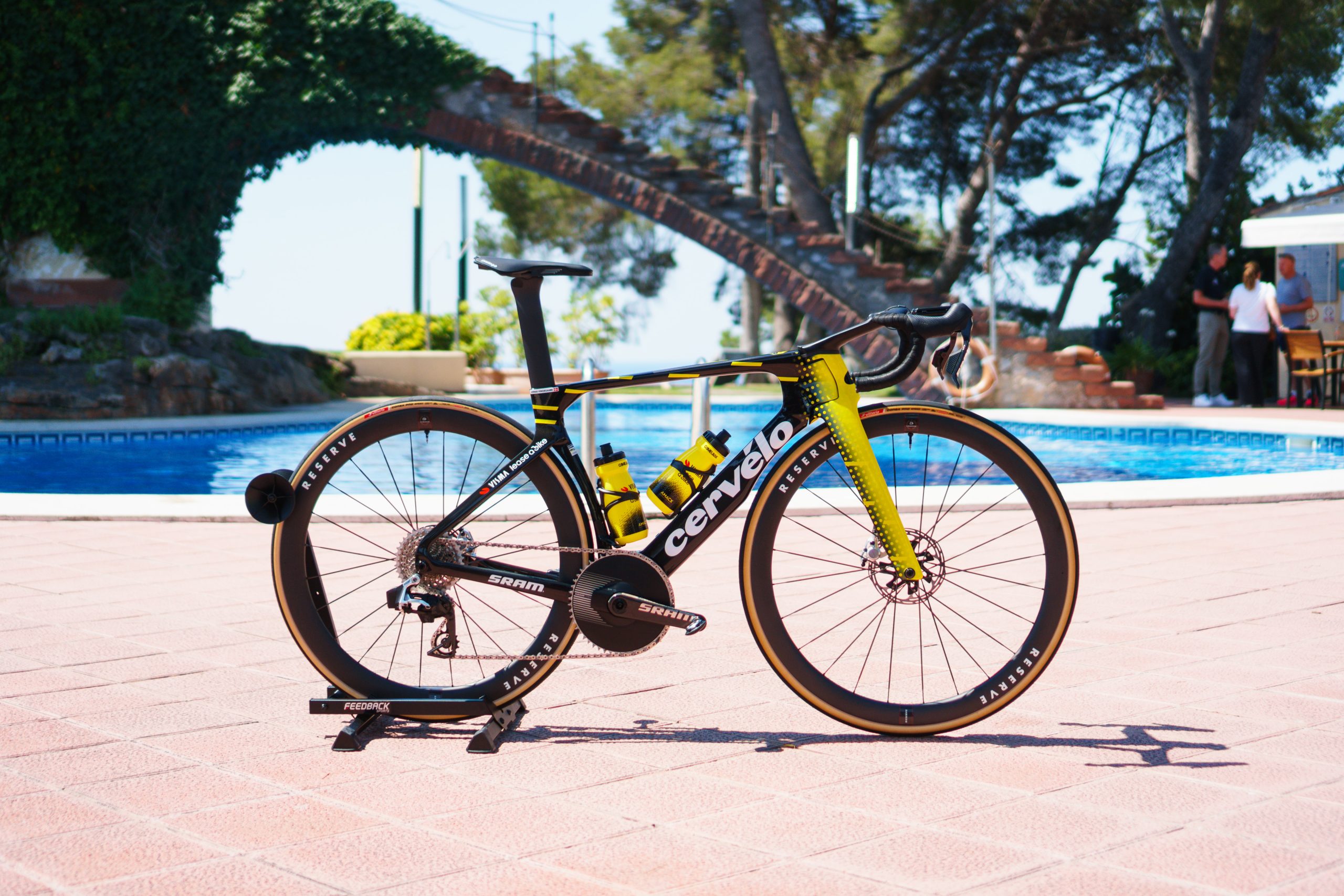
In the absence of a specific weight limit – if the UCI replaced it with a general safety test, for example, as it does with wheels – ultra-light bike frames and components may become more relevant again for mountainous races.
Until then, though, bike and component manufacturers have little incentive to focus their development budgets on intensively reducing weight, rather than on improving other factors such as aerodynamics.
More on the 2026 Tour de France
- I added up the cost of every part on Tadej Pogačar's Colnago Y1Rs – the final total is staggering
- Tom Pidcock crashes after Tour de France whitewashes roads to stop them melting in the heat
- Tadej Pogačar calls for radical overhaul of cycling calendar after Tour de France stage shortened due to heatwave
- UCI changes Tour de France rules in light of extreme heat
- Every team bike at the 2026 Tour de France


