Marin’s Alpine Trail EXR is a full-power enduro eMTB for riders who value capability, range and durability over minimum weight.
The Alpine Trail's Series 4 aluminium frame provides 160mm of rear-wheel travel, paired with a 170mm RockShox Zeb Ultimate fork. Bosch’s Performance Line CX motor draws energy from a removable 800Wh battery, with adjustable headset cups and rear flip chips.
At £6,899, it costs significantly less than some of its carbon-framed rivals, while offering Ultimate-level RockShox suspension, a wireless SRAM GX Eagle AXS Transmission drivetrain, SRAM Maven Silver brakes and DT Swiss wheels.
Its intentions are clear on the trail – this is a stable, slack and composed machine that feels happiest carrying momentum rather than making abrupt changes of direction.
I tested the Marin Alpine Trail EXR as part of our annual Bike of the Year test, which focused on the latest and greatest hard-hitting electric mountain bikes for 2026.
Three key things you need to know
- The heaviest bike in our 2026 Mountain Bike of the Year test
- Requires early, forceful inputs to change direction, but it's impressive when you get the trail timing right
- Bosch motor can surge from a standstill but offers plenty of power
The full Bike of the Year 2026 shortlist
- Amflow PX Carbon Pro – £8,999 / $10,199 / €9,999
- Atherton S.170E.2 – £7,999 / $N/A / €7,599.05 (before applicable local taxes)
- Marin Alpine Trail EXR – £6,899 / $8,999 / €7,999
- Merida Lithos 8000 – £8,500 / €8,899
- Specialized Levo 4 Evo Pro – £9,699 / $10,499 / €10,999
- Yeti LTe T4 – £12,999 / $14,900 / €14,500
Good support with an awkward first step
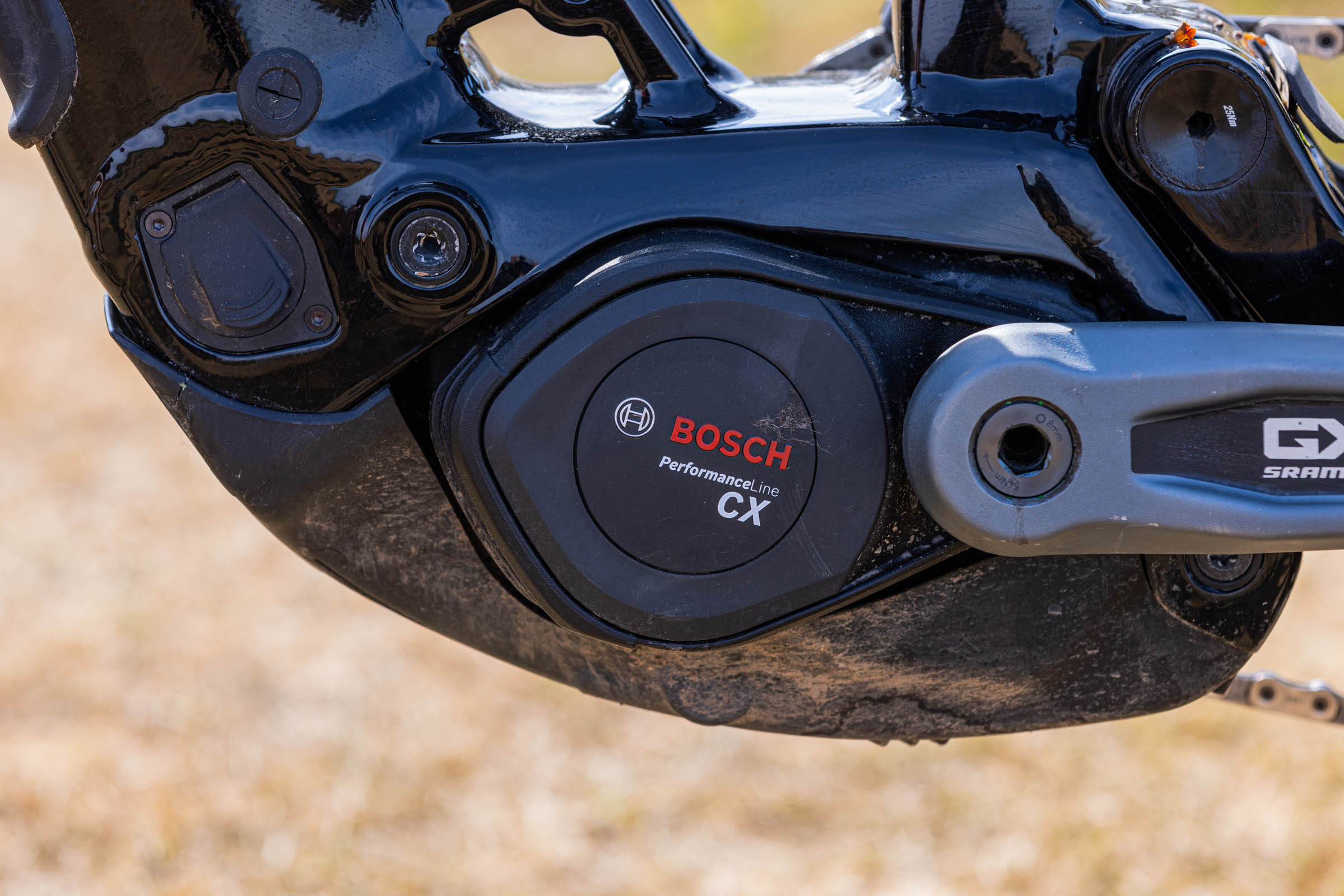
Bosch’s Performance Line CX motor can produce up to 120Nm of torque, 750W and 600% support. Once moving, it delivers strong assistance and pulls the Marin confidently up most gradients riders are going to attempt.
There’s enough support to maintain momentum through roots, rocks and broken ground. However, it struggles on the steepest hills.
When setting off in the stronger modes, small pedal inputs can bring the motor assistance in abruptly, complicating crank positioning and restarts on steep ground. Once rolling, the response becomes easier to anticipate, although the feeding in of power is less fluid than on Avinox and Specialized systems.
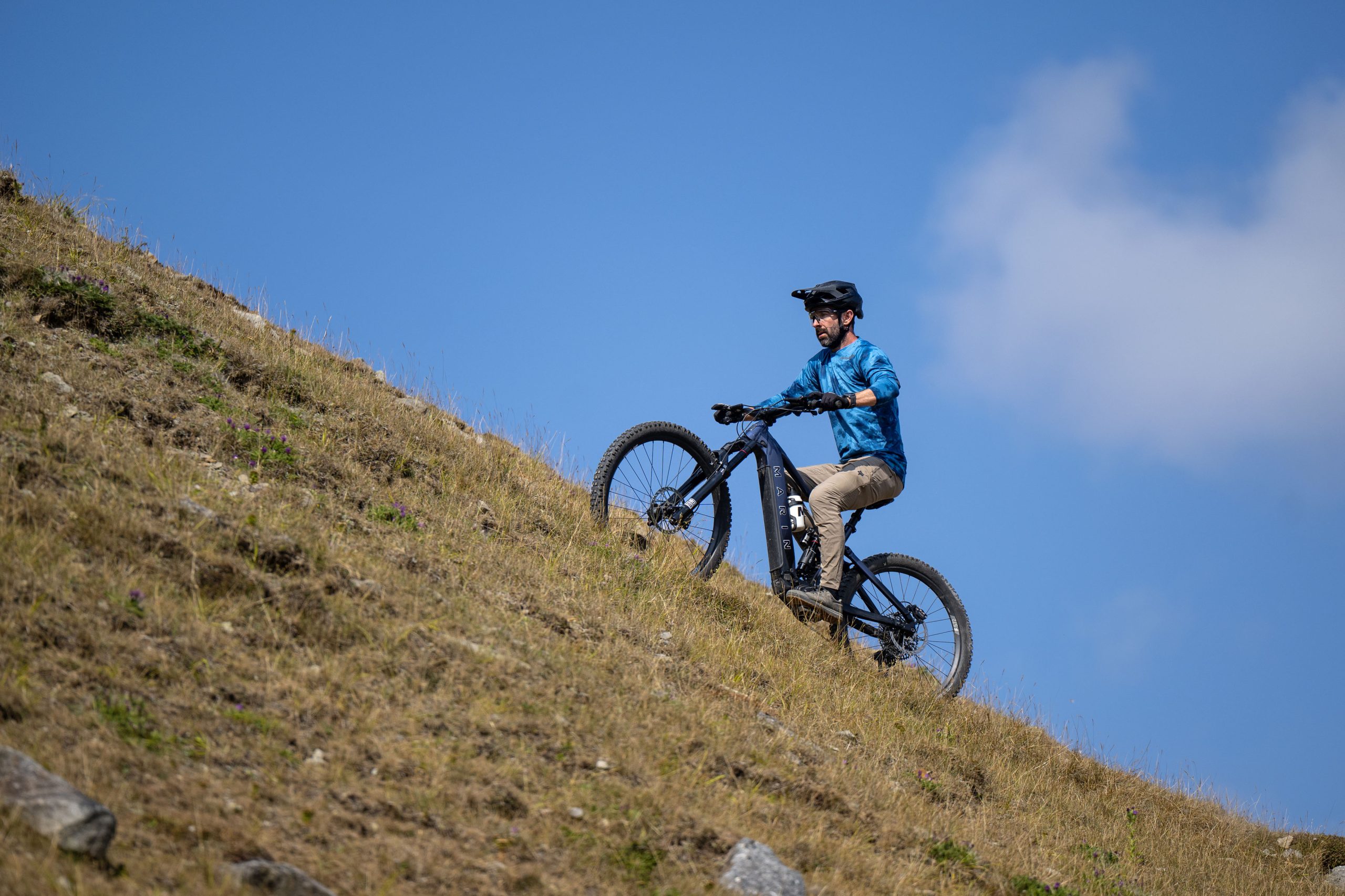
Marin has done a great job with the geometry, which underlines where this bike will excel. The 78.4-degree effective seat tube angle, mid-to-tall 637mm stack and aggressive 63-degree head angle reinforce the Alpine Trail E XR’s gravity-focused intentions.
The steep seat angle positions the rider sufficiently forward without making the cockpit feel cramped. Its tall stack is comfortable on long access roads, although the high front end and lengthy front centre still require an active forward position when gradients become severe.
Moving my chest forwards helped keep the front tyre loaded through steep turns and awkward cambers. The steering remained manageable, but the Marin never felt as naturally balanced or easy to correct as the Amflow PX Carbon Pro when pointed uphill. That's down partly to the geometry, but also the 25kg weight.
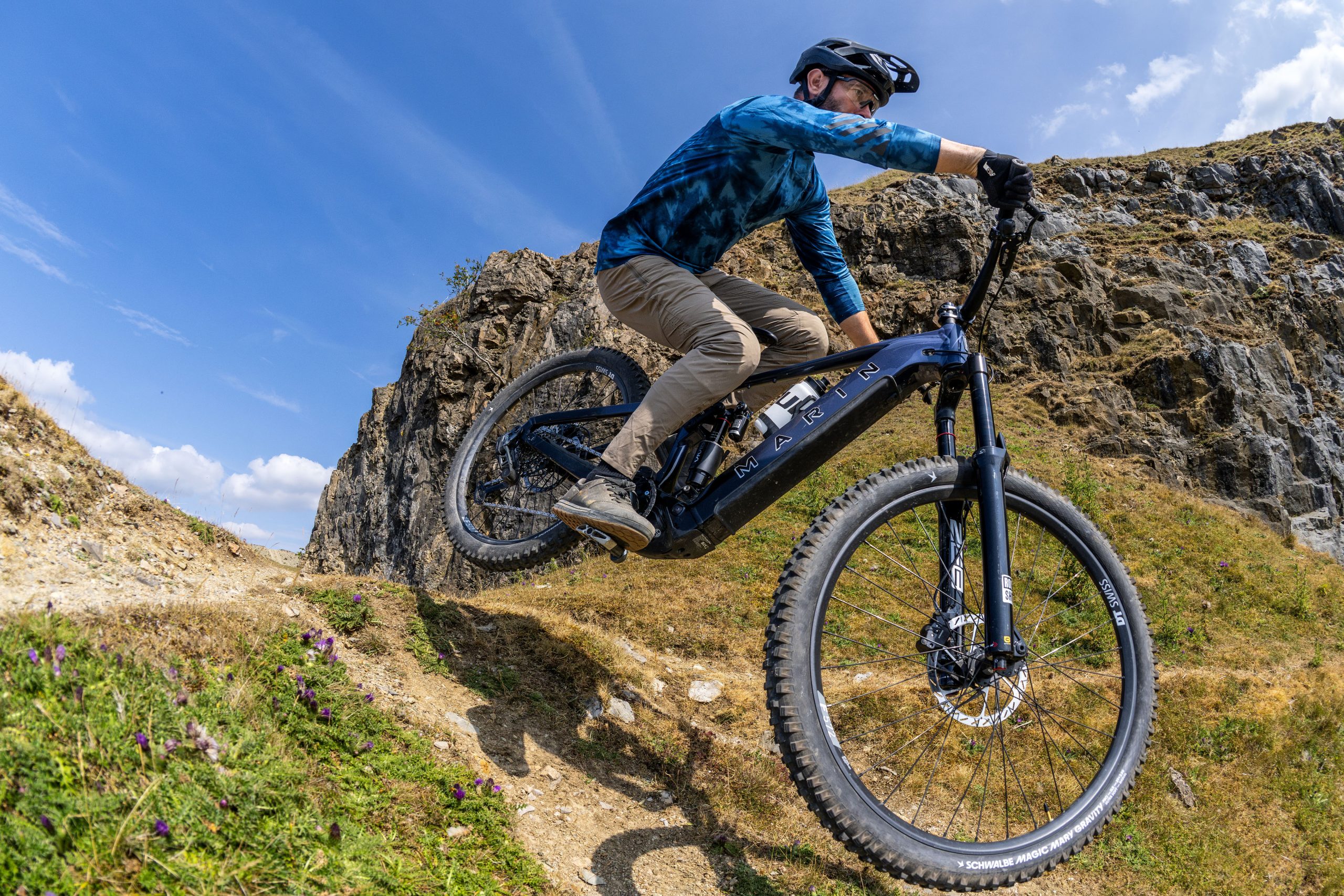
The rear suspension stays active over rough ground, absorbing roots, rocks and square edges rather than allowing the wheel to hook up and stall. There’s also a reasonable platform to pedal against, and the bike doesn’t collapse deeply into its travel or produce excessive squat under power.
The Marin’s greatest limitation is its mass. At 25.18kg in a size medium, it’s the heaviest bike in our Bike of the Year test. That matters less on smooth climbs, but becomes obvious when lifting the front wheel, hopping a rut, correcting a poor line or recovering after losing momentum.
The mixed-wheel setup and moderate 443mm chainstay length stop the rear feeling excessively stretched, but moving the complete package takes planning and force. Pick a line early and it climbs capably; hesitate or stall and restarting becomes more of an effort.
In the full-power range test, the Marin covered 27km and accumulated 1,610m elevation, placing it around the middle of the group.
Built to gather momentum
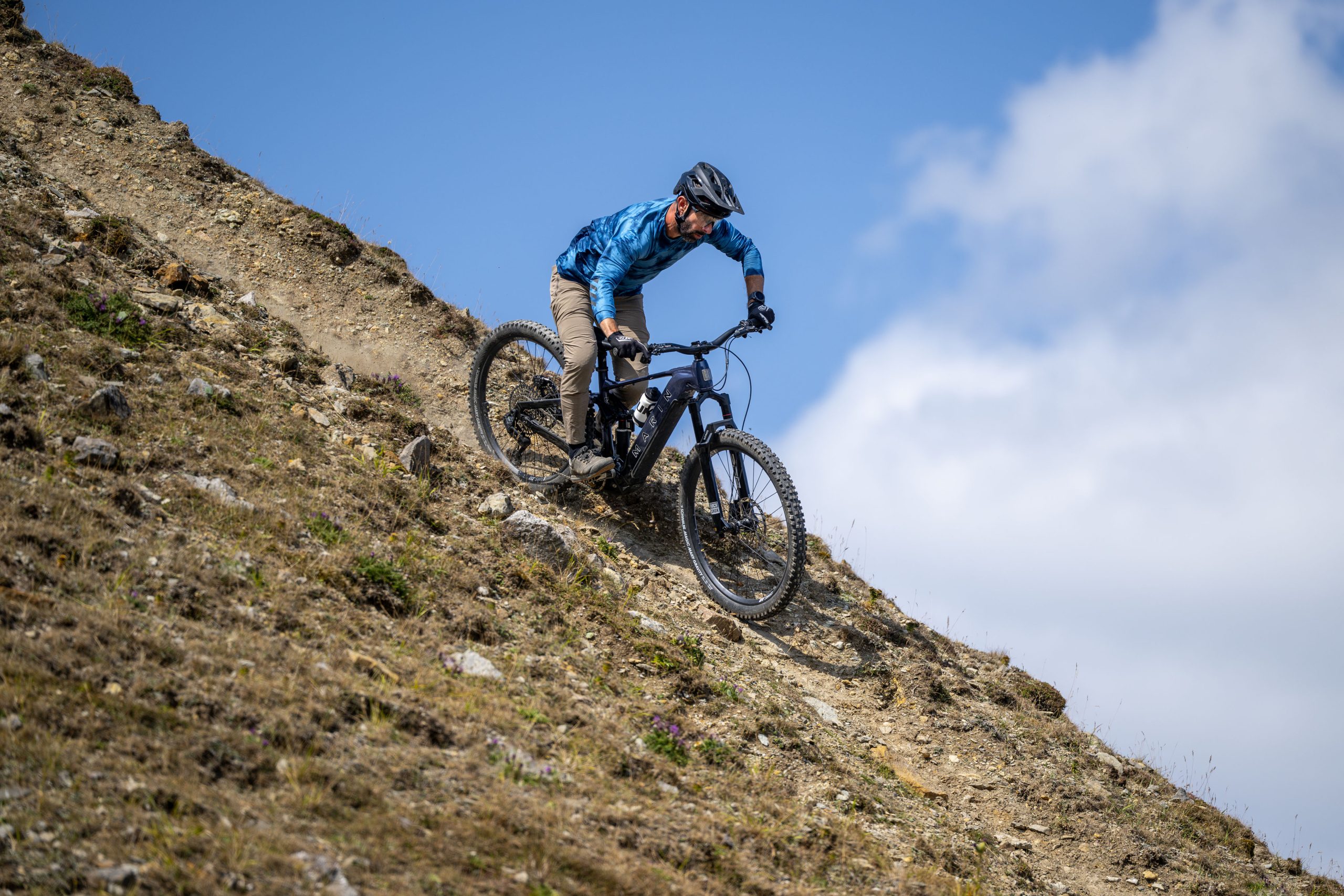
The Marin feels most comfortable when the trail points down and there’s room to build speed. Stability is one of its defining qualities, but it doesn’t flatten everything without rider input. It feels like a long, composed eMTB that rewards clear line choice and decisive riding.
Its slack 63-degree head angle, lengthy front centre and 1,256mm wheelbase create space and security on steep terrain. The bike rarely feels nervous or prone to pitching forwards, and remains calm when speed rises or the ground becomes rough.
Successive impacts rarely knock the Marin far from its chosen line. The long front centre and heavily controlled suspension favour committing to a route and carrying momentum through it.
Firm, muted and controlled
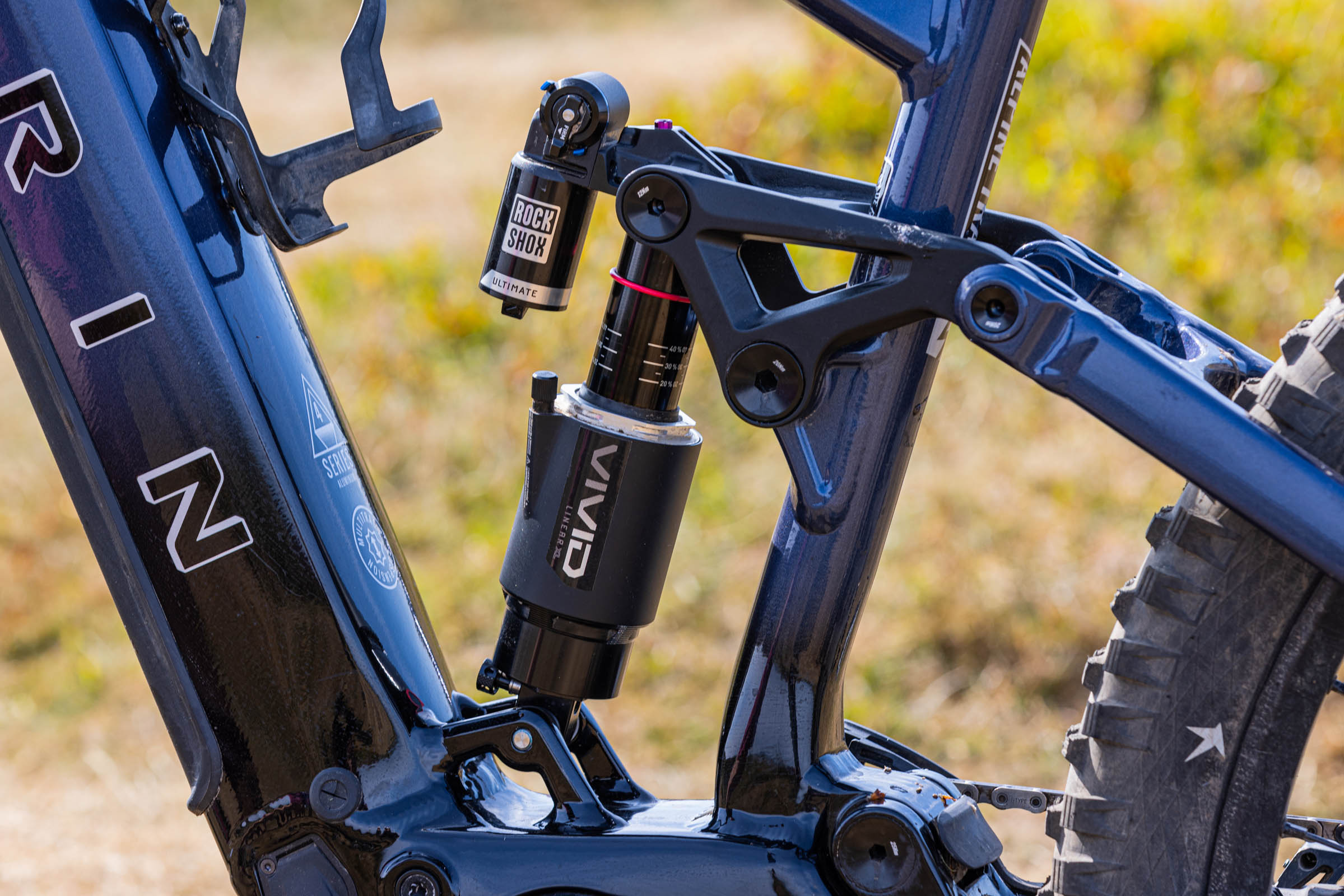
The custom-tuned RockShox Vivid Air Ultimate shock dampens impacts effectively and supports the bike well through larger compressions, while the 170mm ZEB Ultimate fork gives the front end the stiffness and control required for a bike of this weight.
The rear shock tune favours damping over a sprightly feel. Even with the compression fully open, it settles the chassis and calms movement rather than searching for pop from every undulation. Commit to riding at speed and you can unlock more of a playful feeling from the bike, though.
That damping keeps the bike level under braking and during big impacts, with dependable bottom-out control when the trail hits back hard. It mutes the trail impressively well, but that isn't always essential on a 25kg eMTB.
The fork initially felt lighter and more willing to move than the rear shock, so I added more damping up front. Neither end then dominated, but the underlying character remained calm and controlled.
Set the corner up early
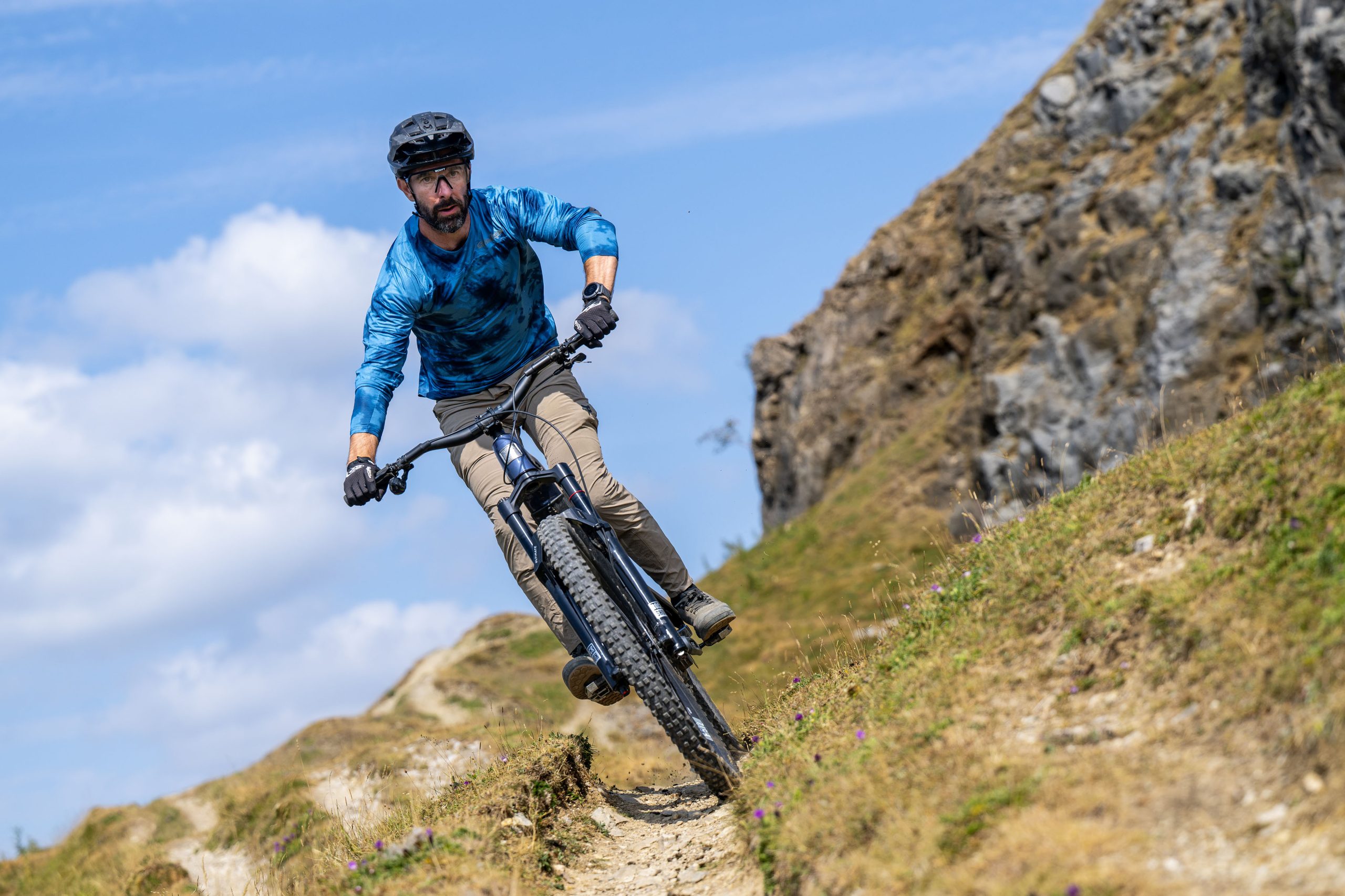
The Marin can be ridden hard through turns, but it requires strong, early inputs.
Set the bike before turn-in, build pressure deliberately and it tracks open corners with confidence. Ask for a late correction, and the mass and long front end mean its easier to run wide than the Bosch-powered Yeti or Merida.
The long front end creates stability, but moving the front wheel onto a new line requires decison making. Its moderate 443mm rear centre and 27.5in rear wheel prevent it becoming completely unmanageable, yet the whole 25kg package takes a fair amount of effort to handle.
The Marin’s handling is steady rather than nimble – it suits riders who set lines early, push confidently through the tyres and value predictability over spontaneous direction changes. Tight, natural trails and off-cambers require concentration, while open, fast descents turn the same calmness into a major strength.
Specification built for hard use
Schwalbe’s Magic Mary Radial tyres use Gravity casings at both ends, with Ultra Soft rubber up front and Soft at the rear. They provide substantial support and grip, although the rear squirmed slightly in dry conditions – I’d prefer a Tacky Chan rear for predominantly dry, fast riding.
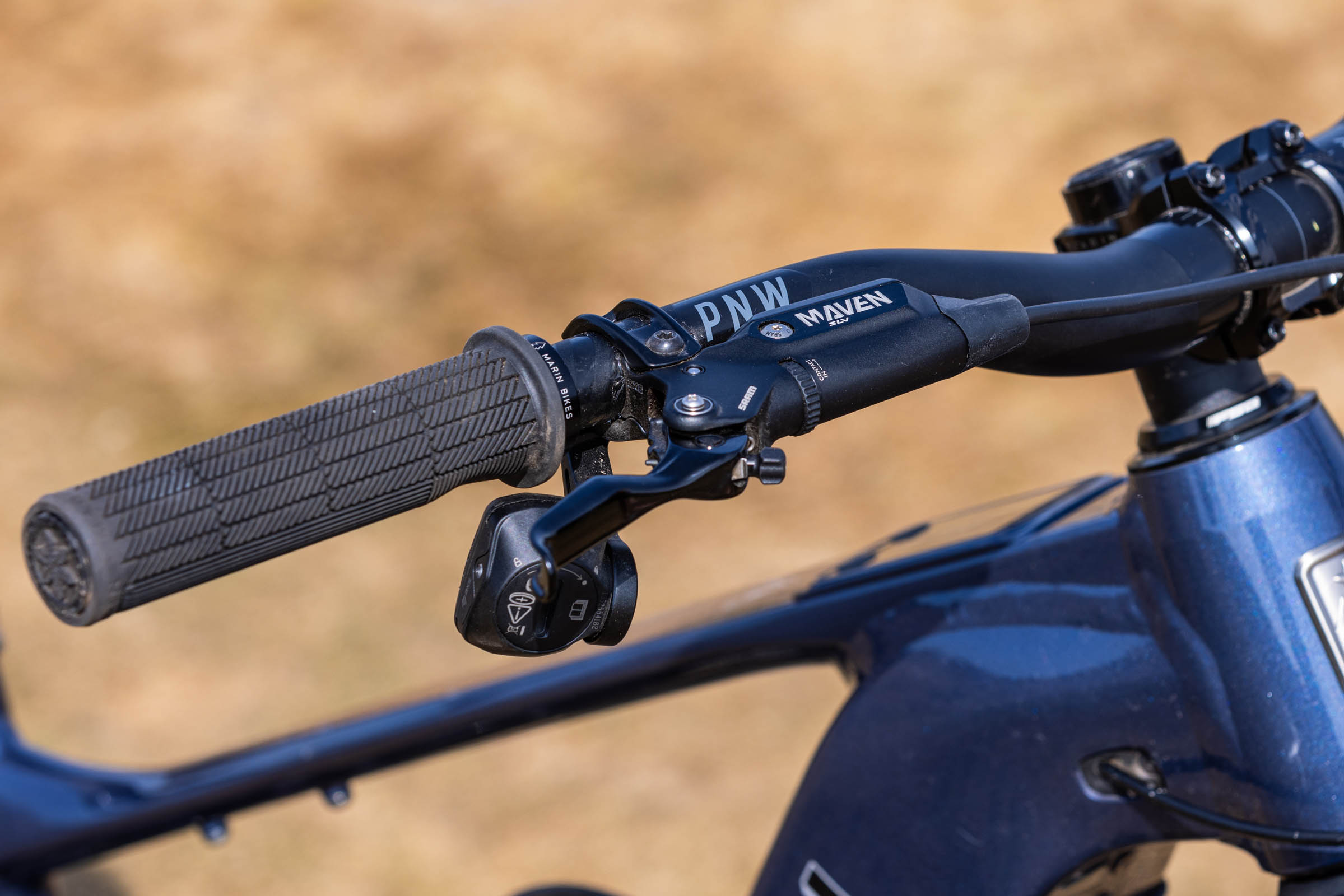
The SRAM Maven Silver brakes have the power required for a 25kg bike, but their lever bite point was not as repeatable as the Hayes Dominion A4s on the Atherton.
Practicality beneath the bulk
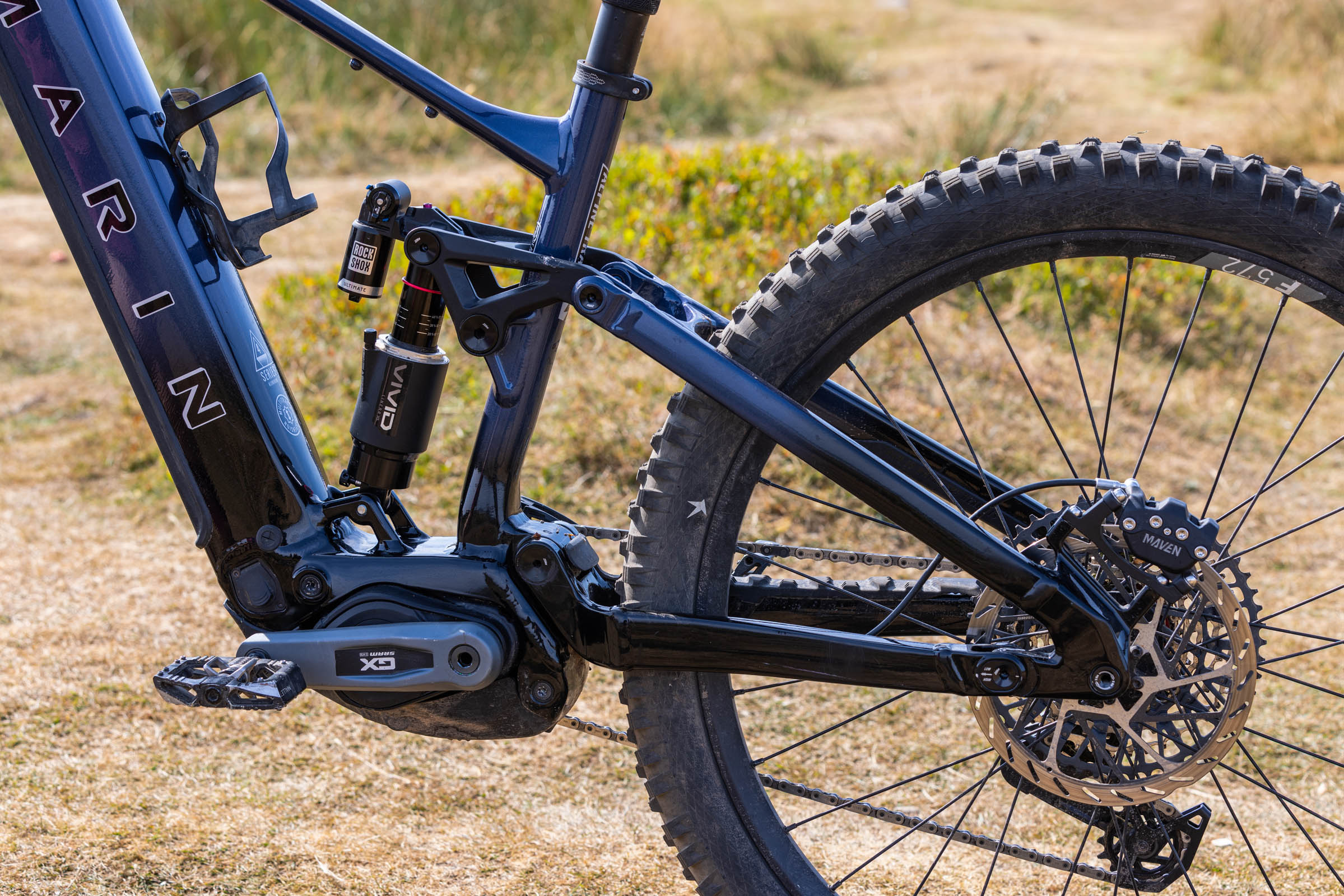
The redesigned aluminium frame is claimed to be 1,345g lighter than its predecessor. Its 800Wh battery sits low in the down tube and can be removed for charging or replacement.
The frame includes weather-sealed cable routing, a SRAM UDH (Universal Derailleur Hanger), substantial protection, tool mounts and bottle or range-extender bosses. Headset cups alter the head tube angle, while rear flip chips change the bottom-bracket height and chainstay length.
Premium performance without a five-figure price
At £6,899, the EXR offers premium suspension, wireless gearing and robust wheels for materially less than several carbon competitors.
The £5,699 Alpine Trail E2 has the same frame, motor and 800Wh battery, while retaining capable RockShox suspension, Transmission and Maven brakes. The £4,499 E1 also shares the chassis and Bosch system.
Since the E2 retains the frame, Bosch system and most of the hard-use intent, it likely represents the best sweet spot, whereas the E XR is for riders who will exploit its finer damping and tougher finishing kit.
How I tested | Bike of the Year 2026
I rode all six bikes back to back across the same mix of technical climbs, trail-centre loops, steep natural descents, rough braking-bump sections and larger bike-park features. To compare motor response, climbing traction, geometry, suspension support, braking control and handling as fairly as possible, I repeated key trails, adjusting setup between runs where required.
Each bike also completed the same maximum-assistance range test, while the three finalists were timed on the Forest of Dean’s FOD Thursday downhill and ridden by a second tester to cross-check my conclusions.
Also tested
- Specialized Levo 4 Evo Pro
- Amflow PX Carbon Pro
- Marin Alpine Trail E XR
- Yeti LTe T4
- Atherton S.170E.2
Marin Alpine Trail E XR bottom line
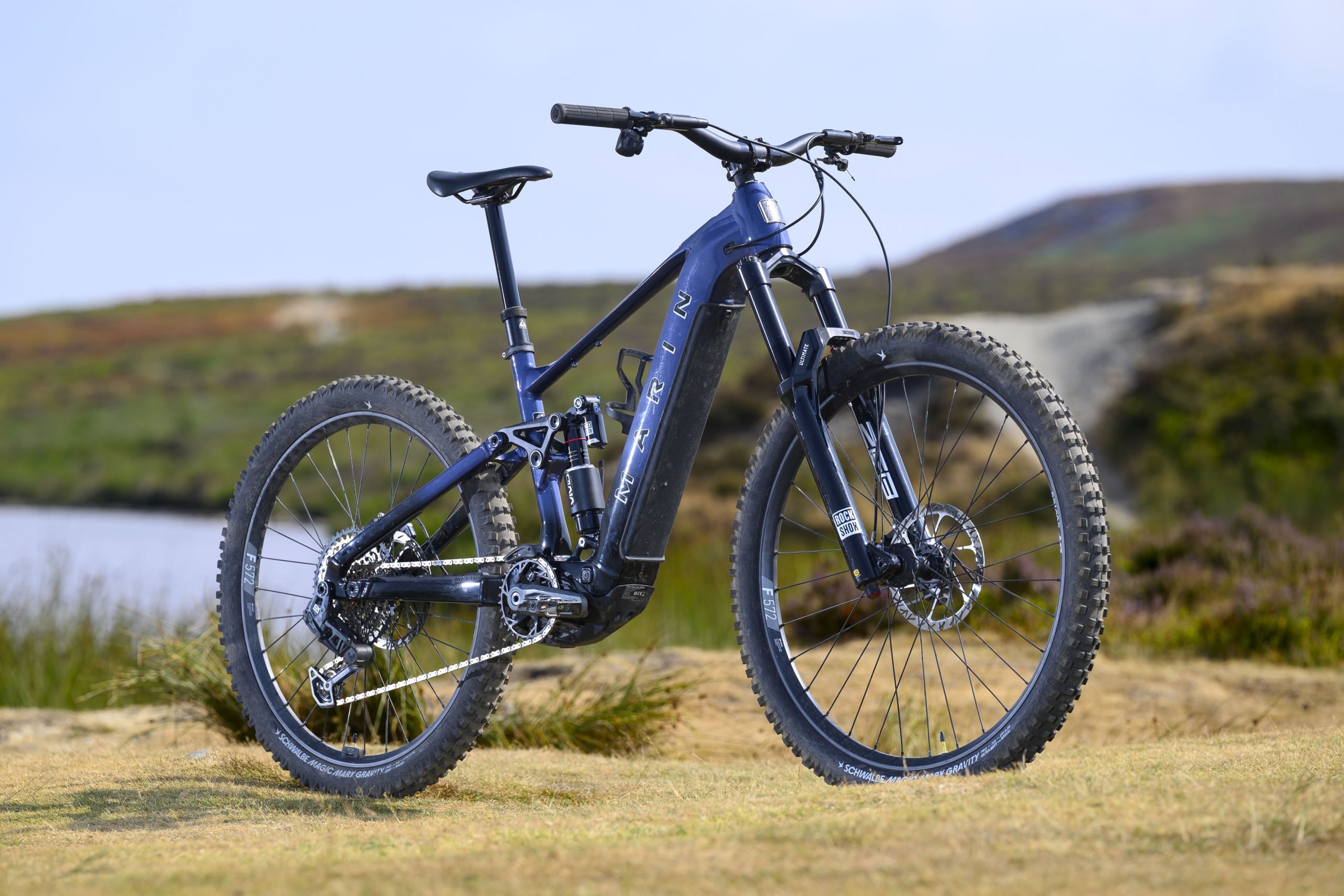
The Alpine Trail EXR is built around commitment. Choose the line early and its long, damped chassis turns speed and roughness into security.
Its 63-degree head angle, 1,256mm wheelbase and 25.18kg mass explain both sides of the ride: there's formidable stability, but that becomes a cost when the trail demands improvisation.
Its suspension manages large impacts well, the chassis remains controlled under braking and the rider position creates confidence on steep terrain.
The unavoidable compromise is its weight. The Marin requires early, deliberate handling inputs and feels more reluctant to change direction than the lighter or more intuitive bikes in this test. Bosch’s surging standstill response also demands care during technical restarts.
It does what Marin promises, though: it's a tough, stable and dependable enduro eMTB with the range, specification and support network for serious terrain.
Riders who prioritise calm control and value over agility should find plenty to like. Anyone looking for a light, reactive or playful ride will be better served elsewhere.
Product
| Brand | Marin |
| Price | €7999.00, £6899.00, $8999.00 |
| Weight | 25.18kg |
Features
| Fork | RockShox Zeb Ultimate, |
| Stem | Marin CNC 35mm |
| Chain | GX T-Type |
| Frame | Series 4 aluminium, 160mm travel |
| Motor | Bosch Performance Line CX |
| Tyres | Schwalbe Magic Mary Radial Gravity Pro Ultra |
| Brakes | SRAM Maven Silver, 200mm rotors |
| Cranks | SRAM GX, 150mm, 34t |
| Saddle | WTB Devo Pick-Up |
| Wheels | DT Swiss M552 rims and 370 Hybrid hubs |
| Shifter | SRAM AXS Pod |
| Cassette | SRAM XS-1275 10-52t |
| Seatpost | PNW Loam, 170mm on medium |
| Grips/tape | Marin Grizzly |
| Handlebar | PNW Range 800mm, 38mm rise |
| Rear shock | RockShox Vivid Air Ultimate |
| Available sizes | S, M, L, XL |
| Rear derailleur | SRAM GX Eagle AXS Transmission |
| Front derailleur | SRAM GX Eagle AXS Transmission |