SQUIRREL_14133155
Beyond the norm-challenging looks of the Factor One lies a brilliant road bike, with its high-performance aerodynamics the most notable of its many considerable charms.
When you add in a rider-first ride position and fast handling that reminds me of the best classic race bikes, it makes for an exhilarating ride.
It's all wrapped up in a firmly efficient bike that’s race-ready, without excluding fans of fast road bikes who ride without a sponsor's logo emblazoned on their jersey. It adds up to a seriously fun bike.
What you need to know about the Factor One
- Claimed to be the most aero race bike available
- Rider-first geometry improves comfort
- Responsive race-bike handling
- Lots of options for optimal fit
- Very fast, very fun, very expensive
Factor One performance
The One is, according to lead engineer Graham Shrive, the evolution of everything Factor has learned to date – be it from the record-breaking Hanzo track bike or the Ostro VAM Chris Froome rode at the tail end of his stellar career.
However, I’d argue you can see influence from Shrive's previous day job at Cervélo, working on projects such as the S5 and P5X.
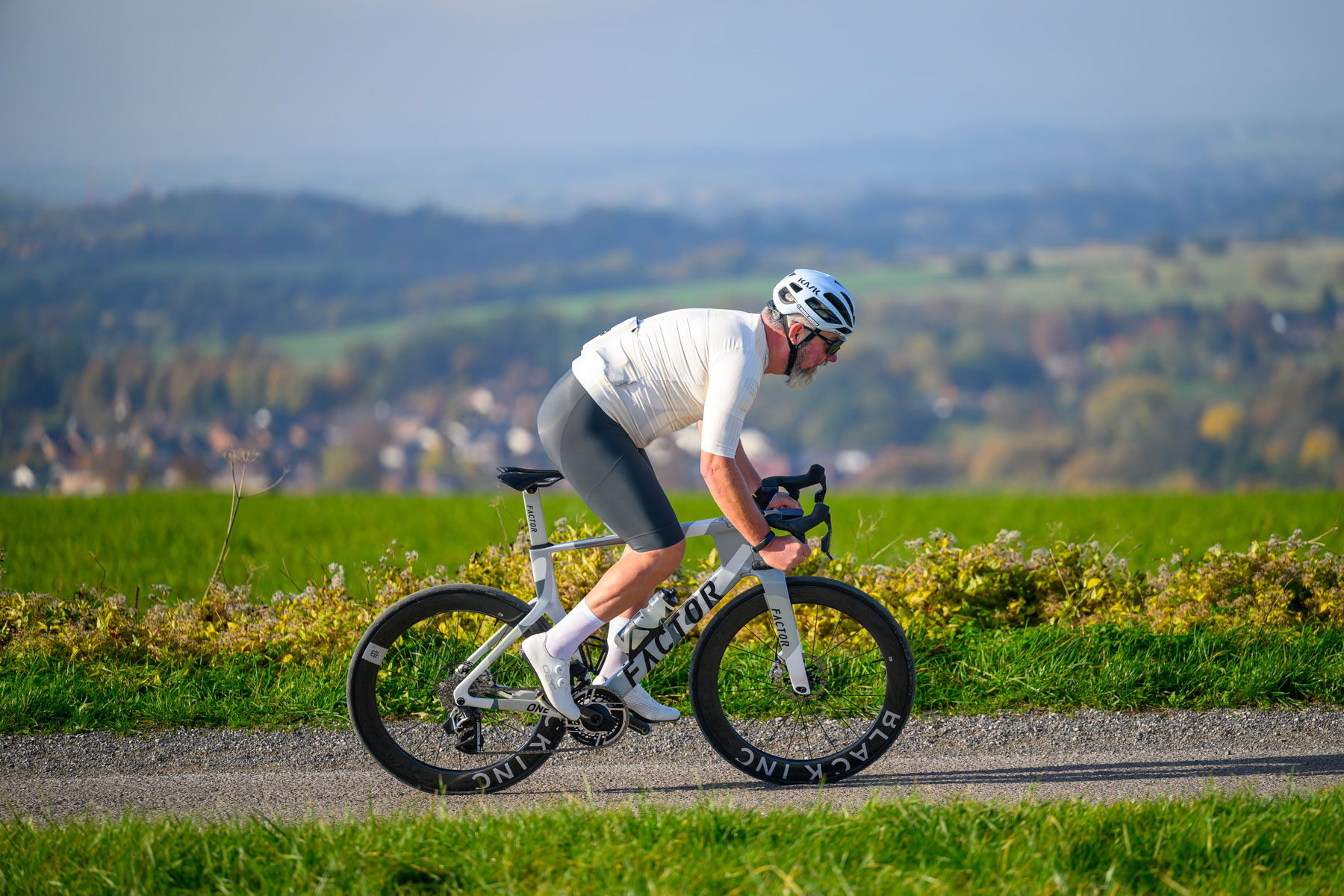
All those plaudits are meaningless if the bike isn’t a good place to be. The One is obviously very much a race bike, but even after four hours or more in the saddle, I still felt relatively comfortable. It’s no Cannondale Synapse, Canyon Endurace or Giant Defy. It is, though, more comfortable than many dedicated aero race bikes I’ve tried over the years.

When it comes to the design, Factor should be applauded for its quick interpretation of the UCI regulations being relaxed, and bringing the One to fruition at a pace none of its rivals could match.
Perhaps that’s down to Factor being one of the very few brands around that owns its means of production rather than relying on contractors for manufacturing. Or it could just be that the team at Factor is prepared to take risks larger brands won’t for commercial reasons, rather than pure performance. Either way I’m impressed by the One’s ambition and, overall, the way it rides.
This bike scores most points with its handling. The steering is sharp and the short back end gives the One an agility I’ve found lacking in most aero race bikes. The clever combination of new thinking around the geometry and cutting-edge aero results in a bike that’s exceptional pretty much everywhere.
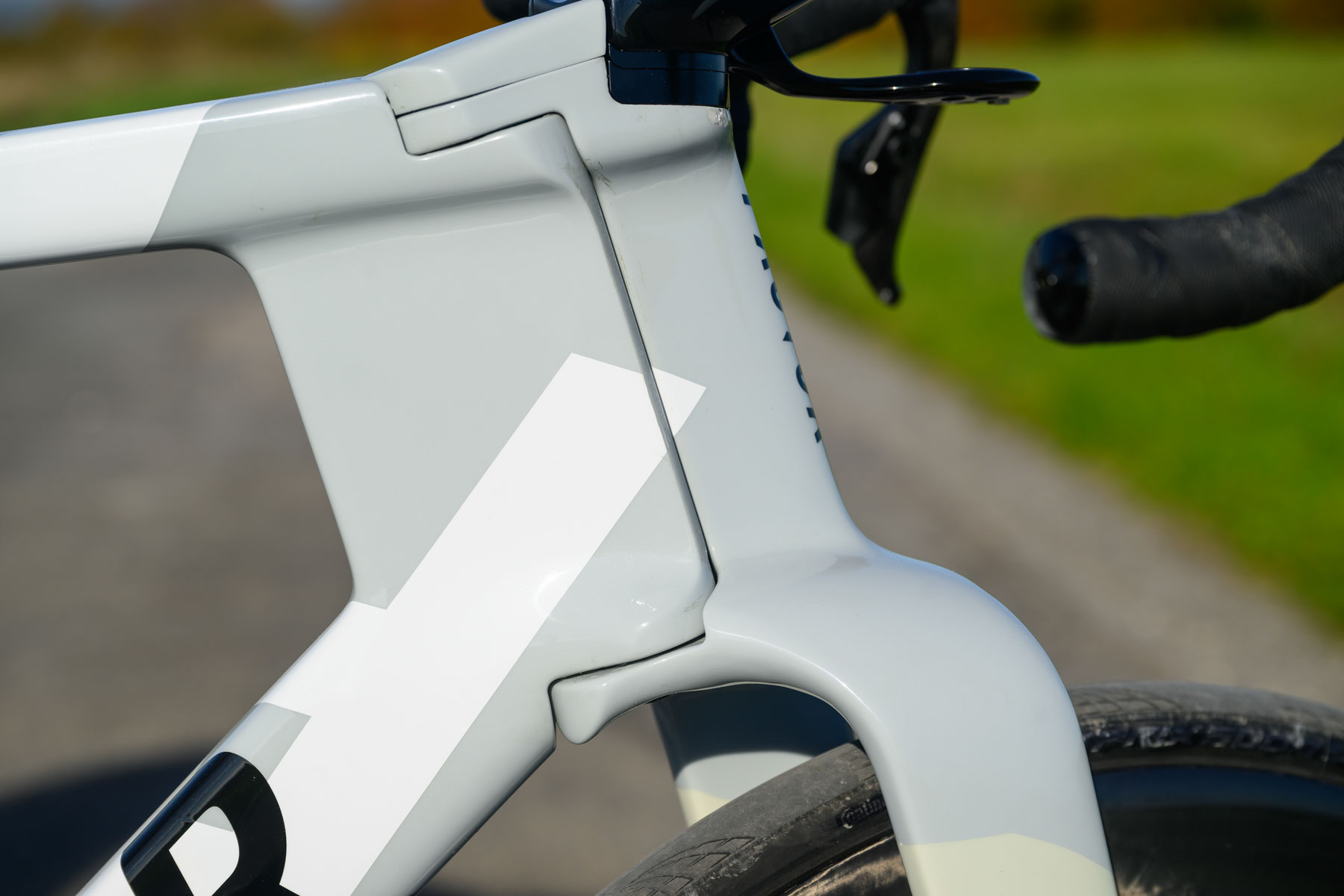
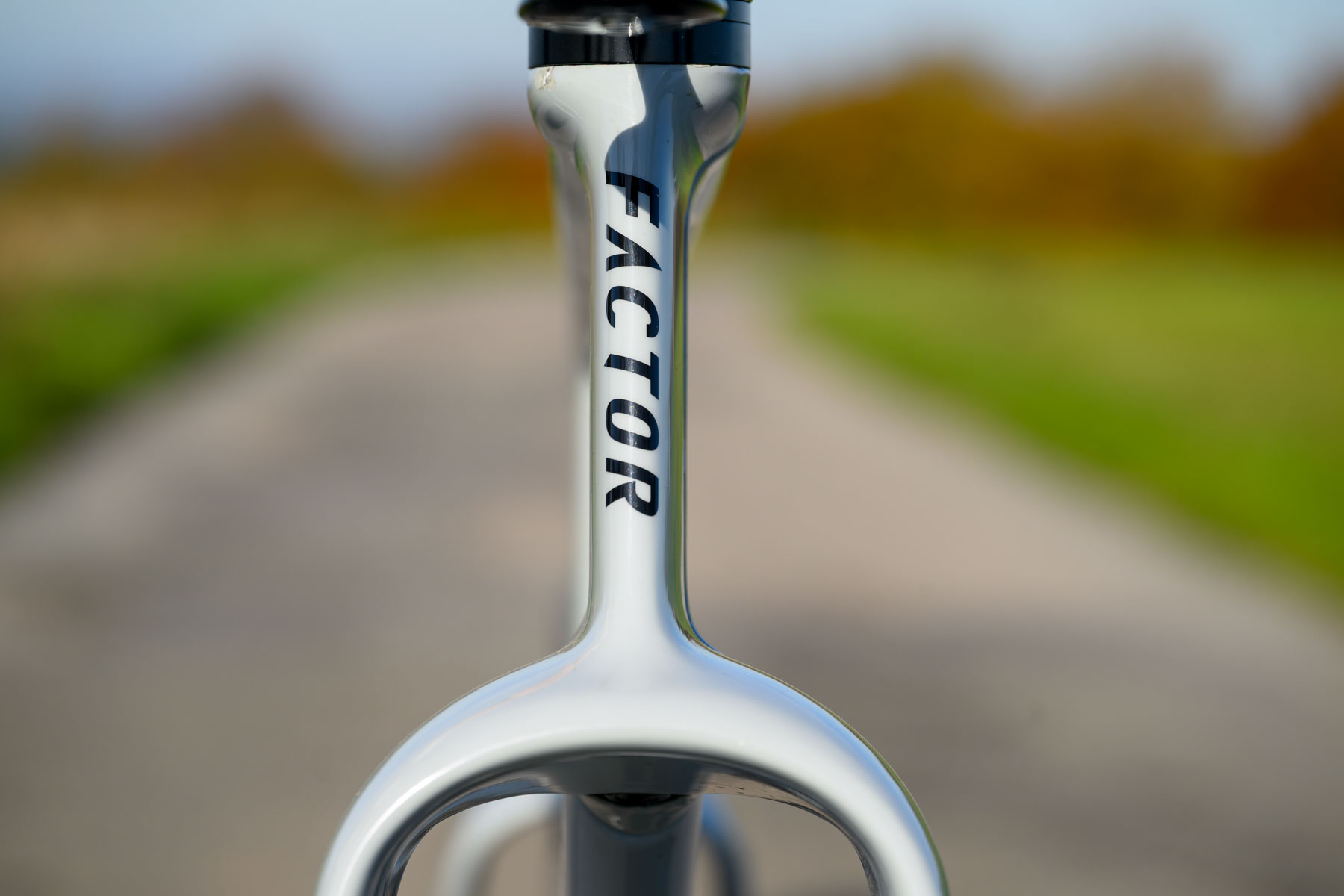
With the radical front end that combines a bayonet-style fork (like the Cervélo S5 and Colnago Y1Rs) and the unique 'chin' fairing of the near-vertical fork, Factor claims this shape controls the airflow, minimising spillover drag from disrupted air across a wide range of yaw angles.
Factor's claims are backed up by independent wind-tunnel testing at the University of Guelph, Canada and SASI’s South Australian Centre For Sports Aerodynamics. This testing showed the One to be more than 8% faster than Factor’s Ostro VAM 2.0, more than 22% faster than Specialized’s Tarmac SL8 and 15% more efficient than the 2024 Cervélo S5.
My experience out on the road proved the One to be a seriously fast bike, and one that takes no prisoners in the pursuit of out-and-out pace.
Of course, it could be lighter. My large 58cm test bike, replete with 62mm-deep Black Inc wheels, tipped the scales at a little over 8kg. However, this isn’t a bike for weight weenies and hill climbers. It’s designed to be quick on the flat and fast overall, and it hits the mark.
I didn’t feel unduly encumbered by a ‘hefty’ bike on longer climbs – in fact, the short wheelbase gave it quite a lively feel. Shallower wheels would drop a bunch of rotational weight if climbing is your thing, but that’s not what the One is for.
The One is brilliant on descents. Its fast steering doesn’t nudge into nervy handling when pushing hard downhill. In fact, it feels remarkably stable and unfazed by gusty winds from any direction.
The ride is firm and the front end feels especially rigid, yet it's never uncomfortably so. I found the solidity of the front end gave me confidence to push a bit harder, drop my shoulder a little more and push the One hard into corners.
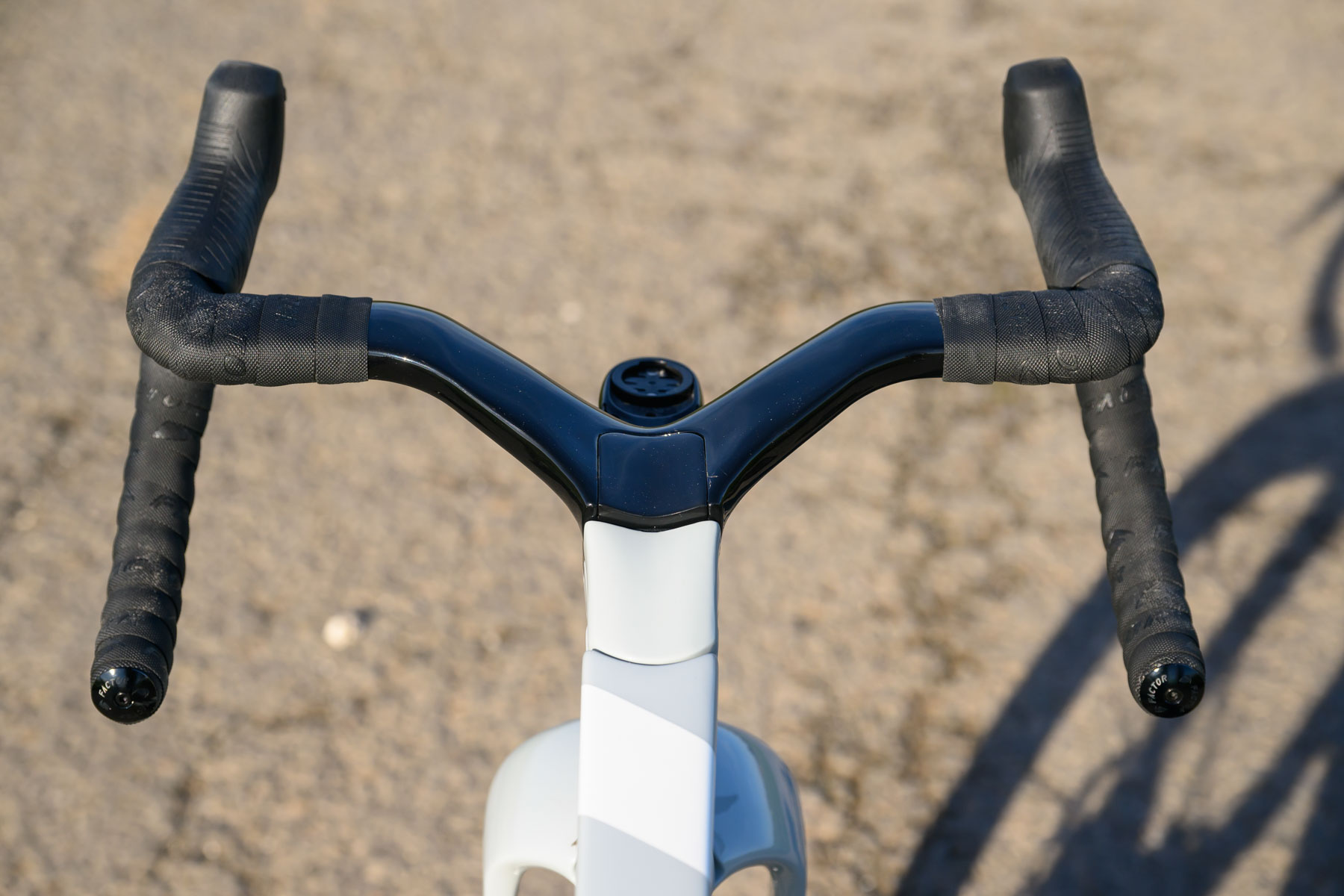
Factor realised in the development of the One that riders’ positions had changed. Its team riders were adopting a much more forward position, rotated over the front of the bike, with the saddle pushed forward over the cranks – which had got shorter. They were also running narrow bars combined with a longer reach, usually with outlandishly long stems.
Eddy Merckx has had the same realisation with the impressive 525R’s progressive geometry.
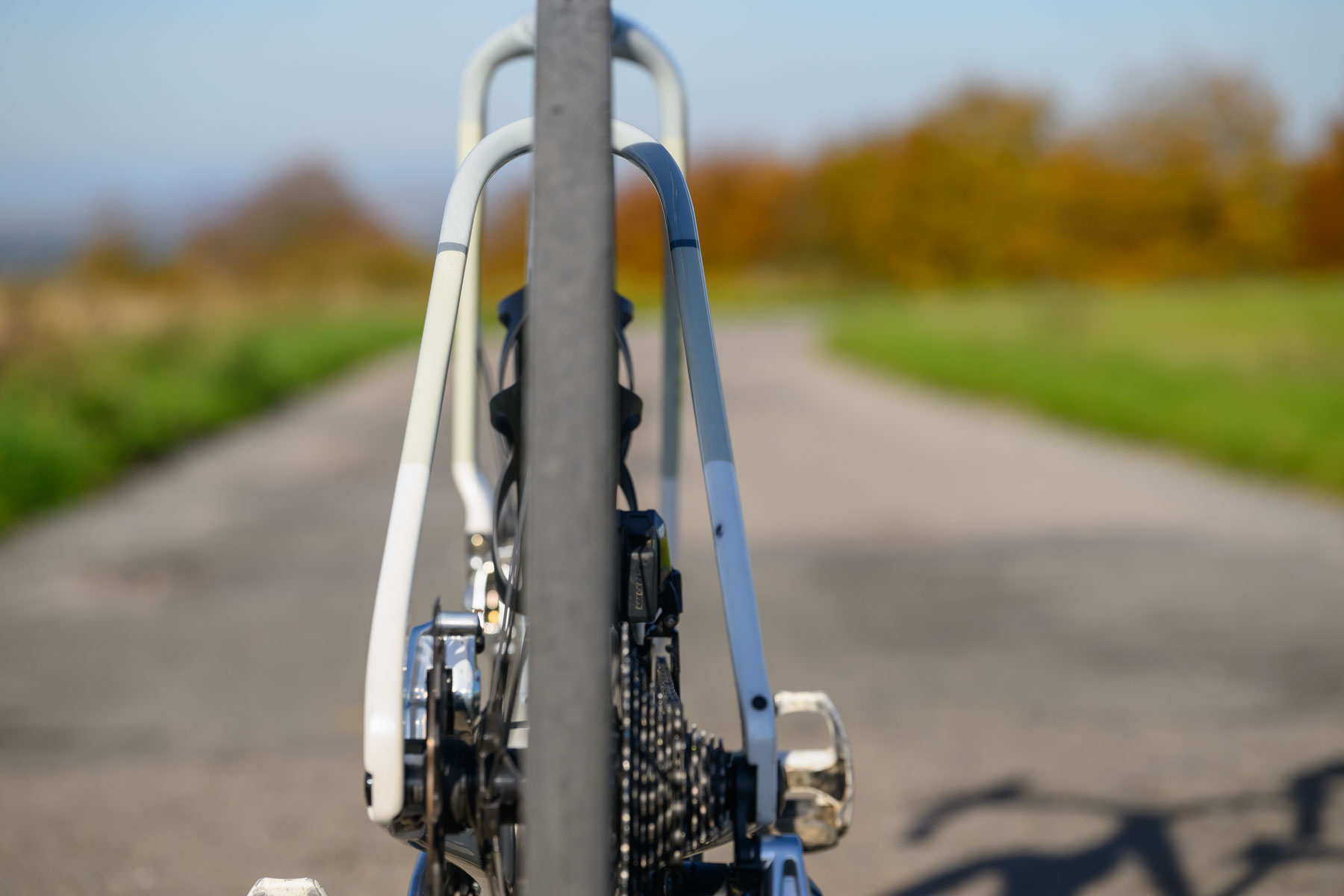
Factor has steepened the seat angle to get the forward position, which has enabled it to shorten the rear end (the One's chainstays measure only 405mm). Yet it has kept the top tube length the same, effectively lengthening the reach.
That means there's no need for excessive stem lengths that compromise the steering and slow down the handling.
A narrow bar is better when combined with a longer reach. I’ve found you don’t get a cramped position when riding, even though the One has a relatively low stack for racers who like the lower position.
I get the narrow bar on the One, as a 'complete system’, but just sticking a narrow bar on a standard-geometry bike doesn’t work for me.
Factor One geometry
| Size (cm) | 47 | 52 | 54 | 56 | 58 |
| Stack (mm) | 503 | 523 | 542 | 565 | 587 |
| Reach (mm) | 390 | 396 | 404 | 412 | 421 |
| Head tube angle (degrees) | 72.5 | 73.3 | 73.3 | 73.3 | 73.3 |
| BB drop (mm) | 77 | 77 | 75 | 75 | 75 |
| Trail (mm) | 57.4 | 58 | 58 | 58 | 58 |
| Fork rake/offset (mm) | 48 | 43 | 43 | 43 | 43 |
| Chainstay length (mm) | 405 | 405 | 405 | 405 | 408 |
| Wheelbase (mm) | 974 | 974 | 988 | 1003 | 1022 |
| Seat tube angle (degrees) | 76.5 | 76 | 76 | 75.5 | 75.5 |
Factor also offers the cockpit with rise options for the bar and stack spacers for the bayonet-fork front end, for those not looking for such a slammed position. My test bike was set up with a spacer, and with the 20mm-rise option on the bar, the ride position worked well for me.
My only criticisms of the One are over its look and its poise.
This is an unashamedly fast bike – it’s all about pure speed, with the aero efficiency to make the most of your efforts. That means whenever I got onto the One, I felt compelled to be ‘on it’. It's not intended for leisurely Sunday rides with your mates; the One demands to be always ridden on the limit.
If I sat up and cruised, holding the tops of that radical aero drop bar, I felt a wave of impostor syndrome. This isn’t a bike you take a break from big efforts on (or at least not while anyone is looking).
Factor has got everything right when it comes to specification on this bike; it has the brilliant SRAM Red AXS, replete with power meter and pro-level gearing (48/35 crankset and 10-33 cassette).
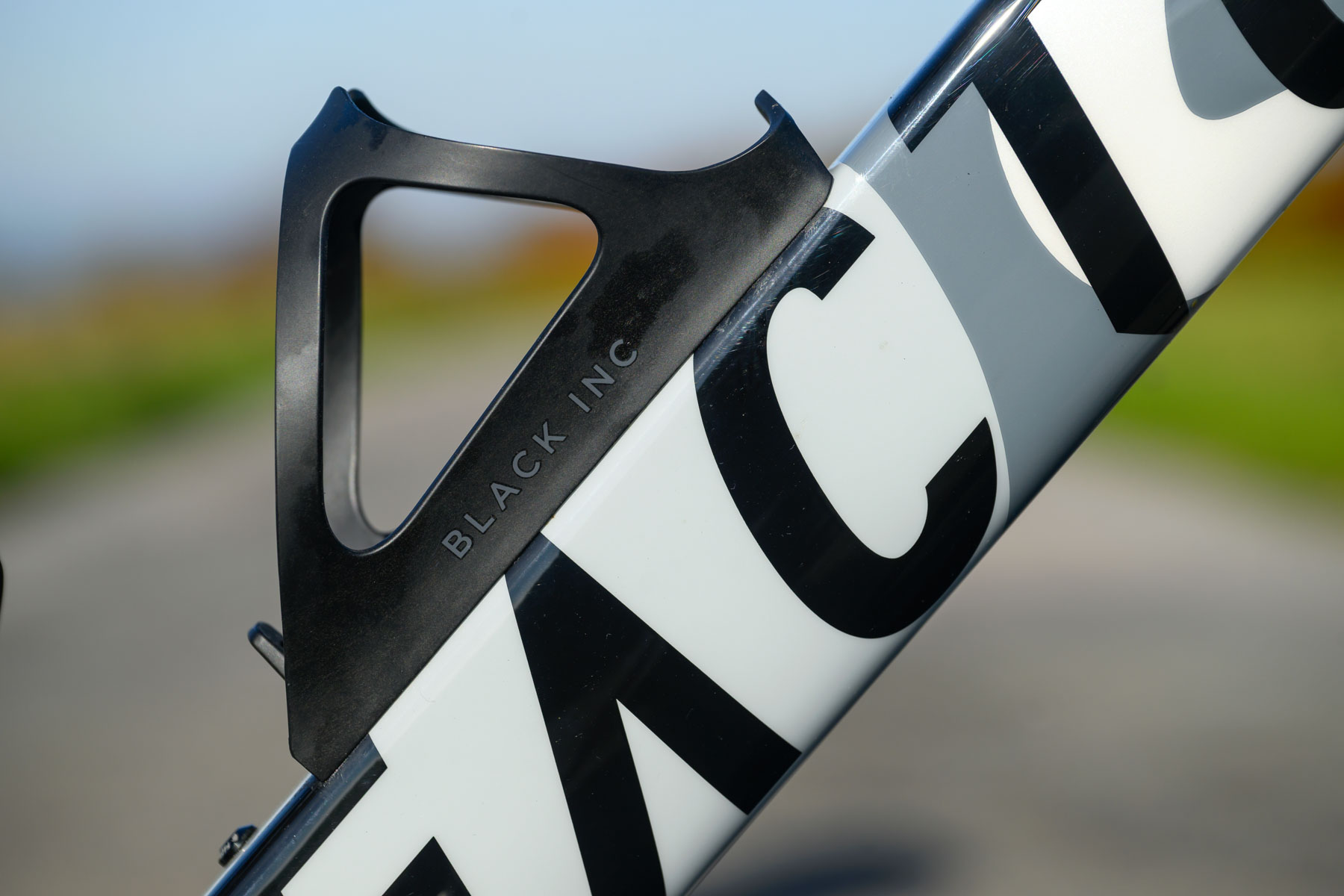
It all works as well as you'd expect, alongside the Black Inc wheels. These come with an impressive spec of 1,398g weight, 23mm internal width and an external 29mm tubeless carbon rim. They're 62mm deep front and rear, with ceramic bearings and a minimal 20 spokes front and rear.
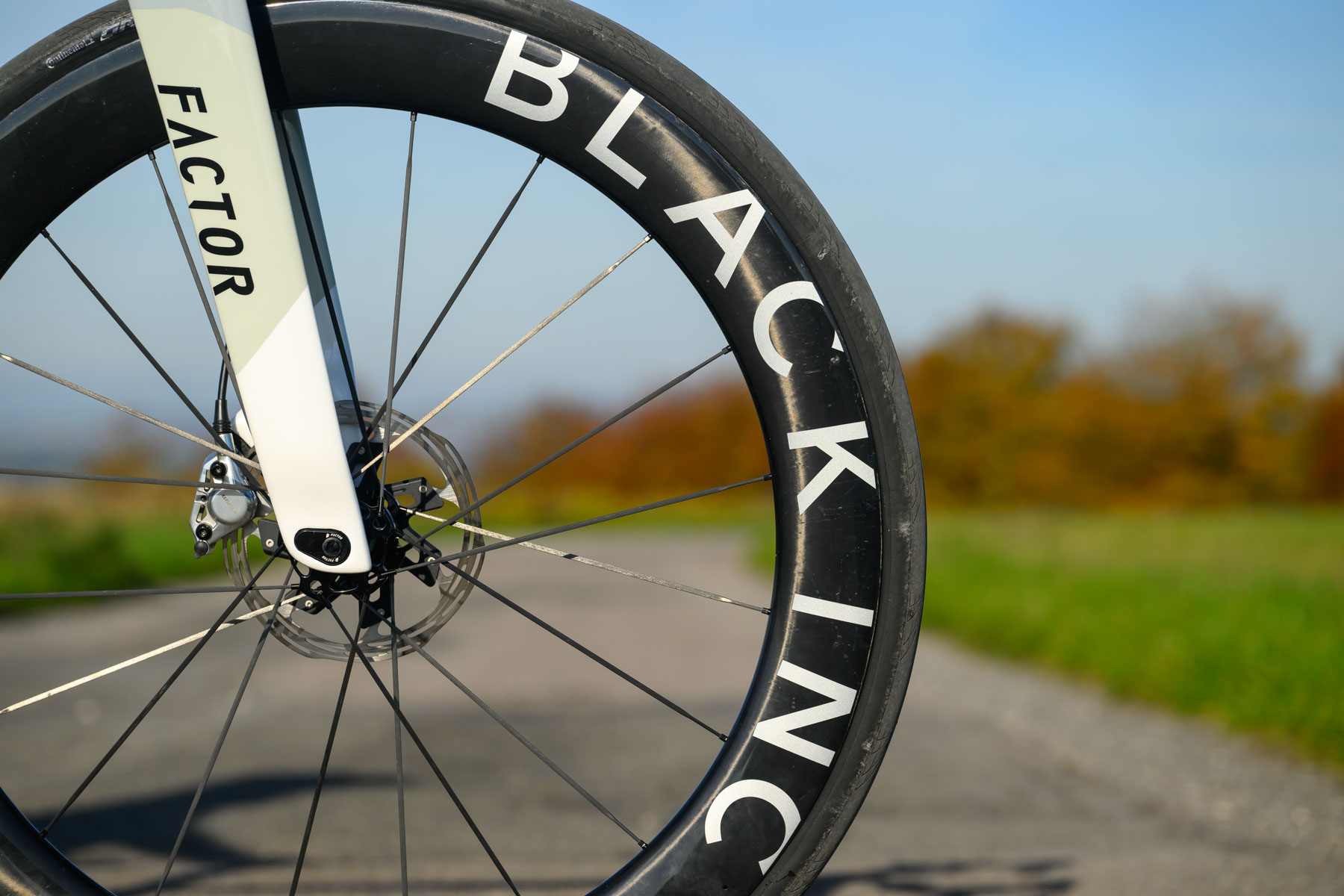
The wheels are shod with Continental GP5000 S TR tyres in a 30mm size; the frame and fork have clearance for 34mm, so you can go bigger if you want to up the comfort.
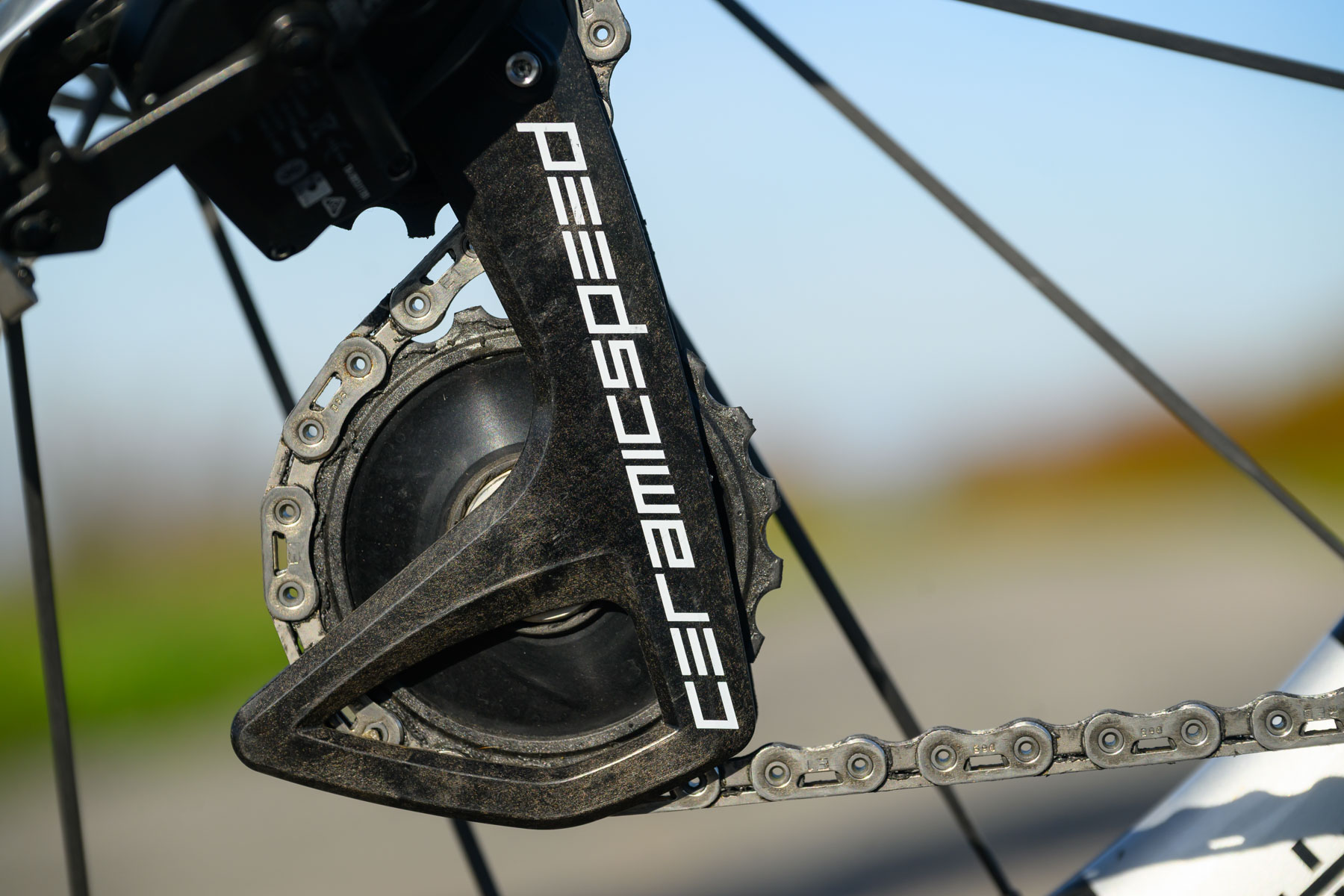
The bike I tested is priced at £13,098 / $14,688 / €16,098, including the CeramicSpeed OSPW (oversized pulley wheel) upgrade to the drivetrain. The standard price, of £12,499 / $14,199 / €15,499, compares well to its premium competition, albeit the One is at the very premium end of the market.
Cannondale’s latest SuperSix Evo Lab 71 Team with SRAM Red AXS is priced similarly, at £12,500 / $14,999 / €12,799.
Pinarello’s Dogma F with SRAM Red AXS is more expensive at £13,000 / $16,000 / €13,900. Colnago’s Y1Rs with Dura-Ace Di2 is cheaper in the UK at £11,900 / $14,177 / €13,800. Cervélo’s S5 with SRAM Red AXS is more expensive at £12,750 / $14,500 / €13,900.
Factor One SRAM Red AXS bottom line
The divisive looks and ‘pure race’ design of the Factor One are certainly not what I’d usually go for – but I was very pleasantly surprised by how much I enjoyed my time with this radical racer.
Its lively handling is exciting, yet it’s remarkably stable at speed. The ride is firm, but it’s not at the expense of your energy. Its purposeful ride position isn’t as extreme as some, and I always found myself able to stay in position to get the power down, without straining, stretching or feeling cramped.
If you have aspirations to race or try to set a PB every time you get out on your bike, and you have a tall budget, the One should be on your shortlist.
After this, the Merckx 525R and the Ridley Noah Fast 3.0, I’m convinced progressive road geometry, with longer front centres and steep seat angles, is the way forward. The next time I’m looking for a road race bike, the geometry tables will be my first port of call.
Product
| Brand | Factor |
| Price | €16098.00, £13098.00, $14688.00 |
| br_whatWeTested | Factor ONE Red AXS |
| Weight | 8.08kg |
Features
| Fork | ONE Wide Stance carbon Fork |
| Chain | SRAM Red AXS |
| Frame | Carbon; TeXtreme®, Toray®, Nippon Graphite® Pitch-Based Fiber |
| Tyres | Continental GP5000s TR 30mm |
| Brakes | SRAM Red AXS |
| Cranks | SRAM Red AXS, 170mm, 48/35 with power meter |
| Saddle | Selle Italia Boost SLR |
| Wheels | Black Inc SIXTY-TWO |
| Headset | Ceramic speed 1-1/8″ upper and lower |
| Shifter | SRAM Red AXS |
| Cassette | SRAM Red AXS 10/33 |
| Seatpost | Factor One carbon, 0 mm setback |
| Grips/tape | Factor |
| Handlebar | Factor Integrated Barstem Reach 80mm, drop 120mm. 380mm bar |
| Bottom bracket | CeramicSpeed T47A Aluminium cups / CeramicSpeed bearings DUB |
| Available sizes | 47/52/54/56/58cm |
| Rear derailleur | SRAM Red AXS |
| Front derailleur | SRAM Red AXS |
SQUIRREL_14133155