Eddy Merckx. The Cannibal. The GOAT. As with Muhammad Ali in boxing or Pelé in football, if people only knew one cyclist around the time of the moon landings, it was that Belgian…
Like Novak Djokovic on any surface of tennis court, or Michael Phelps in any swimming discipline, Merckx won across every type of race. Track, cobbles, mountains, sprints. Hour, day, week, fortnight or longer. The lot.
In the late 1960s and early 1970s, Merckx, now 81, conquered all. Sometimes by, literally, miles. Five Tours, five Giros, an España. All five ‘Monuments’ (Milan-San Remo, Tour of Flanders, Paris-Roubaix, Liège-Bastogne-Liège, Giro di Lombardia). Countless records. He won almost everything – every Classic race except Paris-Tours.
Why is Tadej Pogačar compared to Eddy Merckx?
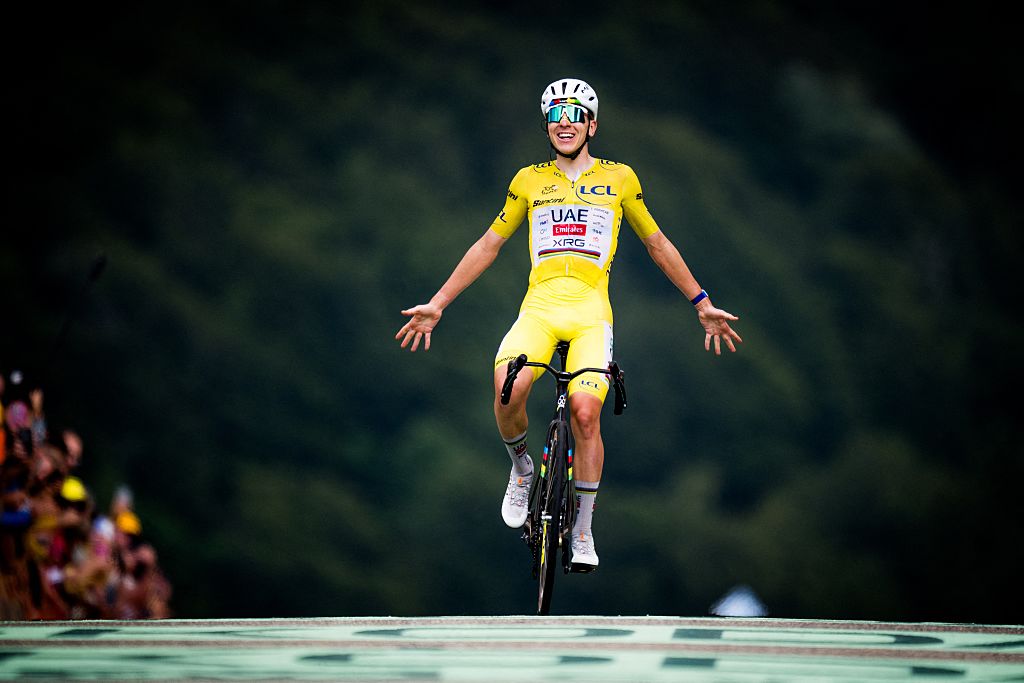
The only rider to come close to replicating that all-conquering dominance, at least on the road, is a certain Tadej Pogačar. Ultimately, comparisons between riders who plied their trade nearly 60 years apart are nigh-on impossible – that won't stop us, though – but Pogačar's insatiable appetite for victory is reminiscent of that of Merckx.
Pogačar is currently cantering to a fifth Tour de France victory (that would draw him alongside Merckx, Jacques Anquetil, Bernard Hinault and Miguel Induráin) – at 27 years old.
The Slovenian has also won 13 Monuments (to Merckx's 19) and only Paris-Roubaix evades Pogačar if he is to join Belgian trio Merckx, Rik Van Looy and Roger De Vlaeminck as the riders to have won all five of cycling's biggest one-day races.
In terms of total victories, however, there's a clear winner – Merckx finished his career with 525 wins, while Pogačar sits on 125 (at the time of writing).
Eddy Merckx's wins, in numbers:
- Total victories: 525
- Tour de France overall wins: 5 (1969, 1970, 1971, 1972, 1974)
- Tour de France individual stage wins: 34
- Giro d'Italia overall wins: 5 (1968, 1970, 1972, 1973, 1974)
- Giro d'Italia individual stage wins: 24
- Vuelta a Espana overall wins: 1 (1973)
- Vuelta a Espana individual stage wins: 6
- Momument wins: 19
- Milan-San Remo – 7 (1966, 1967, 1969, 1971, 1972, 1975, 1976)
- Tour of Flanders – 2 (1968, 1975)
- Paris-Roubaix – 3 (1968, 1970, 1973)
- Liège–Bastogne–Liège – 5 (1969, 1971, 1972, 1973, 1975)
- Giro di Lombardia – 2 (1971, 1972)
- Elite World Championship road race wins: 3 (1967, 1971, 1974)
Why was his nickname 'The Cannibal'?
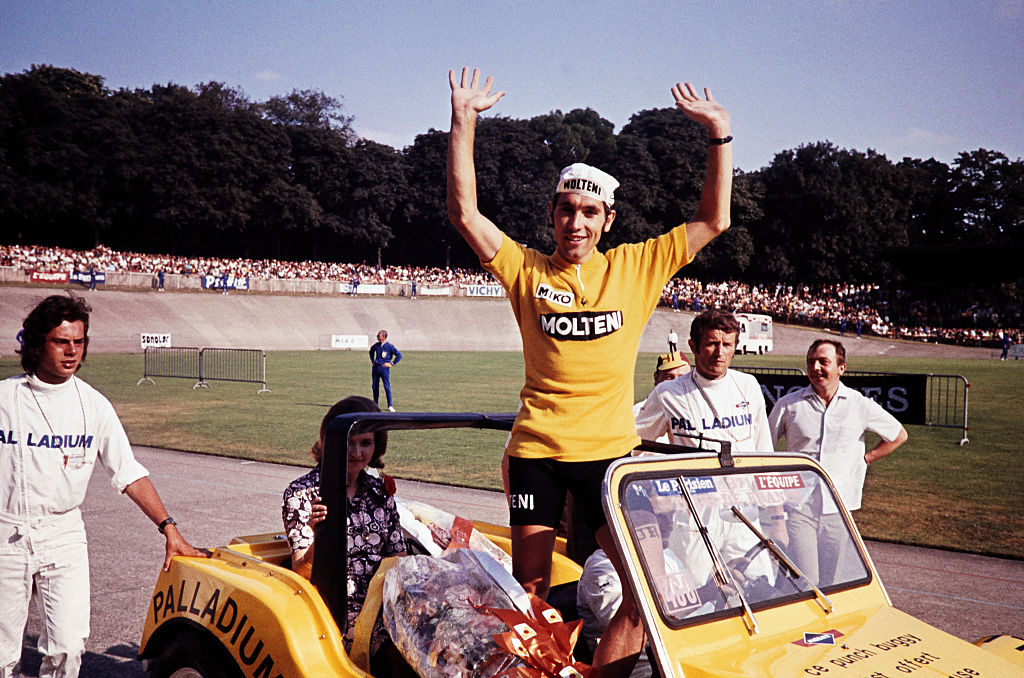
Merckx's ‘Cannibal’ tag came from his all-consuming competitiveness. No following the unwritten rules by letting someone else win a stage if he was ahead.
If he had a beef – with other cyclists, the press or race organisers (most notoriously at the 1969 Giro d’Italia, when he was banned following a dubious ‘drug test result’ – he was later cleared) – his legs usually did the talking.
The Merckx of vintage race photos is aloof, focused. On the podium, he’s nonchalant, with a told-you-so smile. Those to whom he has granted rare interviews report an affable man, quick to laugh, always in control.
When did Merckx retire, and what happened next?
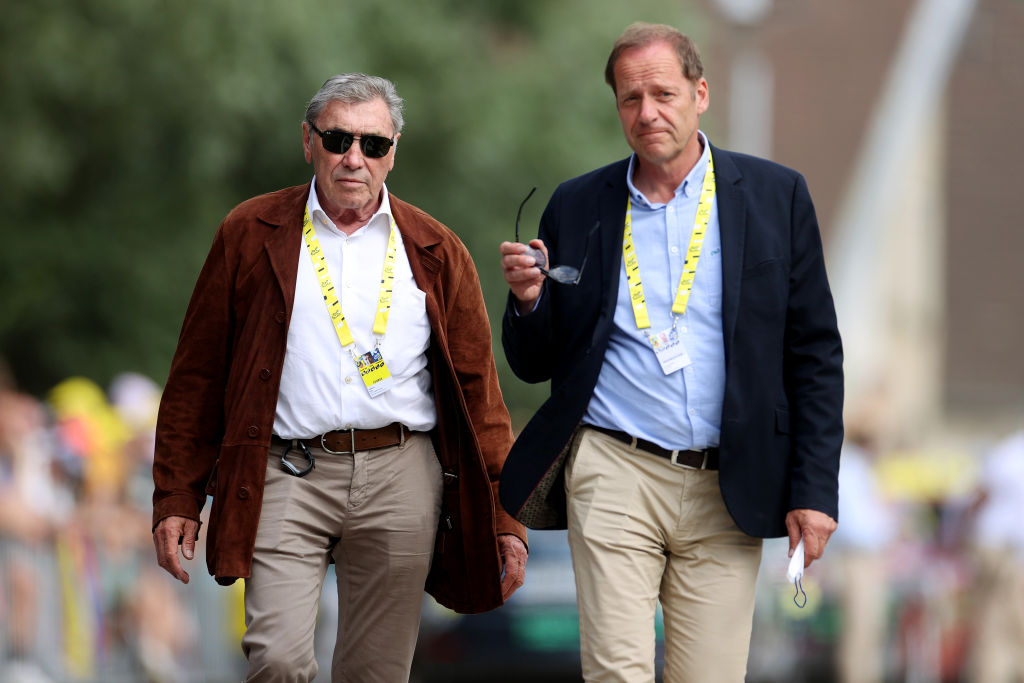
Merckx retired at only 32 in 1978, having made modest earnings compared to today’s riders – a fact that he is keenly aware of, but has evidently coped with.
Since then, he has stayed in cycling. In 1980, he formed Eddy Merckx Cycles, making bikes that were used in pro races, but he sold his majority share in 2008 (the brand survives today thanks to a buyout by Belgian Cycling Factory, Ridley’s parent company, in 2017). He coached various teams and is still one of cycling's most influential figures.
Merckx grew up speaking French and Dutch – his parents ran a grocery shop in Brabant – and is popular in both Flanders and Wallonia, his country’s two sometimes-adversarial main parts. So, we might add ‘social unifier’ to his achievements.
Sorry Adolphe Sax, Audrey Hepburn, Jacques Brel, René Magritte et al – Eddy Merckx might just be the world’s most famous Belgian, too.
So, a victory machine who conquered all on every surface and a voracious appetite that could not be sated, no matter how many wins he racked up. That’s why Eddy Merckx is held in such regard.
More Tour de France questions answered
- How much money does Pogačar earn, and how does that compare to other sports’ top stars?
- What does a Tour de France rider do if they need to poo?
- How dangerous is the Tour de France?
- Why is the Tour de France not on ITV?
- 3,302km in 76 hours: how fast is the Tour de France?
- What is the Tour de France caravan, and why does everyone love it so much?
- Tour de France jargon buster: all the cycling terms you need to know to understand the race