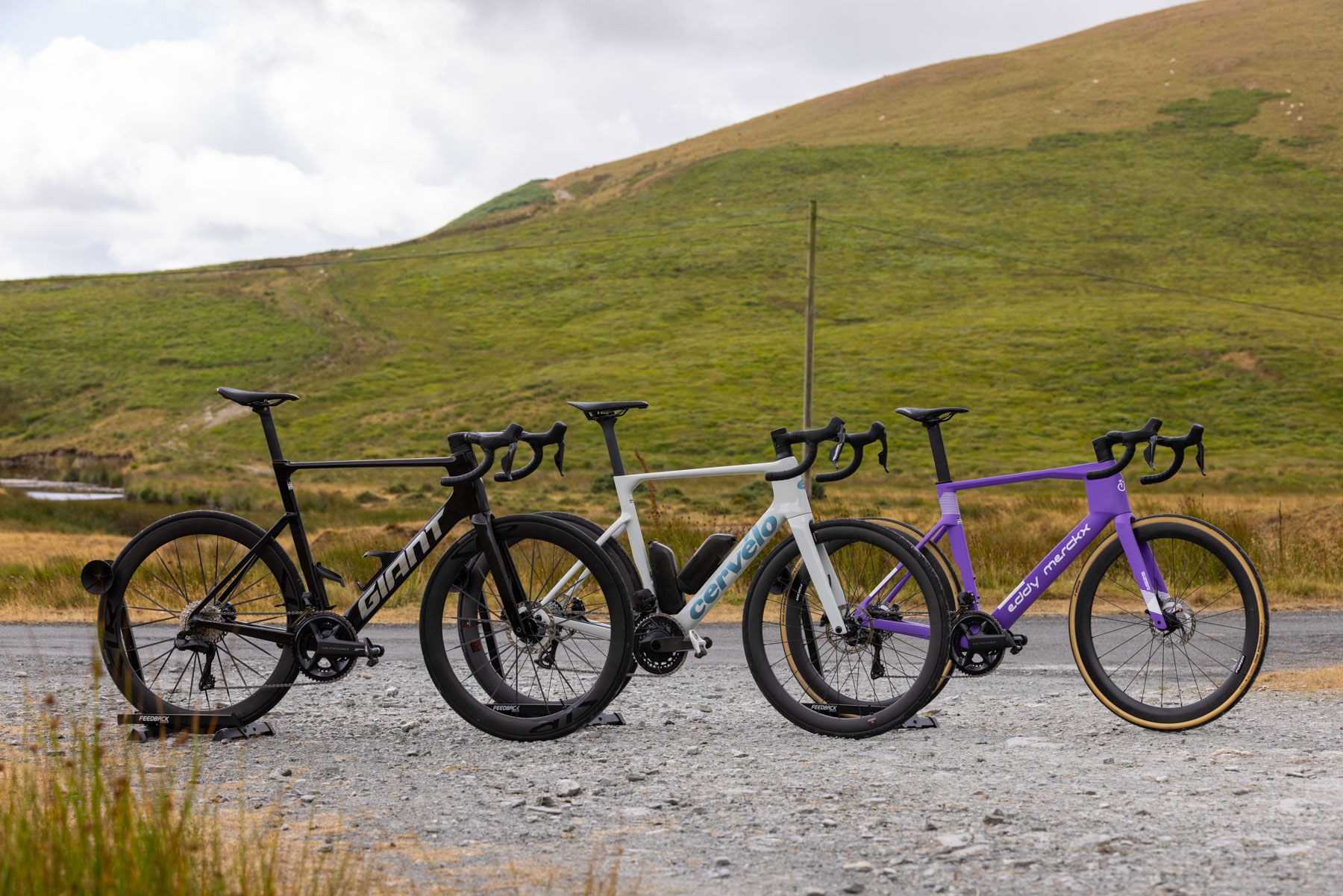
The Eddy Merckx 525R is our 2026 Race Bike of the Year, topping the category from a shortlist of eight bikes. In the process, it had to see off stiff competition in the final showdown between the three leading bikes of this year's test:
- Cervélo Soloist Force AXS
- Giant Propel Advanced Pro 0-Di2
- Eddy Merckx 525R
These three bikes represent the very best in race-bike design in 2026. They show just how much race bikes have changed in the past decade and, in the case of the Merckx specifically, illustrate a genuine shift in how bike designers think about go-fast machines.
Why did I choose the Cervélo Soloist, Giant Propel and Eddy Merckx 525R as my Race Bike of the Year finalists? And why did the Eddy Merckx take top spot in the race category? Read on to find out.
Race bikes for the masses?
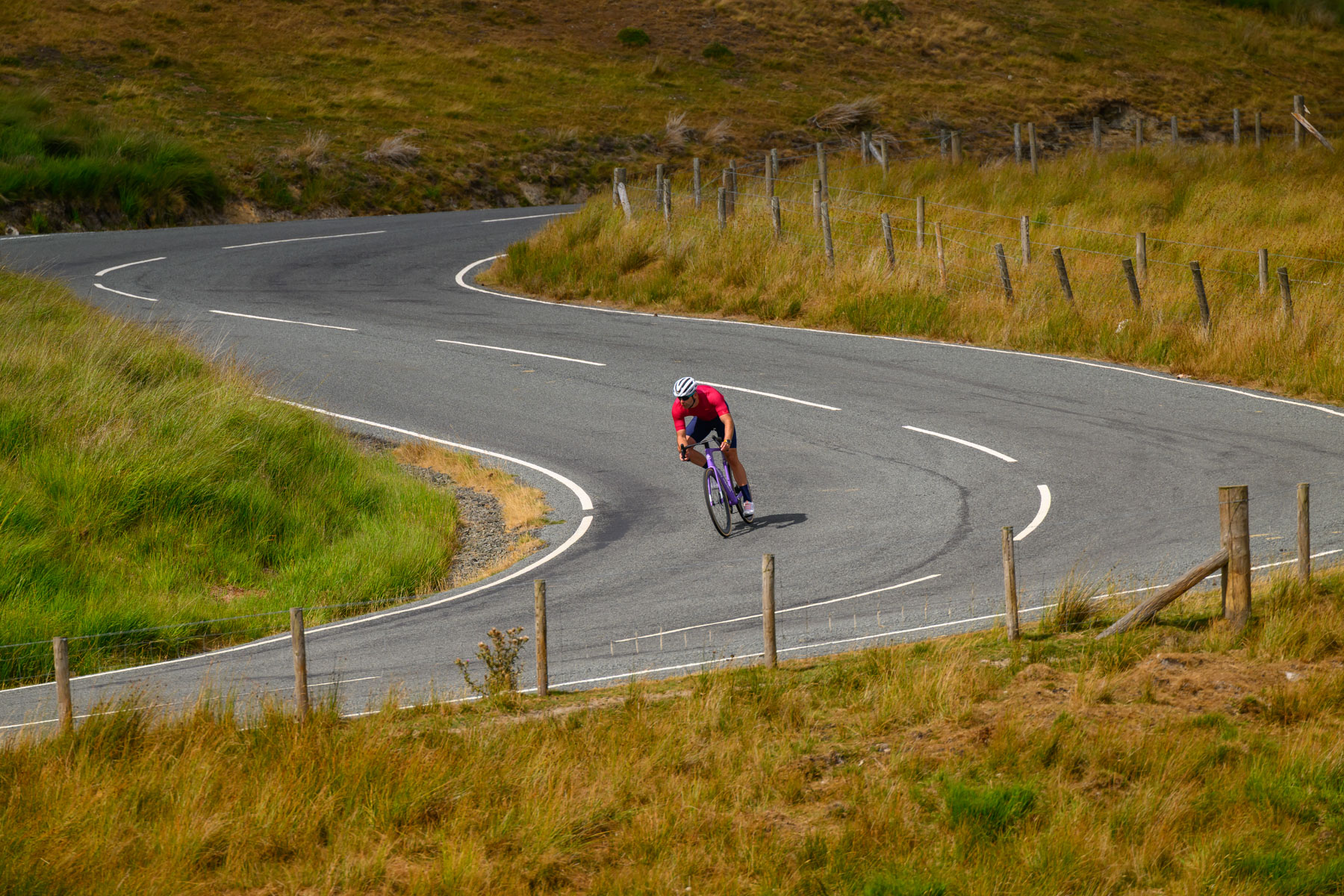
Race bikes are the ultimate expression of speed on the road. Designers and engineers work tirelessly to eke out every ounce of pace to provide racers with the ideal tool to compete.
That said, the latest generation of race bikes are becoming more accommodating; geometry has got less extreme as aerodynamic and biometric knowledge has increased.
That’s why our trio of top-performing bikes are all as fast as ever, but easier to ride. Of course, they’re still not endurance bikes, but they’re all leagues ahead of the best race bikes from a few years ago when it comes to balancing speed and comfort.
The Eddy Merckx 525R is the best we’ve tested in 2026, and the deserved winner of our 2026 Race Bike of the Year award.
What we've tested – the full 2026 Race Bike of the Year shortlist
- Cannondale SuperSix Evo 3 review – £6,995 / $6,999 / €6,499
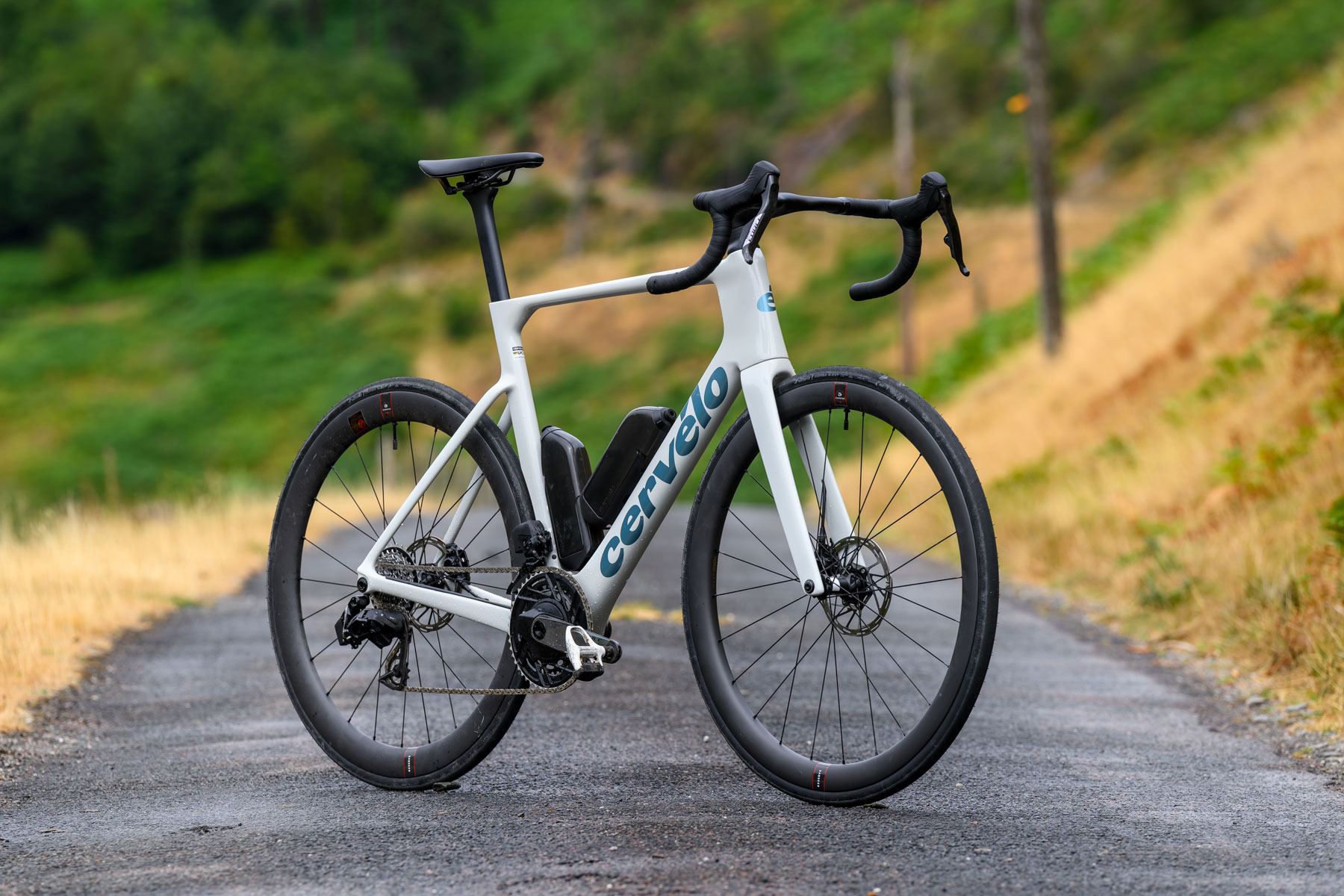
- Cervélo Soloist Force AXS review – £7,000 / $8,500 / €7,499
- Eddy Merckx 525R review – £6,299 / $N/A / €6,999
- Factor Monza SRAM Force w/Power Meter review – £6,799 / $7,199 / €8,299
- Giant Propel Advanced Pro 0-Di2 review – £5,799 / $N/A / €6,600
- Merida Reacto 10K review – £9,500 / $N/A / €10,199
- Rose Shave FFX Red AXS review – £N/A / $N/A / €8,500
- Wilier Filante SLR ID2 Dura-Ace Di2 review – £9,500 / $12,900 / €10,900
In third place: Cervélo Soloist Force AXS
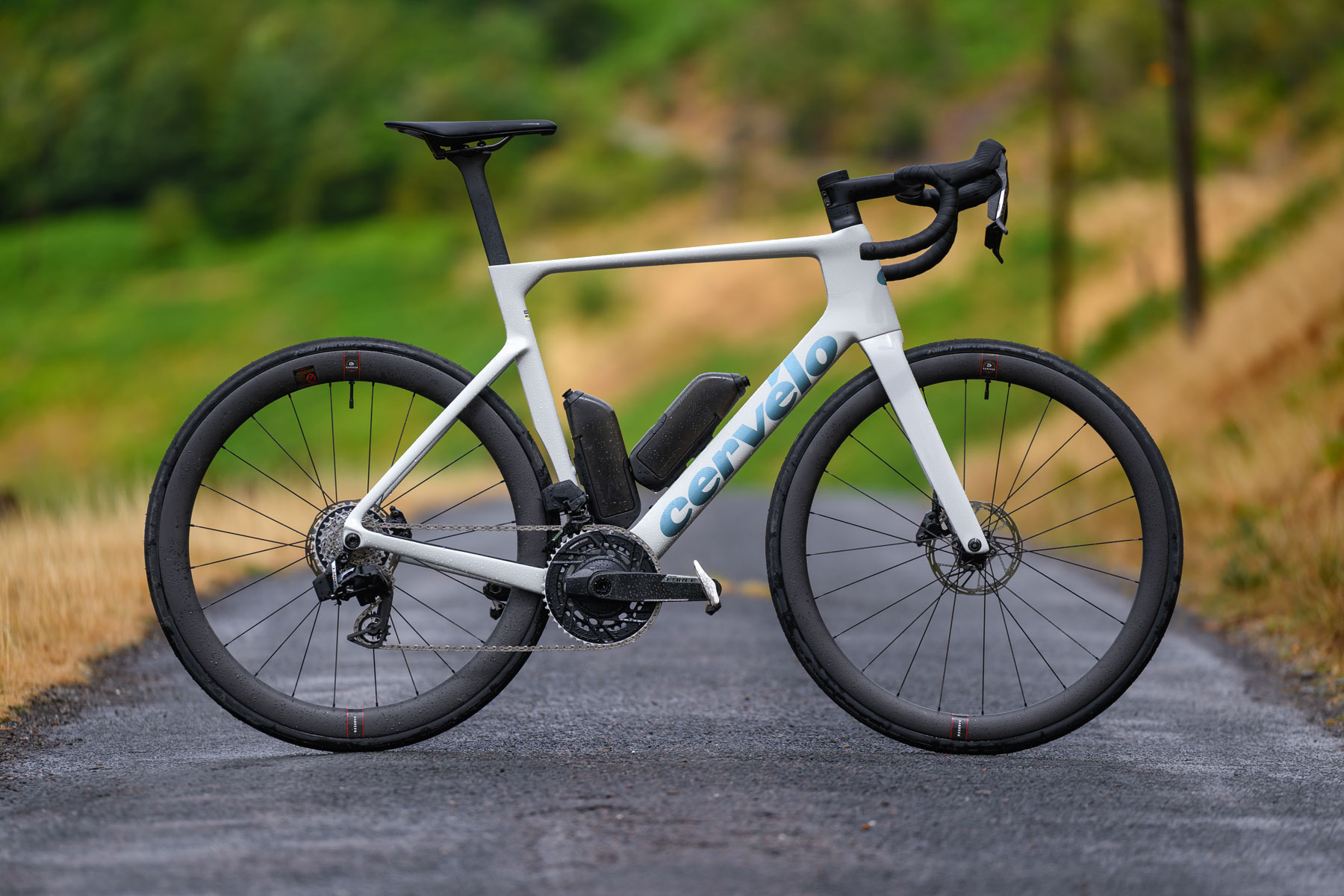
When I first tested the new Soloist, I was enthralled by the way it handles. It gains its nimble agility from sharing much the same geometry as Cervélo’s featherweight R5 all-rounder.
Mix that with some of the aerodynamics from the unique design of the S5 and wrap in a bit of the comfort from the Caledonia endurance bike and it’s my favourite drop-bar road offering from Cervélo.
It’s an easy bike to live with, too. It’s got a T47 threaded bottom bracket, UDH rear end, generous 36mm tyre clearances, and a simpler standard front end and headset compared to the proprietary components of the Cervélo S5.
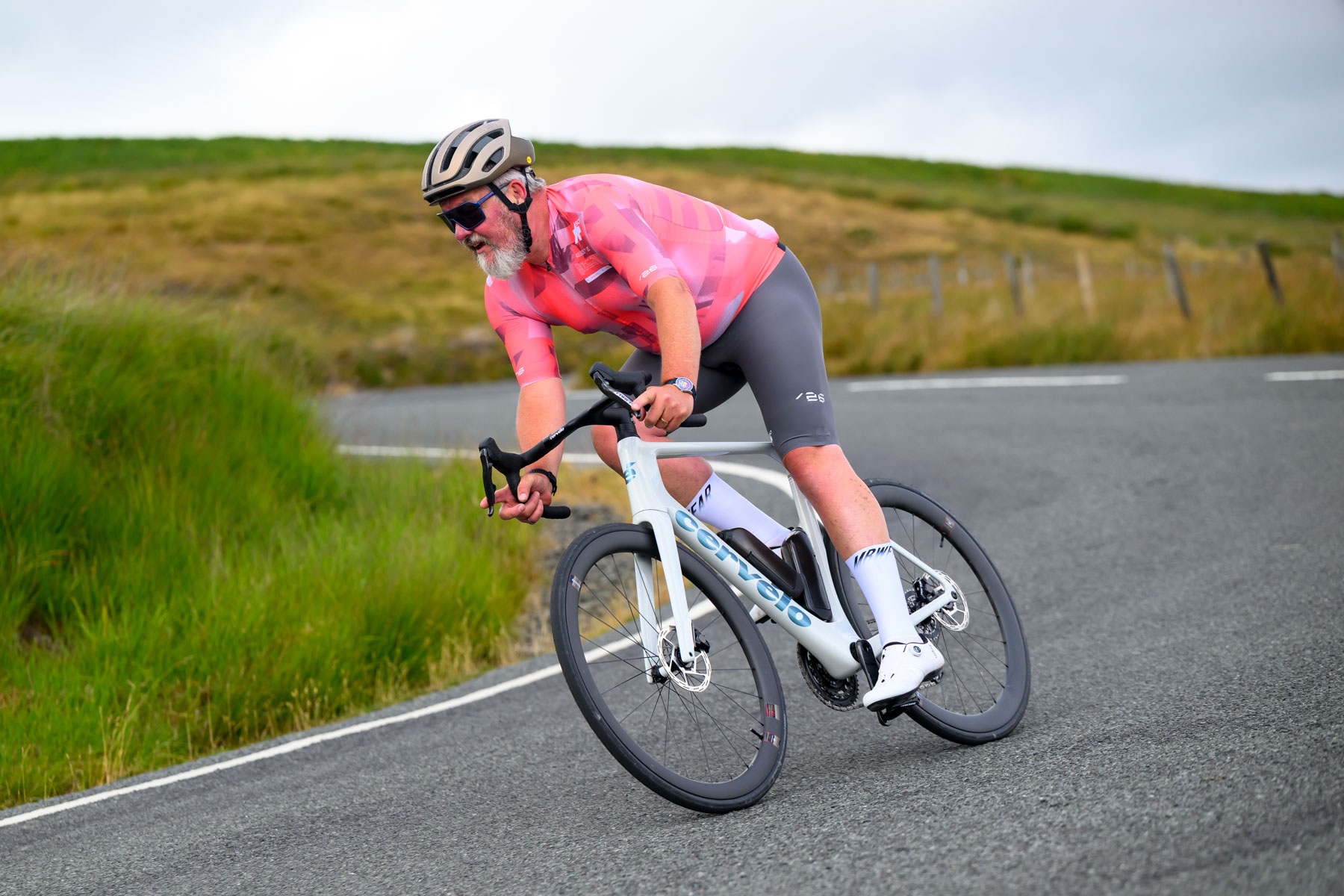
This Force AXS bike costs £7,000 / $8,500 / €7,499, which is in line with similarly equipped rivals from Cannondale, Specialized et al. Compared to its own stablemates, however, a Force AXS equipped S5 would set you back £9,450 / $10,250 / €9,999. That's a massive saving for a ‘premium brand’ bike such as this.
In our Cambrian mountain shootout, the Soloist was my personal favourite when it came to fast downhill sections of road. It rides firmer than both the second-placed Giant Propel and Eddy Merckx 525R winner, though.
In second place: Giant Propel Advanced Pro 0-Di2
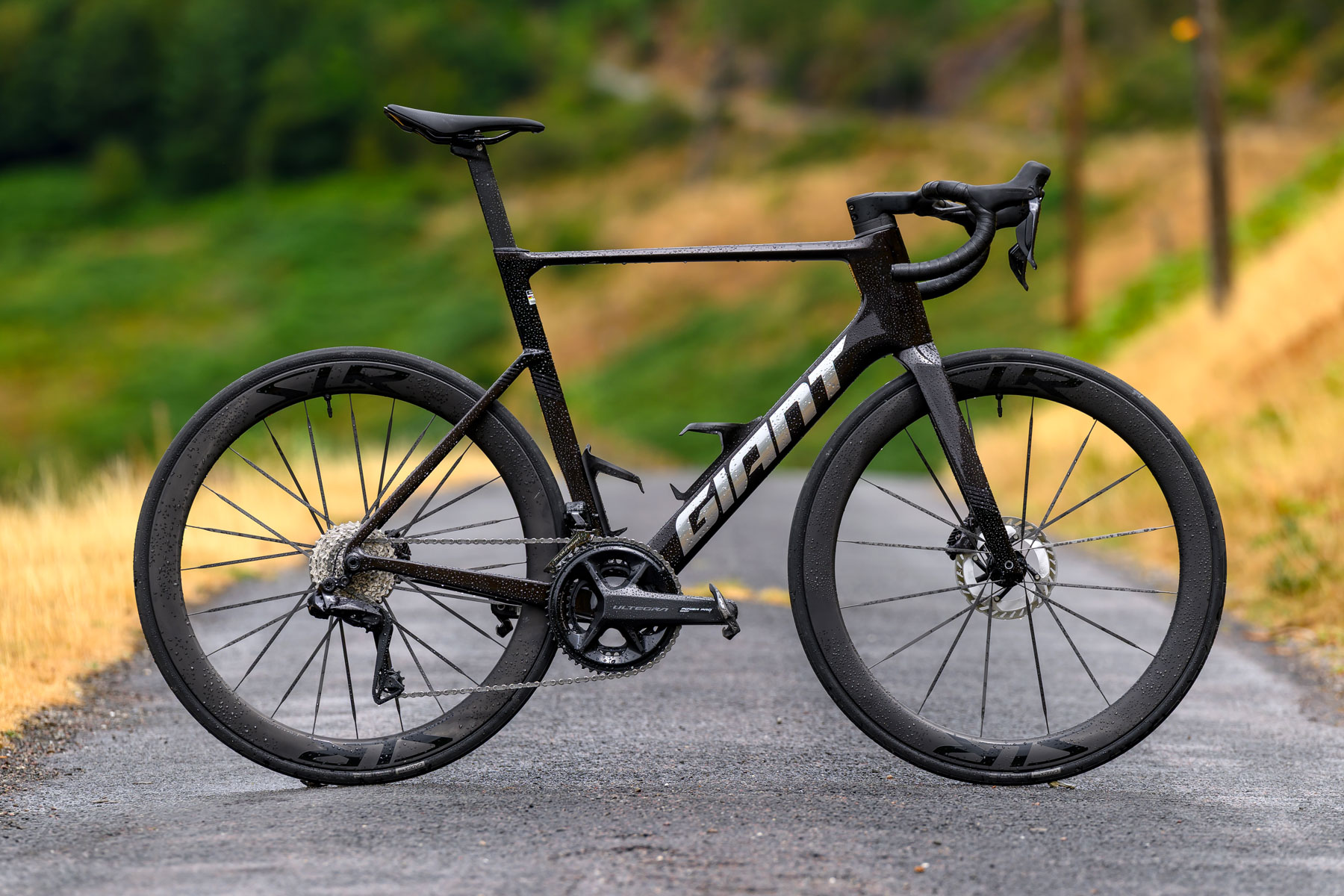
The latest generation of the Propel gets nearly everything right – the balance between light weight, aerodynamics and handling is very hard to fault. The finishing of the bike is exceptional and the equipment levels are spot-on.
As soon as I rode the Propel, I knew it was something special. It has the efficient speed of a true aero race bike, yet the lightness of touch and handling of a great all-rounder. That's not surprising when you consider it shares the same geometry as one of my favourite race bikes for handling, the venerable TCR.
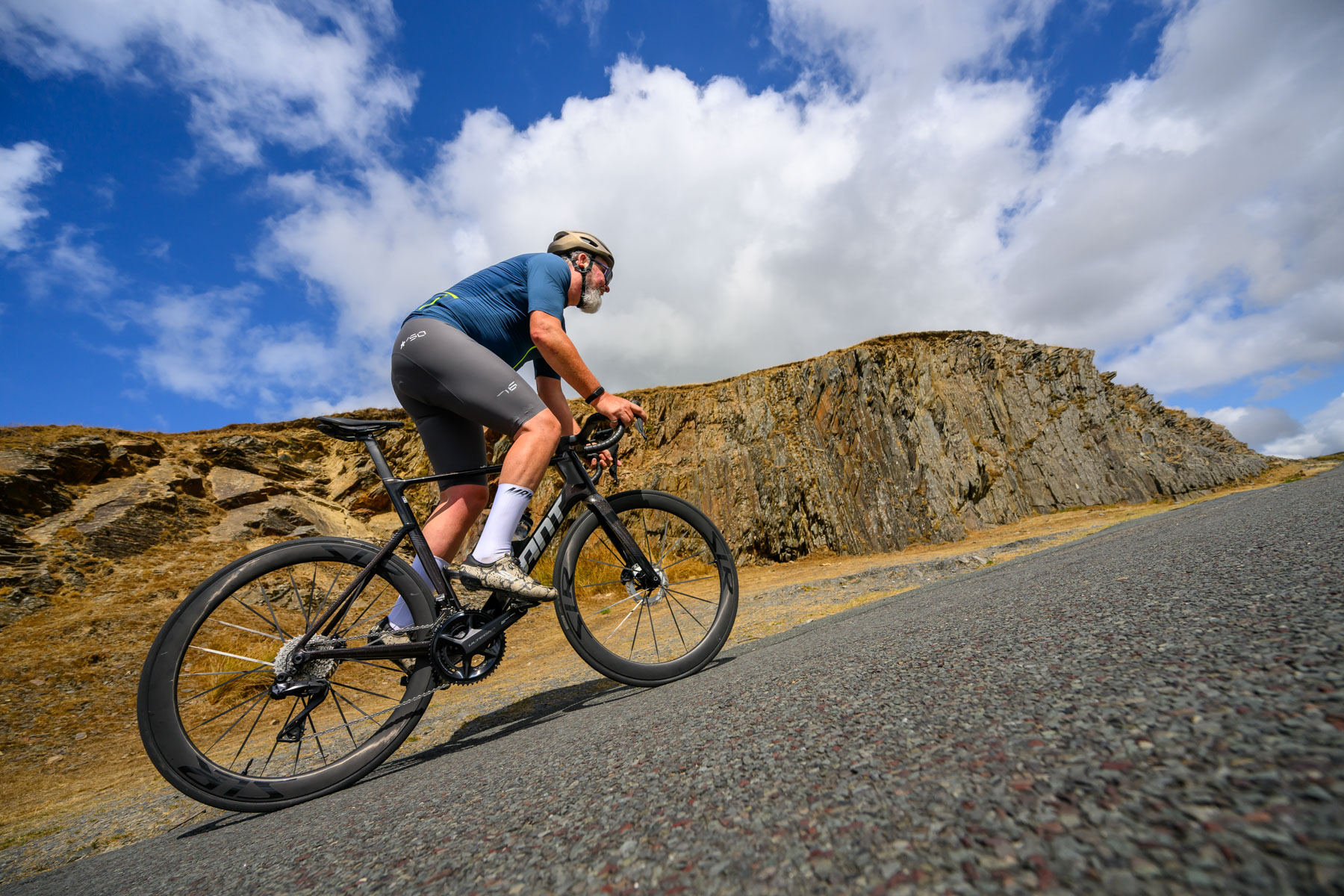
This Propel dismisses the downsides common to aero bikes; it’s not heavier than an all-rounder, in fact the top-of-the-range SL 0 bests the UCI limit in a size medium at 6.5kg.
Even this second-tier bike is impressively light – my large-sized (58cm equivalent) bike tipped the scales at 7.39kg (with Ultegra Di2 and Giant SLR 50mm-deep wheels). The same model of the previous-generation Propel was half a kilo heavier.

It’s good to see the inclusion of a power meter, too. After Giant acquired Stages back in 2024, it made the decision to include power meters on all its performance road bikes.
The Propel's overall road manners are brilliant. It feels light but not flexible, fast handling but not flighty, firm but not uncomfortable; it’s the Goldilocks of race bikes, getting (nearly) everything just right.
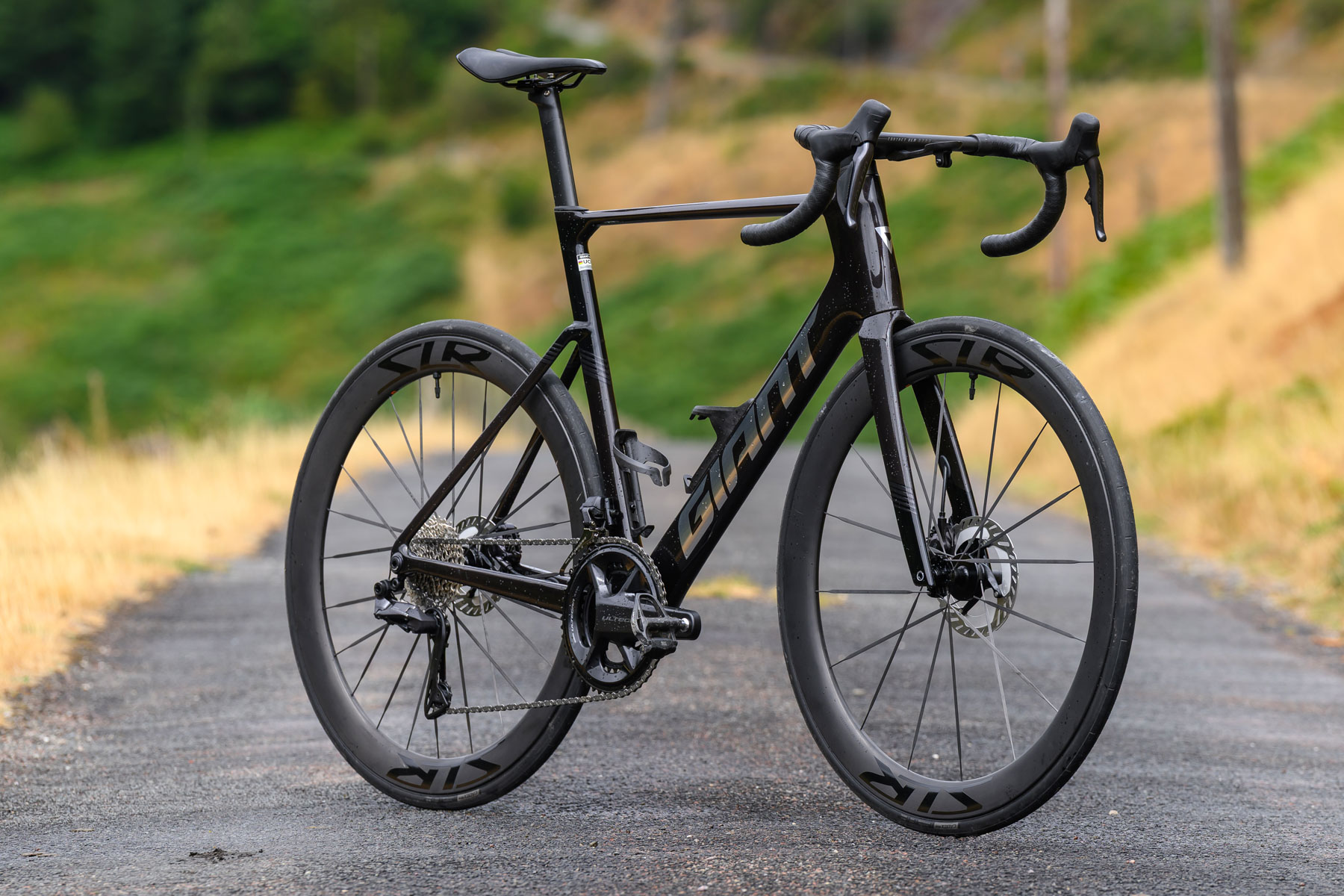
My only criticism of the complete package is about the tyres. In an age when bigger volumes are being embraced, especially here in the UK where we’ve had to deal with deteriorating road surfaces for more than a decade, Giant’s conservative choice of 28c tyres feels a little out of step. It's especially disappointing given Giant upped the tyre clearances to 32mm on this new Propel.
It also begs the question, if you can make an aero race bike this good everywhere, does Giant need to keep the TCR? And that comes from an avid TCR fan and owner.
Our Race Bike of the Year: Eddy Merckx 525R Force AXS
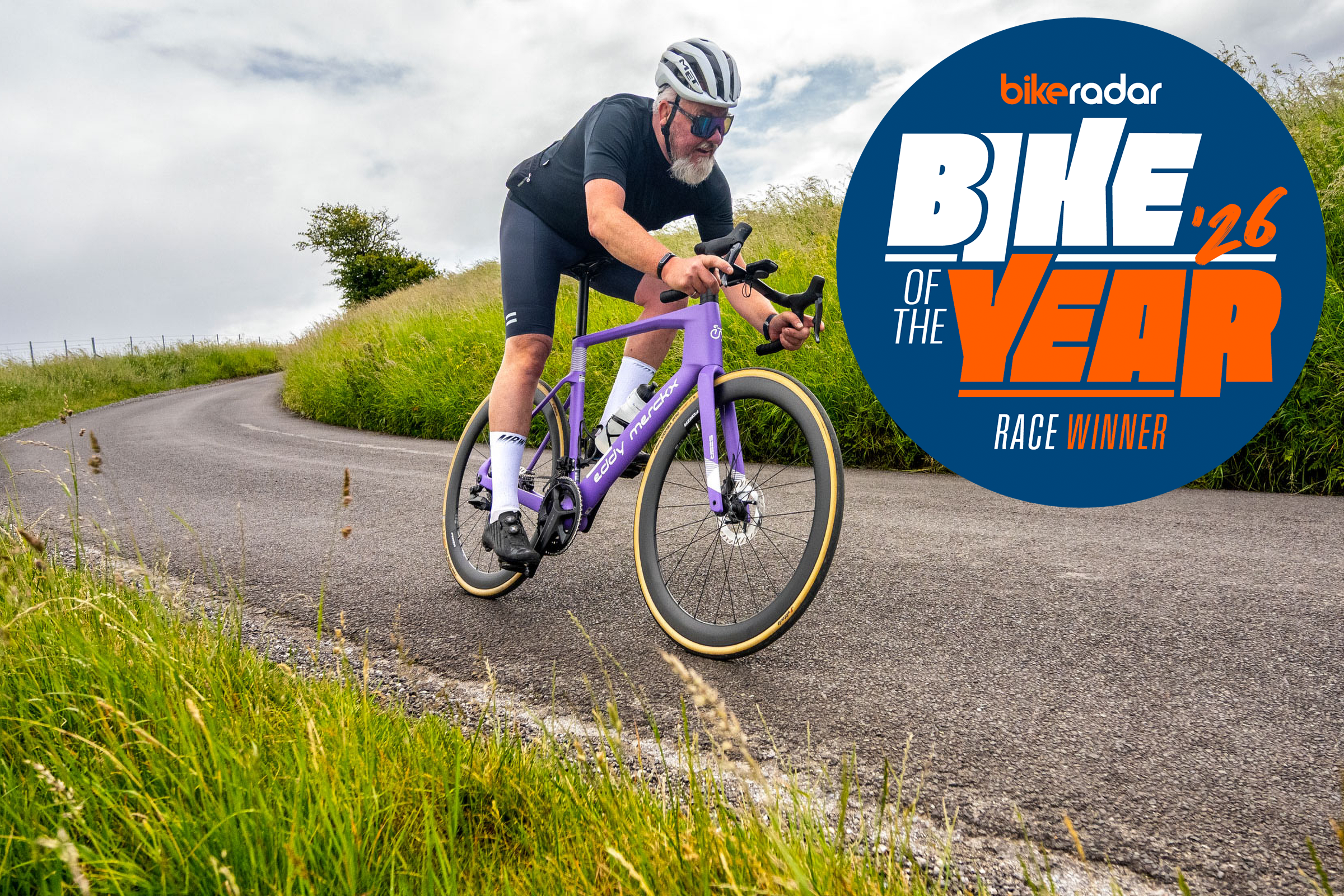
The 525R does race design differently, and it makes for a bike that’s fast without being hard work. A more accommodating ride position blends with sharp handling and aero efficiency. This is all down to a new way of thinking about race-bike geometry.
Race bikes have always featured near parallel 73/73.5-degree angles, long reaches, low stacks and short wheelbases, although biometric knowledge has moved on since those numbers were decided on.
The designers at Merckx had seen the trend for racers to push their saddle as far forward on the rails as possible to achieve a more ‘over the cranks’ position. This opens your hip angle and makes for more efficient power when pedalling.
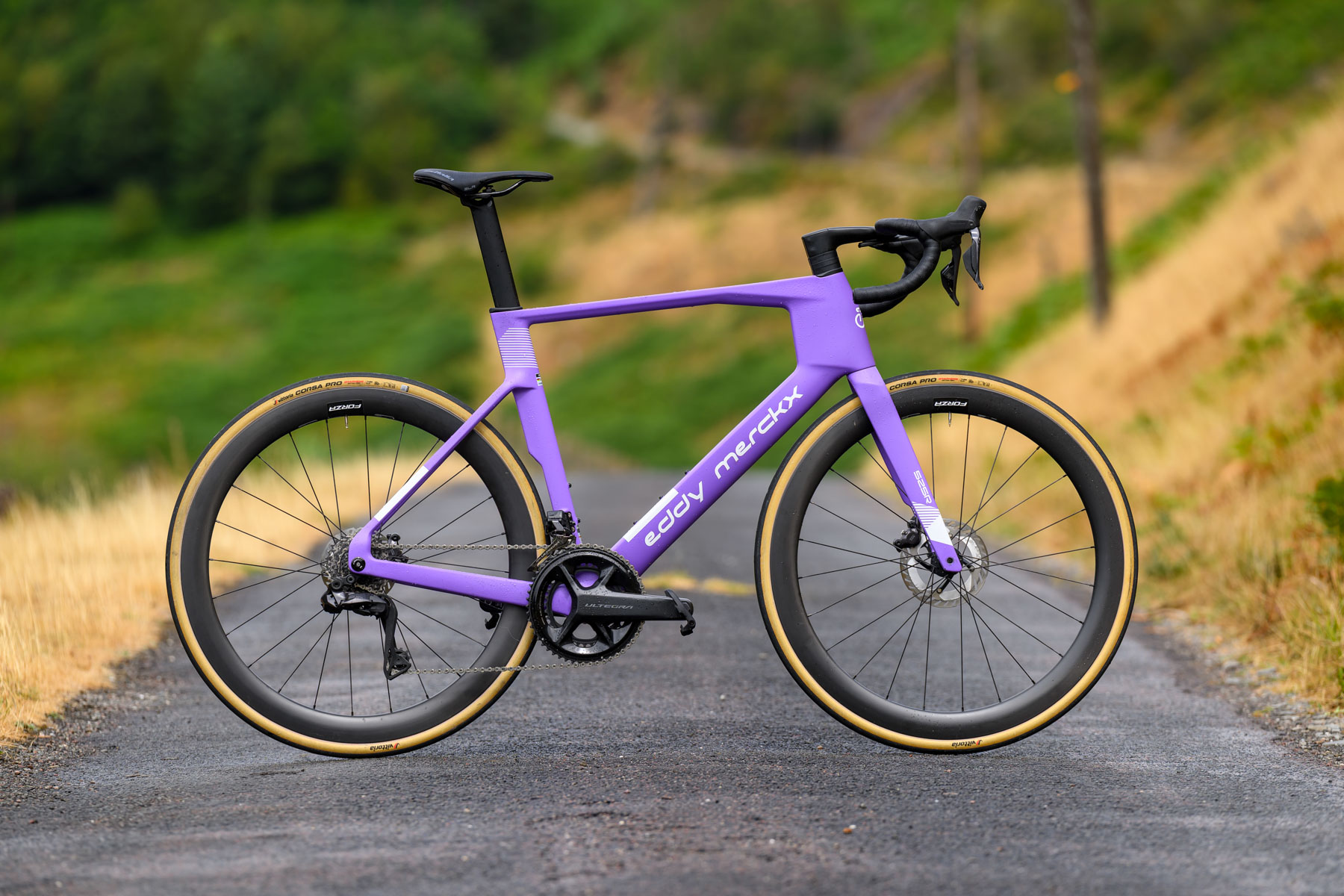
So they integrated this into the 525R’s design, steepening the seat angle instead, yet keeping the top-tube length the same. That means the long reach so favoured by pros to get into the full aero position can be achieved without resorting to excessive stem lengths and/or weird negative stem angles.
That means you don’t compromise the handling in pursuit of straight-line speed. It’s also claimed to improve weight distribution, which brings positives when it comes to handling stability.
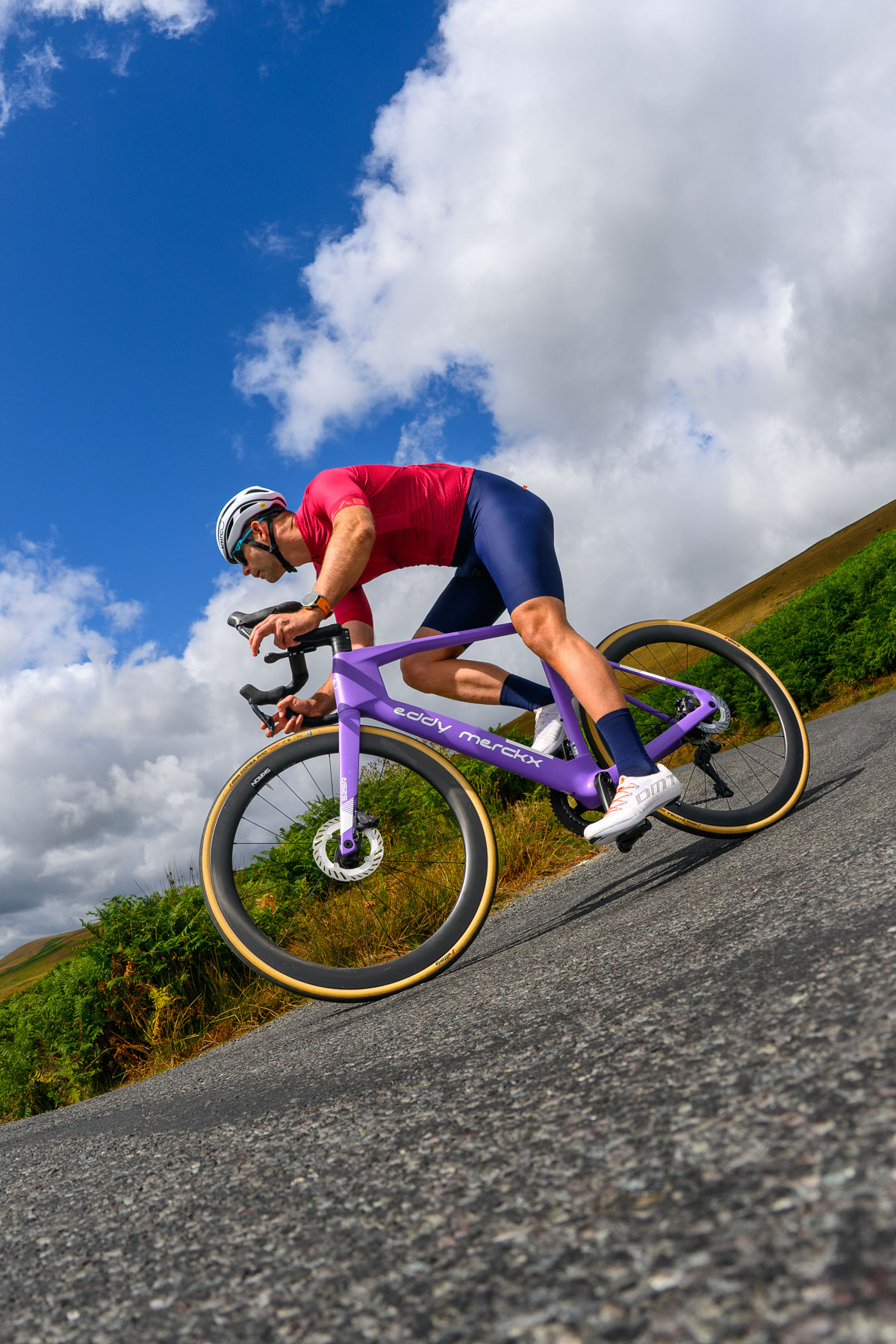
On the road, the Merckx is wonderful. Aside from the accommodating ride position, it feels light, quick-handling and stiff through the cranks. It’s a fantastic bike to sprint and climb on.
The forward position is akin to being up on the nose of the saddle (or ‘on the rivet’ in old-school racing parlance), yet still comfortably placed on the saddle's more accommodating parts.
The ride position is aggressive without being contorted or stretched. I didn’t feel the need to take up Pilates or become a master Yogi to get the best of this bike.
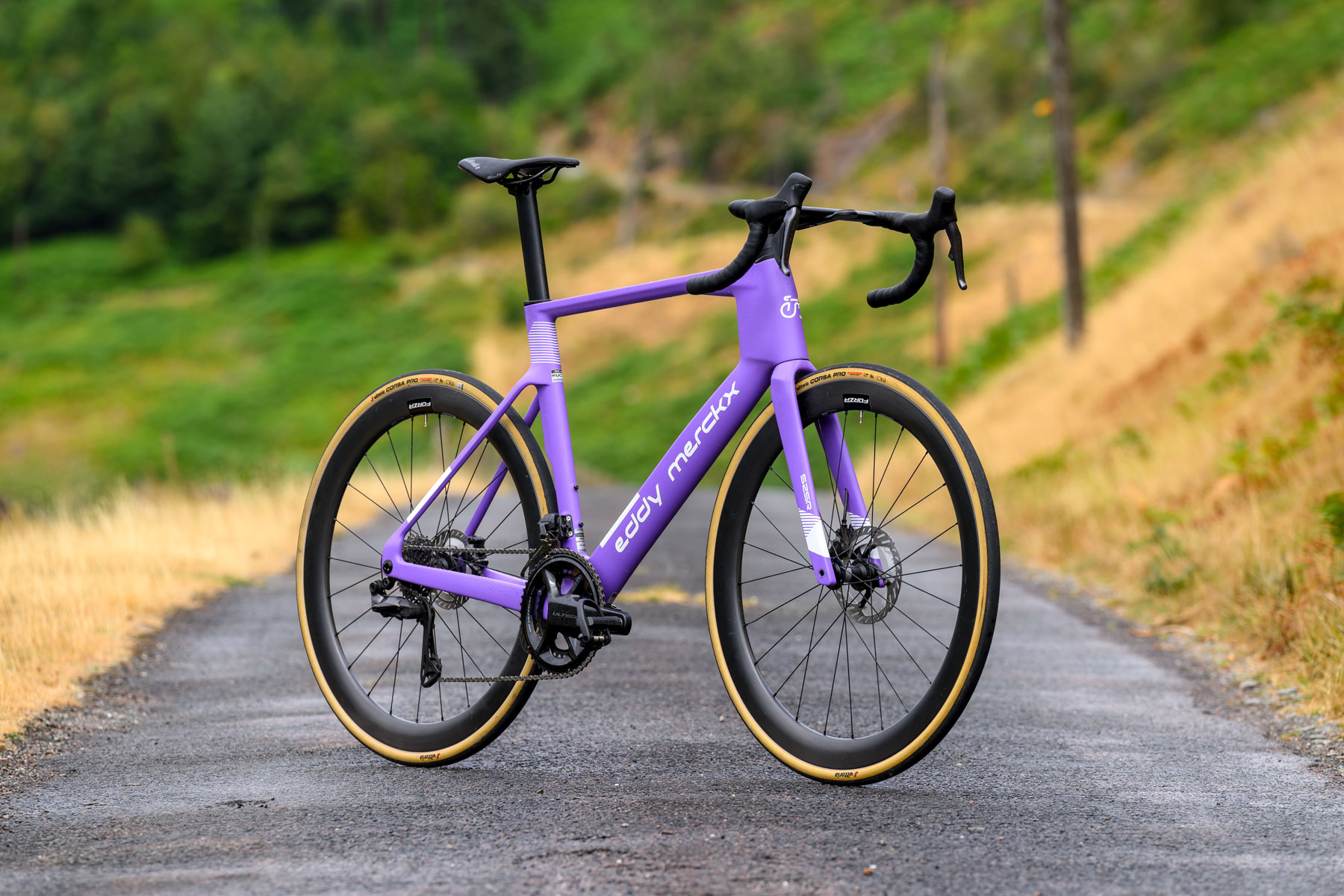
Quite simply, the 525R is the best aero race bike I’ve ridden, precisely because it’s not an uncompromising aero race bike.
If you like the narrow-bar trend, Merckx has you covered. If, like me, you’re not so much of a fan, you're covered too, thanks to Merckx offering multiple width/length options through its online configurator.
Merckx takes the win thanks to its wonderful all-round ride and good range of options, and while it's premium, it's not hugely expensive.